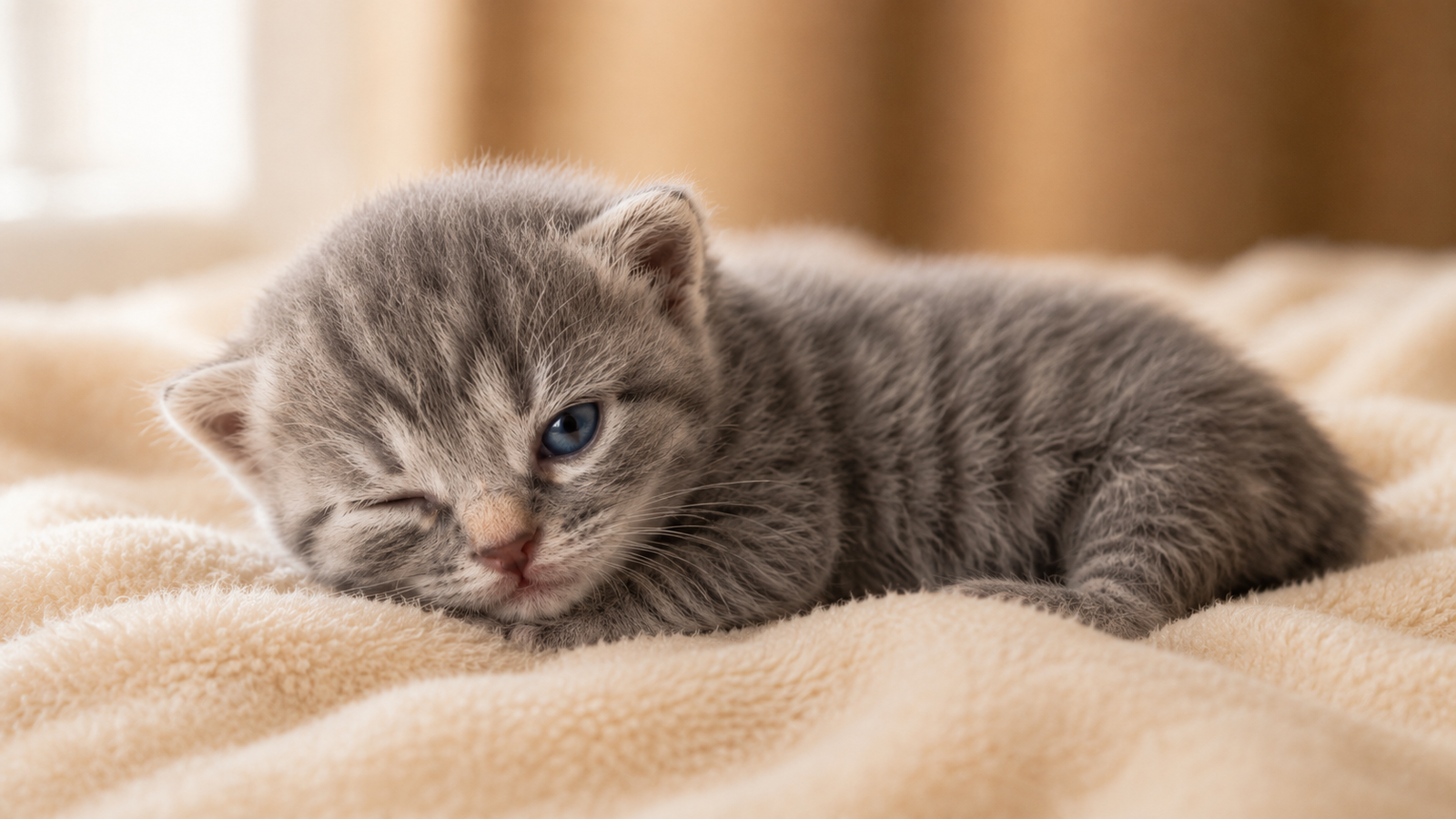
Kittens are born with their eyes sealed shut. For the first week or so, they rely completely on their mother for warmth, food, and protection.
Once the eyes start to open, the process takes several days. Eyes that stay closed past two weeks, or look swollen, crusty, or irritated, should be checked by a veterinarian.
When Do Newborn Kittens Open Their Eyes?
Newborn kittens open their eyes between 7 and 14 days after birth, with 10 days being the average. The eyelids don’t pop open all at once. They usually part into a thin slit first, then widen over the next two to five days until both eyes are fully open.
It’s common for one eye to open before the other. A gap of a day or two between the left and right eye is normal and not a sign of anything wrong. By the end of week two, both eyes should be fully open.
Why Are Kittens Born With Their Eyes Closed?
Kitten eyes aren’t fully developed at birth. The retina, cornea, and tear ducts all need more time to mature, and closed eyelids protect those developing structures from light, dirt, and bacteria during the most vulnerable stage of life.
Tear production also hasn’t started yet in newborn kittens. Sealed eyelids help protect the surface of the eye while the tear film is still developing. Bright light can permanently damage a newborn kitten’s developing retina, so litters should be kept in soft, indirect light for the first two weeks.
What Color Are a Kitten’s Eyes When They First Open?
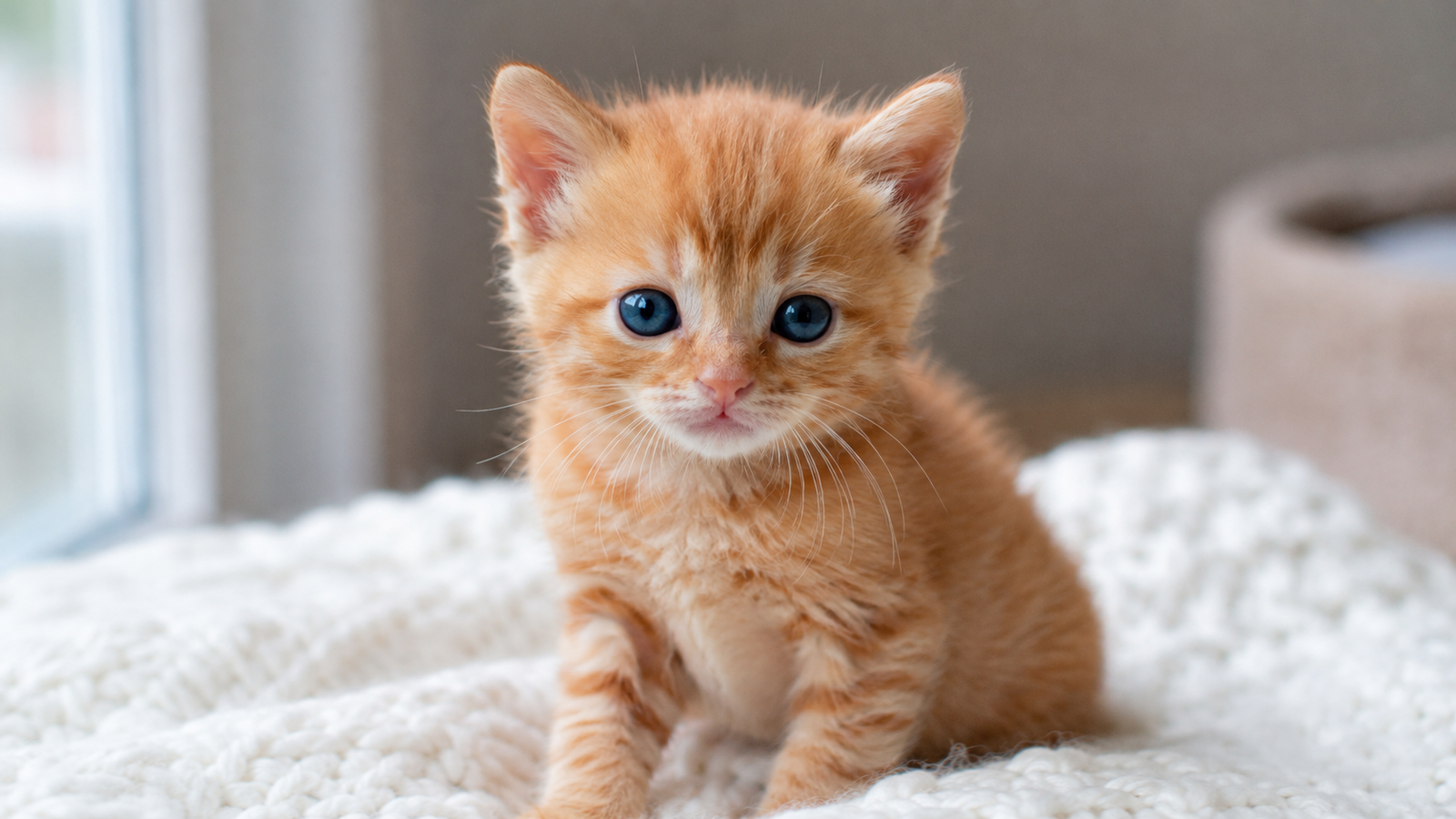
All kittens have blue eyes when they first open. The cells that produce melanin, the pigment that determines final eye color, aren’t active yet. Without pigment, the iris reflects light in a way that appears blue.
Adult eye color starts to appear between 6 and 8 weeks of age and is usually set by 10 to 12 weeks. Most cats end up with yellow, green, gold, copper, or hazel eyes as adults. A few breeds keep blue eyes for life, including Siamese, Ragdoll, Himalayan, Balinese, and Birman cats.
Can Kittens See Right Away After Their Eyes Open?
Not clearly. Vision is blurry and unfocused when a kitten’s eyes first open, and pupils are slow to adjust to changes in light. This is another reason to keep newborn kittens away from bright light during the first two weeks.
Sharper vision develops over the next several weeks. By four to five weeks, kittens can track movement well, judge distance, and start hunting behaviors like pouncing on toys. Full adult vision is in place by around three months.
What If a Kitten’s Eyes Haven’t Opened?
If a kitten’s eyes are still fully sealed at 14 days old, something is likely wrong. The most common causes are neonatal conjunctivitis, feline herpesvirus, calicivirus, and chlamydia infections that develop under the closed lid before the eye ever opens.
Never try to pry a kitten’s eyelids open. Forcing them apart can tear the delicate tissue and cause permanent damage or blindness. Instead, a veterinarian can safely open and treat the affected eye.
While waiting for a vet appointment, a warm, damp cloth can be used to gently soften any crust around the eye area. Never use soap, disinfectants, or over-the-counter eye drops on a newborn kitten.
Signs of an Eye Infection in a Newborn Kitten
Eye infections can develop before or after the eyes open. Watch for:
- Crust or discharge around sealed eyelids
- Swelling or bulging under closed lids
- One eye still shut several days after the other opened
- Cloudy or discolored appearance once eyes open
- Green or yellow discharge
- Poor weight gain or weak nursing
Any of these signs warrants a vet visit. Untreated infections in newborn kittens can lead to corneal scarring, vision loss, or in serious cases, loss of the eye entirely. Early treatment gives the best chance of healing without lasting damage.
How to Care for a Newborn Kitten’s Eyes
When the mother cat is present and healthy, she handles most eye care through grooming. Human intervention isn’t needed unless there’s visible discharge, crust, or swelling.
For orphaned or hand-raised kittens, keep the nesting area clean and dry, and check the eye area daily for any discharge. A soft cloth dampened with warm water is enough to wipe away any crust or discharge. Avoid bright light exposure for the first two weeks, and never handle a kitten’s eyes with anything other than clean hands and clean cloths.
Nutrition matters too. Orphaned kittens should be fed a commercial kitten milk replacer, not cow’s milk. Kitten formulas contain higher levels of DHA, an omega-3 fatty acid the developing eyes and brain need to grow properly.
Frequently Asked Questions
Should I help a kitten open its eyes?
No. Forcing the eyelids apart can cause permanent damage. If eyes haven’t opened by 14 days, see a veterinarian.
Why is one of my kitten’s eyes open but not the other?
A day or two of difference is normal. If one eye stays sealed while the other has been open for several days, or if the closed eye looks swollen or crusted, it’s a sign of infection and needs a vet visit.
Can a kitten go blind from opening its eyes too early?
Forcing eyelids open early can damage the developing eye and cause permanent vision loss. Bright light exposure in the first two weeks can also injure the retina, which is why closed lids and dim environments matter during this stage.
Watching for Milestones
Eye opening is one of the first visible signs a kitten is developing on schedule. Most litters hit the milestone without any problem, but if day 14 comes and eyes are still fully sealed, a vet visit is the right next step. From there, vision, coordination, and social behavior develop over the following weeks.
Debbie Reid is the founder and chief editor of CatPedia.net, with over 25 years of hands-on experience in feline care, rescue, and behavior research. Inspired by her rescue cats Snickers and Bigboy, she collaborates with animal welfare resources and consults veterinary literature to turn complex feline health, nutrition, and behavior topics into clear, actionable guides.