Siamese cats have a way of making themselves impossible to ignore. With their vivid blue eyes, sleek pointed coats, and a personality that fills every room they walk into, they’re one of the most distinctive and recognizable cat breeds in the world. They’re also one of the most vocal, which is either a selling point or a dealbreaker depending on what you’re looking for in a cat.
Living with a Siamese is rarely quiet. These cats form intense bonds with their people, follow you from room to room like a shadow, and have plenty to say about everything from an empty food bowl to the fact that you’ve been in the bathroom for too long. They’re not content to sit in the background, and they tend to communicate that clearly and often.
That said, Siamese cats are genuinely affectionate and rewarding to live with when their needs are met. They stay playful well into adulthood, bond deeply with their families, and tend to fit well into active households that want an interactive cat rather than a quiet observer.
Quick Breed Facts
- Origin: Thailand (formerly Siam)
- Breed registries: CFA, TICA, GCCF, FIFe
- Weight range: 6–14 lbs
- Lifespan: 12–20 years
- Coat: Short, fine, close-lying
- Colors and patterns: Seal, blue, chocolate, lilac, lynx, tortie, red point
- Eye color: Vivid blue
- Grooming: Low
- Activity level: High
- Affection level: Very high
- Vocality: Very vocal
- Good with children: Yes
- Good with other pets: Yes (especially with socialization)
History & Origin of the Siamese Cat
The Siamese cat traces its roots to Thailand, where it was historically known as Siam. These cats were considered sacred and were kept in royal palaces and Buddhist temples for centuries. They were not simply pets but symbols of status and good fortune, and they were closely guarded by the families and institutions that kept them.
Siamese cats arrived in the West in the late 1800s, initially as diplomatic gifts, and quickly attracted attention for their unusual pointed coats and striking blue eyes. By the early 20th century, breeders in Europe and the United States were actively developing the breed, gradually refining it toward the lean, angular look associated with the modern show Siamese. Their influence on other breeds is significant too. The Balinese, Tonkinese, and Oriental Shorthair all descend from Siamese lineage, and the breed remains one of the most recognized and influential in the cat world.
Siamese Cat Personality & Temperament
Siamese cats are among the most people-oriented breeds in existence. They form deep bonds with their families and do not tend to be shy about expressing that attachment. They follow their people from room to room, insert themselves into conversations, and have a wide range of vocalizations they use to make their feelings known. The meow of a Siamese is famously loud and insistent, and they are not afraid to use it when they feel ignored or under-stimulated.
Despite that demanding streak, they are genuinely warm and affectionate rather than simply attention-seeking. They tend to engage with their surroundings with real curiosity, picking up routines quickly and figuring out how things work. Many Siamese owners describe the experience as living with a very social, very opinionated roommate who happens to be covered in fur.
They do not handle long stretches of solitude well. A Siamese left alone for most of the day is likely to become anxious or destructive, so they are best suited to homes where someone is around regularly, or where they have a companion animal to keep them company.
Siamese Cat Appearance & Physical Traits
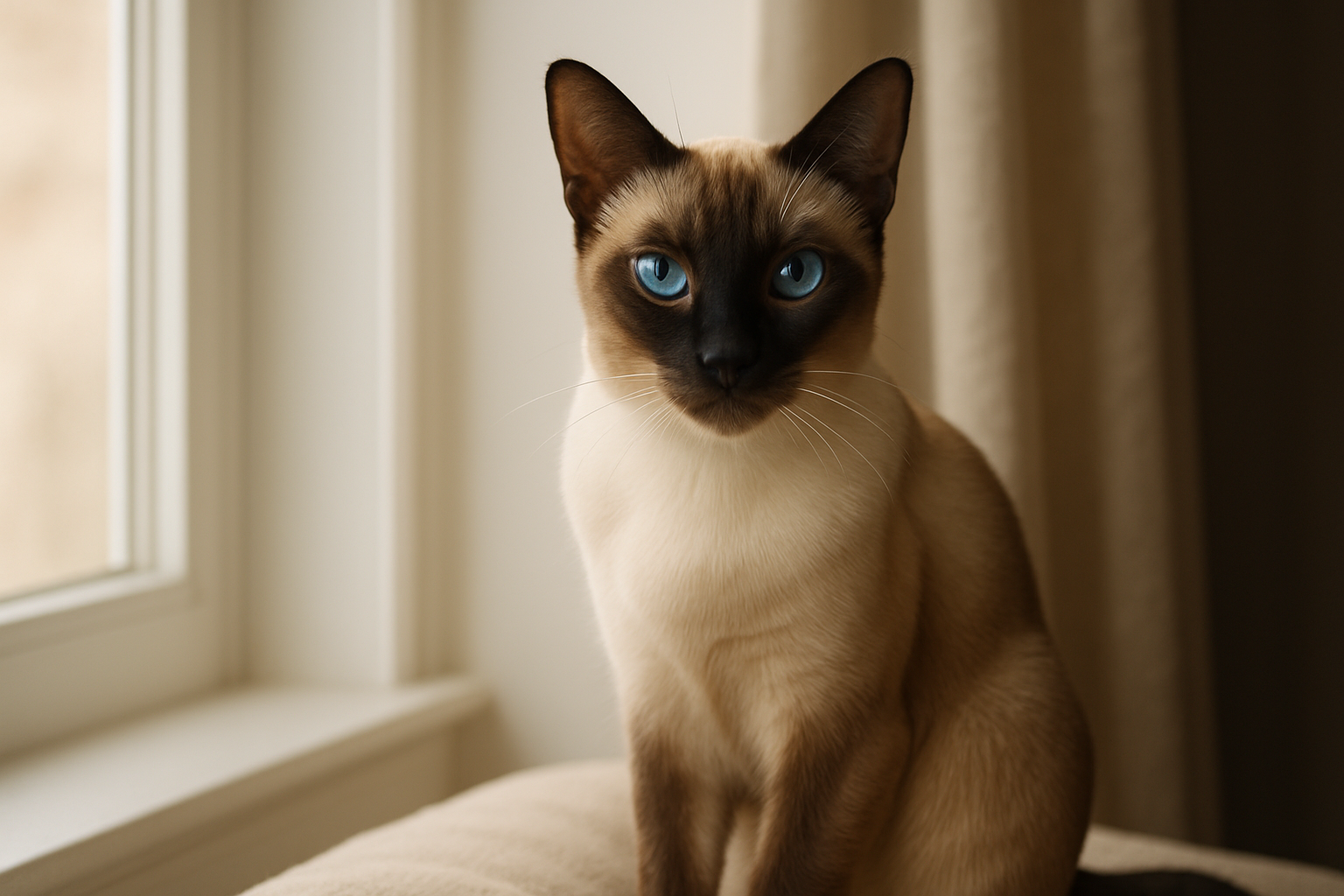
The Siamese is immediately recognizable. Their defining feature is the point coloration, where the ears, face mask, paws, and tail are darker than the rest of the body. This pattern comes from a temperature-sensitive gene that causes pigment to develop more fully in the cooler areas of the body. Kittens are born nearly white and develop their markings over the first few weeks of life.
The most common color variations include seal point, the classic dark brown against a creamy fawn body; blue point, with cool grayish-blue markings on a pale coat; chocolate point, featuring warm milk-chocolate markings on an ivory base; and lilac point, the palest of the traditional colors with frosty gray-pink points. Lynx point Siamese have tabby-pattern striping on their points, and tortie points display a mottled mix of red and dark coloring. Red or flame point cats have bright reddish-orange markings and are less common but equally striking.
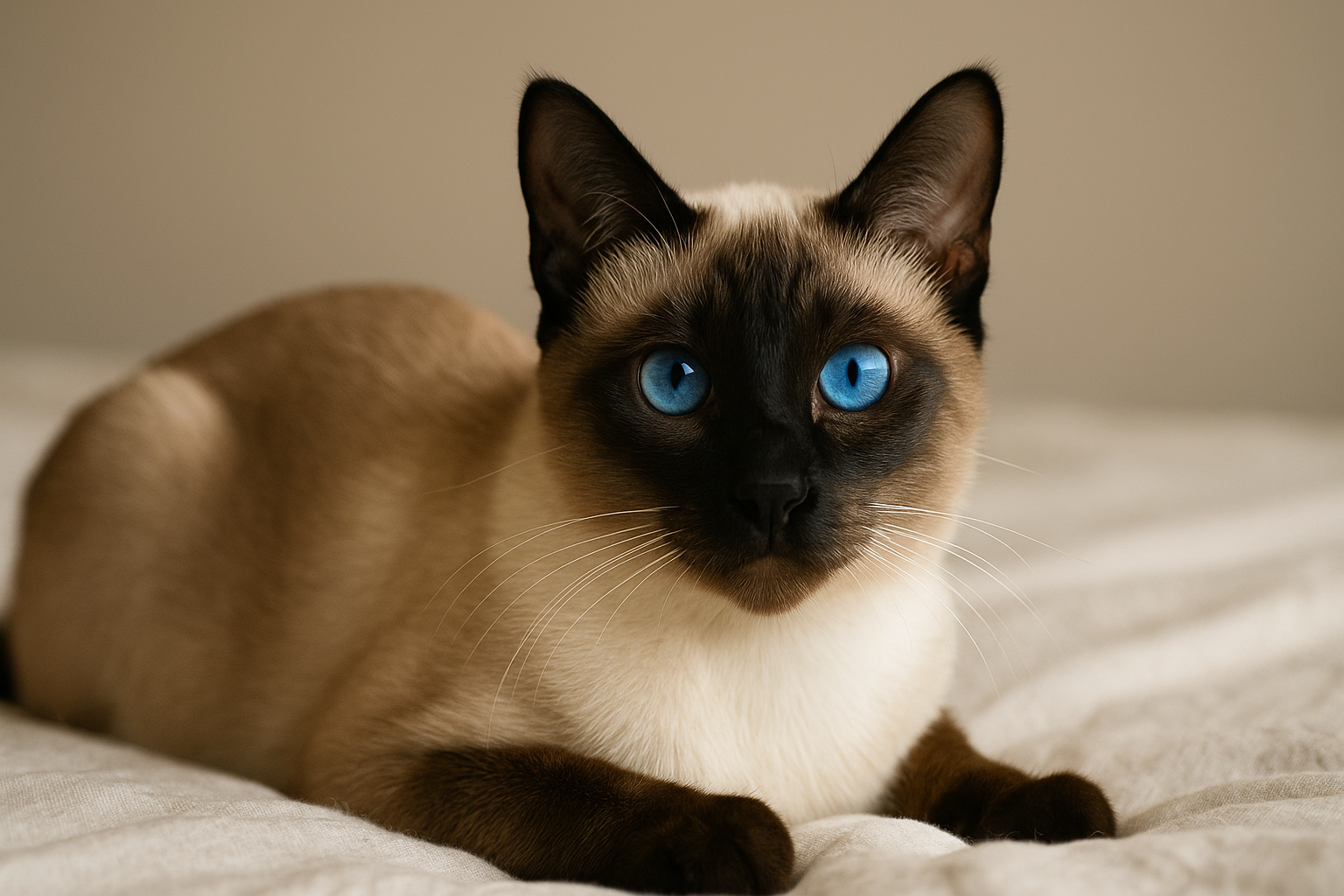
Beyond the coat, the Siamese has a distinctly elegant build. They are slender and long-bodied with fine bone structure, large pointed ears set wide on the head, and almond-shaped eyes in an unwavering vivid blue. Show lines tend toward a more extreme wedge-shaped head, while traditional or applehead Siamese have a rounder, slightly stockier build.
Siamese Cat Grooming & Shedding
The Siamese is one of the lower-maintenance breeds when it comes to grooming. Their short, fine coat lies close to the skin and sheds less than most, with no tendency to mat or tangle. A quick brush once a week is usually all it takes to remove loose hair and keep the coat looking clean and smooth. Many Siamese cats enjoy the attention that comes with grooming, which makes it an easy habit to establish.
Beyond coat care, the usual basics apply: nail trims every couple of weeks, regular ear checks for wax or debris, and dental care. Siamese cats can be prone to dental issues, so teeth brushing or at least regular dental treats are worth building into their routine. Their grooming needs are genuinely simple, which balances out some of the higher-maintenance aspects of the breed in other areas.
Activity & Play
Siamese cats are highly active and stay that way well into adulthood. They enjoy climbing, chasing, exploring, and anything that gives their quick minds something to work on. A bored Siamese will find its own entertainment, and that usually means knocking things off shelves, demanding attention at volume, or getting into places they have no business being.
Daily interactive play is not optional with this breed. Feather wands, puzzle feeders, and training games all go over well. Many Siamese cats can be taught to walk on a leash, which adds outdoor stimulation without the risks of free roaming. A tall cat tree, window perches, and a few rotating toys help keep them occupied during quieter parts of the day.

What Do Siamese Cats Eat?
Siamese cats do best on a high-protein, meat-based diet with animal protein listed as the first ingredient. Their lean, active build means they need quality nutrition to maintain muscle and energy levels, and a diet heavy in fillers or plant-based protein is not going to serve them well. A mix of wet and dry food works well for most Siamese cats, with wet food supporting hydration and dry food offering some dental benefit.
Portion control matters for this breed. Despite being active, Siamese cats can gain weight if overfed, particularly as they age or if their activity level drops. Measured meals at consistent times are a better approach than free-feeding. Fresh water should always be available, and a cat fountain is worth considering given how much Siamese cats tend to appreciate moving water.
Siamese Cat Health & Lifespan
Siamese cats are generally long-lived, with many reaching their late teens and some making it into their early twenties with good care. They are one of the longer-lived breeds, which is a genuine draw for people who want a lasting companion. That said, they do carry some breed-specific health risks worth being aware of before bringing one home.
Progressive retinal atrophy (PRA) is a hereditary eye condition that can develop in some Siamese cats, leading to gradual vision loss over time. Responsible breeders screen for this. Some Siamese, particularly those with very wedge-shaped facial structure, can experience breathing issues or chronic nasal congestion. Dental disease is also more common in this breed than in many others, which makes regular dental care more important than it might otherwise be. As they age, Siamese cats can also be at elevated risk for hyperthyroidism, so monitoring thyroid levels during routine vet visits is a good practice.
Regular checkups, a quality diet, keeping them at a healthy weight, and providing consistent mental and physical stimulation are the best foundations for a long, healthy Siamese life.
Are Siamese Cats Hypoallergenic?
No, Siamese cats are not hypoallergenic. All cats produce the Fel d 1 protein that triggers most cat allergies, and the Siamese is no exception. Their short, low-shedding coat does produce less airborne dander than many longhaired breeds, and some allergy sufferers report fewer symptoms around them compared to other cats. But that’s a matter of degree, not a guarantee, and results vary significantly from person to person.
If you have cat allergies and are considering a Siamese, spending time with one before committing is the most reliable way to gauge your reaction. There’s no substitute for a real-world test.
Family Compatibility
Siamese cats are genuinely well-suited to family life. They bond with multiple people rather than attaching exclusively to one, handle the activity level of a busy household reasonably well, and are playful enough to keep up with children who know how to interact with cats. They are social enough that they tend to warm up to guests and new family members fairly quickly rather than hiding away.
They can get along with other cats and with dogs when introduced carefully, and having a companion animal is often a good idea for this breed given how poorly they handle being alone. Their high prey drive means small animals like birds or rodents are not a natural fit in the same household. For families, single owners, or seniors who are home often and want a genuinely interactive companion, the Siamese is a very strong match.
Recommended Supplies for a Siamese Cat
Siamese cats need an environment that gives them things to do. The basics matter, but enrichment is what keeps this breed content and out of trouble. Prioritize vertical space, interactive play options, and anything that taps into their curiosity and intelligence.
- Tall cat tree with multiple levels and perches
- Interactive toys including wand toys and puzzle feeders
- Window perch for bird-watching and mental stimulation
- Cat harness and leash for supervised outdoor time
- Wide, shallow food and water bowls to avoid whisker fatigue
- Roomy, consistently clean litter box

Siamese Cat Price and Cost
Siamese kittens from reputable breeders typically cost between $600 and $1,200, with price varying based on lineage, coat color, and breeder reputation. Show-quality kittens or rare color variations can push beyond that range. The price reflects health screening, early vaccinations, and socialization, all of which make a meaningful difference in what you bring home.
Adoption is worth considering seriously. Siamese cats do end up in breed-specific rescues, often because owners underestimated their energy or vocality, and adoption fees are typically a fraction of breeder prices. An adult Siamese from a rescue comes already vetted and vaccinated, and their personality is fully developed, which makes it easier to find a good match for your household.
Siamese Cat FAQs
How much does a Siamese cat cost?
Siamese kittens from reputable breeders typically cost between $600 and $1,200, depending on lineage, color point, and breeder reputation. Show-quality or rare color variations can cost more. Adoption through a breed-specific rescue is a more affordable option.
Are Siamese cats hypoallergenic?
No, Siamese cats are not hypoallergenic. All cats produce the Fel d 1 protein that triggers most cat allergies. Their short, low-shedding coat may produce slightly less airborne dander than longhaired breeds, and some allergy sufferers report fewer symptoms around them, but results vary by individual.
How long do Siamese cats live?
Most Siamese cats live between 12 and 20 years with proper care, making them one of the longer-lived domestic breeds. Regular vet visits, a quality diet, and keeping them mentally and physically active all contribute to a longer, healthier life.
Are Siamese cats good with kids and other pets?
Yes. Siamese cats are social, playful, and adaptable, which makes them a solid fit for families with children and other pets. They tend to do best when introduced gradually and thrive in homes where they have consistent company throughout the day.
Is the Siamese Cat Right for You?
If you want a cat that’s genuinely involved in daily life rather than quietly existing in the background, the Siamese is hard to beat. They’re affectionate, intelligent, playful, and full of personality, but they also expect interaction and attention in return. The long lifespan means you’re making a real commitment, but for most Siamese owners that turns out to be one of the best things about them.
The main thing to understand is that this is not a low-engagement breed. They need company, mental stimulation, and regular interaction to really thrive. For the right home, that constant companionship is exactly what makes them so rewarding to live with.
Debbie Reid is the founder and chief editor of CatPedia.net, with over 25 years of hands-on experience in feline care, rescue, and behavior research. Inspired by her rescue cats Snickers and Bigboy, she collaborates with animal welfare resources and consults veterinary literature to turn complex feline health, nutrition, and behavior topics into clear, actionable guides.