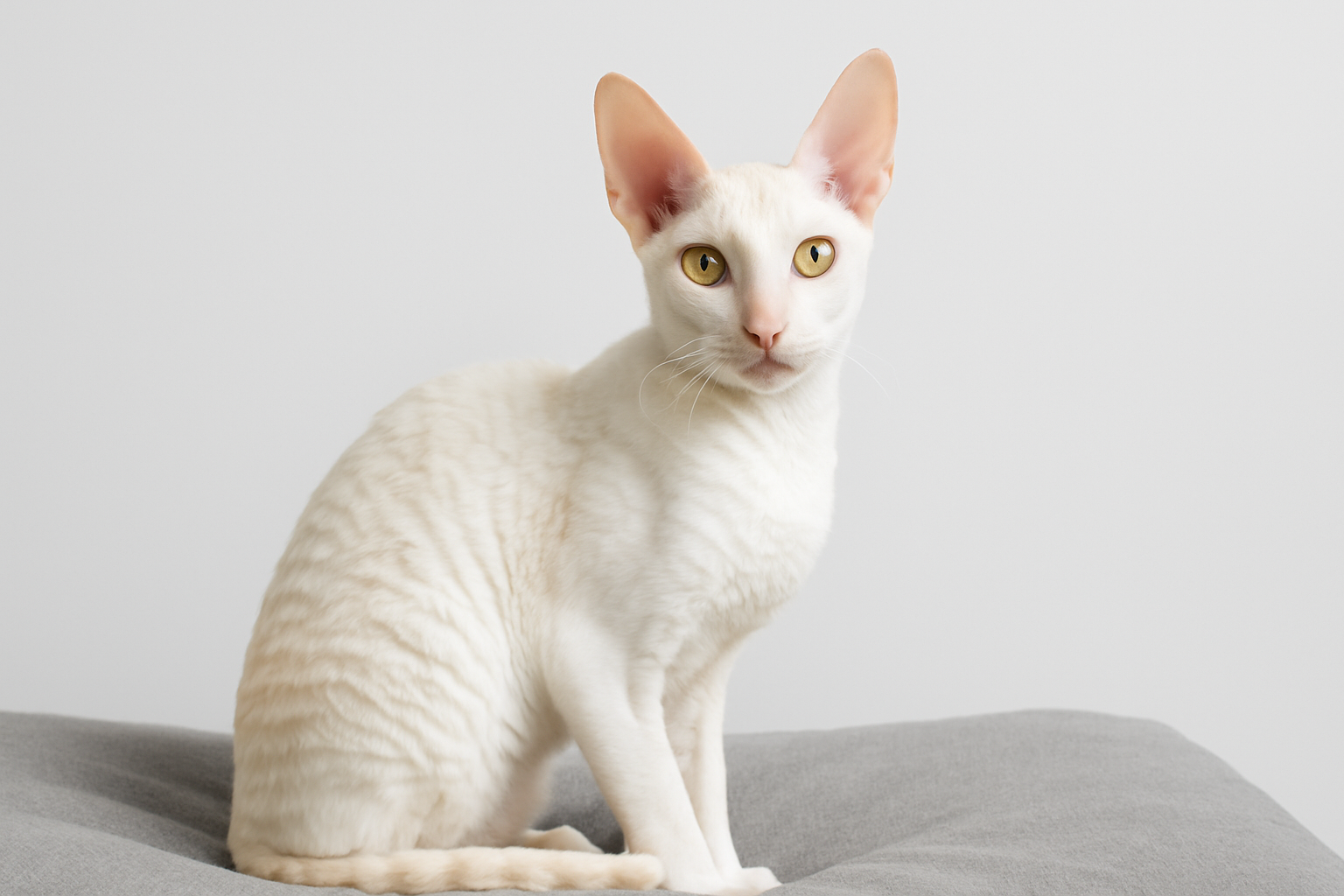
The Cornish Rex cat is genuinely hard to describe to someone who hasn’t seen one. The curly coat, the oversized ears, the narrow whippet-like build — it looks like no other domestic breed, and the personality matches. These cats are warm, playful, and completely invested in their people in a way that tends to catch new owners off guard.
They are also more demanding than their compact size suggests. Cornish Rex cats want company, stimulation, and interaction throughout the day. A quiet apartment with a busy owner who is rarely home is not where this breed thrives. Give them the interaction they need, though, and you will have a cat that genuinely treats you like the most interesting thing in the room.
Here is what it is actually like to live with a Cornish Rex, from personality and daily habits to grooming, health, cost, and whether this breed fits your home and lifestyle.
Quick Breed Facts
- Origin: Cornwall, England
- Breed registries: CFA, TICA, FIFe, GCCF
- Weight range: 6–10 lbs
- Lifespan: 11–15 years
- Coat: Very short, soft, curly; no guard hairs
- Colors and patterns: Wide variety, including solid, tabby, bicolor, and tortoiseshell
- Eye color: Gold, green, or hazel; varies by coat color
- Grooming: Very low
- Activity level: High
- Affection level: Very high
- Vocality: Moderate to high
- Good with children: Yes
- Good with other pets: Yes
History & Origin of the Cornish Rex Cat
The Cornish Rex traces back to a single unexpected kitten born in Cornwall, England in 1950. A barn cat named Serena produced a litter that included one unusually curly-coated male, later named Kallibunker. His owner recognized the coat as something genuinely different and reached out to a geneticist, who confirmed it was the result of a spontaneous recessive mutation. To preserve and expand the trait, Kallibunker was bred back to his mother and then to other cats over several generations.
The breed arrived in the United States in the late 1950s and gained formal recognition from the Cat Fanciers’ Association in 1964. TICA and FIFe followed, and today the Cornish Rex is recognized by all major registries. Breeders on both sides of the Atlantic developed their lines somewhat independently, which is why some variation in build and type exists, but the defining features — that curly coat, the long legs, and the outgoing personality — have stayed consistent.
Cornish Rex Cat Personality & Temperament
Cornish Rex cats are social, curious, and playful in a way that tends to stick around well into adulthood. They follow their people from room to room, greet visitors at the door, and seem genuinely interested in being involved in whatever is happening in the household. They are not the type to find a quiet corner and disappear for the afternoon. They want to be in the middle of things.
They are also affectionate in a hands-on way. Cornish Rex cats often seek out warmth, and since their thin coat provides very little insulation, they gravitate toward laps, heated surfaces, and anyone willing to let them burrow under a blanket. That heat-seeking behavior is part of what makes them such close companions. They bond quickly with their people and tend to follow a specific person around the house more than others, though they are generally friendly with everyone.
Their intelligence is worth accounting for. Cornish Rex cats pick up routines fast, learn their owner’s schedule, and can become vocal or mischievous when bored or under-stimulated. They are not destructive in the way a Bengal might be, but a Cornish Rex without enough engagement will find creative ways to entertain itself.
Cornish Rex Cat Appearance & Physical Traits
The Cornish Rex has a lean, arched body with long legs, a narrow chest, and a distinctive egg-shaped head that makes it look almost aerodynamic. The ears are large and set high, the eyes are prominent, and the overall silhouette has a greyhound quality that sets it apart from the rounder, heavier builds of most domestic breeds.
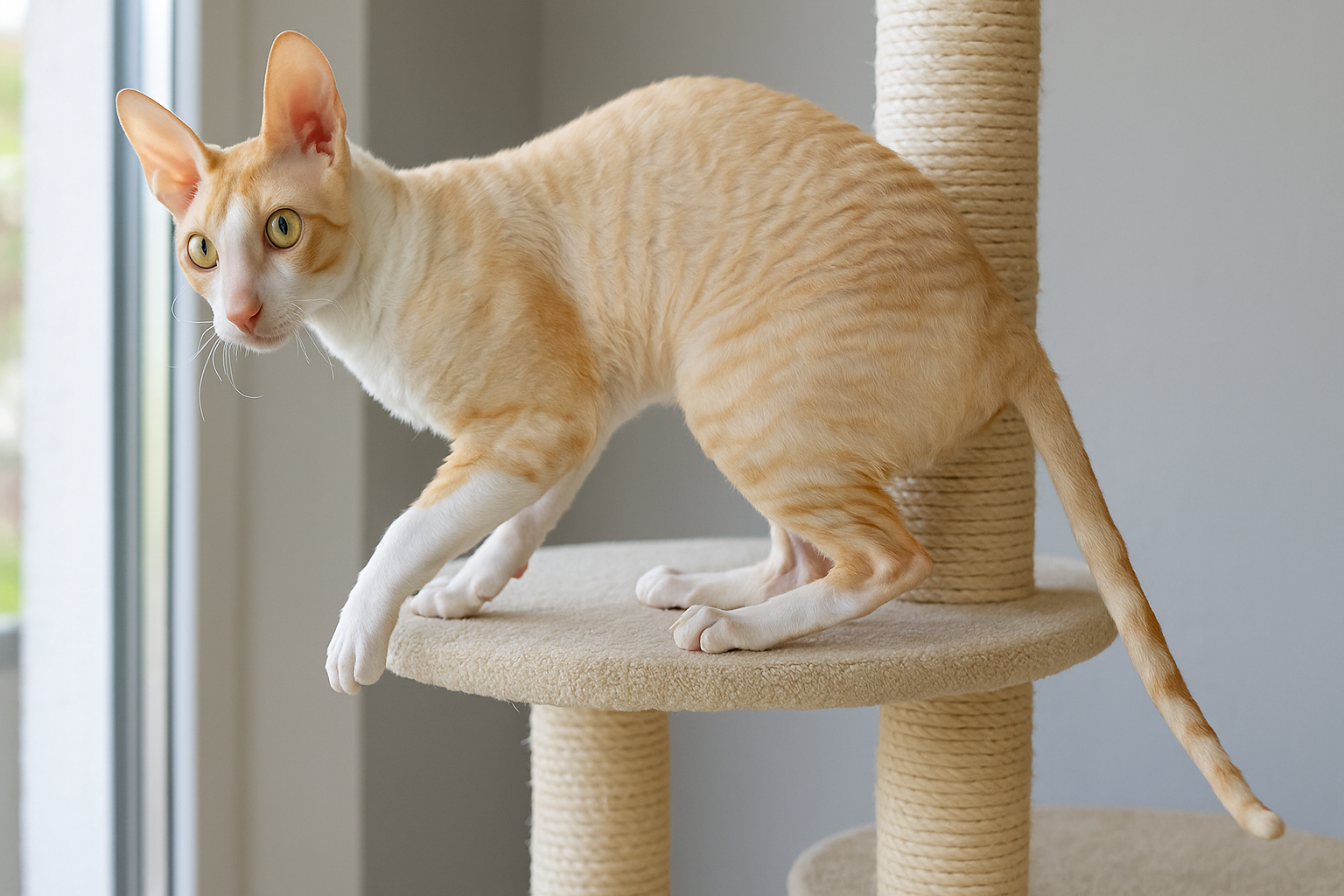
The coat is the defining feature. Unlike most cats, the Cornish Rex has only a soft, downy undercoat with no guard hairs or awn hairs. This gives the coat its characteristic wavy or rippled texture and makes it unusually soft to the touch. It lies close to the body rather than standing out, which contributes to the sleek, tucked-in appearance. The whiskers and eyebrows are often curly as well, which adds to the slightly otherworldly look this breed is known for.
Cornish Rex Cat Grooming & Shedding
The Cornish Rex is one of the lowest-maintenance cats when it comes to grooming. Their short, single-layer coat sheds minimally and does not mat. Most owners find that no brushing is required at all, and in fact brushing can damage the delicate curl pattern, so it is better to skip it entirely with this breed.
What does require occasional attention is skin care. Because the Cornish Rex lacks the guard hairs that normally absorb and distribute skin oils, those oils can build up around the ears, paws, and skin folds. A gentle wipe with a warm, damp cloth every week or two keeps things comfortable and prevents any buildup. Beyond that, the standard basics apply: nail trims every couple of weeks and regular ear checks for wax or debris.
Activity & Play
Cornish Rex cats are high-energy and stay that way longer than most breeds. They run, leap, climb, and investigate constantly, and they need daily interactive play to stay mentally and physically satisfied. Feather wands, puzzle feeders, and toys with unpredictable movement all work well. They also love vertical space, so a tall cat tree or a set of wall-mounted shelves gives them somewhere to channel that climbing instinct.
Many Cornish Rex cats will play fetch and can be taught simple tricks, which speaks to their intelligence and their drive to engage with their people. Rotating toys every few days keeps things interesting and prevents the boredom that can lead to unwanted behavior.

What Do Cornish Rex Cats Eat?
Cornish Rex cats do best on a high-protein, meat-based diet with animal protein listed as the first ingredient. Their fast metabolisms and consistently high activity levels mean they burn through calories efficiently, so nutrient-dense food matters more than it might with a lower-energy breed. Look for options where chicken, turkey, or fish leads the ingredient list and fillers like corn or soy are minimal or absent.
Because their thin coat offers little insulation, some owners and vets suggest including foods with quality fats, particularly omega-3 fatty acids, to support skin health and coat condition. A mix of wet and dry food works well for most Cornish Rex cats: wet food helps with hydration and provides the animal protein they need, while dry food adds some dental benefit. Fresh water should always be available, and given that some Cornish Rex cats are drawn to running water, a cat fountain can encourage better drinking habits.
Cornish Rex Cat Health & Lifespan
Cornish Rex cats are generally healthy, with most living between 11 and 15 years with proper care. Because the breed developed from a fairly small genetic pool, there are a few conditions worth knowing about before bringing one home. Patellar luxation, where the kneecap slips out of its normal position, has been reported in the breed and can range from a minor annoyance to something that affects mobility depending on severity. A vet exam that includes checking joint function is a good idea when adopting.
Because they lack the insulating guard hairs of most cats, Cornish Rex cats are also more sensitive to cold and more prone to chilling in drafty or cool environments. This is something to account for in terms of their living space rather than a medical concern, but it is worth noting. Responsible breeders screen for hereditary conditions, and choosing a breeder who does health testing gives you a better starting point. Regular vet visits, a quality diet, and keeping them at a healthy weight are the best things you can do for their long-term wellbeing.
Family Compatibility
Cornish Rex cats adapt well to busy family homes. They are sociable enough to bond with multiple people rather than attaching to just one, patient with children who interact with them respectfully, and confident around new people and animals. Their playful nature makes them a good match for older children who enjoy active engagement with a cat, and their affectionate temperament means they hold their own in a household with dogs when introductions are handled properly.
They also suit quieter homes and single owners, provided there is enough interaction throughout the day. What they do not suit is a household where they would spend most of their time alone. Cornish Rex cats need companionship to stay happy, and a long workday without another pet or person around tends to lead to stress behaviors over time. If your schedule keeps you away from home regularly, adopting a pair or having another sociable cat is a good idea for this breed.
Recommended Supplies for a Cornish Rex Cat
Setting up a home for a Cornish Rex means prioritizing warmth, vertical space, and mental stimulation. Their thin coat means they feel the cold more than most cats, so cozy spots near heat sources or a quality heated bed matter more here than with other breeds. Beyond that, the focus is on enrichment.
- Tall cat tree with multiple levels and stable base
- Heated or fleece-lined cat bed for warmth
- Interactive toys including wand toys and puzzle feeders
- Wide, shallow food and water bowls to avoid whisker fatigue
- Cat water fountain to encourage drinking
- Scratching posts at different heights

Cornish Rex Cat Price and Cost
From a reputable breeder, Cornish Rex kittens typically cost between $800 and $1,500 for a pet-quality cat. Show-quality kittens from strong pedigree lines can run higher depending on the breeder and region. The price reflects the investment responsible breeders make in health testing, early socialization, vaccinations, and deworming before kittens go to their new homes.
Adoption is worth exploring. Cornish Rex cats are less common in shelters than mixed breeds, but breed-specific rescues do exist and often have adult cats available from breeders or owners who were not fully prepared for the breed’s social needs. Adoption fees are typically in the $100 to $300 range, and you would be giving a cat a second chance at a permanent home.
Cornish Rex Cat FAQs
Are Cornish Rex cats hypoallergenic?
No cat is truly hypoallergenic, but Cornish Rex cats are often better tolerated by people with mild allergies. Their minimal shedding and single-layer coat produce less airborne dander than most breeds, though they still produce the Fel d 1 protein that triggers most cat allergies. Spending time with one before committing is always the right move if allergies are a concern.
Do Cornish Rex cats like to cuddle?
Most do, and their heat-seeking nature makes them particularly inclined to curl up on laps or burrow under blankets. They are affectionate cats that tend to stay close to their people rather than wandering off to find solitude.
Can Cornish Rex cats be left alone?
They can manage short periods alone, but they are not well suited to long stretches of isolation. If your schedule keeps you away from home most of the day, adopting a second sociable cat to keep them company is worth considering seriously.
How much does a Cornish Rex cat cost?
Pet-quality kittens from reputable breeders typically run between $800 and $1,500. Show-quality cats from champion lines can cost more. Adoption through a breed-specific rescue is a more affordable option and often brings an already-vetted adult cat.
Do Cornish Rex cats get cold easily?
Yes. Their thin, single-layer coat provides very little insulation, so they feel the cold more than most cats. A warm bed, access to heated spots, and a climate-controlled indoor environment matter more for this breed than for most.
Is the Cornish Rex Cat Right for You?
If you want a cat with a truly distinctive personality — one that stays playful, bonds closely with its people, and fills a home with more energy and warmth than its size would suggest — the Cornish Rex is probably exactly what you are looking for. They do best in homes where people actually want an involved, interactive companion.
The one thing worth being clear about is that they are not a low-maintenance choice socially. They need company, warmth, and consistent engagement. Get those things right and the Cornish Rex will give you back more than you put in.
Debbie Reid is the founder and chief editor of CatPedia.net, with over 25 years of hands-on experience in feline care, rescue, and behavior research. Inspired by her rescue cats Snickers and Bigboy, she collaborates with animal welfare resources and consults veterinary literature to turn complex feline health, nutrition, and behavior topics into clear, actionable guides.