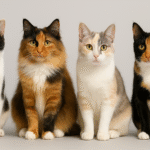
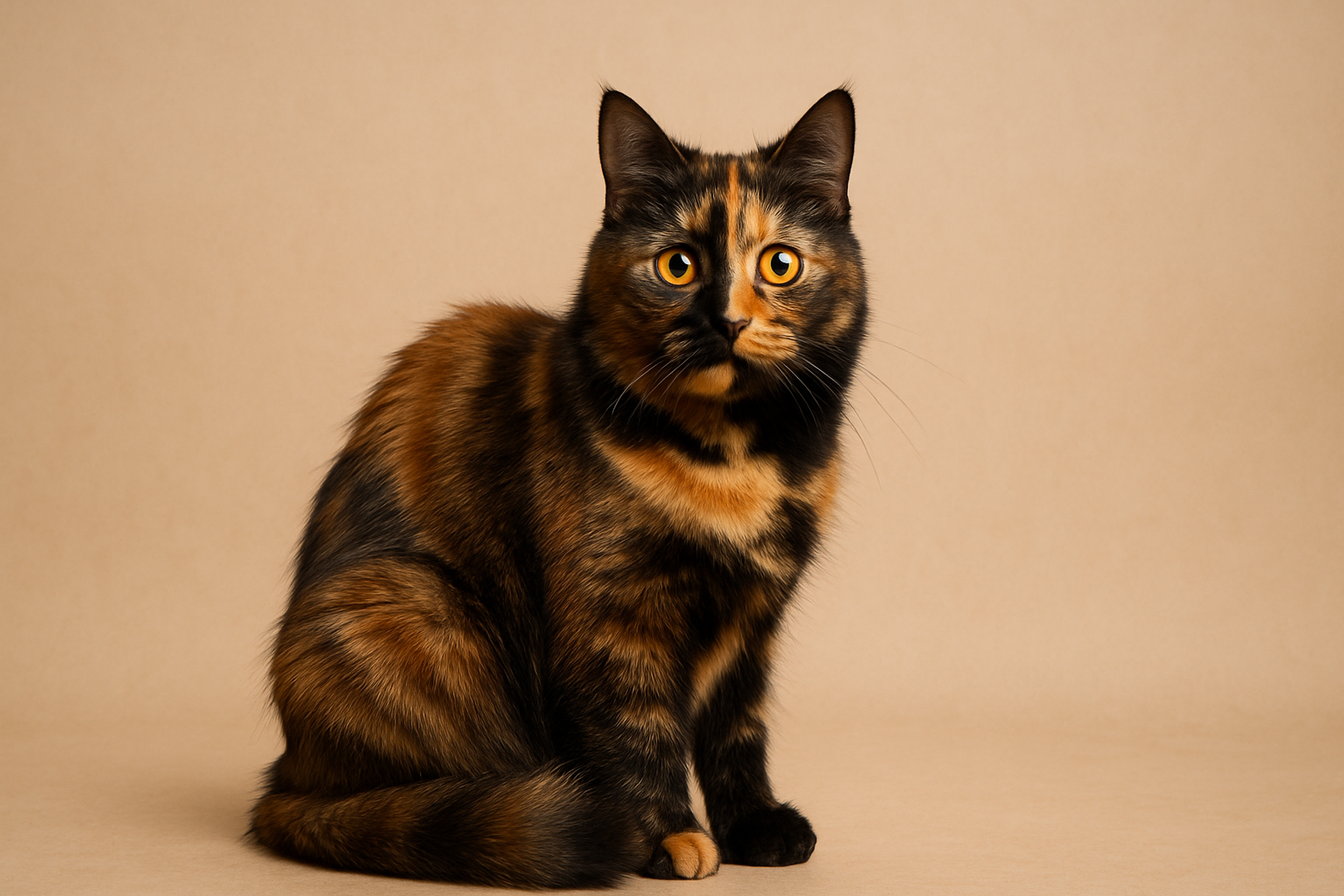
Tortoiseshell cats are hard to miss. That mottled blend of black, orange, and cream is one of the most distinctive coat patterns in the cat world — but tortoiseshell isn’t a breed. It’s a genetic coat pattern that appears across dozens of different breeds, from laid-back Persians to energetic Maine Coons to everyday mixed-breed cats. No two torties look exactly alike.
What tortoiseshell cats share is the genetics behind that striking coloring, and those genetics come with a fascinating quirk: nearly all of them are female. You’ve probably also heard the term “tortitude,” the reputation torties have for being bold and opinionated. Whether that’s linked to genetics or simply what devoted owners notice is still debated, but tortoiseshell cats rarely fade into the background.
Quick Facts About Tortoiseshell Cats
- What it is: A coat pattern, not a breed
- Colors: Black, orange, and cream in classic torties; softer blue, lilac, and fawn in dilute tortoiseshells
- Pattern types: Classic tortoiseshell, dilute tortoiseshell, torbie (tabby and tortie mix)
- Seen in breeds: American Shorthair, Persian, British Shorthair, Maine Coon, and more
- Sex: Almost always female due to X chromosome genetics
- Coat length: Short, medium, or long depending on breed
- Grooming: Low for shorthaired; moderate to high for longhaired torties
- Personality: Often bold and independent, with a reputation for strong opinions
- Lifespan: 12–16 years depending on breed and care
- Good with children: Yes, with proper socialization
- Good with other pets: Depends on individual personality
What Is a Tortoiseshell Cat?
The term tortoiseshell refers specifically to a mottled mix of black and orange-based colors, typically without large areas of white. That’s what separates it from the calico pattern, which includes significant white patches. The size, temperament, and care needs of a tortoiseshell cat depend entirely on the underlying breed, not the coat color.
The pattern has been recognized across cultures for centuries. In Japan, tortoiseshell cats are considered lucky, and male tortoiseshell cats in particular were historically believed to protect ships from storms. In the United States and UK, it’s one of the most commonly seen coat patterns in domestic cats, appearing in both pedigreed and mixed-breed cats alike.
History & Origin of the Tortoiseshell Pattern
The tortoiseshell pattern has appeared in domestic cats for thousands of years, emerging naturally as cats spread from the Middle East through Europe and Asia. Because the pattern requires a specific genetic combination tied to the X chromosome, it developed independently across many cat populations rather than through deliberate breeding. Historical artwork and manuscripts from multiple cultures include cats with recognizable tortoiseshell markings, suggesting the pattern has been widespread throughout recorded cat history.
The name comes from the resemblance to tortoiseshell material, a brownish-orange mottled substance historically used to make combs, frames, and decorative objects. In other parts of the world, the pattern goes by different names. In Japan, tortoiseshell cats are called mike neko when they also carry white, and simply torashineko for the classic blended pattern. In some European countries, the pattern is called “écaille de tortue,” meaning turtle scale.
Why Are Tortoiseshell Cats Almost Always Female?
The reason nearly all tortoiseshell cats are female comes down to how coat color is encoded on the X chromosome. Orange and black coat colors are controlled by genes located on the X chromosome. Females have two X chromosomes (XX), which means they can carry one gene for orange and one for black, producing both colors in the coat. Males have only one X chromosome (XY), so they typically express only one color, either orange or black, not both.
The distinctive blended distribution of colors happens through X-inactivation, where one X chromosome is randomly switched off in each cell during early development. The result is the irregular, asymmetrical patches that make every tortoiseshell coat completely unique.
Male tortoiseshell cats do exist but are extremely rare, occurring in roughly 1 in 3,000 tortoiseshell cats. When they do appear, it’s typically due to a genetic anomaly where the cat has two X chromosomes and one Y chromosome (XXY), known as Klinefelter syndrome. These males are almost always sterile and may face additional health challenges as a result.
Tortoiseshell Cat Coat Patterns and Colors
The classic tortoiseshell pattern features a blended, mottled mix of black and orange, usually with hints of cream woven through. Unlike the calico pattern, which has clearly defined patches with significant white, tortoiseshell coats look more intermingled, as if the colors have been layered rather than placed side by side. No two tortoiseshell coats are identical.
The dilute tortoiseshell cat is a softer variation of the classic pattern. Instead of bold black and orange, the colors are replaced with muted versions — blue-gray and cream, lilac and fawn, or similar pastel shades. The effect is cooler and quieter than the classic tortoiseshell, but just as distinctive. Dilute tortoiseshells are caused by a separate dilution gene that reduces the intensity of the pigmentation without changing the underlying pattern.
A torbie combines tortoiseshell and tabby patterns, resulting in a coat where the tortoiseshell color areas also show tabby striping or mackerel markings. These cats are sometimes called patched tabbies, and the layering of two distinct patterns within the same coat makes them especially complex and visually interesting.
Tortoiseshell vs Calico Cats
Tortoiseshell and calico cats are frequently confused because both feature orange and black coloring. The key difference is white. Calico cats have significant white patches alongside the orange and black, while tortoiseshell cats have little or no white, giving the coat a more blended, intermingled appearance. Calico patterns tend to be more high-contrast and clearly defined, while tortoiseshell coats look more like the colors have been mixed together.
Tortoiseshell Cat Personality & Temperament
Tortoiseshell cats don’t have a single personality type because tortoiseshell is a pattern, not a breed. A tortoiseshell Maine Coon will have the Maine Coon’s sociable, easygoing nature. A tortoiseshell Persian will be calm and quiet. A tortoiseshell American Shorthair will be adaptable and independent. The underlying breed shapes the personality, not the coat color.
That said, tortoiseshell cat owners frequently describe their cats as bold, opinionated, and strongly bonded to one person. The term “tortitude” gets used a lot in the tortoiseshell cat community, referring to the strong-willed, assertive streak that many tortie owners notice in their cats. Whether this reflects genuine personality traits linked to being predominantly female, the specific breeds that most commonly carry the pattern, or simply the observations of devoted owners is genuinely debated. What’s consistent is that tortoiseshell cats tend to make their presence known.
Tortoiseshell Cat Grooming & Shedding
Grooming needs for a tortoiseshell cat depend entirely on coat length, which varies with the breed. A shorthaired tortoiseshell like an American Shorthair or British Shorthair needs only a weekly brush to remove loose hair. A longhaired tortoiseshell like a Persian or Maine Coon will need brushing three to four times a week, with daily attention during seasonal shedding periods to prevent matting, particularly around the armpits, behind the ears, and along the breeches.
Beyond coat care, the usual basics apply: nail trims every couple of weeks, regular ear checks, and dental care. Starting grooming early and keeping sessions positive makes a significant difference in how cooperative your cat will be over time.
Activity & Play
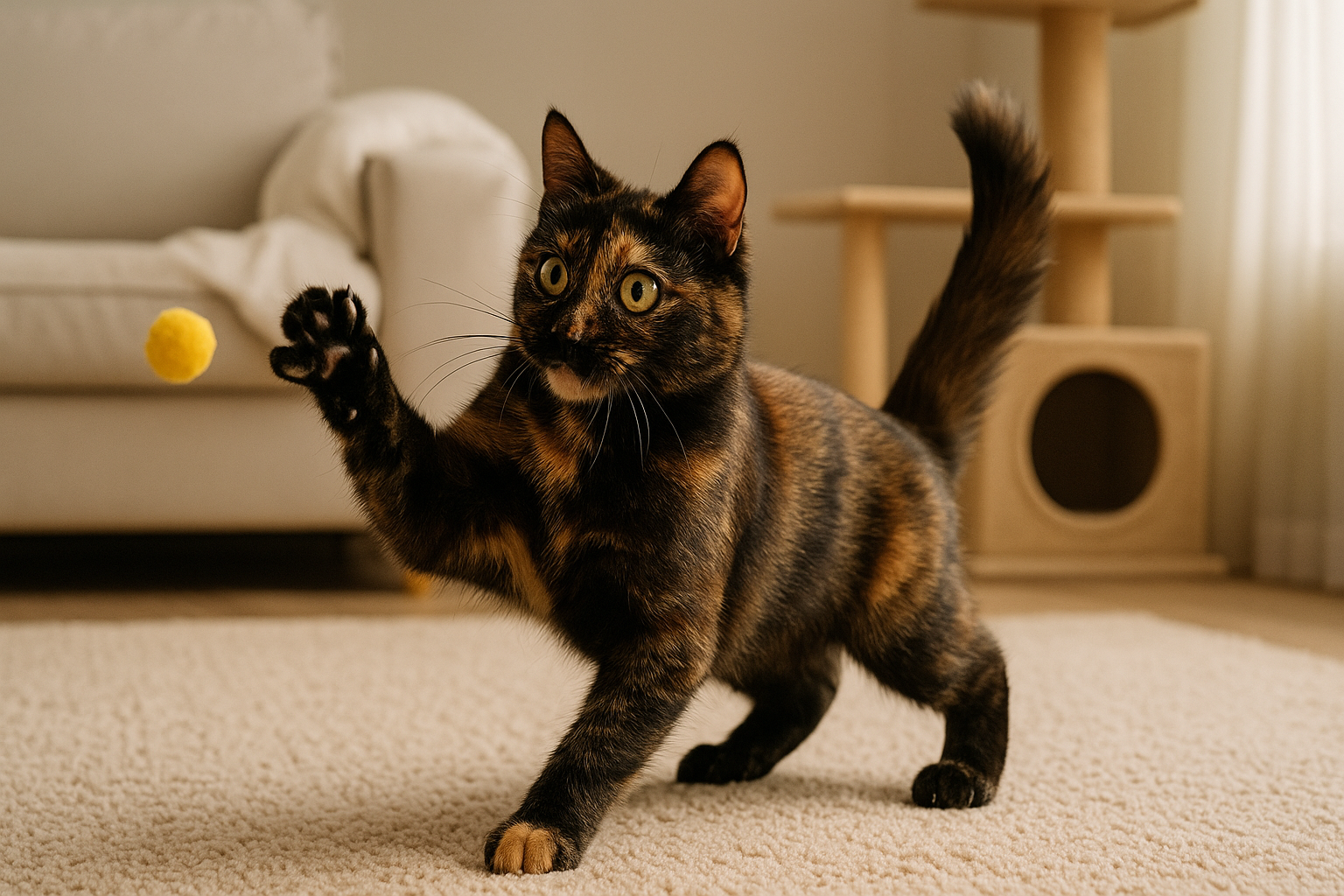
Activity level in tortoiseshell cats varies with the breed. A tortoiseshell Bengal or tortoiseshell Maine Coon will need significantly more daily stimulation than a tortoiseshell Persian or tortoiseshell Ragdoll. The pattern itself doesn’t determine energy level, so it’s worth researching the specific breed you’re considering.
Most tortoiseshell cats share a strong curiosity and engagement with their environment. Interactive play, puzzle feeders, window perches, and rotating toy selections work well for most. Vertical space is also worth prioritizing — cat trees and wall perches give them somewhere to climb and observe, which suits the naturally watchful personality many tortie owners describe.

What Do Tortoiseshell Cats Eat?
There’s no special diet required for tortoiseshell cats. Nutritional needs are determined by breed, age, size, and activity level rather than coat color. The principles are the same as for any cat: a high-protein, meat-based diet with animal protein listed as the first ingredient, appropriate portion control, and a mix of wet and dry food that supports hydration and dental health.
Fresh water should always be available. Wet food is worth including in the rotation for most cats since it supports kidney and urinary health through higher moisture content. A cat water fountain encourages drinking, which is particularly helpful for cats that aren’t naturally drawn to still water.
Tortoiseshell Cat Health & Lifespan
Most tortoiseshell cats live 12 to 16 years, with lifespan determined by breed, genetics, and care rather than coat color. The tortoiseshell pattern itself carries no breed-specific health risks. Health considerations depend entirely on the underlying breed, so a tortoiseshell Persian would have Persian health concerns, and a tortoiseshell Maine Coon would have Maine Coon health concerns.
The exception is male tortoiseshell cats with Klinefelter syndrome, who may face additional health challenges including joint pain, obesity risk, and a shorter lifespan. These cases are rare but worth knowing about. For all tortoiseshell cats, regular vet checkups, a quality diet, and keeping them at a healthy weight are the most important contributors to long-term health.
Family Compatibility
Tortoiseshell cats can make excellent family companions, particularly when properly socialized from an early age. Many form strong bonds with one person in the household while still being friendly with others. Their suitability with children and other pets depends more on the individual cat and underlying breed than on the tortoiseshell pattern itself.
If you’re choosing a tortoiseshell cat with family compatibility in mind, research the breed first. A tortoiseshell Ragdoll will be calm and tolerant in a busy household. A tortoiseshell Bengal will need more stimulation and space. The coat is the starting point, but the breed shapes the living experience.
Recommended Supplies for a Tortoiseshell Cat
Supply needs vary with the breed, but a few things apply across the board. Focus on enrichment, comfort, and a grooming setup appropriate for coat length.
- Slicker brush or wide-toothed comb suited to coat length
- Cat tree or climbing structure appropriate for the breed’s energy level
- Interactive toys and puzzle feeders for mental stimulation
- Wide, shallow food and water bowls to avoid whisker fatigue
- Cat water fountain to encourage hydration
- Roomy, consistently clean litter box

Tortoiseshell Cat Price
Because tortoiseshell is a pattern rather than a breed, many tortoiseshell cats are available through shelters and rescues at standard adoption fees, typically between $50 and $150 depending on the organization. If you’re looking for a pedigreed tortoiseshell — such as a tortoiseshell Persian or tortoiseshell Maine Coon — costs vary by breeder, pedigree, and region, typically ranging from $800 to $2,000 or more for a well-bred kitten.
Wherever you look, prioritize finding a healthy, well-socialized cat over chasing a specific coat pattern. Ask breeders about health testing and temperament, and if adopting, spend time with the cat before committing.
Tortoiseshell Cat FAQs
Are tortoiseshell cats always female?
Almost always, yes. The tortoiseshell pattern requires two X chromosomes to express both orange and black coat colors simultaneously. Male tortoiseshell cats exist but are extremely rare, occurring in roughly 1 in 3,000 tortoiseshell cats, and are almost always sterile.
What is a dilute tortoiseshell cat?
A dilute tortoiseshell has a softer version of the classic pattern. The bold black and orange are replaced by blue-gray and cream, or lilac and fawn, giving the coat a more muted, pastel appearance. The pattern is caused by a separate dilution gene that reduces the intensity of the pigmentation.
What is the difference between a tortoiseshell cat and a calico?
The key difference is white. Calico cats have significant white patches alongside orange and black. Tortoiseshell cats have little or no white, giving the coat a more blended, intermingled appearance. Calico patterns tend to be more high-contrast and clearly defined, while tortoiseshell coats look more layered and mixed.
What is tortitude?
Tortitude is a term used by tortoiseshell cat owners to describe the bold, assertive, and opinionated streak that many torties seem to have. Whether it’s genuinely linked to genetics or simply a reflection of strong individual personalities is debated, but the term resonates widely among people who have lived with tortoiseshell cats.
How long do tortoiseshell cats live?
Most tortoiseshell cats live 12 to 16 years. Lifespan is determined by breed, genetics, and care rather than coat color. The tortoiseshell pattern itself has no effect on longevity.
Are tortoiseshell cats a specific breed?
No. Tortoiseshell is a coat pattern that appears across many different breeds including the American Shorthair, Persian, British Shorthair, and Maine Coon. The breed determines personality, size, and care needs.
Are Tortoiseshell Cats Right for You?
Tortoiseshell cats appeal to people who want a cat with a little extra presence. Whether the pattern appears on a laid-back Persian or an energetic Bengal, torties tend to leave an impression thanks to those rich blended colors and the confident personalities many owners swear come with them.
Because tortoiseshell is a pattern rather than a breed, the experience of living with one depends heavily on the cat underneath the coat. If you want unique markings, an expressive personality, and a cat that makes itself known, a tortie might be exactly what you’re looking for.
Debbie Reid is the founder and chief editor of CatPedia.net, with over 25 years of hands-on experience in feline care, rescue, and behavior research. Inspired by her rescue cats Snickers and Bigboy, she collaborates with animal welfare resources and consults veterinary literature to turn complex feline health, nutrition, and behavior topics into clear, actionable guides.