Some cats demand attention the second you sit down. Others barely notice you’re in the room. The American Shorthair cat sits right in the middle, and that balance is exactly why so many people end up loving them.
They’re easy to live with in a way that doesn’t feel boring. Affectionate without being clingy, playful without being chaotic, and independent enough to handle a busy household. That said, they do have a moderate prey drive and can get bored without enough stimulation, so they’re not quite as low-maintenance as they first appear.
If you’re thinking about bringing one home, it helps to know what that balance actually looks like day to day, from personality and habits to health, care, and long-term expectations.
Quick Breed Facts
- Origin: United States (descended from European working cats)
- Breed registries: CFA, TICA, ACFA, FIFe
- Weight range: 8–15 lbs
- Lifespan: 15–20 years
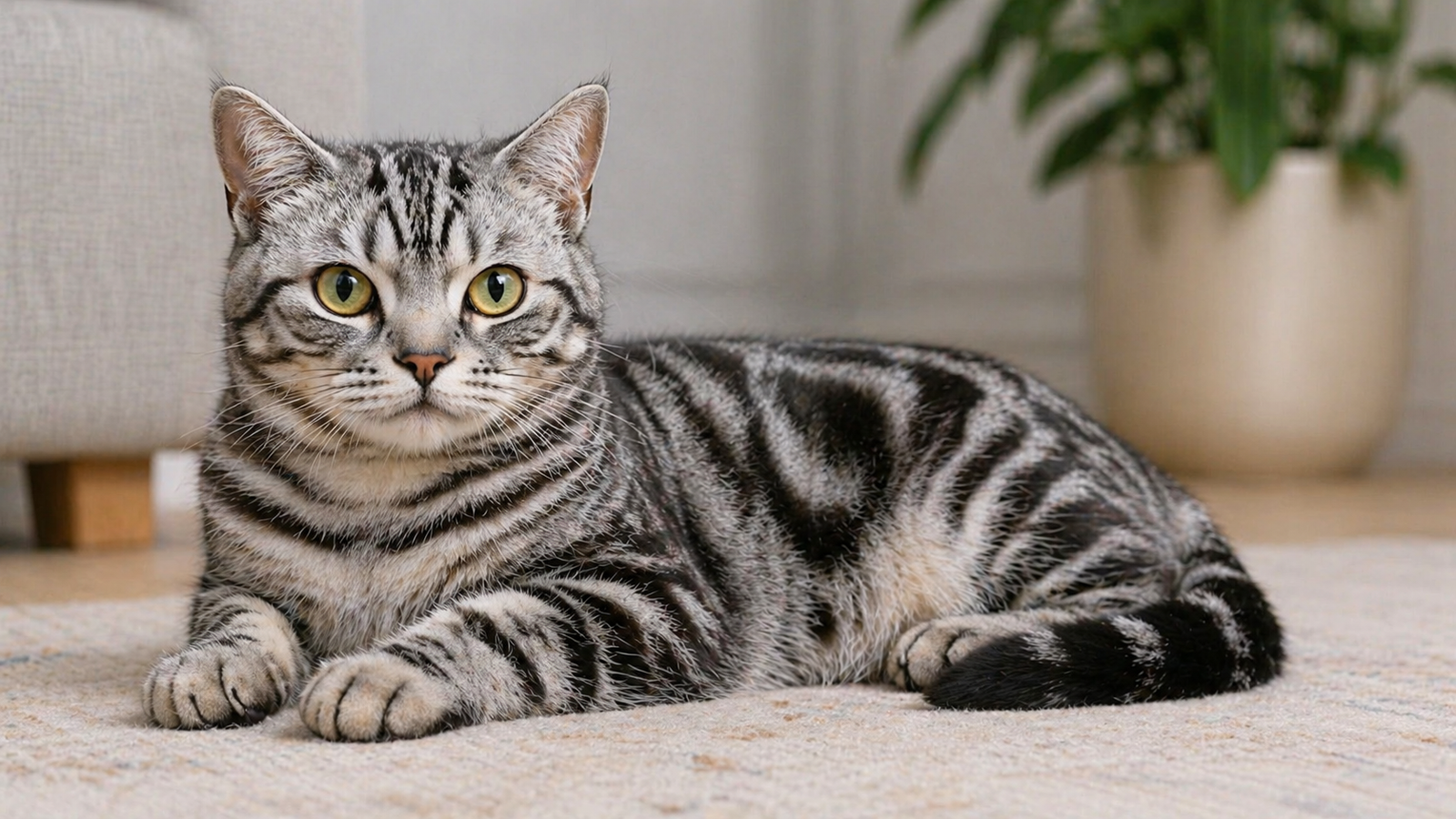
- Coat: Short, dense, weather-resistant
- Colors and patterns: 80+ varieties; silver tabby is most iconic
- Eye color: Gold, green, blue, or odd-eyed
- Grooming: Low
- Activity level: Moderate
- Affection level: Moderate
- Vocality: Low
- Good with children: Yes
- Good with other pets: Yes
History & Origin of the American Shorthair Cat
The American Shorthair cat has roots that go all the way back to the earliest days of European settlement in North America. These cats arrived on ships crossing the Atlantic, brought along specifically to keep rodent populations under control during the voyage, and later in colonial barns, homes, and warehouses. They were working animals first, companions second, and that heritage shows in their tough, adaptable nature.
By the early 1900s, cat fanciers began selectively breeding these shorthaired cats for consistent type, temperament, and appearance. The breed was one of the original five recognized by the Cat Fanciers’ Association (CFA) in 1906. Originally called the “Domestic Shorthair,” the breed was officially renamed the American Shorthair in 1966 to better reflect its heritage and distinguish it from random-bred mixed cats. Today it remains one of the most popular pedigreed breeds in the country.
American Shorthair Cat Personality & Temperament
Living with an American Shorthair cat is low-drama in the best possible way. These cats tend to fit into household routines naturally, curious enough to keep things interesting and calm enough that they won’t claw up your curtains out of boredom. They enjoy being near their people but aren’t typically the type to follow you from room to room demanding attention. They’ll find a spot nearby, keep an eye on things, and be ready when you want to engage.
That said, the American Shorthair does have a playful, hunter-brained side. They enjoy stalking toys, watching birds from a window, and solving simple puzzles. They’re smart without being mischievous, and gentle enough to be trusted around young children. If you’re looking for a cat that gets along with nearly everyone and doesn’t require constant entertainment, the American Shorthair fits the bill almost perfectly.
Grooming & Shedding
One of the practical perks of owning an American Shorthair cat is that grooming is genuinely simple. Their short, dense coat doesn’t tangle or mat, and weekly brushing is usually all it takes to keep shedding under control. During spring shedding season, you may want to brush a little more frequently. A rubber grooming glove works especially well for this breed because it removes loose fur while also giving them a gentle massage they tend to enjoy.
Beyond coat care, keep up with the basics: trim nails every one to two weeks, check ears for wax buildup, and brush their teeth regularly. The American Shorthair is a low-fuss cat by nature, so a consistent routine is easy to establish and stick to.
Activity & Play
American Shorthairs are moderately active, not couch potatoes but not wall-climbers either. They enjoy daily play sessions, especially anything that taps into their natural hunting instincts like feather wands, crinkle balls, or even a quick laser pointer session before dinner. They also appreciate window perches where they can watch the world go by, which doubles as mental stimulation without any effort on your part.
Puzzle feeders are a particularly good fit for this breed. American Shorthairs are smart enough to stay interested in them and food-motivated enough to stick with it, which helps prevent the boredom snacking that can lead to weight gain in less active indoor cats.

What Do American Shorthair Cats Eat?
American Shorthair cats do best on a high-protein, meat-based diet. Look for cat food where an animal protein like chicken, turkey, or salmon is listed as the first ingredient. Avoid foods that rely heavily on fillers like corn, wheat, or soy, which offer little nutritional value for obligate carnivores. A mix of wet and dry food works well for most American Shorthairs: wet food helps with hydration and supports urinary health.
This breed has a healthy appetite and can be prone to weight gain if overfed or under-stimulated, so measured meals are usually better than free-feeding. Fresh water should always be available, and a cat water fountain can help encourage drinking if your cat isn’t naturally drawn to a still bowl.
Health & Lifespan
The American Shorthair is generally one of the healthier pedigreed breeds, partly because of its diverse working-cat gene pool. American Shorthair cats typically live 15 to 20 years with good care, making them one of the longer-lived breeds you can choose. Routine vet visits, a quality diet, and keeping them indoors all contribute to a long, healthy life.
The main health concern to be aware of is hypertrophic cardiomyopathy (HCM), a form of heart disease that can affect some lines of this breed. Responsible breeders screen for this, and regular cardiac checkups are a good idea as your cat ages. Outside of that, American Shorthairs don’t carry a heavy burden of breed-specific conditions, which is part of what makes them such a solid, practical choice.
Family Compatibility
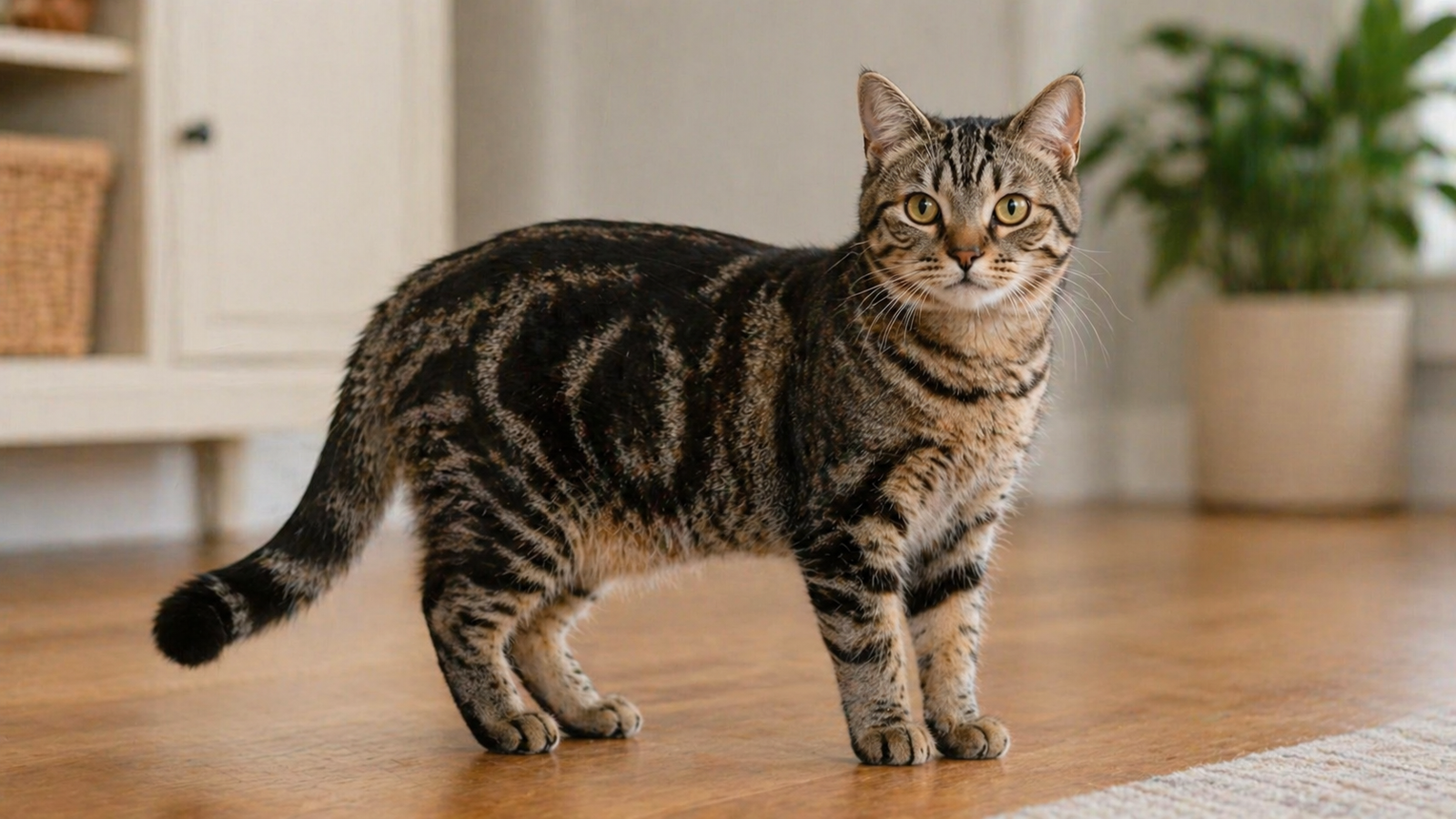
Few breeds handle the chaos of a busy family home as gracefully as the American Shorthair cat. They’re patient with young children who haven’t quite learned how to handle a cat, tolerant of dog housemates, especially if introduced properly, and calm enough not to bolt at every loud noise or surprise visitor. Their adaptability is genuine. This isn’t a breed that just tolerates people, it’s a breed that genuinely enjoys being part of a household.
American Shorthairs form real bonds with their people and appreciate a consistent routine. They don’t tend to suffer from severe separation anxiety, but they do thrive when they have companionship, whether human or animal, during the day.
Recommended Supplies for an American Shorthair Cat
American Shorthairs are easy to care for, but the right setup makes a noticeable difference in how active and content they are day to day. You don’t need anything over-the-top. Solid, reliable basics that support their natural habits go a long way.
Think in terms of movement, comfort, and routine. A sturdy place to climb, something to scratch, and a few ways to stay mentally engaged will cover most of what they need to thrive indoors.
- Wide, shallow food bowl to reduce whisker fatigue
- Cat water fountain to encourage better hydration
- Interactive toys and puzzle feeders for mental stimulation
- Durable scratching post or cardboard lounger
- Mid-height cat tree with solid, stable perches
- Roomy, easy-to-clean litter box

American Shorthair Cat FAQs
Are American Shorthair cats hypoallergenic?
No, American Shorthair cats are not hypoallergenic. All cats produce the Fel d 1 protein that triggers allergies. Their short coat may release slightly less airborne fur than longhaired breeds, but they are not allergy-free.
How much does an American Shorthair cat cost?
Pet-quality American Shorthair kittens from a reputable breeder typically cost between $500 and $1,000. Show-quality kittens from champion lines can range from $1,200 to $2,000 or more. Adoption is also a great option, as many American Shorthair mixes end up in shelters.
Do American Shorthair cats shed a lot?
They shed moderately year-round, with heavier shedding in spring. Weekly brushing keeps it under control, and their short, dense coat doesn’t mat easily.
Are American Shorthair cats good with kids or other pets?
Yes. They’re known for being patient, adaptable, and tolerant, which makes them a great fit for families with children and other pets when introduced properly.
Is the American Shorthair Cat Right for You?
If you want a cat that’s genuinely easy to live with, calm, friendly, healthy, and not too demanding, the American Shorthair cat is one of the best choices out there. It suits first-time cat owners just as well as experienced ones, fits into apartments and larger homes alike, and tends to get along with just about everyone it meets. The 15 to 20 year lifespan means you’re making a real commitment, but for most people that’s a feature rather than a drawback.
The only real caveat is that “easy” doesn’t mean “hands-off.” American Shorthairs still need daily play, regular vet care, and consistent company. Get those basics right, and you’ll have a loyal, low-drama companion for a very long time.
Debbie Reid is the founder and chief editor of CatPedia.net, with over 25 years of hands-on experience in feline care, rescue, and behavior research. Inspired by her rescue cats Snickers and Bigboy, she collaborates with animal welfare resources and consults veterinary literature to turn complex feline health, nutrition, and behavior topics into clear, actionable guides.