Javanese cats are easy to fall for. The silky coat, the vivid blue eyes, and the way they talk to you like they have actual opinions about your day make them one of the more engaging breeds to share a home with. They’re affectionate, people-focused cats that want to be near you, involved with you, and usually talking to you.
What they need in return is real company, daily stimulation, and an owner who has time for them. They don’t do solitude well, and they have no problem making that known. Meet those needs, and they’re exceptional companions. Underestimate what they need, and you’ll have a vocal, destructive cat on your hands.
Quick Breed Facts
- Origin: United States
- Breed registries: CFA, TICA
- Weight range: 5–10 lbs
- Lifespan: 12–16 years
- Coat: Medium-long, silky, no undercoat
- Colors and patterns: Pointed; red, cream, lynx, and tortie points
- Eye color: Blue
- Grooming: Low to moderate
- Activity level: High
- Affection level: Very high
- Vocality: Very high
- Good with children: Yes
- Good with other pets: Yes
History & Origin of the Javanese Cat
The Javanese cat was developed in the United States during the 1970s as an extension of the Balinese breeding program. At the time, the Balinese was already known as the longhaired relative of the Siamese, but it was only recognized in four traditional point colors. Breeders wanted to expand that range.
By crossing Balinese cats with Colorpoint Shorthairs and other Siamese-type cats, they produced a cat with the same elegant build and vocal personality but in a wider palette of point colors including red, cream, lynx, and tortie. The name Javanese was chosen to fit the Oriental naming theme already used for the Balinese and Siamese, not because of any connection to Java or Southeast Asia.
Breed status has shifted over time. CFA originally recognized the Javanese as a distinct breed, though some registries have since reclassified it as a color division of the Balinese. The distinction matters more to breeders and show exhibitors than to anyone looking for a companion.
Javanese Cat Personality & Temperament
Javanese cats are social in the truest sense of the word. They track your movements, insert themselves into whatever you’re doing, and have a vocal commentary ready for most situations. This isn’t a breed that settles quietly into the background. They want to be part of things, and they’ll let you know when they feel left out. For the right person, that level of engagement is the whole appeal. For someone who prefers a more independent cat, it can be exhausting.
They’re also sharp. Javanese cats pick up routines quickly, figure out how things work around the house, and tend to test limits when they’re under-stimulated. The intelligence that makes them so engaging is the same thing that gets them into trouble when they’re bored. They do best with people who are home often, enjoy interacting with their cat, and can keep up with an animal that’s always thinking about what to do next.
Javanese Cat Appearance & Physical Traits
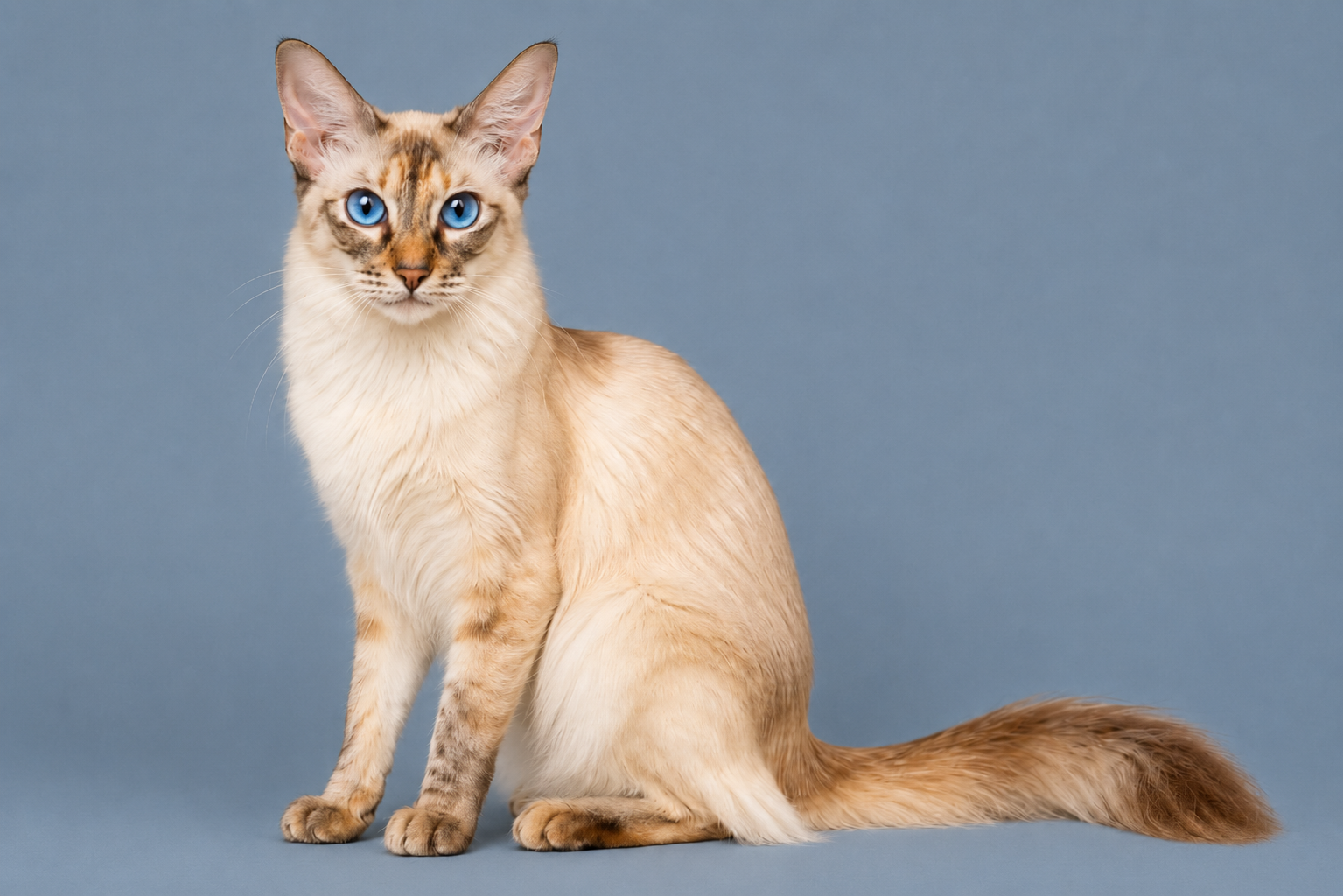
The Javanese has the lean, angular build typical of Oriental-type breeds. They have long legs, a tubular body, and a wedge-shaped head that gives them a distinctly elegant look. The ears are large and wide-set, the tail is long and tapered, and the eyes are a consistent vivid blue regardless of point color.
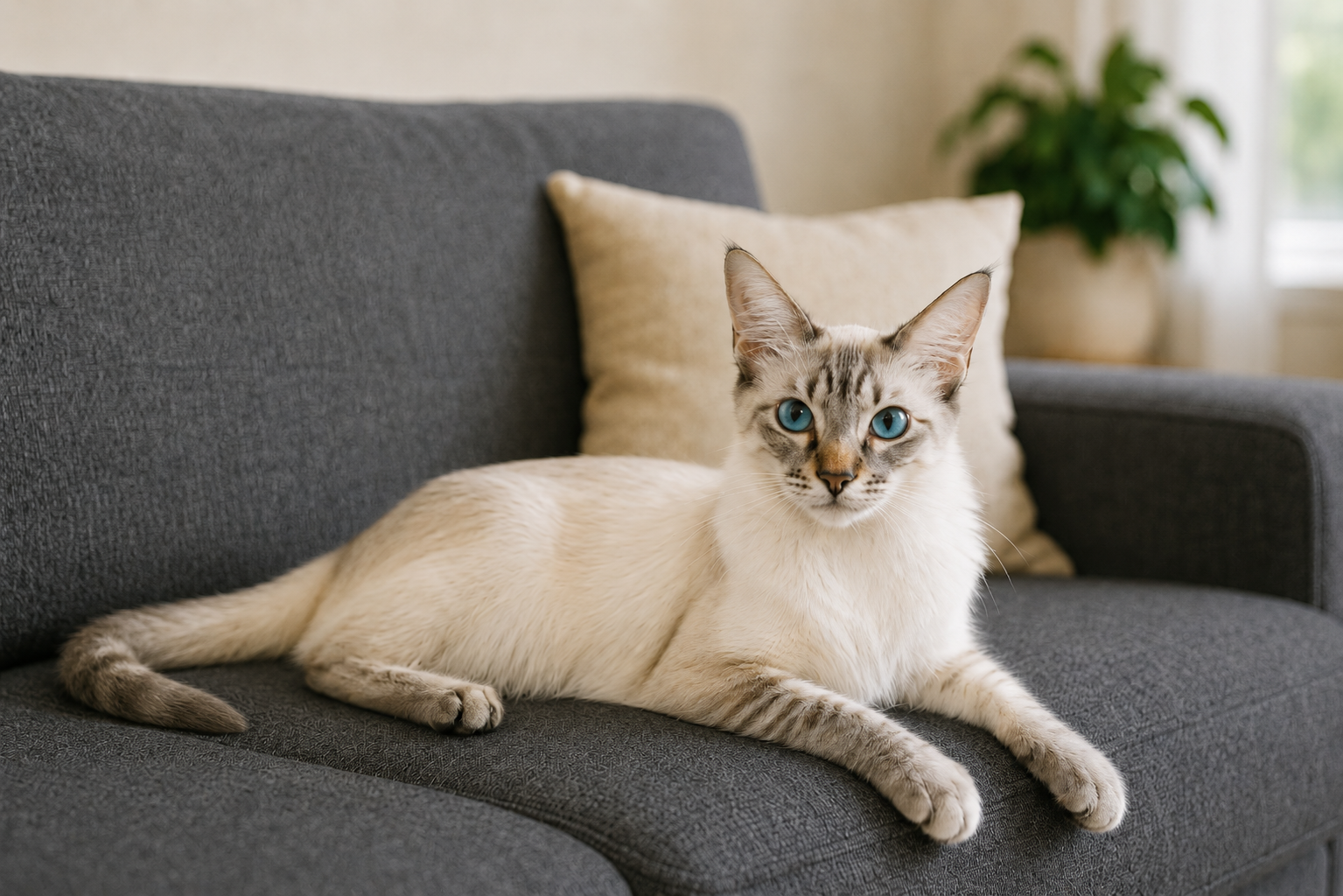
What sets the Javanese apart from the Balinese is the color. While Balinese cats come in the four classic Siamese points, Javanese cats carry the extended palette: red, cream, lynx, and tortie points in various combinations. The coat is medium-long and silky, lying close to the body without the bulk of a double-coated breed.
Javanese Cat Grooming & Shedding
The Javanese coat looks high-maintenance but isn’t. Because there’s no dense undercoat, it doesn’t mat the way many longhaired breeds do. A brush once or twice a week is enough to keep it smooth and manage everyday shedding. During heavier shed seasons in spring and fall, slightly more frequent brushing helps, but it’s never a big production with this breed.
Beyond coat care, the standard basics apply: nail trims every couple of weeks and regular ear checks. Javanese cats can be prone to periodontal disease, so dental care is worth taking seriously from early on, whether that’s brushing or dental treats alongside routine vet cleanings.
Activity & Play
Javanese cats are athletic, agile, and relentlessly curious. They climb, jump, and investigate, and they need an environment that gives them real outlets for that energy. A tall cat tree is a start, but it won’t be enough on its own. Daily interactive play is necessary with this breed, not optional. Feather wands, puzzle feeders, and anything that taps into their hunting instincts all work well.
They’re also a breed that benefits from having a companion animal, especially in households where someone is out for long stretches during the day. A bored Javanese doesn’t sit quietly and wait. They find something to do, and it’s rarely something you’d have chosen for them. Leash training is worth considering for owners who want to add outdoor stimulation without free roaming.

Javanese Cat Health & Lifespan
Javanese cats generally live between 12 and 16 years, with some reaching beyond that with consistent care. As a Siamese-related breed, they carry some of the same hereditary health risks. Progressive retinal atrophy (PRA) is the most notable, a genetic condition that can lead to gradual vision loss. Responsible breeders screen for this, so asking about testing before buying from a breeder is sensible. Respiratory issues and a predisposition toward dental disease also appear in the breed, along with occasional cardiac concerns.
Diet plays a role in keeping Javanese cats healthy long-term. A high-protein, meat-based food supports their lean, active build, and wet food is worth including regularly to support hydration and urinary health. Because they’re active cats, weight gain is less of a concern than with lower-energy breeds, but it can become an issue in cats that are well-fed but under-stimulated. Regular vet visits and a baseline cardiac screening as they age are good practices for this breed.
Family Compatibility
Javanese cats do well in active households where people are home regularly and actually want a cat that participates in daily life. They tend to bond with the whole family rather than one person, handle children well when the kids know how to interact with cats respectfully, and generally get along with other pets when introduced gradually. Their high energy and confident temperament mean they’re rarely intimidated by dogs.
They’re less suited to households where long stretches of solitude are the norm. A Javanese left alone for most of the day without company may become vocal, anxious, or destructive. If your schedule keeps you away often, consider adopting two so they have company when you’re not home.
Recommended Supplies for a Javanese Cat
Focus on enrichment and vertical space above everything else.
- Tall, sturdy cat tree with multiple levels and platforms
- Interactive wand toys and rotating puzzle feeders
- Window perch for passive mental stimulation
- Soft, cozy bed or heated pad for downtime near where you spend time
- Wide, shallow food and water bowls to reduce whisker fatigue
- Roomy litter box kept consistently clean

Javanese Cat Price and Cost
Javanese kittens from reputable breeders typically cost between $1,000 and $2,500, depending on coat quality, point color, and breeder reputation. Rarer point variations and show-quality cats can push toward the higher end. The price reflects the health screening, socialization, and selective breeding that go into producing a well-tempered, healthy Javanese. Breed-specific rescues do exist, and because Javanese cats are sometimes rehomed by owners who underestimated their social needs, adult cats occasionally come available with adoption fees well below breeder prices.
Javanese Cat FAQs
Are Javanese cats hypoallergenic?
No cat is truly hypoallergenic. Some people with allergies may tolerate Javanese cats better because of their single-layer coat, but you should spend time with one before bringing one home.
What is the difference between a Balinese and a Javanese cat?
The main difference is color. Balinese cats have the traditional Siamese point colors, while Javanese cats have extended point colors such as red, cream, lynx, and tortie.
Do Javanese cats meow a lot?
Yes. Javanese cats are very vocal and often “talk” to their people throughout the day.
How long do Javanese cats live?
Most Javanese cats live 12 to 16 years with proper care, though some may live longer.
Are Javanese cats good with kids and other pets?
Yes, they usually do well with respectful children and cat-friendly pets when introductions are handled gradually.
Is the Javanese Cat Right for You?
The Javanese is a cat that gives a lot and asks for a lot in return. They’re interactive, affectionate, and entertaining to live with, but they need an owner who’s present, engaged, and comfortable with a cat that has opinions about everything.
If that sounds like your kind of cat, the Javanese delivers. If you want a more independent cat, this probably isn’t the right breed. Their need for attention and interaction is part of who they are, not something you can train out of them.
Debbie Reid is the founder and chief editor of CatPedia.net, with over 25 years of hands-on experience in feline care, rescue, and behavior research. Inspired by her rescue cats Snickers and Bigboy, she collaborates with animal welfare resources and consults veterinary literature to turn complex feline health, nutrition, and behavior topics into clear, actionable guides.