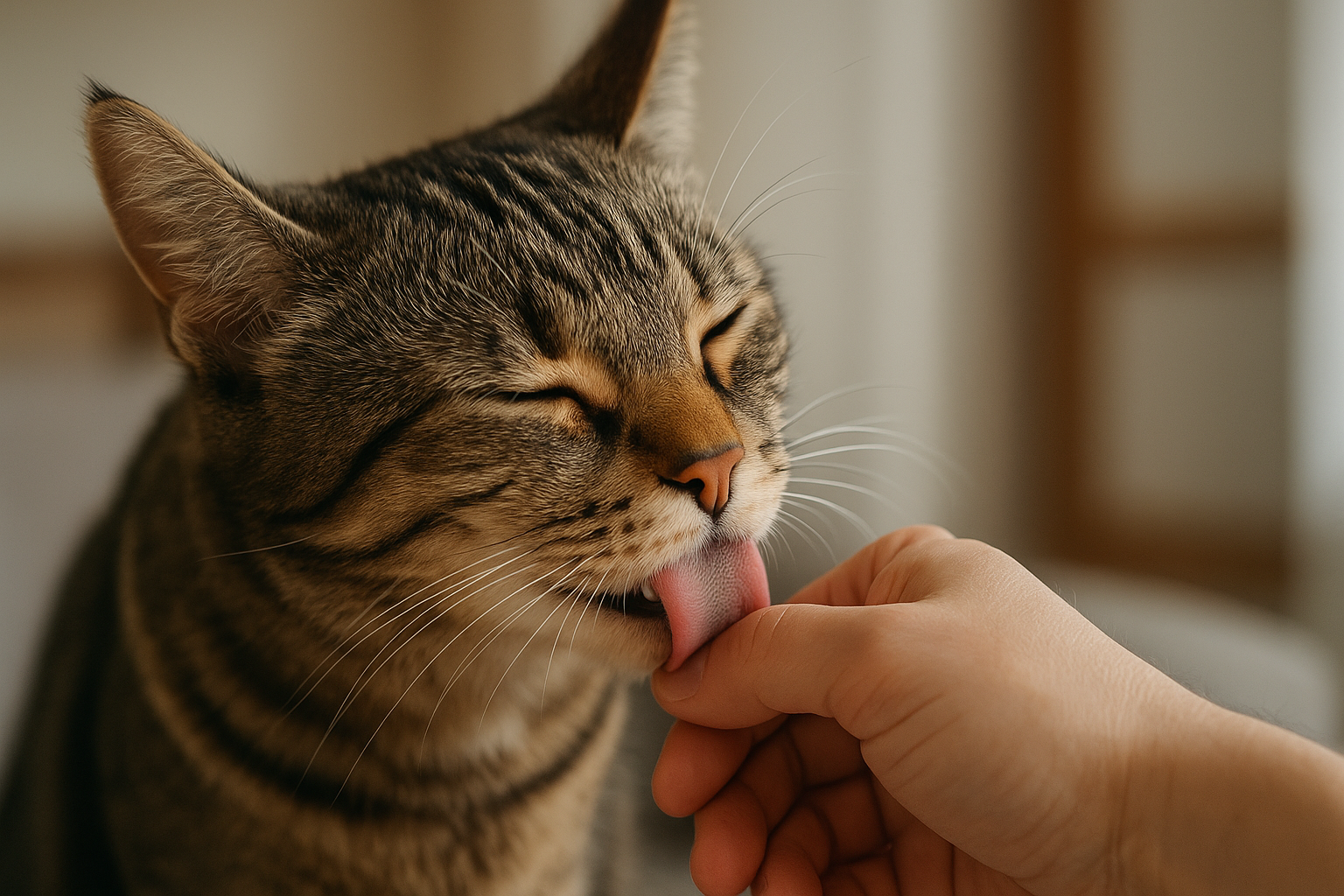
You’re relaxing on the couch watching TV when your cat jumps up next to you and starts licking your hand. It’s sweet, weird, and a little scratchy.
Licking is one of the most common ways cats communicate with the people they trust, but the reason behind it isn’t always the same. Sometimes it’s affection. Sometimes it’s the salt on your skin. Sometimes it’s your cat reminding you that you’re part of the family and, apparently, due for a proper grooming.
So why does your cat lick you? Let’s break down the six most common reasons, from pure affection to signs that something may be off.
6 Reasons Your Cat Licks You
They See You as Family
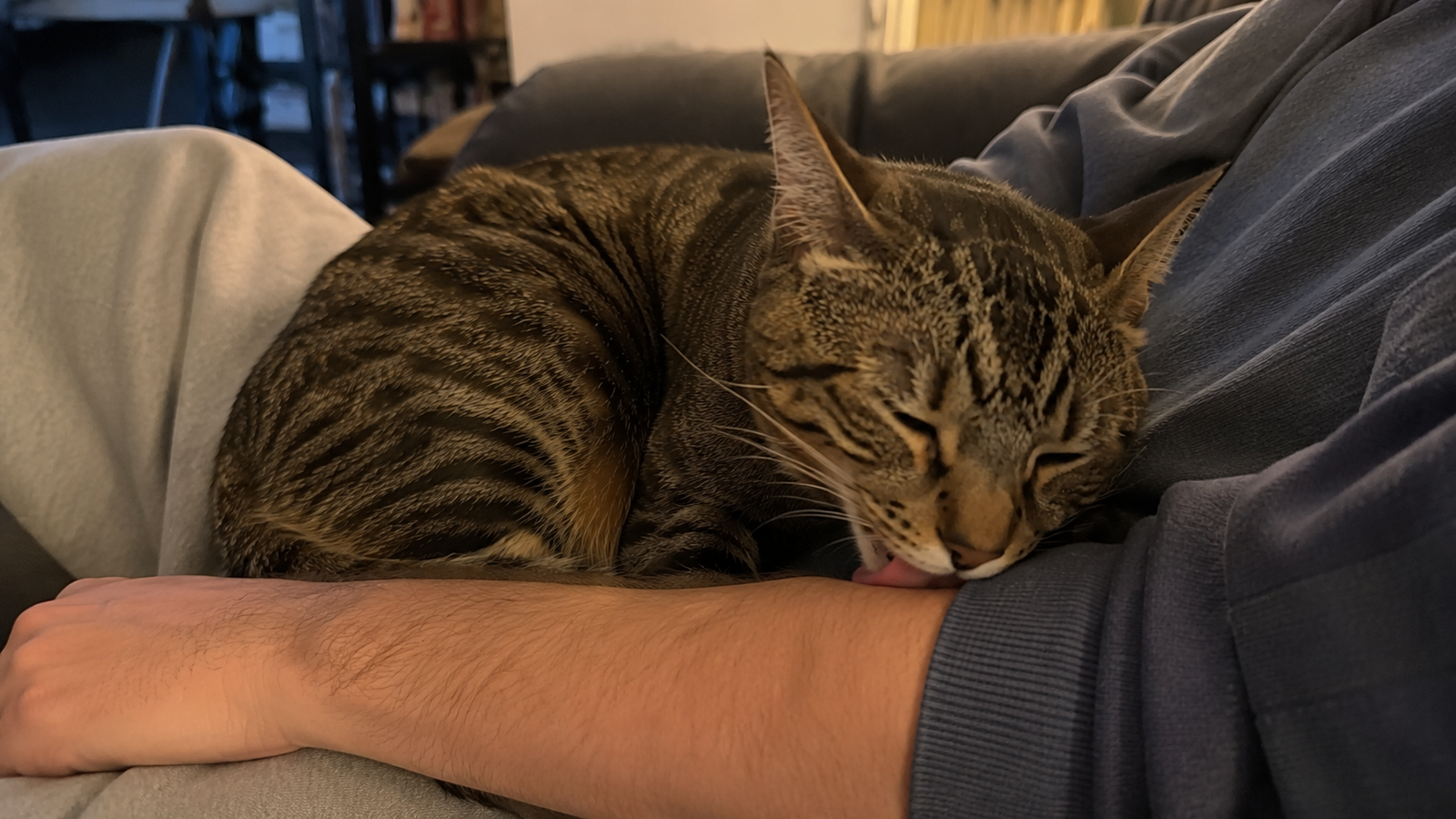
When your cat licks you, there’s a good chance they see you as part of their social group.
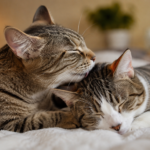
Mother cats begin grooming their kittens from birth, and grooming continues to play a social role as cats grow. Cats that share a close bond often lick one another around the head, face, and neck, a behavior known as allogrooming.
Your cat may extend that same behavior to you. If they lick you during a calm moment, especially while curled in your lap or kneading, it’s usually a sign that they feel safe and connected to you.
That doesn’t necessarily mean your cat thinks you’re another cat, or that allogrooming is a declaration of love in the human sense. The behavior reinforces familiarity and signals that another individual is trusted rather than threatening. In cat terms, you’ve been accepted into the inner circle.
This kind of licking often appears alongside other signs of affection, including slow blinking, head bunts, purring, and choosing to sleep close to you.
They’re Marking You With Their Scent
Cats are territorial by nature, and scent is their favorite way to stake a claim on what’s theirs. Every lick leaves a faint trace of your cat behind, filing you under “mine” in a language only other cats can read.
Scent sharing also keeps a kind of group smell going among everyone your cat lives with, human and animal alike, and licking is one way your cat keeps you folded into it.
Head bunts and cheek rubs work the same way, using scent glands around the face to leave the same kind of mark. Between the licks, the bunts, and the rubs, your cat is telling you the same thing: you’re theirs.
They Like the Way You Taste
Your cat may lick you because something on your skin tastes or smells interesting.
Sweat can leave behind a salty residue, especially after exercise or on a hot day. Traces of food may also remain on your fingers after cooking or eating, giving your cat another reason to investigate.
Lotions, soaps, and other scented products can catch their attention too. Be careful with anything medicated, though. Minoxidil and fluorouracil cream are two topical medications that can be extremely dangerous to cats even in tiny amounts. Keep treated areas covered, and if your cat licks the area by accident, contact your veterinarian or the ASPCA Animal Poison Control Center right away.
Otherwise, an occasional lick is usually just your cat doing a quick taste test.
They Want Your Attention
Cats are quick studies, and they’ve almost certainly figured out that licking gets a reaction out of you.
If you’ve ever laughed, talked to them, or reached over to pet them mid-lick, they noticed. To your cat, that’s a request that worked, and they’re likely to try it again. Licking can become their way of asking for food, play, scratches, or just for you to put the phone down for a minute.
This version tends to show up most in cats who don’t get much active playtime during the day. It’s usually easy to spot: the licking starts around predictable moments, like when dinner’s running late or right after you sit down for the first time all evening, and it stops the second you give them what they’re after.
They Find Comfort in It
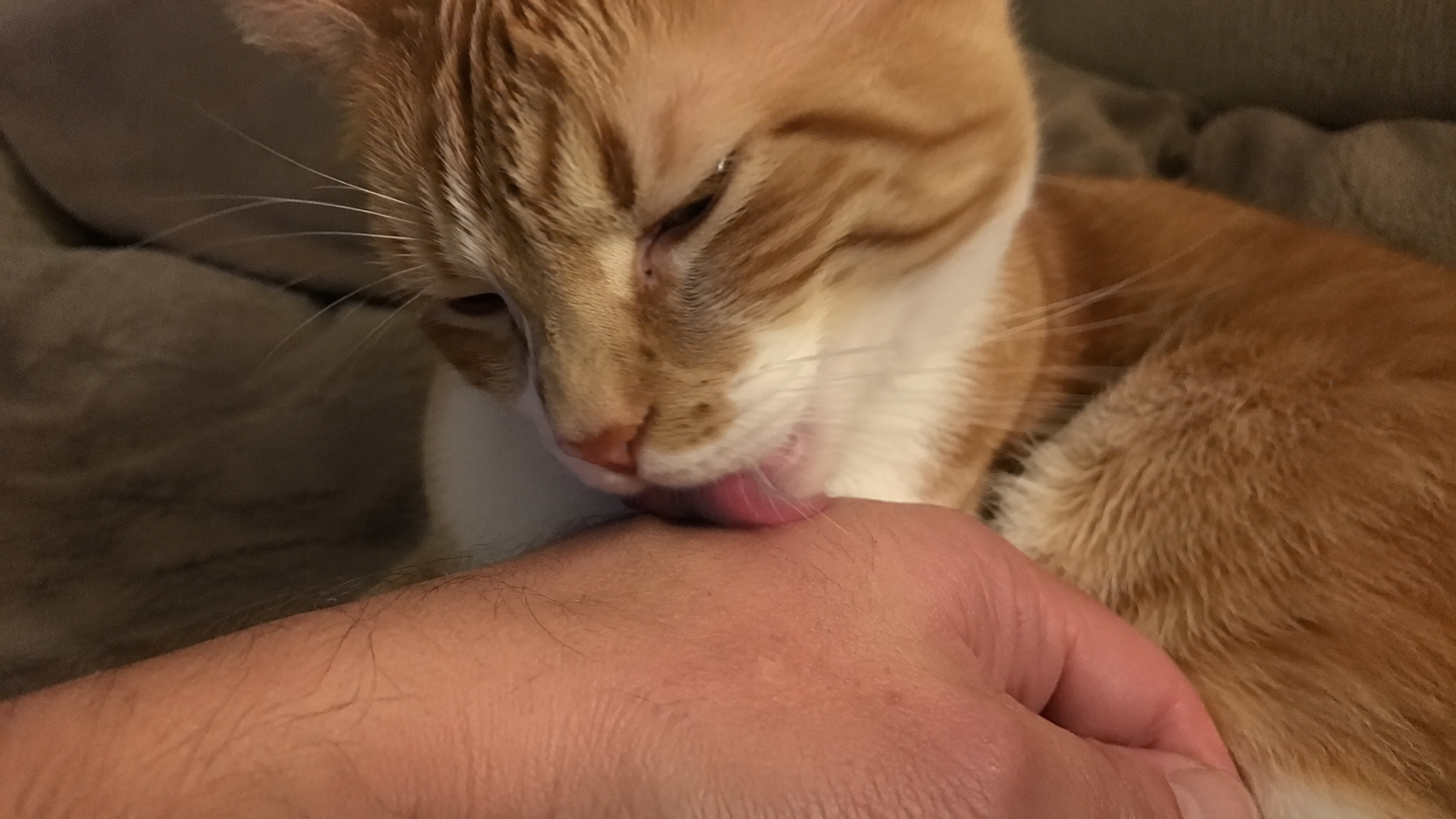
Grooming was one of the first things a kitten ever felt, so it makes sense the motion stays comforting long after they’ve grown up. Some cats lick while kneading, purring, or sinking into a favorite blanket, usually when they’re at their most relaxed.
Early weaning has been tied to a few repetitive habits in cats, like wool sucking and overgrooming, and licking sits in that same general family of comfort-seeking behavior. But that doesn’t mean every cat who licks people was separated from their mother too soon. Most of the time, it’s just a familiar, soothing motion your cat has held onto.
If your cat licks you while kneading and purring at the same time, they’re likely in full comfort mode, and it’s one of the clearest signs of trust a cat can show.
They’re Feeling Stressed or Anxious
Sometimes licking has less to do with you and more to do with what your cat is feeling. Cats can be more sensitive to change than many people realize. A move, a new pet or baby in the home, a shift in schedule, construction noise, houseguests, or the loss of another resident cat can all be enough to unsettle them.
Licking becomes a way to self-soothe, not unlike a person biting their nails under stress. It often appears alongside other signs, including overgrooming themselves, hiding, changes in appetite or litter box habits, and increased vocalization.
Why Does My Cat Bite Me Then Lick Me?
This combination usually comes down to one of two things: a grooming nibble or overstimulation.
The first is a grooming nibble. Cats groom each other in a lick-nibble-lick rhythm to work loose fur and small knots free, and some cats do the same thing to you. It’s gentle, repetitive, and has nothing to do with aggression or discomfort.
The second is overstimulation. If your cat is licking you while you’re also petting them, the petting is usually the trigger. Even a cat who started out relaxed can reach their limit after enough contact, and the bite that follows tends to be sharper and quick to arrive. The tell is in the few seconds before it happens: a flicking or thumping tail, ears rotating back or flattening, a ripple across the skin on their back, or a sudden stillness where a moment ago they were relaxed.
If the bites stay gentle and your cat’s body language stays loose, there’s no need to stop the licking. If you catch any of those warning signs, pause and let them reset before petting again.
Why Does a Cat’s Tongue Feel Like Sandpaper?
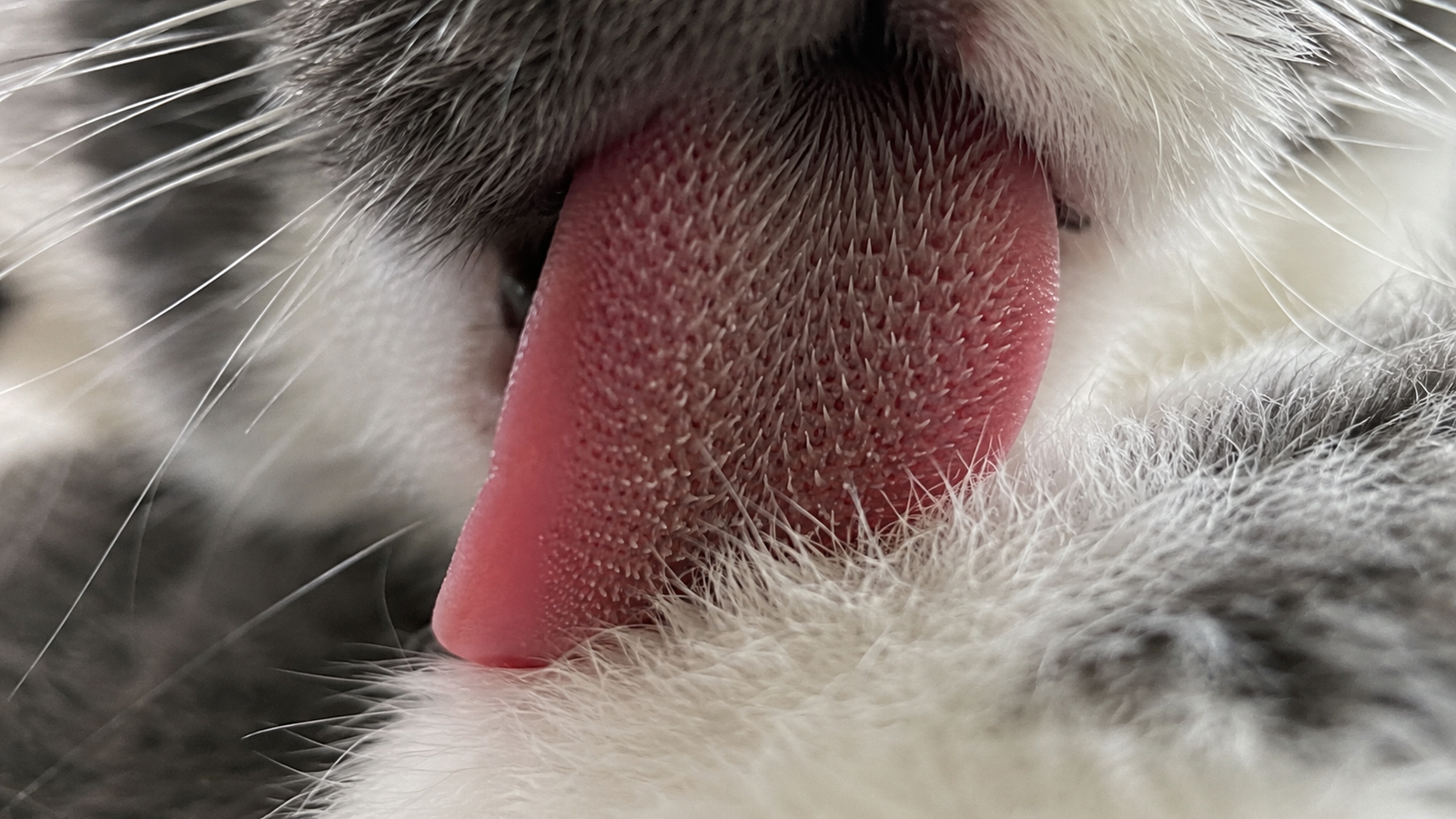
That rough, almost scratchy texture comes from hundreds of tiny, backward-facing spines called papillae. They’re made of keratin, the same material as your cat’s claws, which is why they feel so firm against your skin.
On fur, papillae work like a built-in comb. They pull loose hair and debris out of your cat’s coat and help spread saliva evenly, which cools them down as it evaporates. It’s an efficient system: cats spend up to a quarter of their waking hours grooming, so their tongue has to do a lot of work.
The catch is that your skin isn’t fur. There’s nothing for the papillae to comb through, so all that friction lands directly on you instead of getting absorbed by a coat. That’s the sandpaper feeling.
Is It Safe to Let Your Cat Lick You?
Generally, yes. Cat mouths do carry bacteria, including Pasteurella and Bartonella, but healthy, intact skin is a solid barrier, and most people never have a problem.
One exception is if you have open cuts or broken skin, since they give bacteria a direct way in. It’s also best to keep your cat away from your mouth, eyes, and nose. And if you’ve just applied medication to your skin, keep your cat away from that spot, since the risk is to them rather than to you.
People with weakened immune systems face a higher risk from contact with cat saliva, and young children or older adults may be more vulnerable too.
If your cat licks an open wound, wash it thoroughly with soap and water, and check in with your doctor if the area becomes red, warm, painful, or swollen.
Could the Licking Be Medical?
Medical issues are a real cause of excessive licking, but they’re usually directed at the cat’s own body first. Skin conditions, allergies, parasites, and pain can all lead to overgrooming, particularly around the area that’s bothering them.
When to Call the Vet
Most of the time, your cat licking you doesn’t need a vet visit. But if you notice any of these signs, it’s time to call your veterinarian:
- A sudden increase in licking with no clear cause
- Repeated licking of one specific spot on you or on their own body
- Fur loss, skin irritation, or bald patches from overgrooming
- Licking paired with hiding, appetite loss, or low energy
- Compulsive-looking licking that’s hard to interrupt and starts back up the moment you look away
You know your cat’s normal better than anyone. If something feels different, call your veterinarian.
How to Gently Redirect Licking
If the licking itself isn’t a health concern, it’s usually not something you need to stop entirely, just something you can redirect.
Skip the spray bottles, loud noises, and scolding. None of it teaches your cat anything useful, and it can damage their trust in you without making them less likely to lick.
A few things that actually work:
- Stand up and walk away the moment the licking starts, then come back once they’ve settled. Cats pick up on cause and effect quickly.
- Offer a toy instead, like a feather wand, a catnip mouse, or a puzzle feeder. This works especially well if the licking is attention-seeking.
- Cover the spot they keep going for with a light blanket or a long sleeve. It removes the reward without any confrontation.
- Build in more active play. Ten to fifteen minutes, twice a day, does more than leaving toys out on their own, and it burns off the energy that often fuels attention-driven licking.

Your Cat Is Just Being a Cat
Most licking comes down to the same idea: your cat is including you in their world, whether that’s through affection, scent, taste, comfort, or a habit they’ve picked up over time. It’s rarely something to overthink.
What matters isn’t the licking itself, but any sudden change in it. A new pattern, a new intensity, or a new spot they won’t leave alone deserves a second look. Most of the rest is just normal cat behavior.
So next time you’re watching TV and your cat climbs up for an unprompted lick, take it for what it is. You’ve made the list.
Debbie Reid is the founder and chief editor of CatPedia.net, with over 25 years of hands-on experience in feline care, rescue, and behavior research. Inspired by her rescue cats Snickers and Bigboy, she collaborates with animal welfare resources and consults veterinary literature to turn complex feline health, nutrition, and behavior topics into clear, actionable guides.