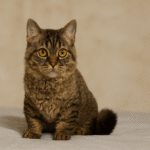
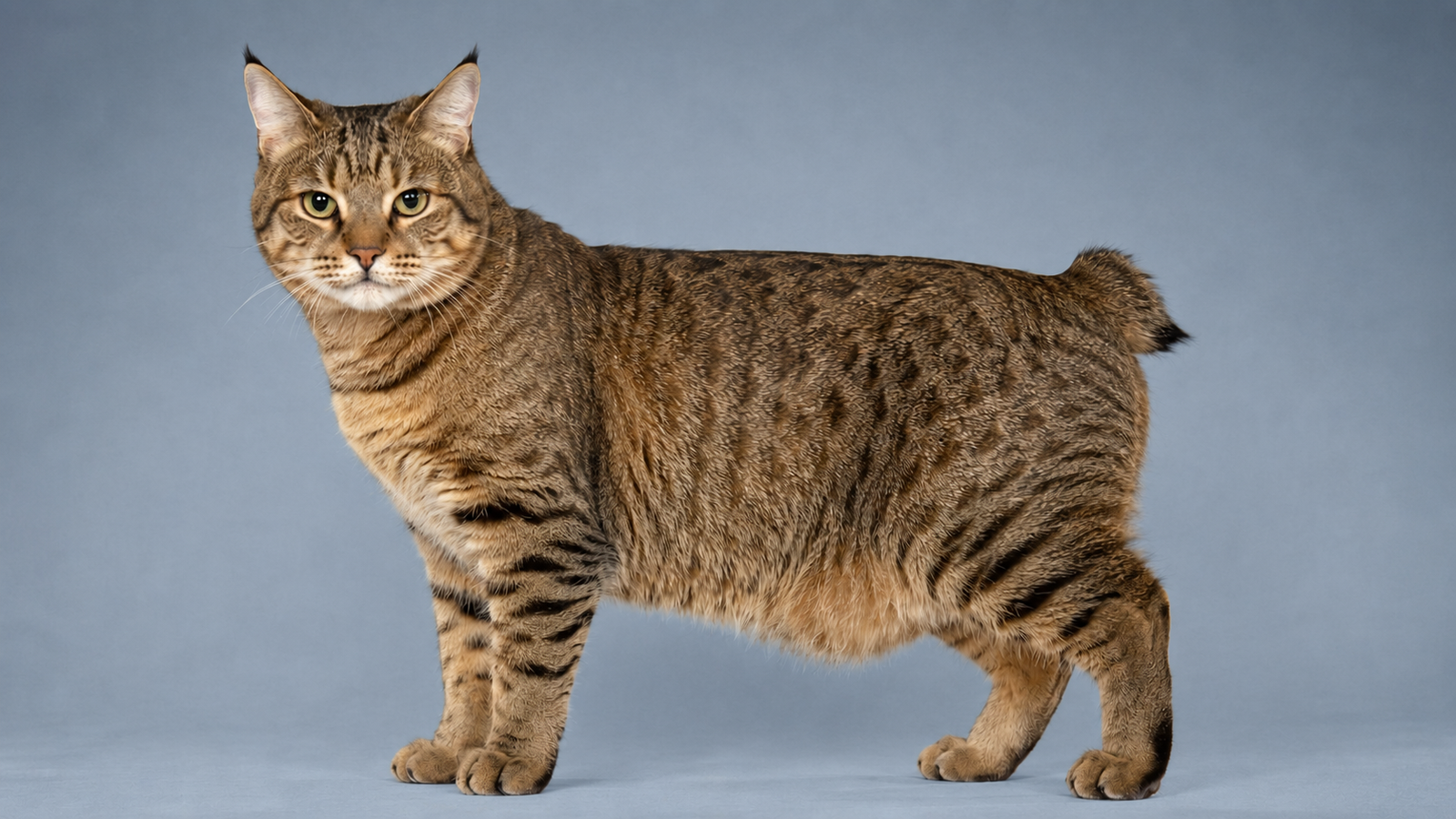
The Pixie-bob was bred from domestic cats to resemble the coastal red bobcat of the Pacific Northwest. They have a muscular build, spotted tabby coat, tufted ears, and a stubby tail. Many are also polydactyl, with extra toes on one or more paws.
Behind the wild look is a calm, affectionate cat with a distinctly dog-like personality. Pixie-bobs bond closely with their families, are patient with kids, and do best in homes where they get plenty of companionship.
Here’s what it’s actually like to live with a Pixie-bob, from personality and daily habits to grooming, health, cost, and whether they’re the right fit for your home.
Quick Breed Facts
- Origin: Washington State, United States
- Breed registries: TICA (Championship), ACFA
- Weight range: 8–12 lbs (females), 12–17 lbs (males)
- Lifespan: 13–16 years
- Coat: Short or long, thick double coat with wooly texture
- Colors and patterns: Brown spotted tabby, tawny to reddish-brown
- Eye color: Gold, hazel, or gooseberry green
- Grooming: Low to moderate
- Activity level: Moderate
- Affection level: Very high
- Vocality: Quiet, mostly chirps and trills
- Good with children: Yes
- Good with other pets: Yes, including dogs
History & Origin of the Pixie-bob Cat
The Pixie-bob began in Washington State in the mid-1980s with breeder Carol Ann Brewer. In 1985, Brewer bought a spotted, short-tailed, polydactyl male cat near Mount Baker, and the wild look stuck with her. The following year she took in a large bobtailed male named Keba, drawn to the same short-tailed type. Keba mated with a neighbor’s spotted tabby, and Brewer kept one of the resulting kittens, a female named Pixie, who became the foundation of the breed and gave it its name.
Over the next several years, Brewer sought out more cats with the same wild, short-tailed appearance and eventually brought 23 cats from the Cascade Range into her breeding program. She believed some might have descended from natural matings between bobcats and domestic cats and called them “Legend Cats.” DNA testing later found no evidence of bobcat ancestry, and the Pixie-bob is considered a fully domestic breed.
TICA accepted the Pixie-bob for exhibition in 1994 and granted championship status beginning with the 1998 show season. ACFA followed in 2005.
Pixie-bob Cat Personality & Temperament
Pixie-bobs are often described as dog-like because of how closely they bond with their people. They follow family members from room to room, greet visitors at the door, and many learn to walk on a harness, ride calmly in the car, or play fetch. They’re intelligent, observant, and highly tuned in to what is happening around them.
They’re also quiet cats. Most Pixie-bobs communicate through soft chirps, trills, and grumbles rather than loud meows. That doesn’t mean they’re aloof. They like staying close to their people without constantly demanding attention.
They don’t handle long stretches alone particularly well. Pixie-bobs do best in homes where someone is around regularly or where they have another friendly pet for company.
Pixie-bob Cat Appearance & Physical Characteristics
The Pixie-bob has the look of a small wild cat. The body is muscular and rectangular with heavy bone structure, a broad chest, and a primordial belly pouch. The head is shaped like an inverted pear with heavy brows, hooded eyes, and lynx-tipped ears in many cats. Males typically weigh 12 to 17 pounds, while females are smaller at 8 to 12 pounds. Pixie-bobs also grow slowly, taking up to four years to reach full size instead of the usual one year.
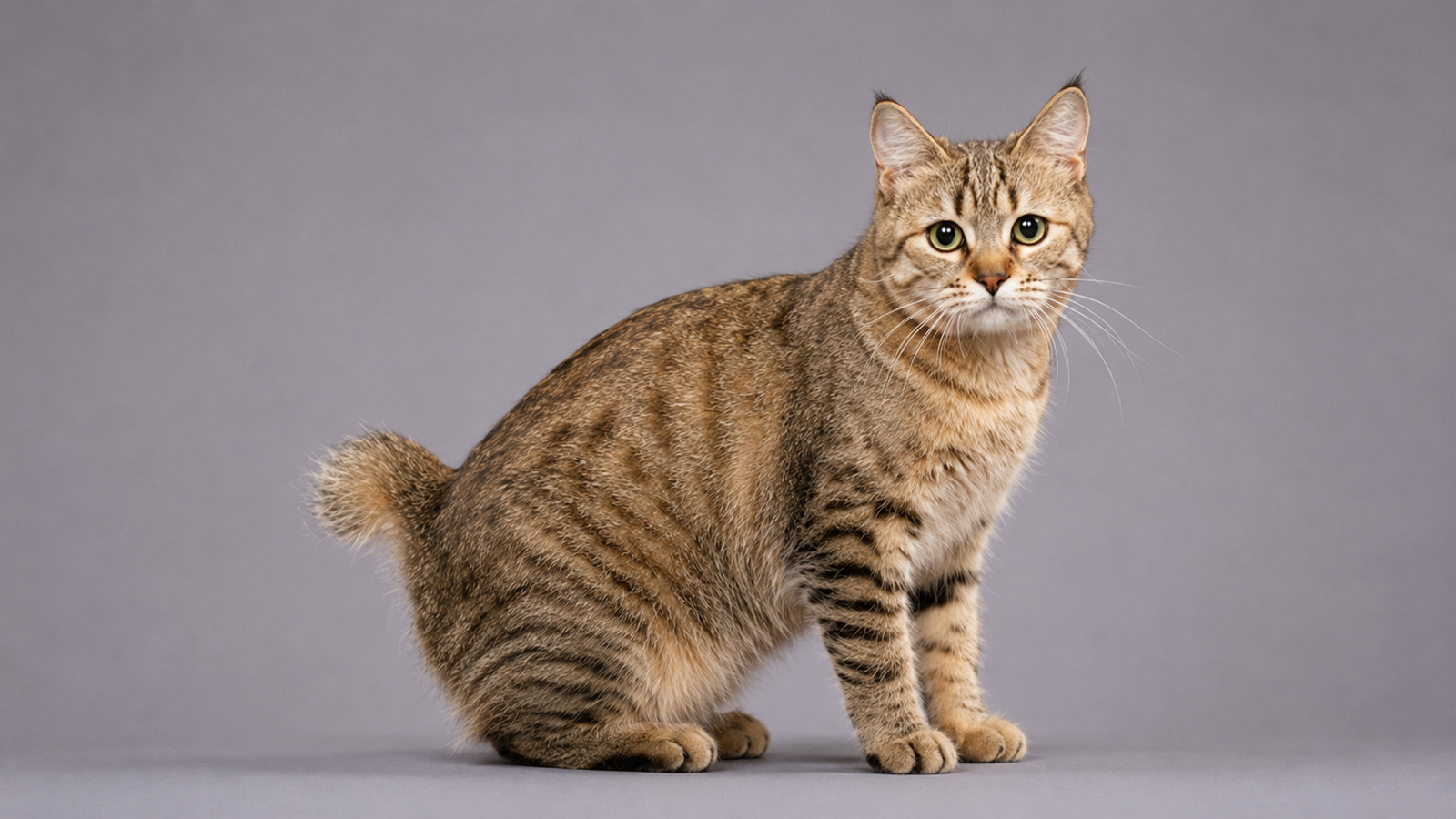
The coat comes in short or long varieties, both with a thick double coat, wooly texture, and water-resistant undercoat. Color is always brown spotted tabby, ranging from tawny to reddish-brown, with heavy ticking that mutes the spots and gives the coat a slightly silvery tone in winter. The tail must be at least two inches long and can extend to the hock, often with kinks or knots. Tails past the hock are penalized in the show ring, and a full-length tail is a disqualification.
TICA permits Pixie-bobs to have up to seven toes per foot, and polydactyl paws are part of the breed’s identity rather than a disqualifying fault as they are in most other registries. Roughly a quarter of Pixie-bobs are polydactyl, though the standard is equally open to straight-footed cats.
Pixie-bob Cat Grooming & Shedding
Grooming needs are low to moderate depending on coat length. Shorthaired Pixie-bobs do fine with a weekly brush to manage shedding and keep the coat looking its best. Longhaired Pixie-bobs need brushing two or three times a week, especially through spring and fall when shedding picks up, since the wooly double coat can pick up tangles around the belly and hind legs.
Nails need extra attention if your Pixie-bob is polydactyl. Extra toes mean extra claws, and some sit at odd angles that don’t wear down naturally, so trimming every two to three weeks and checking each toe individually matters more with this breed than most. Beyond that, the usual basics apply: regular ear checks and consistent dental care.
Activity & Play
Pixie-bobs are moderately active rather than hyper. They enjoy structured play, and their intelligence means puzzle feeders, feather wands, and training sessions hold their interest longer than passive toys. Many will play fetch without any real training, which fits their dog-like nature. Because they take four years to mature, expect kitten-like enthusiasm well beyond the first year or two.
Leash training is one of the breed’s standout traits. Pixie-bobs adapt to a harness better than most cats and often enjoy supervised outdoor time, whether that’s a backyard walk or a hike. A tall cat tree gives them somewhere to climb and perch indoors, and puzzle toys help fill the gap when you’re not around. A bored Pixie-bob tends to get withdrawn rather than loud about it, which makes it easy to miss until the shift in mood is already there.

Pixie-bob Cat Health & Lifespan
Pixie-bobs typically live 13 to 16 years and are a generally healthy breed. Their foundation stock came from a wide range of wild-looking barn cats rather than a narrow pedigree line, which may have helped limit inherited health problems. The breed is not known for a high rate of hereditary disease, though hypertrophic cardiomyopathy (HCM) has been reported. Cryptorchidism (undescended testicles) occurs occasionally in males, and dystocia (difficulty giving birth) has been reported in a small number of females.
Pixie-bobs are food-motivated and prone to weight gain if free-fed or under-stimulated, and extra weight puts real strain on a breed already carrying heavy bone and muscle. Because the build is naturally solid, judge weight by body condition rather than size alone. A high-protein, meat-based diet with animal protein as the first ingredient is a good starting point, and measured meals with a slow feeder or puzzle bowl help control portions. Fresh water should always be available, and many Pixie-bobs are drawn to moving water, which makes a fountain worth trying.
Family Compatibility
Pixie-bobs are usually a good fit for families with children. They’re patient, tolerant of respectful handling, and interested in being part of household activity. Their dog-like bonding style also means they tend to attach to the whole family rather than choosing only one person. Many adapt well to cat-friendly dogs and other cats, making them a reasonable choice for multi-pet homes.
Solo owners and seniors can do just as well with a Pixie-bob, provided someone is around regularly. They don’t cope well with being left alone for long stretches, so a household that’s empty most of the day works better if the cat has another friendly pet for company.
Recommended Supplies for a Pixie-bob Cat
Pixie-bobs are active, intelligent, and often food-motivated, so sturdy furniture, interactive toys, and puzzle feeders are especially useful for this breed.
- Tall, sturdy cat tree with multiple perches
- Harness and leash for supervised outdoor time
- Puzzle feeders and interactive wand toys
- Slow feeder bowl to pace eating
- Wide, shallow food and water bowls to avoid whisker fatigue
- Cat water fountain to encourage drinking
- Roomy, easy-to-clean litter box
Pixie-bob Cat Price
Pixie-bob cat prices typically range from $800 to $3,000 from a reputable breeder, with coat length and pedigree driving most of the variation. Polydactyl kittens can sometimes command a premium. Because the breed is rare and relatively few breeders operate in the United States, wait lists are common. Adoption is possible but uncommon, so check local shelters and breed-specific rehoming groups. For a breeder, start with TICA’s breeder directory.
Pixie-bob Cat FAQs
Are Pixie-bob cats part bobcat?
No. Despite the wild appearance and persistent legend, DNA testing has found no evidence of bobcat ancestry in Pixie-bobs. They’re fully domestic cats selectively bred to resemble the coastal red bobcat found in the Cascade Range.
Are Pixie-bob cats polydactyl?
Many are, but not all. TICA permits Pixie-bobs to have up to seven toes per foot, and polydactyl paws are part of the breed standard rather than a fault. Straight-footed Pixie-bobs with the standard toe count are equally valid.
Do Pixie-bob cats have long tails?
Most have short bobbed tails, only a few inches long, often with kinks or knots. Longer tails do occur, but the show standard caps acceptable length partway down the hind leg, and a full-length tail is a disqualification.
Are Pixie-bob cats hypoallergenic?
No. Pixie-bobs are not hypoallergenic. Their thick double coat sheds moderately year-round, and they produce the Fel d 1 protein that triggers most cat allergies.
How long do Pixie-bob cats live?
Most Pixie-bob cats live 13 to 16 years with proper care. Regular vet checkups, weight management, and a quality diet all contribute to a longer, healthier life.
Is the Pixie-bob Cat Right for You?
If you want a cat that looks like a small bobcat and has a dog-like personality, the Pixie-bob is it. They’re patient with kids, quiet around the house, and many will actually walk on a leash.
The one real caveat is companionship. Pixie-bobs don’t do well left alone for long stretches, so this breed works best in homes where someone is around regularly or where another pet can keep them company.
Debbie Reid is the founder and chief editor of CatPedia.net, with over 25 years of hands-on experience in feline care, rescue, and behavior research. Inspired by her rescue cats Snickers and Bigboy, she collaborates with animal welfare resources and consults veterinary literature to turn complex feline health, nutrition, and behavior topics into clear, actionable guides.