If you’ve ever watched your cat go from a peaceful loaf on the couch to a full-speed sprint down the hallway, you’ve witnessed the zoomies. It’s one of those funny, slightly baffling things cats do, and the good news is that most of the time, it’s completely normal. Your cat isn’t broken, they’re just being a cat.
Here’s why cats get the zoomies, why they tend to strike at night, what’s really going on with the post-litter box victory laps, and when this wild behavior might be worth a closer look.
What Are Cat Zoomies?
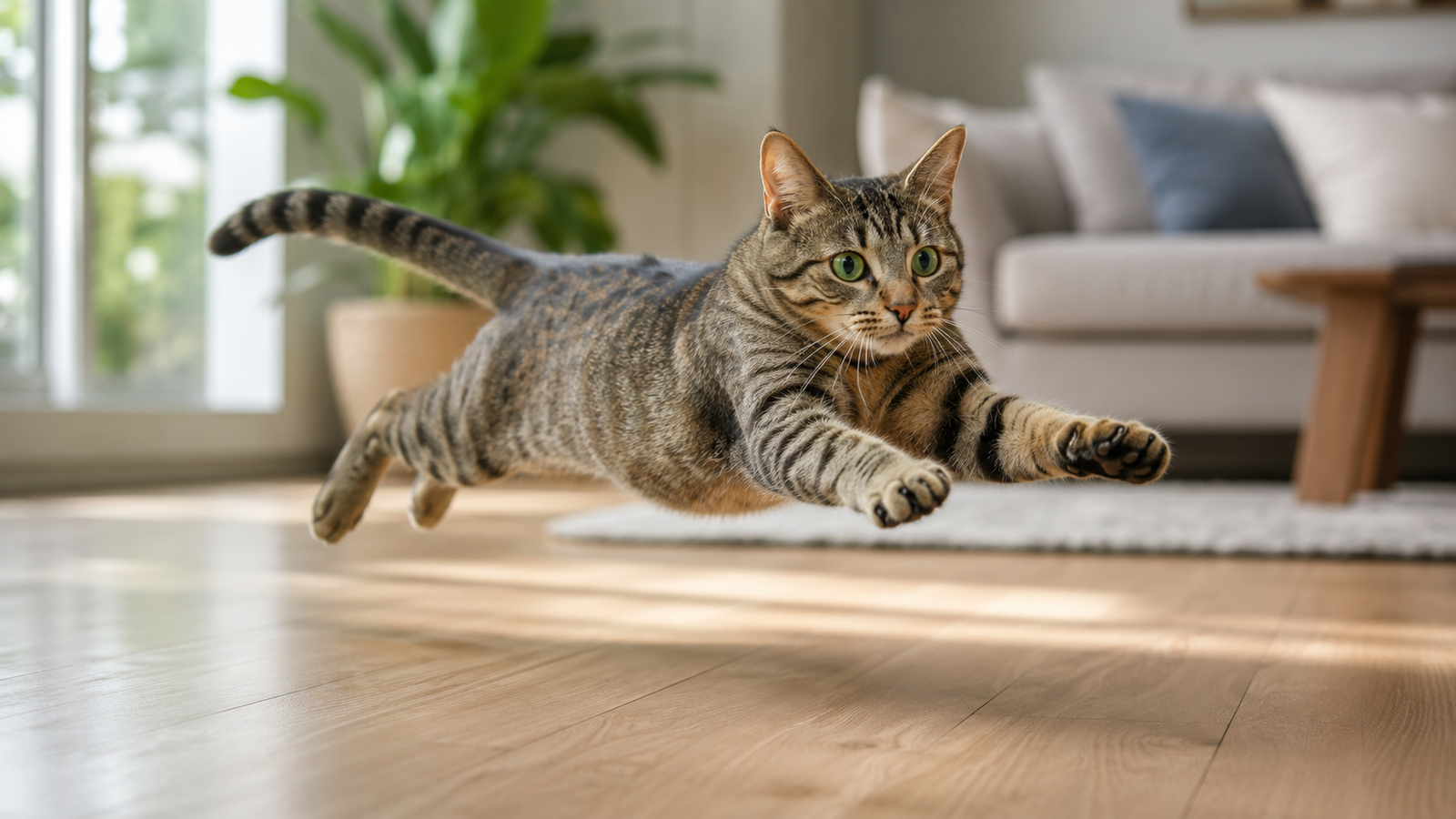
Cat zoomies are sudden bursts of high-speed running that seem to come out of nowhere. Your cat might tear across the living room, launch onto the couch, skid around a corner, and then flop down like nothing happened. Wide eyes, alert ears, and a whipping tail are all part of the show. The scientific name is Frenetic Random Activity Periods, or FRAPs, which sounds very official for something that looks so ridiculous.
Zoomies are different from regular play. Play is focused and interactive, aimed at a toy, another cat, or you. Zoomies aren’t aimed at anything at all. They’re just pure energy release, and your cat is the whole show.
Why Do Cats Get the Zoomies?
Cats get the zoomies for several reasons, and it usually comes down to a mix of instinct, energy, and mood. Here are the most common explanations:
- Pent-up energy: Cats sleep a lot, sometimes 15 to 20 hours a day, and they conserve energy for short bursts of activity. When that energy builds up, they need to burn it off, and the zoomies are how they release it.
- Hunting instincts: Those sharp turns and sudden sprints look a lot like the way wild cats chase and pounce on prey. Even a well-fed housecat still has the instincts of a tiny lion.
- Excitement and pleasure: Zoomies often happen when a cat feels playful, worked up, or especially good. You can think of it as the feline version of a runner’s high.
- Environmental triggers: A sudden noise, catnip, a whiff of fresh air from an open window, or a play session that gets your cat too excited can all kick off a zoomie session.
- Kittens being kittens: Young cats have energy to spare and are still figuring out how their bodies work. Kitten zoomies tend to be frequent, intense, and very entertaining.
Why Do Cats Get Zoomies After Pooping?
If your cat regularly bolts from the litter box and takes a victory lap around the house, you’ve got yourself a classic case of post-poop zoomies. While no one knows exactly why it happens, there are a few good theories.
One theory involves the vagus nerve, which connects the brain with the digestive system. A bowel movement can stimulate this nerve and create a feeling of relief. For some cats, that sudden relief may translate into a burst of energy and a full-speed sprint through the house. This is sometimes jokingly called “poo-phoria.”
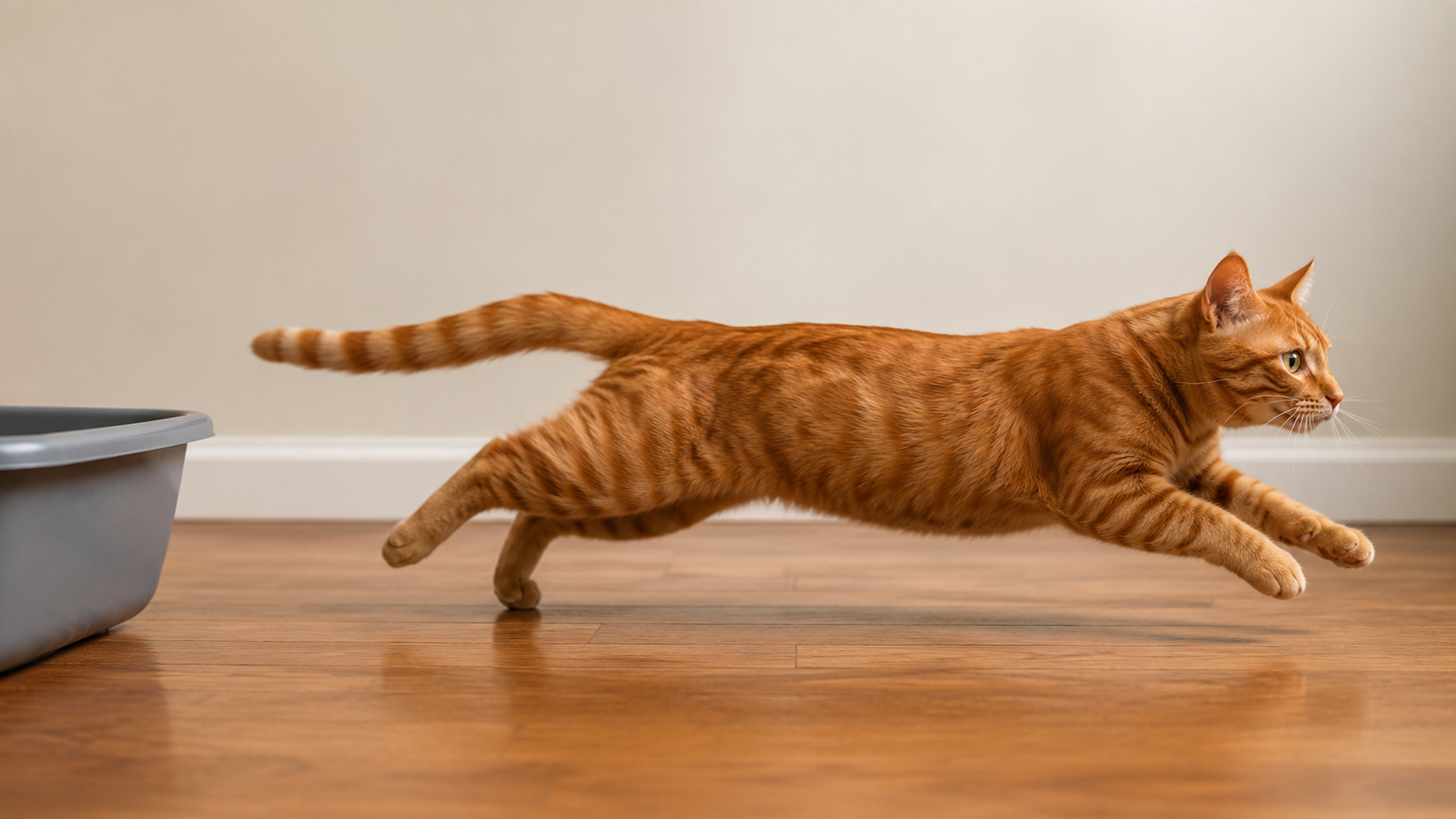
Beyond the vagus nerve, there are a couple of other theories. Some cats might be trying to get away from the smell, which is fair. Others may be following an old survival instinct to leave the area quickly so predators can’t track them by scent.
Whatever the reason, post-poop zoomies are one of those quirky, harmless things cats do. So enjoy the show, and maybe clear the coffee table.
Why Do Cats Get Zoomies at Night?
If your cat has a habit of tearing through the house late at night or early in the morning, there’s a reason behind the timing. Nighttime zoomies are one of the most common cat quirks out there, and they come down to how cats are wired.
Cats are crepuscular, which means they’re naturally most active at dawn and dusk. In the wild, those low-light hours are prime hunting time, and that instinct is still hardwired into your indoor cat. So when your cat wakes up near one of those natural activity periods, they’re ready to move even if the rest of the house isn’t.
Indoor cats who don’t get enough play during the day are especially likely to let loose at night. If your cat is regularly waking you up with nighttime sprints, adding more daytime play can help take the edge off.

Do Older Cats Get the Zoomies?
Yes, though usually less often and less intensely than younger cats. Senior cats slow down naturally as they age, and things like arthritis or lower muscle mass can make those wild sprints harder to pull off. A little zoom every now and then from your older cat is a good sign that they’re feeling good and moving well.
That said, sudden changes in an older cat’s zoomie behavior deserve a second look. If your senior cat suddenly starts running around a lot more than usual, or seems restless and can’t settle, it can sometimes point to hyperthyroidism, which speeds up the metabolism and can leave cats acting jittery or hyperactive.
When Should You Worry About Cat Zoomies?
Most zoomies are harmless, but there are a few situations where they might be your cat’s way of telling you something’s off. Here are the situations worth watching for.
- Pain or irritation: Fleas, itchy skin, or a painful spot can trigger sudden running. If your cat is also biting at their skin, over-grooming one area, or crying out while they run, discomfort could be the cause.
- Anxiety or fear: Fear-driven running usually comes with other body-language clues, such as dilated pupils, flattened ears, a puffed-up tail, or a tense posture. Loud noises, unfamiliar visitors, or changes at home can all set it off.
- Sudden behavior changes: If your cat’s zoomies are new, much more frequent, or paired with weight loss, extra hunger, or unusual sleep patterns, a checkup is a good idea.
- Episodes that don’t look like normal zoomies: Rarely, unusual bursts of behavior can be a focal seizure. Twitching, staring, snapping at things that aren’t there, or seeming unaware of their surroundings are more concerning than an ordinary sprint. If something feels off, record it and show your vet.
If any of these ring a bell, it’s worth checking in with your veterinarian to rule out a medical problem.
What to Do When the Zoomies Strike
The good news is you usually don’t have to do anything. Zoomies are a normal, healthy part of being a cat, and the best move is to let your cat run it out. Just make sure the space is safe and there’s nothing breakable in their runway.
If nighttime zoomies are wrecking your sleep, adding more daytime play is your best move. Two play sessions of 10 to 15 minutes each can burn through a lot of that pent-up energy and lead to a calmer evening. Aim to end each session with your cat catching and “killing” the toy, since that’s the payoff that satisfies their hunting drive.
Puzzle feeders, treat balls, and rotating toys in and out of the toy bin can also keep things interesting. Mental stimulation tires a cat out just as much as physical activity does, and a bored cat is a zoomie-prone cat.

Enjoy the Zoomies
Cat zoomies are one of those funny little quirks that come with sharing your home with a tiny predator. Most of the time, they mean your cat is feeling good, has energy to burn, and is doing exactly what cats are wired to do.
So the next time it happens, just step back and let them have their moment.
Debbie Reid is the founder and chief editor of CatPedia.net, with over 25 years of hands-on experience in feline care, rescue, and behavior research. Inspired by her rescue cats Snickers and Bigboy, she collaborates with animal welfare resources and consults veterinary literature to turn complex feline health, nutrition, and behavior topics into clear, actionable guides.