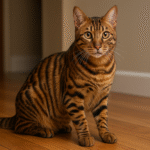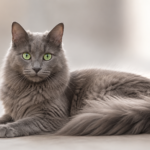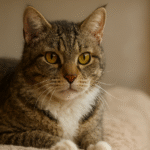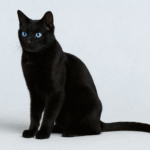
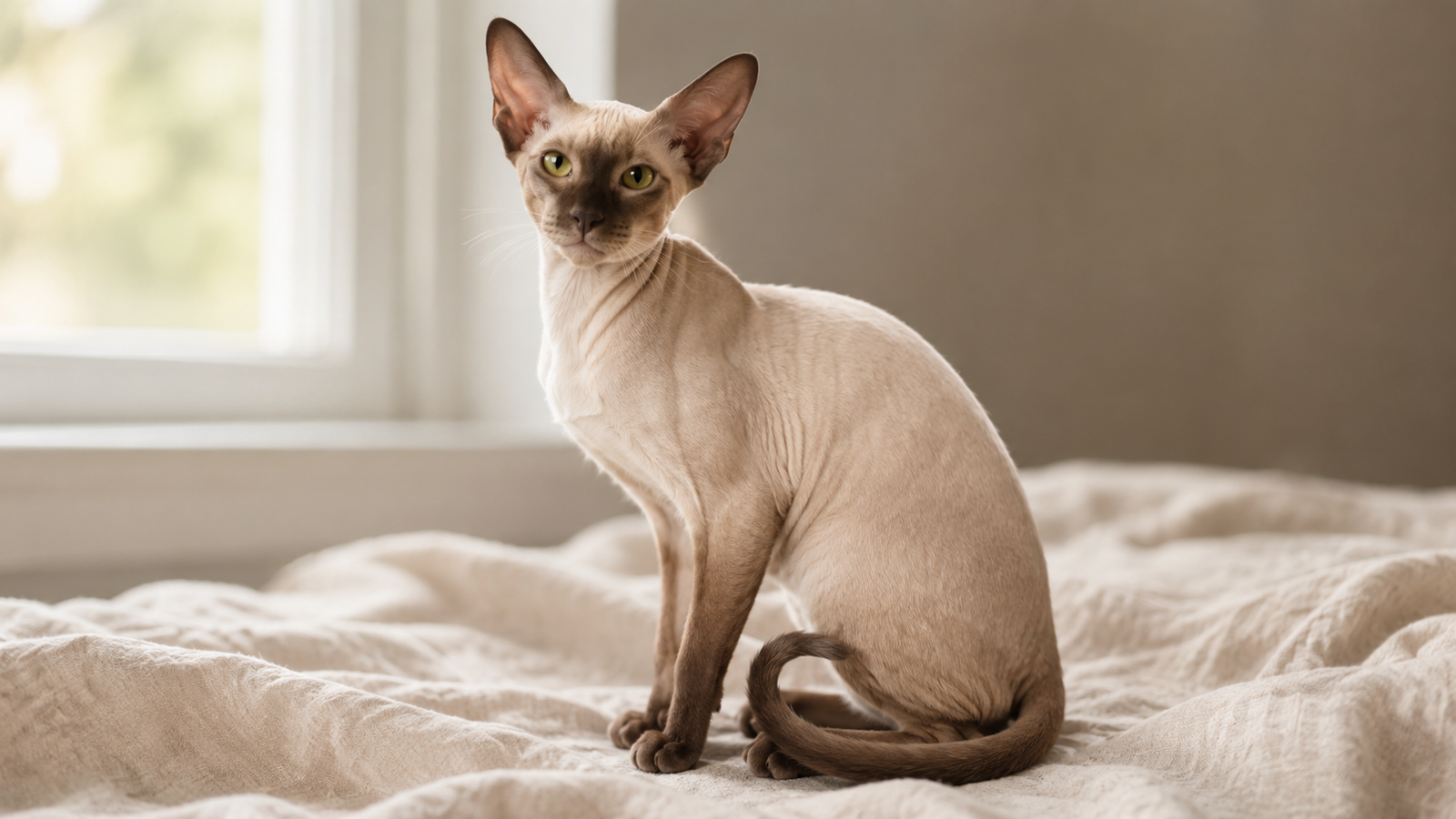
The Peterbald cat is a hairless breed with an unusually wide range of coat possibilities. It has a long, lean body, wedge-shaped head, oversized ears, and a coat that can be anything from ultra-bald to soft velour depending on which genes a kitten inherits.
They’re also high maintenance. Without a full coat, skin care, temperature regulation, and regular bathing become part of the routine. Their Oriental-derived personality also means they need steady interaction to stay content, and long stretches alone often turn into anxiety, boredom, and constant vocalizing.
Here’s what it’s actually like to live with a Peterbald cat, from personality and coat variations to grooming, health, cost, and whether they’re the right fit for your home.
Quick Breed Facts
- Origin: Russia (St. Petersburg, 1994)
- Breed registries: TICA, WCF, FIFe
- Weight range: 6–10 lbs
- Lifespan: 12–15 years
- Coat: Five variants from ultra-bald to normal short coat
- Colors and patterns: Wide range including solid, tabby, tortie, pointed
- Eye color: Green, blue, amber, or odd-eyed
- Grooming: Low shedding, high skin care
- Activity level: High
- Affection level: Very high
- Vocality: Talkative
- Good with children: Yes
- Good with other pets: Yes
History & Origin of the Peterbald Cat
The Peterbald traces to a single 1994 breeding in St. Petersburg, Russia, where breeder Olga S. Mironova paired a Donskoy male named Afinguen Myth with an Oriental Shorthair female called Radma vom Jagerhof. The Donskoy contributed the hairless trait, which in this breed is carried by a dominant gene, and the Oriental brought the long legs, wedge-shaped head, and social personality that shape the breed today. That cross gave the Peterbald something unusual among hairless breeds: the possibility of multiple coat types appearing in the same litter.
TICA recognized the breed as experimental in 1997 and granted championship status in 2005. The World Cat Federation followed with its own recognition. The Peterbald remains rare outside Russia and Eastern Europe, but it has a steady following among owners who want the hairless look with a lighter, more athletic build.
Peterbald Cat Personality & Temperament
Peterbalds inherit the Oriental Shorthair’s love of company and constant communication. They follow their people from room to room, chirp and trill about whatever is happening, and settle in laps whenever the opportunity comes up. This is not a background cat. They want to be involved in what you’re doing, and they’ll insert themselves into most household activities whether you invited them or not.
They’re also intelligent and quick to learn, which means they pick up on routines fast and often figure out how to open doors or drawers if there’s something interesting on the other side. Many Peterbalds play fetch without any training, respond reliably to their names, and take to leash walking with less resistance than most cats. The downside is that they don’t handle isolation well. A Peterbald left alone for long stretches will often develop anxiety behaviors, which is why a second cat or a household with steady human presence works best.
Peterbald Cat Appearance and Physical Traits
The Peterbald is built long and lean, with a tubular body, tall slim legs, and a wedge-shaped head that tapers to a narrow muzzle. The ears are large and set wide, giving them an unmistakable silhouette from any angle. One distinctive trait is the breed’s long, slightly webbed toes, which give them unusual dexterity. Peterbalds can grip and manipulate small objects with their front paws in ways most cats can’t.
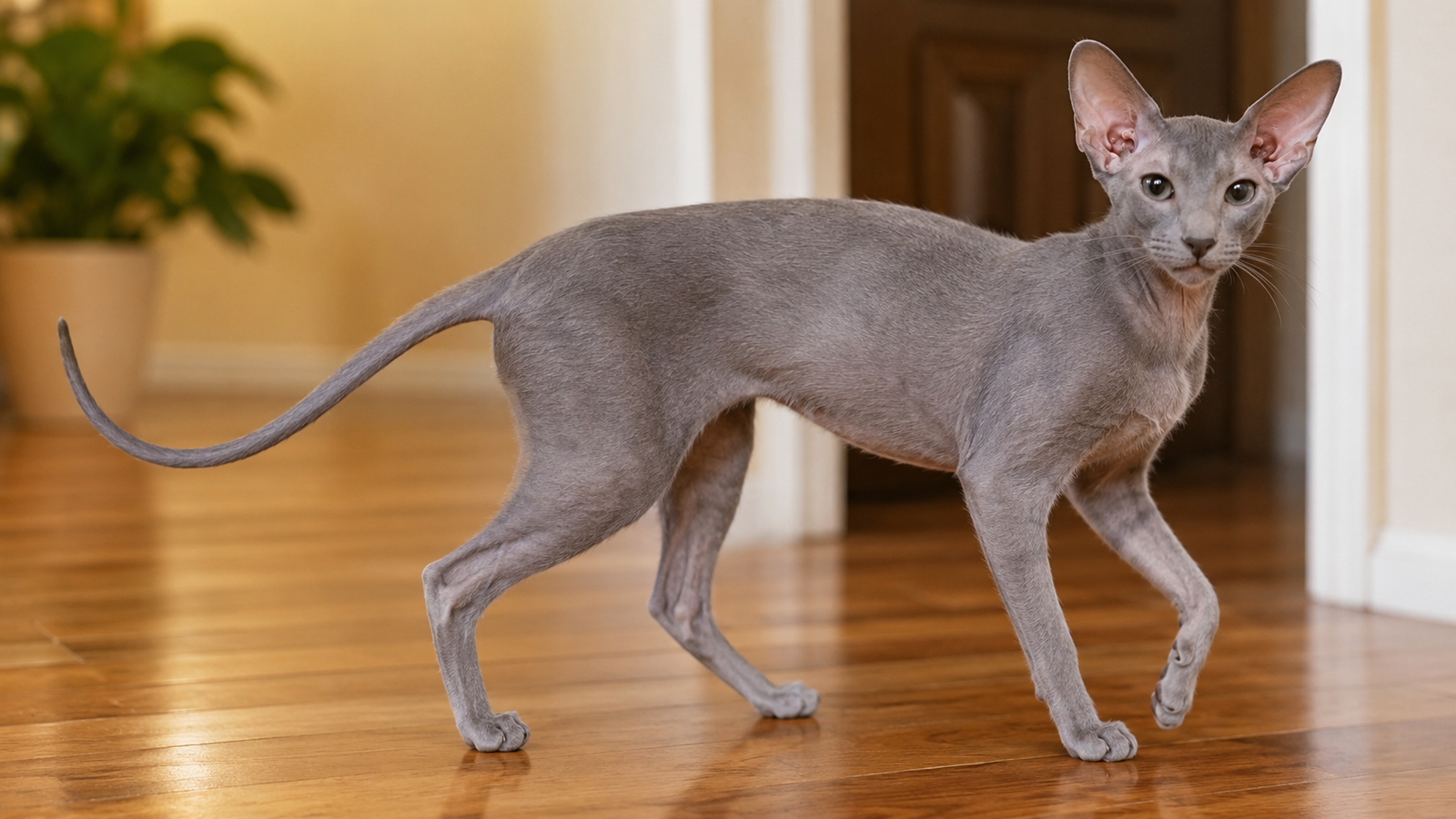
Coat is where the breed gets interesting. Peterbald kittens can be born with one of five coat types: ultra bald (no hair, no whiskers, sticky rubber-like skin), flock or chamois (a soft downy layer under 2mm that often disappears within weeks), velour (short soft fur up to 5mm), brush (wiry irregular coat that stays into adulthood), or straight (a normal short coat, from cats that don’t carry the hairless gene). Coat type can also change as a kitten grows, and littermates often end up with different textures depending on which genes they inherited.
Peterbald Cat Grooming and Shedding
Peterbald grooming is nothing like caring for a furred breed. Because there’s no coat to absorb skin oils, those oils build up on the skin and need to be washed off regularly. Most Peterbalds need a bath every one to two weeks with a mild, cat-safe shampoo. Skip a few weeks and you’ll notice a waxy film and sometimes a slightly musky smell.
Their ears also produce more wax than furred breeds and need gentle cleaning weekly. Nail beds tend to accumulate oil and grime, so those need attention too. In winter, Peterbalds are prone to dry skin and benefit from either a light coat of pet-safe moisturizer or a warmer indoor environment. Shedding is minimal to nonexistent depending on coat type, but that lack of shedding does not translate to lack of maintenance.
Activity & Play
Peterbalds are high-energy cats that stay playful well into adulthood. They climb constantly, chase anything that moves, and get bored fast without stimulation. Daily interactive play isn’t optional with this breed, and a setup with vertical space, puzzle feeders, and rotating toys keeps them from redirecting that energy into things you’d rather they leave alone.
Their intelligence works for and against them. Trained routines like fetch and leash walks give them an outlet, but if you don’t provide one they’ll make their own, usually at the expense of a cabinet, a plant, or your patience at 4am.

Peterbald Cat Health Issues and Lifespan
Peterbalds typically live 12 to 15 years, and the breed is reasonably healthy overall. The biggest concerns tie back to the skin. Without fur, they’re vulnerable to sunburn, cold exposure, and skin infections if grooming lapses. They also carry a higher risk of dental issues inherited from their Oriental Shorthair line, including gingivitis and early tooth loss, so building dental care into the routine from kittenhood pays off long term.
Ectodermal dysplasia, which affects hair, teeth, and sweat glands, can appear in the ultra-bald variant and is worth asking breeders about. Diet-wise, Peterbalds burn calories fast because they’re active and lack the insulating layer that furred cats have. A high-protein, meat-first food helps them maintain muscle and body heat, and free-feeding tends to work better for this breed than it does for most since they rarely overeat.
Family Compatibility
Peterbalds fit well into busy family homes. They’re sociable enough to greet visitors, patient enough to handle respectful children, and confident enough to hold their own around cat-friendly dogs. They bond with the whole household rather than attaching to one person, which works well when there are multiple people around to share the attention they demand.
The one situation they don’t handle well is being alone for long stretches. This breed needs company, and if your household is empty most weekdays, a second cat is close to necessary. A Peterbald without enough interaction becomes anxious, vocal, and often destructive, and no amount of enrichment fully substitutes for actual company.
Recommended Supplies for a Peterbald Cat
Peterbald supplies need to account for the lack of coat and the high energy in equal measure.
- Heated bed or self-warming pad for cooler months
- Soft cat sweaters or shirts for winter warmth
- Cat-safe shampoo and unscented baby wipes for skin care
- Tall cat tree with sturdy climbing platforms
- Puzzle feeders and interactive wand toys
- Roomy litter box with low-dust, unscented litter

Peterbald Cat Price
Pet-quality Peterbald kittens from a reputable breeder typically run $1,200 to $2,500, with rare coat types like ultra-bald and show-quality lines pushing $3,000 or more. Peterbalds are hard to find in shelters given how rare they are outside Russia and Eastern Europe, but Oriental Shorthair rescues occasionally take in Peterbalds and Peterbald mixes, so those networks are worth checking if you’re open to an adult cat.
Peterbald Cat FAQs
Are Peterbald cats hypoallergenic?
No cat is truly hypoallergenic, but Peterbalds shed very little and produce less airborne dander than furred breeds, which many allergy sufferers find easier to live with. All cats produce the Fel d 1 protein that triggers most cat allergies, though, so spending time with one before committing is the safest way to test tolerance.
What’s the difference between a Peterbald and a Sphynx?
Peterbalds are slimmer and more Oriental in build, with wedge-shaped heads, longer legs, and multiple possible coat types ranging from fully hairless to a normal short coat. Sphynx cats are stockier with rounder faces and are always hairless with a suede-like feel. The hairless gene in Peterbalds is dominant, while in Sphynx cats it’s recessive, which is why Peterbald litters can produce such a wide range of coats.
Can Peterbald cats have Down syndrome?
No. Down syndrome is caused by an extra copy of human chromosome 21, and cats have a completely different chromosomal makeup with 38 chromosomes instead of 46. The condition is medically impossible in cats. Some Peterbalds do have unusual facial features like wide-set eyes or a flatter face structure that people compare to Down syndrome online, but these are normal breed traits or unrelated genetic quirks.
How long do Peterbald cats live?
Most Peterbalds live 12 to 15 years with proper care. Regular dental checkups, consistent skin care, and a warm indoor environment all contribute to a longer, healthier life.
How much does a Peterbald cat cost?
Pet-quality Peterbald kittens typically cost between $1,200 and $2,500 from a reputable breeder. Show-quality cats and rare coat variants like ultra-bald can push $3,000 or more.
Is the Peterbald Cat Right for You?
If you want a hairless breed that’s active, social, and closely bonded to its people, the Peterbald is a strong choice. They’re clever, affectionate, and fit well into busy households where someone is around most of the day.
They’re not the right fit for anyone looking for a low-maintenance cat or anyone who’s regularly out of the house for long stretches. Weekly baths, warmth management, and steady company are all part of the deal.
Debbie Reid is the founder and chief editor of CatPedia.net, with over 25 years of hands-on experience in feline care, rescue, and behavior research. Inspired by her rescue cats Snickers and Bigboy, she collaborates with animal welfare resources and consults veterinary literature to turn complex feline health, nutrition, and behavior topics into clear, actionable guides.