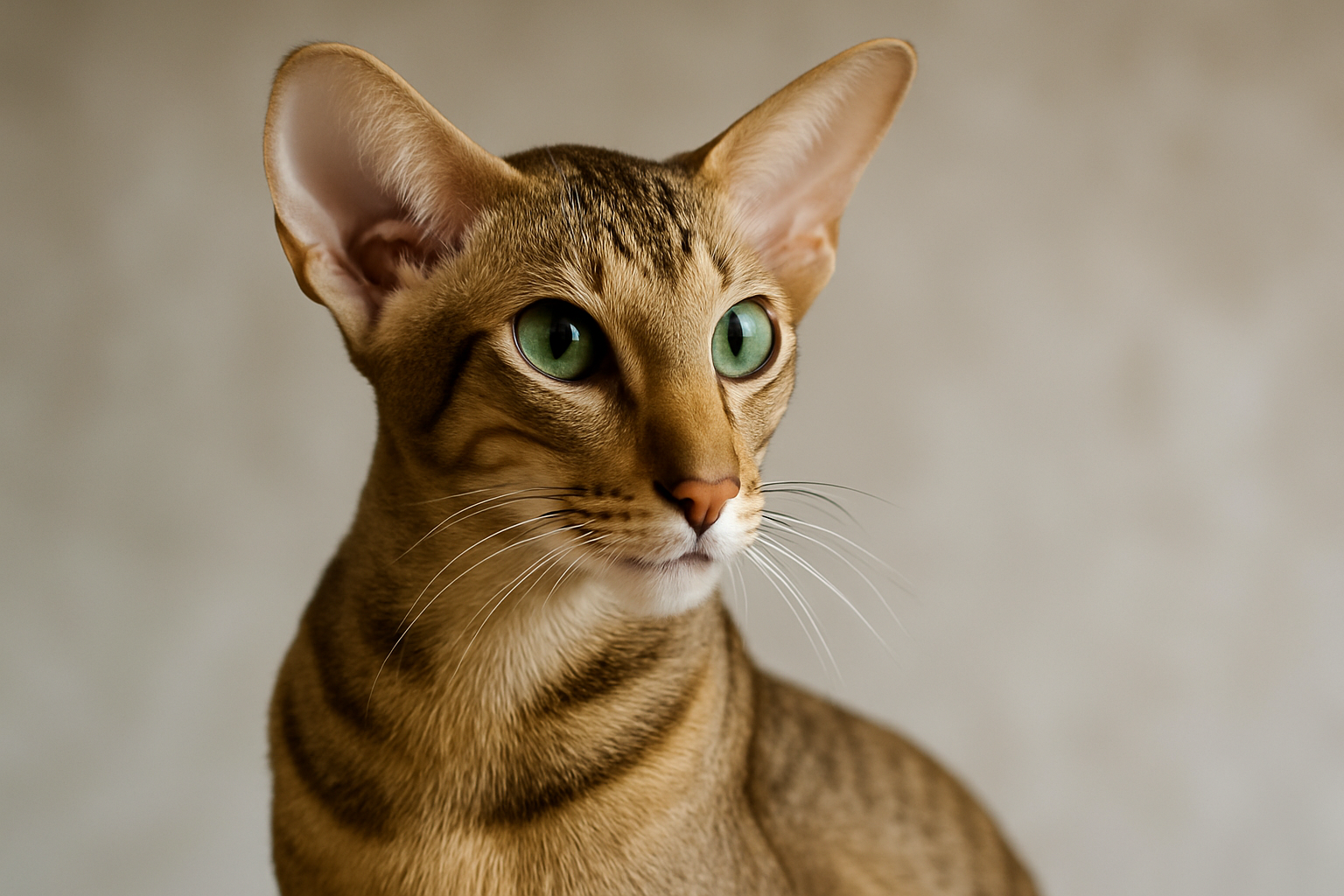
Oriental Shorthair cats look like someone took a Siamese cat, stretched it slightly, and opened up the color palette to almost everything imaginable. The oversized ears, almond eyes, and long, lean body give them one of the most distinctive looks among domestic cat breeds.
They’re also one of the most demanding cats you can live with. Oriental Shorthairs are loud, opinionated, and want to be involved in every part of your day. For the right owner, that’s exactly the appeal. For someone hoping for a quiet, independent cat, this breed will be a constant source of mild frustration.
Quick Breed Facts
- Origin: United States and United Kingdom (developed from Siamese lines)
- Breed registries: CFA, TICA, GCCF, FIFe
- Weight range: 6–12 lbs
- Lifespan: 12–15 years
- Coat: Short, fine, close-lying (longhair variety also exists)
- Colors and patterns: Over 300 combinations including solid, tabby, smoke, shaded, bi-color
- Eye color: Green most common; blue or odd-eyed in white cats
- Grooming: Low maintenance
- Activity level: Very high
- Affection level: Very high
- Vocality: Extremely vocal
- Good with children: Yes, with respectful kids
- Good with other pets: Yes, especially with another active companion
History & Origin of the Oriental Shorthair Cat
The Oriental Shorthair traces back to post-war Britain, when breeders were rebuilding Siamese lines after World War II. To widen the gene pool, they crossed Siamese cats with breeds like the Russian Blue, Abyssinian, and British Shorthair. The result was a cat with the slim Siamese body type and outgoing personality, but in coats that went far beyond the traditional pointed pattern.
By the 1960s and 70s, American breeders were developing the breed even further, creating the wide range of colors and patterns Oriental Shorthairs are known for today. CFA officially recognized the Oriental Shorthair in 1977, and the longhair version followed later as a separate division. In some registries, Orientals are still considered part of a broader Siamese family, with the same lean body type but far more coat color and pattern options.
Oriental Shorthair Cat Personality & Temperament
Oriental Shorthairs are about as far from a low-key cat as you can get. They’re intelligent, persistent, and deeply attached to their people. They want to know where you are at all times, what you’re doing, and whether they can participate. Most owners describe living with one as closer to having a small, vocal dog than a typical cat.
The talking is worth taking seriously before you bring one home. Oriental Shorthairs are loud, raspy, and remarkably expressive, and most use that voice all day long. They’ll greet you, complain about an empty bowl, demand attention, and narrate your trip to the bathroom. If you live in a thin-walled apartment or work from home on calls, think it through carefully before committing.
They’re also very smart. Many learn to fetch, open doors, and respond to their names. They pick up routines quickly and will hold you to them. A bored Oriental Shorthair is a destructive Oriental Shorthair, so mental engagement matters as much as physical play.
Oriental Shorthair Cat Appearance & Physical Traits
The Oriental Shorthair has one of the most distinctive silhouettes among domestic cats. The body is long, tubular, and lean, with fine bones and more strength than the slim frame suggests. The legs are slender, the tail tapers to a fine point, and the head forms a long wedge that flows into oversized, wide-set ears. Almond-shaped eyes complete the look, usually in a vivid green.
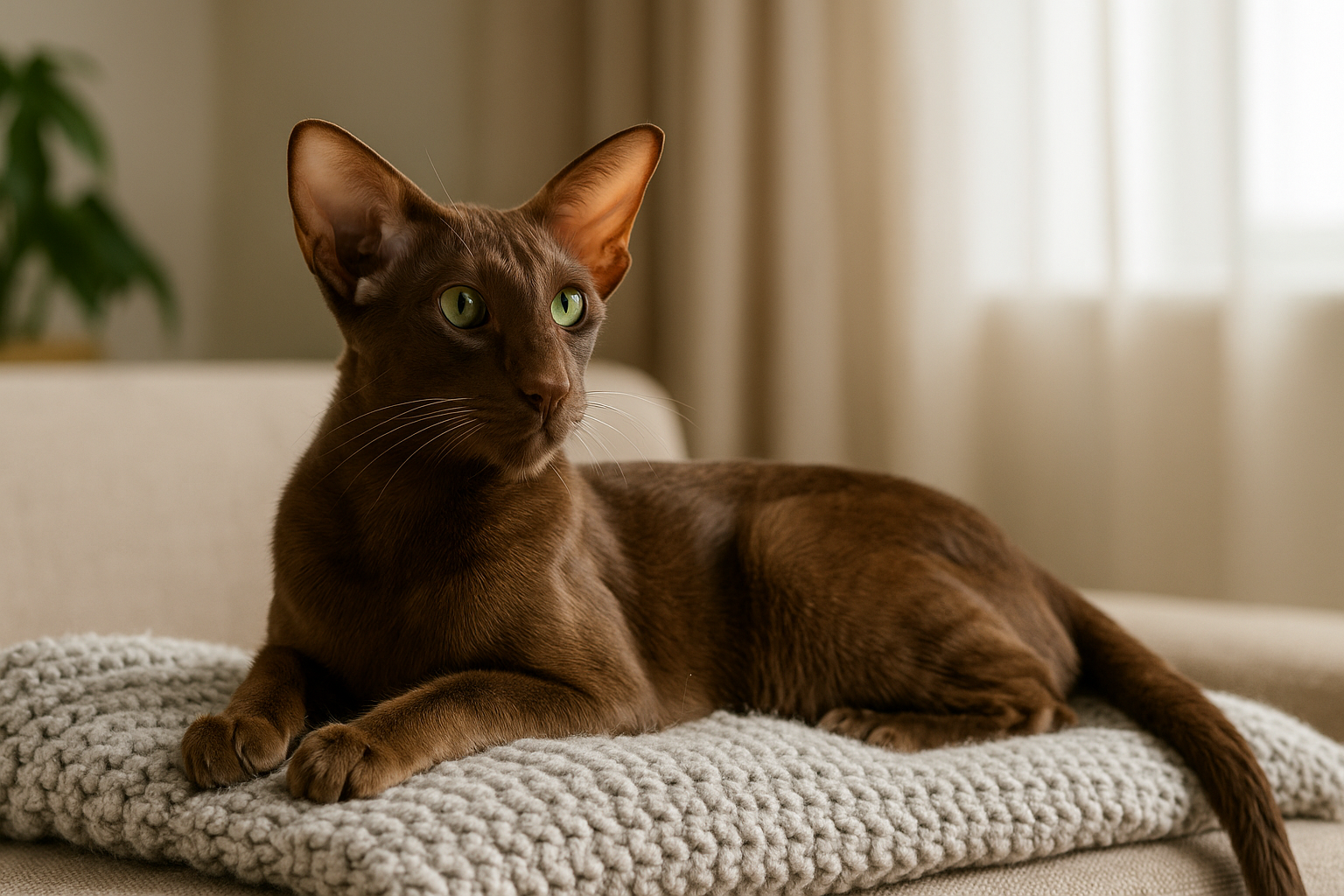
The coat is where this breed really stands out. With more than 300 recognized color and pattern combinations, no two Oriental Shorthairs look quite alike. You’ll find solid ebony, blue, chocolate, lavender, cinnamon, fawn, red, and cream, plus tabby, smoke, shaded, parti-color, and bi-color variations. The longhair variety carries the same color range with a soft, silky coat that lies flatter than most longhaired breeds.
Oriental Shorthair Cat Grooming & Shedding
Grooming is one area where this breed makes life easy. The short coat lies close to the body, sheds minimally, and almost never mats. A quick weekly brush or a wipe-down with a grooming mitt is usually all that’s needed to remove loose hair and keep the coat looking sleek. The longhair variety needs a bit more attention, usually two or three brushings a week, but it still falls on the lower end of longhair maintenance.
The ears, on the other hand, do need regular attention. Those oversized ears collect wax and debris more readily than smaller-eared breeds, so a weekly check and gentle cleaning when needed is part of the routine. Nail trims every couple of weeks and dental care round out the basics.
Activity & Play
Oriental Shorthairs are more athletic than their slim build suggests. They run, leap, climb, and investigate constantly. Vertical space is essential with this breed, not a nice-to-have. A tall cat tree, wall shelves, or a clear path to the tops of bookcases gives them somewhere to direct that energy. Without it, they’ll find their own routes, and you may not love the ones they pick.
Interactive play is non-negotiable. Plan on at least two solid sessions a day with feather wands, teaser toys, or anything that lets them stalk and pounce. Many Oriental Shorthairs take to clicker training, leash walking, and even basic obedience cues, which can be a useful outlet for that constantly running brain. Puzzle feeders work well too, both for slowing down meals and for adding a daily problem to solve.

Oriental Shorthair Cat Health & Lifespan
Oriental Shorthairs typically live 12 to 15 years, with some reaching their late teens when kept at a healthy weight and given consistent veterinary care. The breed carries some hereditary risks inherited from its Siamese roots. Hypertrophic cardiomyopathy (HCM) is the most significant, a heart muscle disease that can develop without obvious symptoms and is worth screening for, especially in breeding cats.
Progressive retinal atrophy (PRA) can also appear in the breed, slowly affecting vision over time. Dental disease is common because of the narrow jaw structure, so regular dental cleanings and at-home brushing pay off long term.
Diet-wise, Oriental Shorthairs do well on a high-protein, meat-based food with animal protein as the first ingredient. They tend to stay lean naturally because they are so active, but their narrow build means even a small amount of extra weight shows quickly and adds strain. Free-feeding usually works fine for this breed, though portioned meals make sense if your cat starts gaining weight.
Family Compatibility
Oriental Shorthairs do well in busy households as long as they get the attention they want. They bond closely with their entire family rather than picking a single person, and they tend to greet visitors at the door rather than hiding under the bed. With respectful children who understand how to play with a cat, they’re playful, patient, and engaged. Very young or rough-handed children are a poorer match given how slender and fine-boned the breed is.
They also tend to get along well with other pets, particularly other active cats and cat-savvy dogs. In fact, this is one of the better breeds to adopt in pairs. Oriental Shorthairs hate being alone for long stretches, and they do best in homes with another cat for company if you work outside the house. They’re not the right cat for someone who travels constantly or wants a pet that handles solitude well.
Recommended Supplies for an Oriental Shorthair Cat
This breed needs an environment that supports their energy, intelligence, and need to be involved in everything. A bored Oriental Shorthair will find something to climb, open, or chase, so the right setup makes daily life easier for both of you.
- Tall, sturdy cat tree with multiple perches
- Wall-mounted shelves or window perches for vertical territory
- Interactive wand toys and feather teasers
- Puzzle feeders to slow down meals and provide enrichment
- Wide, shallow food and water bowls to avoid whisker fatigue
- Cotton or rope scratching posts at various heights
- Heated bed or warm spot, since this breed feels the cold

Oriental Shorthair Cat Price and Cost
Pet-quality Oriental Shorthair kittens from a reputable breeder typically run $600 to $1,500, with show-quality cats and rare color variations pushing past $2,000. Because the breed is less common than Siamese or other mainstream breeds, finding a kitten often involves waiting on a breeder’s list or traveling for pickup. Rescue is a real option here. Oriental Shorthairs are sometimes surrendered by owners who underestimated the noise and energy, and Siamese-focused rescues often include them.
Oriental Shorthair Cat FAQs
Are Oriental Shorthair cats hypoallergenic?
No, no cat is fully hypoallergenic. Oriental Shorthairs produce lower amounts of dander than many breeds because of their thin, single-layer coat and minimal shedding, and some allergy sufferers report fewer reactions around them. Spending time with the breed before adopting is the only reliable way to know how you’ll respond.
What’s the difference between an Oriental Shorthair and a Siamese?
They share the same body type, head shape, and personality. The main difference is coat. Siamese cats are restricted to pointed patterns with blue eyes, while Oriental Shorthairs come in over 300 colors and patterns with green eyes most common. Some registries treat them as separate breeds, while others consider them divisions of the same breed group.
How much does an Oriental Shorthair cat cost?
Pet-quality kittens from a reputable breeder usually cost $600 to $1,500. Rare colors, patterns, or show-quality bloodlines can push prices higher. Adoption through a Siamese or Oriental rescue is more affordable and a solid option if you’re open to an adult cat.
Are Oriental Shorthair cats loud?
Yes, and it’s worth thinking through before committing. They’re one of the most vocal domestic breeds, with a raspy, expressive voice they use throughout the day. If quiet is a priority in your home, this breed will test it.
Do Oriental Shorthair cats get along with other pets?
Generally yes. They do well with other active cats and cat-friendly dogs when introduced properly. Because they don’t tolerate being alone well, many owners adopt them in pairs or alongside another social pet.
How long do Oriental Shorthair cats live?
Most Oriental Shorthairs live 12 to 15 years, with some reaching their late teens. Regular vet care including cardiac screening, dental care, and keeping them at a healthy weight all contribute to a longer life.
Is the Oriental Shorthair Cat Right for You?
If you want a cat that talks back, follows you everywhere, and treats your home like a shared project, the Oriental Shorthair is exactly that. They’re affectionate, smart, and full of personality, and they bond with their people in a way that’s hard to match.
What this breed asks of you is time and participation. They want company, conversation, climbing space, and a household that doesn’t mind a loud, opinionated cat narrating the day. Match those expectations and the Oriental Shorthair settles in as one of the most engaging cats you can live with. Fall short and you’ll spend a lot of time wondering why your cat won’t stop yelling at you.
Debbie Reid is the founder and chief editor of CatPedia.net, with over 25 years of hands-on experience in feline care, rescue, and behavior research. Inspired by her rescue cats Snickers and Bigboy, she collaborates with animal welfare resources and consults veterinary literature to turn complex feline health, nutrition, and behavior topics into clear, actionable guides.