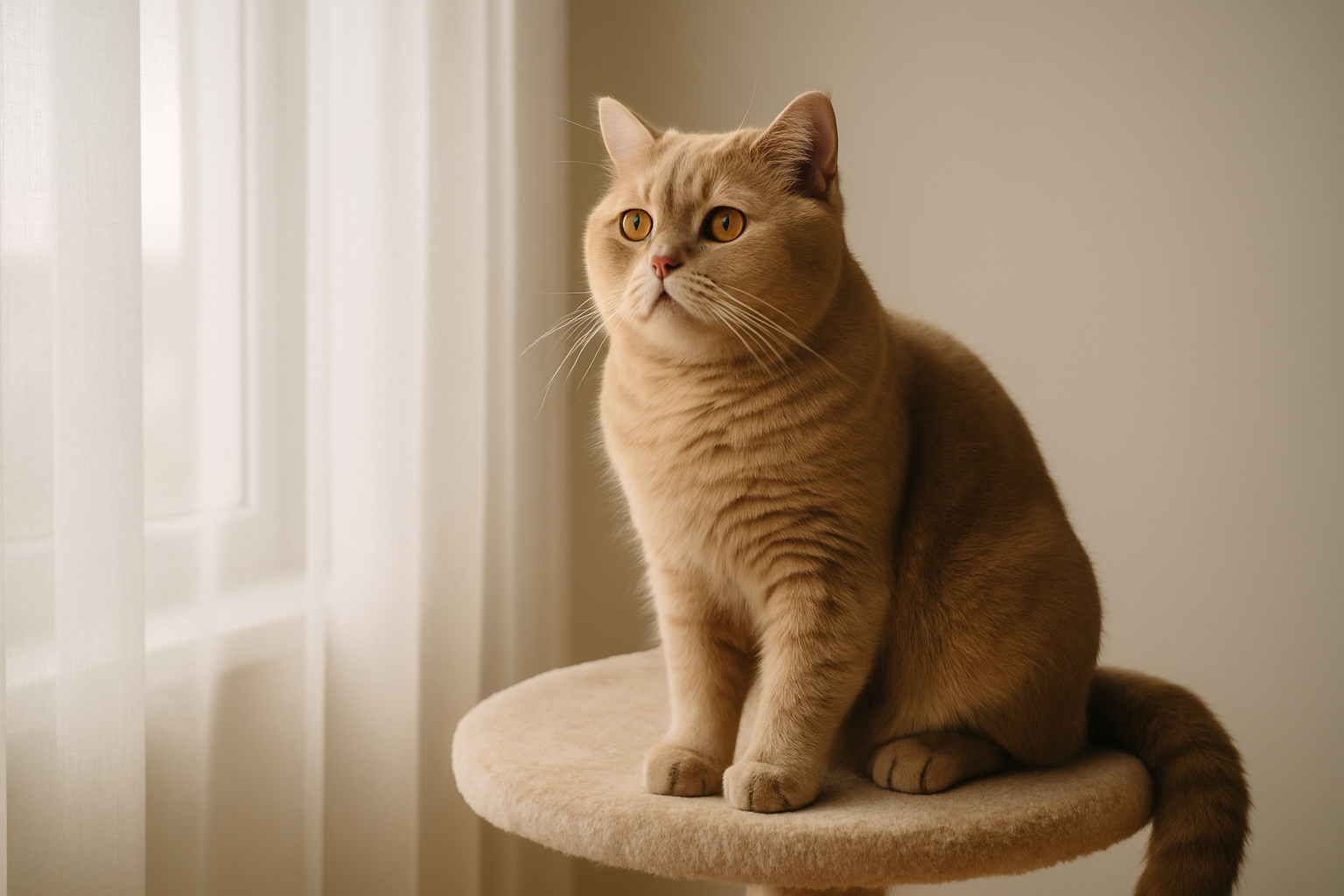
The British Shorthair cat is one of those breeds that wins people over without trying very hard. That round face, dense plush coat, and calm, self-possessed manner give them an immediate appeal, and the personality backs it up. They’re affectionate without being demanding, adaptable without being bland, and content in their own company without being distant.
They’re also one of the more laid-back breeds you can choose, which suits some owners perfectly and disappoints others who want a more interactive cat. British Shorthairs are companions rather than entertainers, and they’re happiest in a household that appreciates that distinction.
Here’s what it’s actually like to live with a British Shorthair cat, from personality and daily habits to grooming, health, cost, and whether they’re the right fit for your home.
Quick Breed Facts
- Origin: United Kingdom
- Breed registries: CFA, TICA, GCCF, FIFe
- Weight range: 7–17 lbs
- Lifespan: 12–20 years
- Coat: Short, dense, plush
- Colors and patterns: Blue, white, golden, cinnamon, chocolate, lilac, and more
- Eye color: Copper, gold, blue, or green
- Grooming: Low to moderate — weekly brushing recommended
- Activity level: Low to moderate
- Affection level: Moderate — affectionate but not clingy
- Vocality: Quiet and soft-spoken
- Good with children: Yes, very tolerant
- Good with other pets: Yes, especially with early introductions
History & Origin of the British Shorthair Cat
The British Shorthair is one of the oldest domesticated cat breeds in the world. Its ancestors are believed to have been brought to Britain by the Romans, where they bred with local wildcats over generations and gradually developed into the sturdy, shorthaired working cats that became common across British farms and households. By the late 1800s, breeders began standardizing the breed’s characteristics, focusing on the round face, dense coat, and solid, compact build that define the modern British Shorthair.
The breed nearly disappeared during World War II due to the disruption of breeding programs and food shortages. Recovery required careful crossbreeding with other breeds, including Russian Blue cats, which helped restore the signature plush coat. The British Blue was the original and most iconic color, but the breed now comes in over 30 recognized colors and patterns, including golden, cinnamon, chocolate, lilac, white, and colorpoint variations. Today the British Shorthair is one of the most popular pedigreed cat breeds in the world.
British Shorthair Cat Personality & Temperament
The British Shorthair has a calm, dignified temperament that makes it genuinely easy to live with. They’re affectionate with their people but on their own terms — more likely to settle nearby than to climb into your lap uninvited. They’re not aloof, but they’re independent, and they carry themselves with a quiet confidence that’s one of the breed’s most distinctive traits. You’ll often find them watching household activity from a comfortable spot rather than being in the middle of it.
They’re also reliably steady. British Shorthair cats don’t tend to be rattled by new people, changes in routine, or the energy of a busy household. They adapt well and are patient with children and other pets in a way that comes naturally rather than requiring extensive socialization. They’re not big talkers, but when they do communicate it’s with a soft, gentle meow that rarely becomes demanding.
British Shorthair Cat Appearance & Physical Traits
The British Shorthair has a distinctively round appearance throughout. The head is large and round with full cheeks, a broad nose, and large, round eyes that give the breed its characteristic open, friendly expression. The body is compact and muscular with a broad chest and short, strong legs, giving the overall impression of a solid, well-built cat that’s heavier than it looks. Males are noticeably larger than females and tend to develop particularly prominent jowls as they mature.
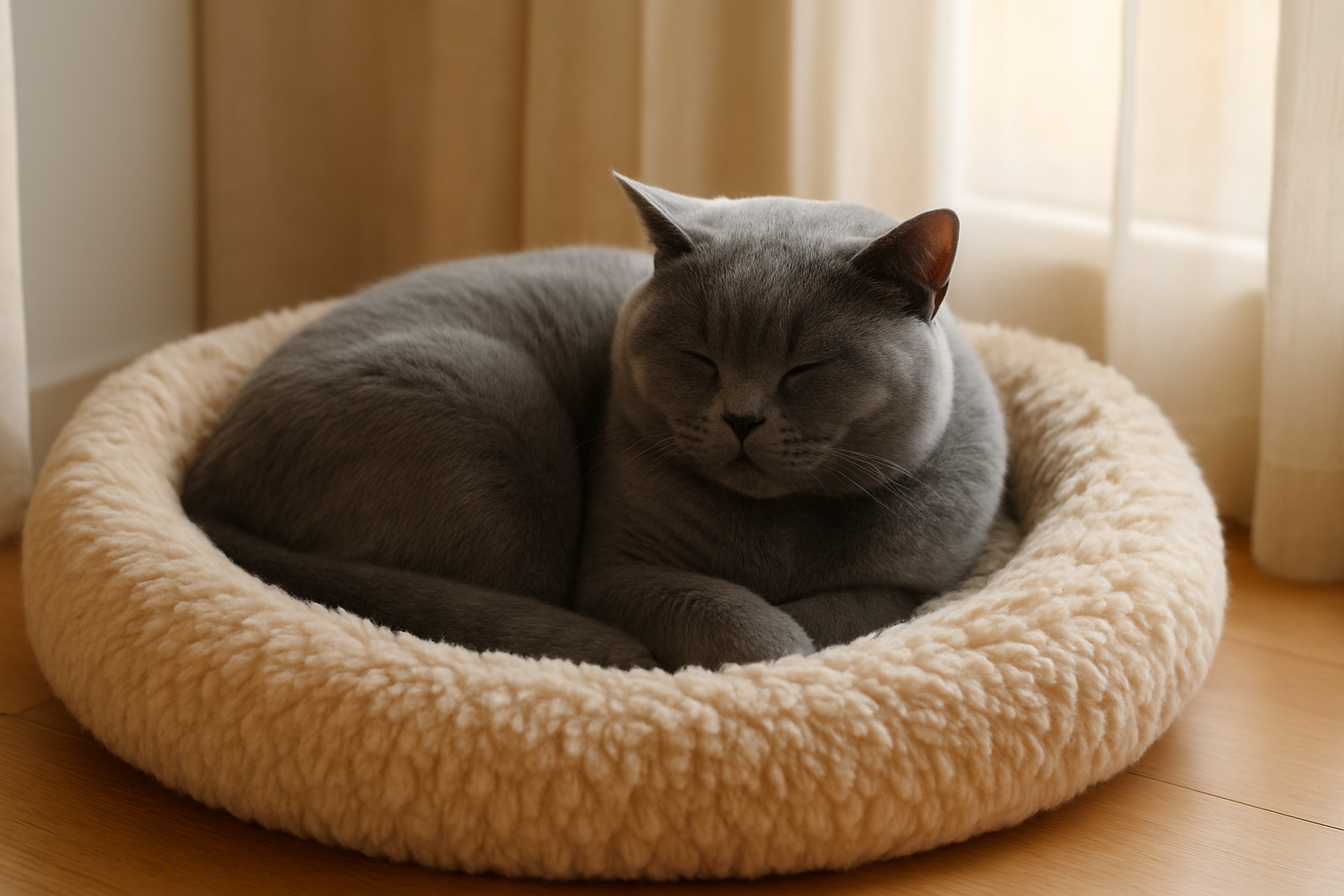
The coat is short, dense, and plush with a crisp texture that stands away from the body rather than lying flat. It’s thicker and more substantial than most shorthaired breeds, which gives the British Shorthair its characteristic teddy bear quality — though despite how it looks, it’s surprisingly easy to maintain.
British Shorthair Cat Colors
The British Blue is the most iconic color — a solid blue-gray that’s become almost synonymous with the breed. But British Shorthairs come in a much wider range than most people realize. White, black, cream, and chocolate are all well-established, and the golden British Shorthair has become increasingly popular in recent years for its warm, striking appearance. Cinnamon and lilac are rarer and tend to command higher prices from breeders.
Beyond solid colors, British Shorthairs come in tabby, colorpoint, bicolor, and smoke patterns, giving the breed one of the widest coat variation ranges of any pedigreed cat. Eye color varies with coat color: copper and gold are most common, blue eyes appear in colorpoints and some whites, and green occasionally shows up in certain silver and golden lines.
British Shorthair Cat Grooming & Shedding
The British Shorthair’s dense, plush coat is lower-maintenance than it looks. Their fur doesn’t mat or tangle, and a weekly brush is usually enough to remove loose hair and keep the coat looking its best. During seasonal shedding in spring and fall, more frequent brushing helps manage the extra loose fur, but it never becomes a significant time commitment. Many British Shorthairs enjoy being brushed, which makes the routine easy to establish and maintain.
Beyond coat care, the usual basics apply: nail trims every couple of weeks, regular ear checks, and dental care. Because this breed can be prone to weight gain, grooming sessions are also a good opportunity to check body condition — their dense coat can make it easy to miss gradual weight changes between vet visits.
Activity & Play
British Shorthair cats are low to moderately active and prefer short, calm play sessions over intense, high-energy activity. They enjoy batting at toys, watching birds from a window perch, and occasional games with a feather wand, but they’re just as happy to observe from a comfortable spot while life happens around them. Puzzle feeders are a particularly good fit for this breed since they provide mental stimulation in a calm, measured way that suits their temperament.
Daily enrichment is still important, especially for weight management. British Shorthairs are built solidly and can gain weight if they’re sedentary and overfed, so building gentle daily activity into their routine is worthwhile even if the sessions are short. Low-level climbing structures with broad, stable platforms suit their body type better than tall, narrow cat trees designed for more agile breeds.

What Do British Shorthair Cats Eat?
British Shorthair cats do well on a high-protein, meat-based diet with animal protein listed as the first ingredient. Because they’re a low to moderately active breed with a naturally solid build, portion control is one of the most important aspects of their care. Two measured meals per day works well for most adult British Shorthairs. Kittens need more frequent feeding, typically three to four small meals daily until around six months of age.
A mix of wet and dry food works well for most cats of this breed. Wet food supports hydration and provides the animal protein they need, while dry food adds some dental benefit. Their dense coat can make weight gain easy to miss between vet visits, so monitoring body condition regularly and adjusting portions accordingly is worth doing consistently throughout their life.
British Shorthair Cat Health & Lifespan
The British Shorthair is a generally robust breed with an impressive lifespan of 12 to 20 years. Like most purebreds, they have a few hereditary conditions worth being aware of. Hypertrophic cardiomyopathy (HCM) is the most significant, a form of heart disease that can develop silently and is seen across many pedigreed breeds. Polycystic kidney disease (PKD) has also been documented in British Shorthairs, and responsible breeders screen for both conditions. Asking about health testing when choosing a kitten is always worthwhile.
Obesity is the most common day-to-day health risk for this breed, partly because of their laid-back nature and partly because their dense coat can mask gradual weight gain. Keeping them at a healthy weight through consistent portion control and regular gentle activity is one of the most practical things you can do for their long-term health. Regular vet checkups and dental care round out the essentials.
Family Compatibility
The British Shorthair is one of the more versatile breeds when it comes to household type. They do well with families, couples, singles, and seniors, and their tolerant, patient temperament makes them a genuinely good fit for homes with respectful children and other pets. They’re not easily startled or provoked, which is part of what makes them so reliably easy to live with across a wide range of situations.
They don’t need constant company or stimulation the way some more social breeds do, but they do appreciate having people around and form genuine bonds with their households over time. If you want a calm, affectionate companion that fits quietly into daily life without demanding the center of attention, the British Shorthair is one of the best options available.
Recommended Supplies for a British Shorthair Cat
British Shorthair cats need comfortable, practical basics that match their calm lifestyle and solid build. Focus on stability and comfort over novelty.
- Slicker brush or grooming mitt for weekly coat care
- Low to mid-height cat tree with wide, stable platforms
- Puzzle feeders and gentle interactive toys
- Wide, shallow food and water bowls to avoid whisker fatigue
- Cat water fountain to encourage hydration
- Roomy, consistently clean litter box

British Shorthair Cat Price and Cost
From a reputable breeder, British Shorthair kittens typically cost between $1,200 and $3,000, with price varying depending on coat color, pedigree, and breeder reputation. Rarer colors like golden, cinnamon, and lilac tend to sit at the higher end of that range. Responsible breeders screen for HCM and PKD and will provide health documentation and early vaccinations as part of the purchase.
Adoption is worth exploring. British Shorthairs occasionally appear in shelters or through breed-specific rescues, and adult cats often make particularly easy additions since their calm, adaptable personality is already fully developed. Adoption fees are significantly lower than breeder prices and give a cat a second home.
British Shorthair Cat FAQs
Are British Shorthair cats hypoallergenic?
No, British Shorthair cats are not hypoallergenic. All cats produce the Fel d 1 protein that triggers allergies. Their dense coat does shed, though less than many longhaired breeds, and regular grooming can help manage allergens in the home.
How much do British Shorthair cats cost?
Pet-quality British Shorthair kittens from a reputable breeder typically cost between $1,200 and $3,000. Rarer colors like golden, cinnamon, and lilac can cost more. Adoption through a rescue is a more affordable option.
What are the most popular British Shorthair cat colors?
The British Blue is the classic and most recognized color. Golden, chocolate, white, lilac, and cinnamon are all popular, with golden becoming increasingly sought after in recent years. The breed comes in solid, tabby, colorpoint, and bicolor patterns.
How long do British Shorthair cats live?
British Shorthair cats typically live 12 to 20 years with proper care. Regular vet checkups, weight management, and dental hygiene all contribute to a longer, healthier life.
Do British Shorthair cats like to be held?
Most British Shorthairs tolerate being held but prefer to be near you rather than on you. They’re affectionate on their own terms and tend to show affection by settling nearby rather than seeking physical contact constantly.
What is the difference between a British Shorthair and a Russian Blue cat?
Both breeds can appear similar in their blue coloration, but they differ significantly in build and personality. Russian Blue cats are more slender and fine-boned with vivid green eyes and a silkier coat. British Shorthairs are stockier and rounder with copper or gold eyes and a denser, plushier coat. Russian Blues are also more sensitive and reserved, while British Shorthairs are more adaptable and less easily unsettled.
Is the British Shorthair Cat Right for You?
If you want a calm, adaptable, and genuinely beautiful cat that brings a steady, affectionate presence to daily life without demanding constant attention, the British Shorthair is one of the best choices available. They suit a wide range of households and are one of the most reliably easy breeds to live with in terms of temperament. The main practical considerations are weight management and grooming, both of which are manageable with a consistent routine.
They’re not the right choice if you want a highly interactive, energetic cat that seeks you out constantly. But if you appreciate a companion that’s comfortable in its own skin, quietly devoted, and content to share your space on its own terms, the British Shorthair will exceed your expectations.
Debbie Reid is the founder and chief editor of CatPedia.net, with over 25 years of hands-on experience in feline care, rescue, and behavior research. Inspired by her rescue cats Snickers and Bigboy, she collaborates with animal welfare resources and consults veterinary literature to turn complex feline health, nutrition, and behavior topics into clear, actionable guides.