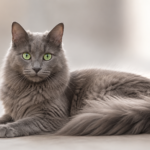
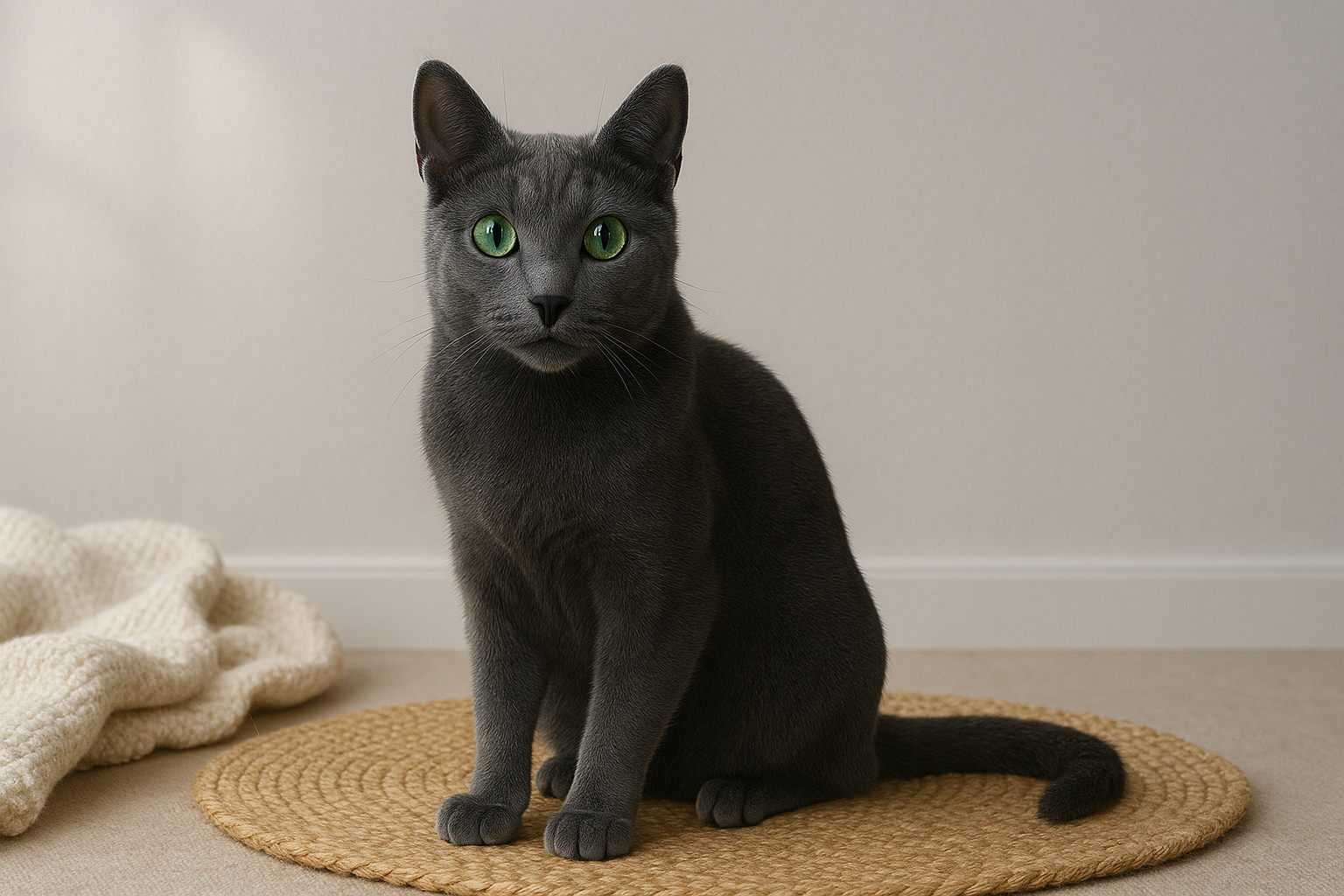
The Russian Blue cat is one of those breeds that takes a little time to reveal itself. That silver-blue coat and those vivid green eyes make an immediate impression, but the personality is something you discover gradually. They’re reserved with strangers, deeply loyal with family, and quietly affectionate in a way that feels earned rather than automatic.
They’re also not the right fit for every household. Russian Blue cats prefer calm, predictable environments and don’t do well with chaos, loud noise, or constant change. For the right owner that combination of elegance and quiet devotion is exactly what makes them so special.
Here’s what it’s actually like to live with a Russian Blue cat, from personality and daily habits to grooming, health, and whether they’re the right fit for your home.
Quick Breed Facts
- Origin: Russia (Archangel Isles)
- Breed registries: CFA, TICA, FIFe, GCCF
- Weight range: 7–12 lbs
- Lifespan: 15–20 years
- Coat: Short, plush, double-layered
- Colors and patterns: Solid blue-gray with a silvery sheen
- Eye color: Vivid emerald green
- Grooming: Low maintenance
- Activity level: Moderate
- Affection level: High with family, reserved with strangers
- Vocality: Soft and quiet
- Good with children: Yes, with gentle handling
- Good with other pets: Usually, with slow introductions
History & Origin of the Russian Blue Cat
The Russian Blue cat is believed to have originated in the northern port city of Arkhangelsk, Russia, sometimes called the Archangel city, which is where the breed’s early nickname “Archangel Cat” came from. Sailors are thought to have brought these striking gray cats to England and northern Europe in the mid-1800s, where their plush coats and regal bearing quickly attracted attention from cat fanciers.
By the 1870s Russian Blues were appearing at cat exhibitions in London, initially shown alongside other blue-coated cats before breeders began working to distinguish them as a separate breed. Over the following decades, breeders in England, Scandinavia, and the United States refined the breed’s distinct characteristics, including the fine-boned but muscular build, the vivid green eyes, and the signature double-layered coat. Today’s Russian Blue is the result of careful, deliberate breeding across multiple countries and well over a century of dedicated development.
Russian Blue Cat Personality & Temperament
The Russian Blue is a thoughtful, gentle cat that takes time to warm up but becomes deeply devoted once it does. They’re not the type to greet every visitor enthusiastically or seek attention from people they don’t know. With strangers they tend to observe from a distance, and they may disappear entirely when the house is busy or loud. That reserve can make them seem distant at first, but it melts away completely with trusted people.
With their own family, Russian Blue cats are quietly affectionate and surprisingly playful. They follow their people from room to room, curl up nearby during quiet time, and communicate with soft, gentle vocalizations rather than demanding meows. Some will play fetch, learn tricks, or show off a surprisingly silly side once they feel completely secure. They thrive on routine and consistency, and they reward patient, attentive owners with a level of loyalty that’s genuinely touching.
Russian Blue Cat Appearance & Physical Traits
The Russian Blue has a fine-boned but muscular build that gives it an elegant, athletic appearance. The head is wedge-shaped with a flat top, prominent whisker pads, and large, wide-set ears. Their most striking feature is the vivid emerald green eyes, which are a defining characteristic of the breed and one of the first things people notice.
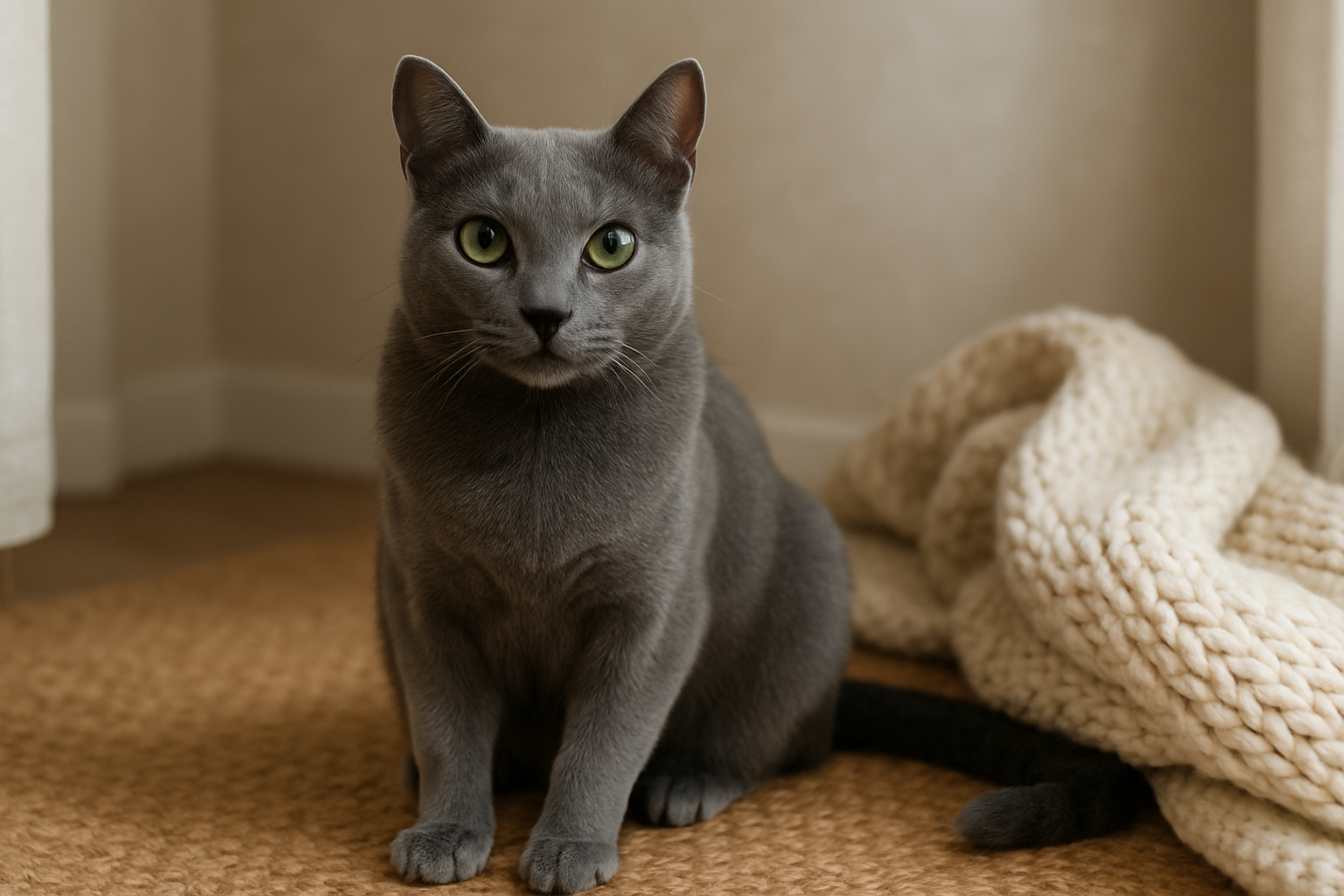
The coat is short, dense, and double-layered, with a plush texture that stands away from the body slightly and gives it a distinctive silvery sheen in light. It comes in one color only: a solid blue-gray with silver-tipped guard hairs that create that characteristic luminous quality. The coat is one of the breed’s most admired features, and it’s also one of the practical advantages, as it sheds lightly and requires minimal grooming compared to many other breeds.
Russian Blue Cat Grooming & Shedding
The Russian Blue is a low-maintenance breed when it comes to grooming. Their short, dense double coat sheds lightly throughout the year with slightly more shedding during seasonal transitions, but it’s minimal compared to most breeds. A gentle brush once a week is usually enough to remove loose hair and keep the coat looking plush and healthy. Many Russian Blues enjoy the quiet attention of a grooming session, which makes it a pleasant bonding routine rather than a chore.
Beyond coat care, the usual basics apply: nail trims every couple of weeks, regular ear checks, and dental care. Their coat rarely mats or tangles, and they’re naturally fastidious self-groomers, which keeps their coat in good condition between brushing sessions.
Activity & Play
Russian Blue cats are moderately active with a playful side that often surprises people who expect a purely reserved, serious cat. They enjoy games of fetch, batting toys under furniture, and watching birds from a window perch. Many develop strong routines and look forward to scheduled play sessions with their people. They’re not climbers or daredevils by nature, but they do appreciate having a quiet observation spot at some height.
Mental stimulation matters as much as physical play for this breed. Interactive puzzle toys, feather wands, and rotating toy selections keep their intelligent minds engaged. Because they’re routine-oriented, building consistent daily play into their schedule works better than sporadic bursts of attention separated by long quiet periods.

What Do Russian Blue Cats Eat?
Russian Blue cats do well on a high-protein, meat-based diet with animal protein listed as the first ingredient. One thing worth knowing about this breed is that they’re food-motivated and can be prone to weight gain if fed freely. Their dense, plush coat can actually hide gradual weight gain, which makes it easy to miss until it becomes a health concern. Measured meals and regular mealtimes work better than free-feeding for most Russian Blue cats.
A mix of wet food and dry food works well for most cats of this breed. Wet food supports hydration and provides the animal protein they need, while dry food adds some dental benefit. Puzzle feeders are a good option for this breed specifically, since they slow down eating and add a layer of mental stimulation that suits a clever, food-motivated cat.
Russian Blue Cat Health & Lifespan
The Russian Blue is one of the longer-lived domestic cat breeds, with most cats living 15 to 20 years and some reaching their early twenties with good care. They’re generally considered a naturally healthy breed with few breed-specific genetic issues, which is partly a result of their diverse gene pool and careful breeding practices over many generations.
The main health concerns to manage are weight and dental health. Russian Blues are food-motivated enough to overeat if given the opportunity, and obesity brings its own cascade of health issues over time. Regular vet checkups, consistent portion control, and dental care are the practical foundations for keeping a Russian Blue healthy across what can be a very long life.
Are Russian Blue Cats Hypoallergenic?
The Russian Blue is one of the breeds most often recommended for people with mild cat allergies. They’re believed to produce lower levels of the Fel d 1 protein that triggers most cat allergies, and their low-shedding coat means less airborne dander in the environment. Many allergy sufferers report significantly fewer symptoms around Russian Blue cats compared to other breeds.
That said, no cat is completely allergen-free. If you have cat allergies, spending time with a Russian Blue before committing is the only reliable way to know how you’ll react. Regular brushing by a non-allergic household member, air purifiers, and consistent cleaning all help manage exposure if you do decide to bring one home.
Family Compatibility
Russian Blue cats do best in calm, stable households where they can form deep bonds with a consistent set of people. They’re gentle with children who know how to interact with cats respectfully, and they can adapt to homes with other calm pets when introductions are handled gradually. What they don’t do well with is a consistently chaotic, noisy, or unpredictable environment. They’re not a breed that shrugs off disruption easily.
They suit singles, couples, and quieter families particularly well. Seniors often find them ideal companions because of their gentle, undemanding nature. Once they’ve bonded with their household, Russian Blue cats are remarkably devoted and will provide years of quiet, loyal companionship that most owners find deeply rewarding.
Recommended Supplies for a Russian Blue Cat
Russian Blue cats need an environment that feels calm and secure. Focus on comfort, quiet enrichment, and a consistent setup rather than novelty or constant change.
- Stable cat tree or window perch for lounging and observation
- Interactive puzzle toys and feather wands for mental stimulation
- Wide, shallow food and water bowls to avoid whisker fatigue
- Cat water fountain to encourage hydration
- Soft grooming brush for weekly coat care
- Roomy, consistently clean litter box in a quiet location

Russian Blue Cat Price and Cost
From a reputable breeder, Russian Blue kittens typically cost between $800 and $2,500, with price varying depending on pedigree, breeder reputation, and region. Kittens from champion bloodlines or with show potential sit at the higher end of that range. Responsible breeders will provide health guarantees, early vaccinations, and documentation of the parents’ health history.
Adoption is worth exploring. Russian Blues and Russian Blue mixes occasionally appear in shelters or through breed-specific rescues. The Rescue Me Russian Blue rescue organization is a good starting point if you’re open to an adult cat. Adoption fees are significantly lower than breeder prices, and adult cats come already socialized and litter trained.
Russian Blue Cat FAQs
Are Russian Blue cats hypoallergenic?
They’re considered one of the more allergy-friendly breeds. Russian Blue cats produce lower levels of the Fel d 1 protein and shed minimally, which many allergy sufferers find significantly more tolerable. No cat is completely allergen-free, so spending time with one before adopting is always recommended.
How much does a Russian Blue cat cost?
From a reputable breeder, expect to pay between $800 and $2,500. Show-quality or champion bloodline kittens cost more. Adoption through a rescue is a more affordable option if you’re open to an adult cat.
How long do Russian Blue cats live?
Russian Blue cats typically live 15 to 20 years, with some reaching their early twenties with proper care. They’re one of the longer-lived domestic cat breeds, which makes diet, weight management, and regular vet care especially important.
Do Russian Blue cats shed a lot?
No. Their short double coat sheds lightly year-round with minimal seasonal increase. Weekly brushing is usually all the maintenance they need, and their coat rarely mats or tangles.
Are Russian Blue cats good with children and other pets?
Yes, with gentle handling and gradual introductions. They’re patient and affectionate with people they trust, but they do better in calmer environments. Very young children or chaotic households may not suit their sensitive temperament.
What color eyes do Russian Blue cats have?
Russian Blue cats have vivid emerald green eyes, which are one of their most distinctive and recognizable features. Kittens are born with yellow eyes that gradually transition to green as they mature.
Is the Russian Blue Cat Right for You?
If you want a calm, deeply loyal, and strikingly beautiful cat that rewards patience with genuine devotion, the Russian Blue is one of the best choices available. They’re best suited to quieter households where they can form close bonds with a consistent set of people and settle into a comfortable routine.
The honest caveat is that they need time and a stable environment to fully open up. Rush them, overwhelm them, or upend their routine too often and you’ll get the reserved, cautious version of this cat rather than the affectionate, playful one. Give them what they need and the Russian Blue will be one of the most rewarding companions you’ve ever lived with.
Debbie Reid is the founder and chief editor of CatPedia.net, with over 25 years of hands-on experience in feline care, rescue, and behavior research. Inspired by her rescue cats Snickers and Bigboy, she collaborates with animal welfare resources and consults veterinary literature to turn complex feline health, nutrition, and behavior topics into clear, actionable guides.