Yes, cats really do shed their claws, though they’re usually not losing the whole claw. What you’re finding is most often the outer sheath, the older layer that comes loose as a newer, sharper claw grows in underneath.
Because that sheath often comes off in one curved piece, it can look like a full nail at first glance. It’s really more like a little shell that has loosened and fallen away.
Here’s why cats shed their claws, how often it happens, when nail trimming helps, and when a claw problem may need a vet visit.
Why Do Cats Shed Their Claws?
Cats shed their claw sheaths to keep their claws sharp, healthy, and ready to use. As the outer layer wears down, it loosens and eventually comes off through scratching, climbing, stretching, or normal daily movement.
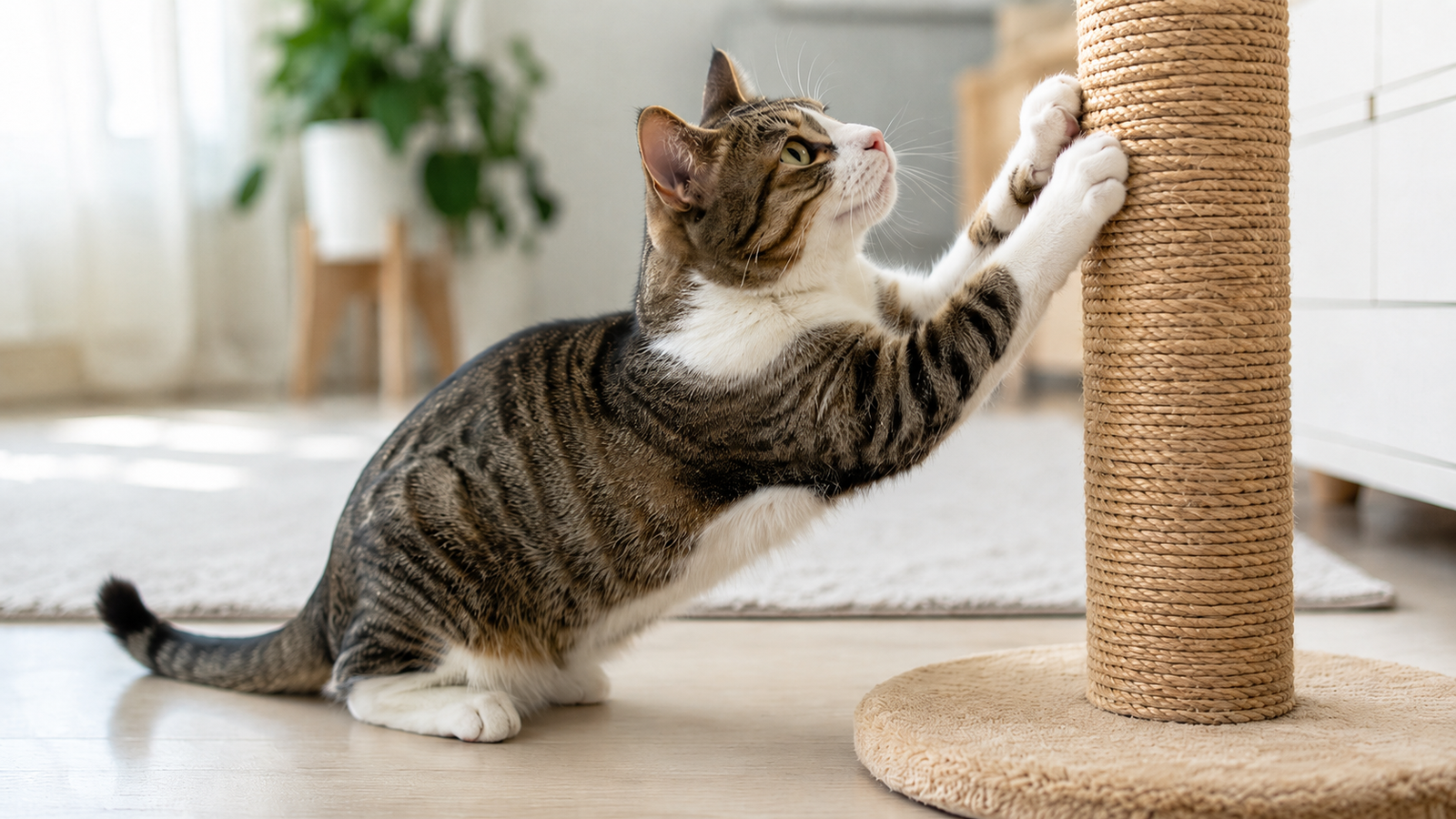
This is one reason scratching is so important. When your cat scratches a post, cardboard scratcher, rug, or the side of your couch, they’re not just being dramatic. They’re stretching their body, helping old claw layers come loose, and marking territory. To your cat, scratching is part gym, part nail salon, and part message board.
Indoor cats may need a little more help with this than cats who climb trees or walk on rough outdoor surfaces. Scratching posts, cat trees, and regular nail checks all help keep their claws from getting too long, sharp, or stuck in fabric.
How Often Do Cats Shed Their Claws?
Cats shed claw sheaths as their nails grow, but you may not notice every piece. Some fall off in scratching posts, carpet fibers, bedding, or spots you don’t usually check.
If you find a few little claw shells around the house now and then, that’s usually normal. You may notice them more around a favorite scratching post or during times when your cat’s been scratching, climbing, or playing more than usual.
Kittens and younger cats may seem to shed claw sheaths more often because their claws grow quickly and they’re always playing, climbing, and testing everything with their paws. Older cats can have a harder time loosening those outer layers if they’re less active, stiff, or dealing with thickened nails.
When Is Claw Shedding Not Normal?
Most claw sheaths are nothing to worry about, but not every claw issue is normal. A loose outer layer is very different from a claw that’s torn, bleeding, swollen, or painful.
It’s always worth checking in with your veterinarian if you notice any of these signs:
- Limping or favoring one paw
- Licking or chewing one paw over and over
- Hiding more than usual or seeming withdrawn
- Pulling away or reacting when you touch a foot
- Blood spots on the floor, bedding, or scratching posts
Those signs can point to a broken nail, an injury, an infection, or a claw that’s growing into the paw pad. Also watch for claws that look unusually thick, curved, brittle, or dirty at the base. This is especially important for senior cats, since older cats may scratch less and their nails can thicken or grow into the pad if they aren’t checked regularly.
Should I Trim My Cat’s Nails?
Many indoor cats benefit from regular nail trims. Even though claw shedding is normal, trimming helps keep the tips from getting too sharp, snagging on fabric, or growing too long.
This is especially true for cats who live indoors, scratch less often, or are getting older. Their claws may not wear down as naturally, so a quick trim can keep them more comfortable and help prevent the nails from catching on blankets, carpet, toys, or clothing.
You don’t need to cut much. A small trim at the sharp tip is enough for most cats. Avoid the pink area inside the nail, called the quick, because cutting that part can hurt and cause bleeding.
Some cats need nail trims every few weeks, while others can go longer. If your cat’s claws are catching often, clicking on the floor, curling toward the paw pad, or scratching you during normal handling, it’s probably time for a trim. Thick claws, curled nails, or nails growing toward the paw pad should be handled by a vet or groomer.
How Can I Help My Cat Shed Claws Naturally?
The best thing you can do is give your cat places where scratching feels easy and satisfying. Scratching is what helps loosen old claw sheaths, so a good scratching post or pad gives those outer layers somewhere to catch and peel away naturally.
Offer more than one type of scratcher if you can. Some cats love tall vertical posts where they can stretch their whole body. Others prefer flat cardboard scratchers, angled scratchers, or rougher textures like sisal.
Placement matters too. Cats often like to scratch after waking up, so putting a scratcher near a favorite nap spot can make a big difference. If your cat keeps going after one piece of furniture, place an approved scratcher right beside it before slowly moving it to a better location.

FAQs About Cats Shedding Their Claws
Should I pull off a loose claw sheath myself?
No, it’s best to leave it alone. A loose sheath will come off on its own through scratching and normal movement. Pulling at one that isn’t ready can hurt your cat or damage the new claw underneath. If a sheath looks stuck and is bothering your cat, let your vet take a look.
Is it bad if I never find any claw sheaths?
No. Many cats shed sheaths in places you never check, like deep in a scratching post, in carpet fibers, or in bedding. Outdoor cats may wear the layers down on rough surfaces so cleanly that nothing obvious falls off. Never finding sheaths isn’t a problem as long as your cat’s claws look healthy and they’re scratching normally.
Do indoor cats shed claws differently than outdoor cats?
The shedding process is the same, but indoor cats often need more help with it. Outdoor cats wear their claws down on bark, concrete, and rough ground, so old layers loosen on their own. Indoor cats rely more on scratching posts and nail trims, which is why a good selection of scratchers matters more for them.
Do cats shed their back claws too?
Yes, cats can shed the outer layers of their back claws too. You may not notice those sheaths as often because back claws wear down through running, jumping, climbing, and normal movement. It’s still worth checking all four paws during nail trims, especially in older cats.
Is Cat Claw Shedding Something to Worry About?
For most cats, no. Finding the occasional curved little shell on the rug just means your cat’s claws are doing what claws are designed to do, quietly shedding old layers and growing fresh ones underneath. It’s one of those small background things that goes on without you noticing most of the time.
If your cat seems comfortable, scratches normally, and lets you handle their paws, there’s usually nothing more you need to do. Anything that looks painful, swollen, or out of the ordinary is worth a quick check with your vet.
Debbie Reid is the founder and chief editor of CatPedia.net, with over 25 years of hands-on experience in feline care, rescue, and behavior research. Inspired by her rescue cats Snickers and Bigboy, she collaborates with animal welfare resources and consults veterinary literature to turn complex feline health, nutrition, and behavior topics into clear, actionable guides.