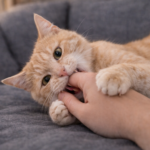

Bringing home a new cat when you already have a resident cat is stressful, and the first few weeks are usually the worst of it. Maybe you just adopted a kitten and your resident cat is glaring from under the bed. Maybe you brought home an adult from a shelter and both cats are hissing through a door. Or maybe your two cats used to get along, one came back from the vet, and suddenly they can’t stand each other.
All of these situations are fixable, and the process is roughly the same. What separates introductions that work from ones that don’t is how much time you give them.
The biggest mistake is putting the cats in the same room and hoping it works out. Sometimes it does. More often it ends in a fight that both cats remember for years, and once cats decide they dislike each other, changing that is hard.
Doing this properly takes weeks, not days.
Why a Slow Introduction Matters
Your resident cat sees your home as their territory. From their perspective, a new cat is an intruder in a space they already own. That reaction is instinct, and it doesn’t go away because you want the cats to be friends.
Rushing past this creates two problems. The first is behavioral. Cats who start off badly often stay that way, and reversing a hostile relationship is much harder than building a good one from the start.
The second is physical. Stress from a bad introduction shows up as peeing outside the litter box, spraying to mark territory, over-grooming, appetite changes, and stress-related conditions like feline lower urinary tract disease (FLUTD).
Slow introductions give your cats time to accept the situation before it becomes a fight your household lives with for years.
Before You Bring the New Cat Home
Most of the work of a successful introduction happens before the new cat arrives. Getting the setup right buys you a much easier first few weeks.
Choose the right room
Pick a room that will belong to the new cat for the first week or two. Good options are:
- Quiet, away from the main household traffic
- A space your resident cat doesn’t spend much time in
- A door with a gap underneath, so the cats can smell each other safely
- Big enough to hold everything the new cat needs without feeling cramped
A spare bedroom or home office usually works well. A bathroom can work for a very shy cat who needs a small space to feel secure, but it’s tight for longer stays.
Stock the room with the new cat’s own things

The new cat needs their own resources, and these should be new rather than borrowed from the resident cat. Anything that already smells like your resident cat sends the wrong signal.
- Litter box, placed away from the food and water
- Food and water bowls
- A bed or two soft resting spots
- Scratching post
- A few toys
- A cat tree or elevated perch if the room allows it
- Somewhere to hide, like a covered bed, a cardboard box, or space under furniture
Hiding spots matter more than people expect. A cat with somewhere to retreat settles in faster than one with nowhere to disappear.
While you’re setting up the new cat’s space, plan for the rest of the house too. The rule for a multi-cat household is one litter box per cat plus one extra, spaced apart so one cat can’t guard both. Add food and water stations in different rooms, and resting spots at different heights, so neither cat has to compete for anything. Getting these in place before you need them prevents resource fights from starting.
Close the door a few days early
Shut the room off from your resident cat two or three days before the new cat arrives. This gives them time to accept that the space is no longer part of their territory. If they only lose access on arrival day, the closed door and the new smells hit them at the same time, which puts your resident cat on edge before you’ve even opened the carrier.
The First Few Days: Full Separation
When the new cat arrives, take them straight to their room and close the door. No visual contact with your resident cat, no quick introductions, no “let them just see each other for a minute.” Even a brief sighting through a crack in the door can start the relationship off badly.
The new cat needs to decompress. They’ve just been through a car ride, a new building, new smells, and probably a stressful few days at a shelter or breeder before that. Asking them to also handle another cat on day one is too much.
Feed both cats normally in their own spaces. Spend time with each of them separately, so your resident cat doesn’t feel replaced and the new cat starts bonding with you. Let the new cat come out from hiding on their own schedule. Some cats explore their room within an hour. Others stay under the bed for two days. Both are normal.
Plan on at least two to three days of full separation. Extend it if the new cat is still hiding, not eating, or clearly stressed. There’s no benefit to moving faster than they’re ready for.
Signs your new cat is ready for the next step
- Eating normally, not just picking at food
- Using the litter box consistently
- Coming out from hiding when you’re in the room
- Exploring their space and settling on a favorite spot
- Relaxed body language, loose posture, tail up, willing to be petted
Scent Swapping: The Real Foundation
This is the step most people rush, and it’s the step that does the most work. Scent swapping is what turns two strangers into two cats who at least recognize each other, and skipping it is why so many introductions fall apart at the first physical meeting.
Why scent matters more than sight
Cats identify each other by smell more than by sight. When two cats meet, the sniff comes first, and that sniff tells them almost everything they need to know: is this cat familiar, are they part of my group, are they a threat? Your two cats have never met, so both start with “threat” as the default answer.
Everything else in the introduction process, from visual contact to the first physical meeting, works better when the cats already accept each other’s smell. Scent is the foundation you build everything on.

How to swap scents between your cats
Work through these techniques over several days to a week. Do more than one at a time, and rotate them so both cats are constantly getting fresh information about each other.
Cheek-rub cloth exchange. Take a soft cloth and gently rub it around each cat’s cheeks, where their scent glands are concentrated. Place the resident cat’s cloth in the new cat’s room, and the new cat’s cloth in the resident cat’s space. This is the most direct scent exchange you can do.
Bedding swap. After a few days, swap the beds or blankets each cat has been sleeping on. Now each cat is resting in a space that smells strongly of the other. If either cat reacts by hissing at the bed or refusing to lie on it, take a step back and stick with the cloth exchange for longer.
Feed on opposite sides of the door. Place both cats’ food bowls near the closed door, on their respective sides. Eating is one of the strongest positive associations a cat has, so pairing it with the other cat’s scent teaches both of them that the new smell means good things happen. Start with the bowls a few feet from the door and move them closer as both cats stay relaxed.
Site swap. Once both cats are calm eating near the door, try a full site swap. Put the new cat in a carrier or a different closed room, then let your resident cat explore the new cat’s space freely. After 15 to 30 minutes, swap them back. Each cat gets to investigate the other’s scent all through their environment without any risk of a face-to-face encounter. Do this a few times over several days.
What to watch for during scent swapping
You’re looking for both cats to grow bored of the other’s scent. Bored is the goal. Bored means the smell has stopped being novel or threatening, and that’s when you know the foundation is ready.
Signs you can move to the next step:
- Both cats eating calmly near the door
- No hissing or growling when they encounter the other’s scent
- Willing to sleep on swapped bedding without reacting
- Investigating the other cat’s items with curiosity rather than fear
Signs you need to slow down:
- Hissing or growling at the door or at scented items
- Spraying or marking near the door
- Refusing to eat near the door
- Avoiding the area entirely
If you see the slow-down signs, don’t force it. Go back to the previous stage, extend the time, and let the cats set the pace. Scent swapping that takes two weeks is still faster than an introduction that fails and has to restart from zero.
Before Visual Introductions: Know What to Watch For
Once your cats can handle each other’s scent calmly, the next step is letting them see each other. Before you do, you need to know the difference between normal tension and signs that you’re moving too fast. What follows are the signals you’ll be watching for during visual introductions and the physical meeting that comes after.
Relaxed signs: keep going
These are the signs you want to see. Both cats are handling the current stage well. Once these behaviors are consistent, you can move to the next one.
- Ears pointed forward or in a natural upright position
- Loose, relaxed body posture
- Tail held upright, or curled softly at the tip
- Normal grooming behavior in the other cat’s presence
- Able to look at the other cat and then look away
- Moving around normally instead of freezing or fixating
Warning signs: slow down but don’t panic
These signs mean one or both cats are stressed but not yet in fight-or-flight mode. Stay at the current stage, shorten your sessions, and give them more time before progressing.
- Ears flattened sideways or against the head
- Low, crouched body posture
- Tail lashing, twitching hard, or puffed up
- Dilated pupils in normal lighting
- Hissing or growling
- Hard staring at the other cat or at the door
- Fur standing up along the back or tail
If warning signs escalate, such as persistent hissing or growling, lunging, or a cat becoming fixated on the other and unable to be distracted, end the session immediately. Go back to the previous stage for several more days before trying again.
What to do in the moment
If you see warning signs during a session, end it calmly. Don’t scoop up either cat quickly or make sudden movements. Toss a treat or a toy to distract them, then guide one cat back to their space without making a scene. Ending a session before things escalate is a win, not a failure.
If either cat starts showing broader stress signs outside of sessions, such as hiding again after they’d stopped, refusing to eat, or avoiding areas they normally use, that’s a signal the pace is wrong. Slow down, and see the When It Goes Wrong section for next steps.
Visual Introductions Through a Barrier
Once both cats are relaxed with each other’s scent and eating calmly on their respective sides of the door, they’re ready to see each other. This stage is also where a lot of people get impatient and let the cats meet directly, which is how introductions that were going well fall apart.
Set up the right kind of barrier
You have a few options depending on your home:
A cracked door with a doorstop. Simple and free. Wedge the door open a couple of inches so the cats can see and smell each other but can’t get through the opening. Make sure the doorstop is solid enough that neither cat can push the door open by leaning on it.
A tall baby gate. Cats jump, so a single baby gate usually isn’t enough. Stack two gates on top of each other, or use a pet gate designed to be cat-height. This gives you a full view between the two spaces without any physical contact.
A mesh screen door. If you’re planning to have cats separated regularly, installing a screen door on the new cat’s room is the most sustainable option. Both cats can see each other clearly through the mesh, and you can leave them near it without supervision once they’re relaxed.
Keep the first sessions short
Start with five minutes, a few times a day. The goal is to end every session while both cats are still calm, not to see how long they can tolerate each other before something goes wrong.
During each session:
- Sit on the floor near the barrier so both cats can see you’re relaxed
- Feed treats to both cats near the barrier, ideally with help from a second person
- Talk softly and reward calm behavior with praise
- Watch for the warning signs from the previous section
- End the session before either cat escalates, not after
If a session ends well, both cats build a slightly more positive association with the other. If it ends badly, it can reinforce tension instead. Short, successful sessions add up. One bad encounter can undo a lot of that progress.
Gradually extend the sessions
Over several days, work up from five-minute sessions to fifteen, then thirty, then an hour or more. Add duration only when the previous length is consistently going well. If a longer session shows warning signs, drop back to the last length that worked and stay there for another day or two before trying to extend again.
You’ll know this stage is done when both cats can spend extended time in view of each other without tension. They don’t need to be interested in each other, and they don’t need to be friendly. They just need to be able to coexist through the barrier without stress. Neutral is a win.
The First Physical Meeting
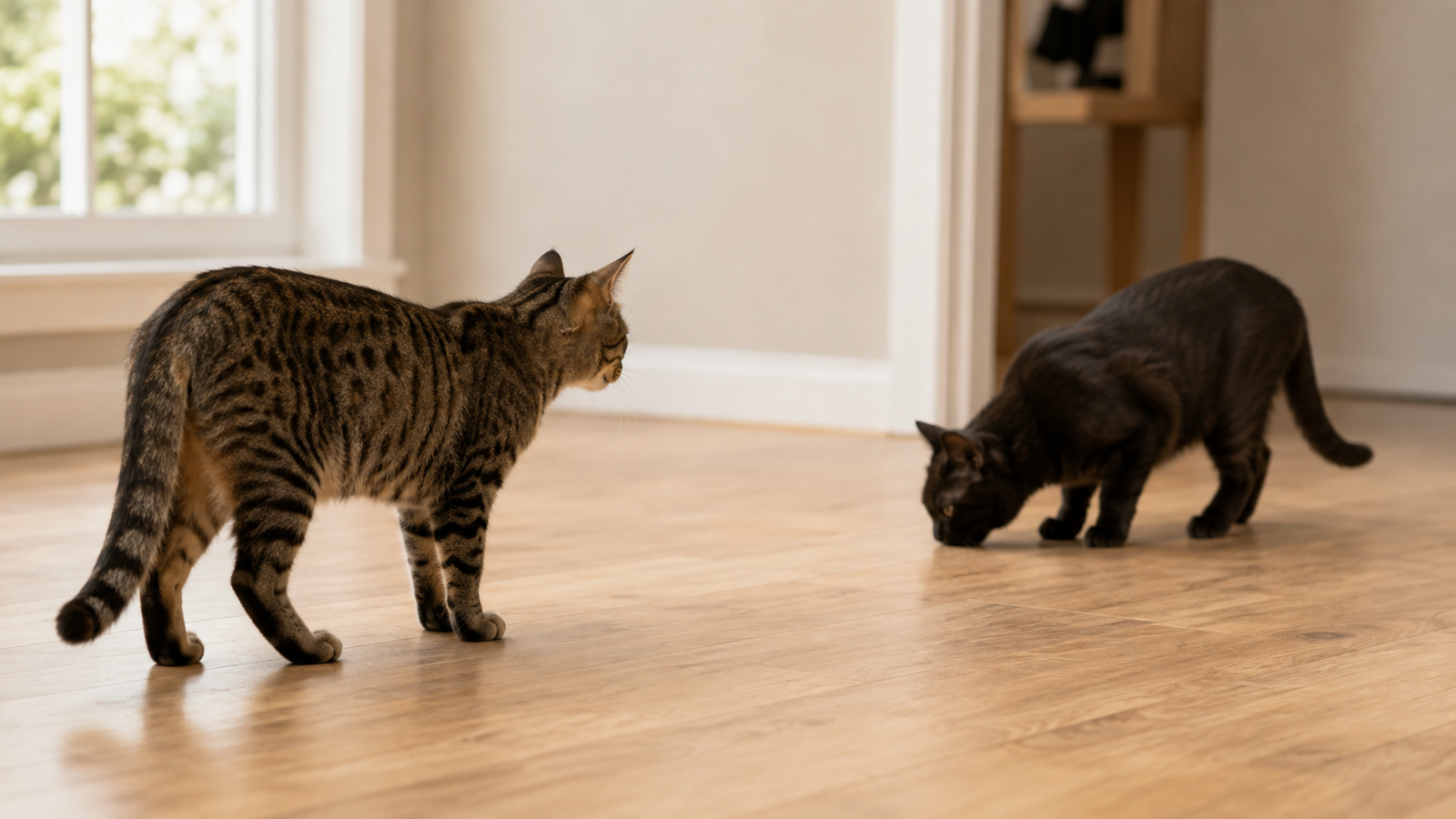
If you’ve done the earlier stages well, the first physical meeting is often anticlimactic. Both cats already know each other’s scent, they’ve seen each other through a barrier for days or weeks, and the removal of the barrier is more of a formality than a dramatic reveal. Anticlimactic is what you want.
The thing to avoid is a first meeting that turns into a fight. A single bad meeting can undo weeks of work and teach both cats that the other one is a threat. That’s why the setup for this stage matters as much as the meeting itself.
Set up the room before you open the door
The physical environment does most of the work of keeping the first meeting safe. Prep before either cat is in the room.
- Choose a neutral space. Not the resident cat’s favorite room, and not the new cat’s decompression room. A neutral third space keeps either cat from feeling like their territory is being invaded.
- Create escape routes. Both cats need to be able to leave the situation. Leave doors open to adjacent spaces, and make sure neither cat can be cornered.
- Add vertical space. Cat trees, shelves, the back of a couch, a windowsill. Vertical space lets a stressed cat get above the situation, which is often enough to defuse tension.
- Block off “unders.” Beds, couches, dressers, anywhere a chased cat could disappear and continue the fight where you can’t reach them. Block these off with pillows, boxes, or by pushing furniture flush against the wall.
- Have sight blockers ready. A large piece of cardboard or a flat pillow works. If a stare-down starts, sliding a sight blocker between the cats breaks the tension without physical contact.
- Keep a blanket within reach. If a fight breaks out, tossing a blanket over one cat is the safest way to separate them.
- Bring treats and distraction toys. Wand toys are ideal because they let you engage a cat without putting your hands near the other one.
- Get a second person if you can. One person per cat means each cat has their own source of treats, attention, and calm. It also means you can separate the cats in opposite directions if something goes wrong.
How the meeting itself should go
Open the door or gate and let both cats enter the room on their own terms. Don’t carry either cat in. Don’t push them toward each other. Don’t hold one cat and let the other approach. Cats decide their own approach speed, and forcing proximity is the fastest way to turn a curious cat into a defensive one.
What you want to see:
- Both cats moving freely around the room
- Sniffing each other briefly, then moving on
- Ignoring each other, which is often the best possible outcome for a first meeting
- Neutral body language, no staring or stalking
Keep the first meeting to five to ten minutes. Ending on a calm, boring note is the best possible outcome, and you can extend future meetings once you know both cats can handle the shorter version.
If things start to go wrong
Warning signs during a physical meeting mean end the session now, not in a minute. Slide a sight blocker between the cats to break eye contact, distract each cat with a toy or treat, and calmly guide them back to their separate spaces.
If aggressive body language escalates to growling, stalking, or lunging, separate immediately. Don’t try to redirect and don’t wait to see if it settles. Get both cats into their own rooms and close the doors.
If a fight actually breaks out, never put your hands between the cats. Adrenaline overrides recognition, and a cat who would never bite you can bite badly in this state. Toss a blanket over one cat to block their view and interrupt the fight, then use the blanket or another barrier to separate them. Once they’re apart, move one cat to a separate room and close the door. Check both cats for injuries once they’ve calmed down, and have any bite wounds seen by a vet because punctures can abscess easily.
See When It Goes Wrong for what to do in the days after.
The Introduction Timeline: What to Expect Week by Week
Here’s a realistic timeline for a properly-paced introduction, with the signs that tell you whether you’re on track or need to back off.
| Timeframe | What’s happening | Signs you’re on track | When to slow down |
|---|---|---|---|
| Days 1–3 | Full separation, decompression | New cat eating, using the litter box, exploring their room | New cat still hiding, not eating, or clearly shut down |
| Days 4–7 | Scent swapping begins | Calm behavior at the door during feeding, curiosity about scented items | Hissing or growling through the door, spraying near the boundary |
| Week 2 | Visual introductions through a barrier | Both cats relaxed within sight of each other, eating near the barrier | Staring, tail lashing, refusing food, or swatting at the barrier |
| Week 3 | Short supervised physical meetings | Neutral or curious interactions, brief sniffing, no aggression | Fighting, stalking, lunging, or persistent aggression |
| Week 4+ | Longer supervised time together, followed by short unsupervised periods when ready | Coexisting calmly, ignoring each other, or choosing to interact without tension | Renewed hissing, avoidance, resource guarding, or one cat blocking the other |
Let your cats set the timeline
The dates above are a rough guide, not a schedule. Some pairs move through these stages in a few weeks; others get stuck at one stage for a month. Move forward when both cats are consistently relaxed, not because you’ve hit a certain day.
Let your slower cat set the pace. If one cat is ready to move to the next stage and the other isn’t, you’re not ready. Pushing the reluctant cat forward is how introductions get set back.
Not every pair becomes friends
Some cats bond deeply, groom each other, and sleep curled up together. Others live in the same home for years without ever becoming close, eating in separate areas and mostly ignoring each other. Both count as success.
When It Goes Wrong: What to Do
Not every introduction follows the timeline cleanly. Cats are individuals, and some pairs hit real problems that need more than “go back a step” advice. When that happens, the next step depends on what’s actually going wrong.
If your cats fight during the first physical meeting
First, stop the fight safely. Toss a blanket over one cat to block their view and interrupt the fight, then use the blanket or another barrier to separate them. Once they’re apart, move one cat to a separate room. Never reach between fighting cats with your bare hands.
Once both cats are separated:
- Don’t punish either cat. Punishment adds stress and teaches them to associate the other cat with negative consequences from you.
- Keep them fully apart for at least 48 hours, ideally longer. Both cats need time for adrenaline levels to drop.
- Check both cats for injuries and take them to the vet if you see any bite wounds.
- When you resume, restart from the visual barrier stage, not from full separation. You aren’t starting over. You’re rebuilding from the last stage that worked.
A single fight doesn’t end the relationship, but it does change the pace. Assume the next few weeks will move slower than they did the first time.
If one cat is stalking or blocking the other
This is almost always a resource guarding pattern. One cat has decided that the food, water, litter box, favorite sleeping spot, or path through the house belongs to them, and the other cat isn’t allowed near it.
The fix is more resources, not more discipline:
- Add a second litter box in a different location, following the one-per-cat-plus-one rule
- Set up separate feeding stations in different rooms
- Provide multiple water sources
- Create separate resting spots at different heights, so neither cat has to compete for their favorite perch
- If your home is multi-story, give each cat a floor with everything they need, so they only share space when they choose to
Resource guarding often looks like aggression but is really about scarcity. Once neither cat feels like they have to compete, the blocking behavior usually eases on its own. If it doesn’t, this is a good conversation to have with your vet or a behaviorist.
If the resident cat stops eating or using the litter box
Your resident cat is telling you the introduction is moving too fast. Stress-related litter box avoidance is one of the most common signs that a cat feels overwhelmed by a household change.
What to do:
- Go back to full separation. Not the visual barrier stage. Full separation.
- Restart at scent swapping only, and extend that phase significantly. Two weeks of scent swapping is not too much for a cat who has been this stressed.
- Rule out physical causes with a vet visit. Stress can trigger real medical problems, especially urinary issues, and appetite loss for more than 24 hours in a cat is a medical concern regardless of cause.
- Give your resident cat extra one-on-one time so they don’t feel displaced.
Once eating and litter box use return to normal for several days, you can begin scent swapping again, from the very beginning.
If the new cat is hiding constantly
A new cat who hides for the first day or two is normal. A new cat who is still hiding a week in, refuses to eat when you’re in the room, or hasn’t explored their space at all isn’t ready for any introduction, and pushing forward will make things worse.
Slow down and focus on the new cat’s confidence first:
- Extend the decompression phase for as long as it takes. Some cats need two or three weeks in their own room before they’re ready to think about another cat.
- Add more hiding spots in the new cat’s room, such as covered beds, cardboard boxes, or safe spaces under furniture.
- Sit in the room quietly without trying to engage. Read a book, work on your laptop, let the cat come to you.
- Consider a Feliway Classic diffuser in the new cat’s room. Feliway Classic mimics a facial pheromone that helps cats feel more secure in unfamiliar spaces, which is what a shut-down new cat needs at this stage.
- Feed high-value treats like a small amount of tuna or chicken to build positive associations with your presence.
Wait until the new cat is comfortable, eating well, and coming out to explore before starting scent swapping. Rushing a shy cat is one of the most reliable ways to fail an introduction.
If it’s been weeks with no progress
Sometimes an introduction stalls despite doing everything right. If you’ve been at it for a month or more and the cats are still tense, hissing at each other regularly, or one cat is spraying, losing weight, avoiding food, or showing other ongoing stress behaviors, it’s time for outside help.
Start with a vet visit. Pain and illness can cause aggression, and a medical issue in one cat can look like a behavioral problem between the two. A physical exam, bloodwork, and urinalysis can help rule out underlying causes before you treat the problem as purely behavioral.
If medical causes are ruled out, consult a qualified behaviorist. Look for a veterinary behaviorist or certified applied animal behaviorist rather than someone using the title “cat behaviorist” without recognized credentials. A behaviorist can observe the specific dynamic between your cats, identify triggers you may have missed, and build a plan around your household.
Medication may also be part of that plan. Fluoxetine and similar medications can help cats with high stress or ongoing aggression and may be used short-term during a difficult transition or longer-term when needed. Your vet or veterinary behaviorist can decide whether medication is appropriate.
Getting to this stage doesn’t mean you did something wrong. It means you’ve done the standard process and your cats need something the standard process can’t provide.
Reintroducing Cats Who Used to Get Along
Sometimes cats who have lived together peacefully for years suddenly can’t stand each other. This is disorienting for the humans in the household, but it’s a well-understood pattern, and the fix is the same as introducing new cats, just usually faster.
Why cats who were friends stop getting along
Three scenarios cause most cases of sudden hostility between cats who previously bonded.
One cat came back from the vet and the other one doesn’t recognize them. Cats identify each other by scent, and a vet visit changes how a cat smells: antiseptic, other animals, stress pheromones, medication. When the returning cat comes home, the resident cat may react as if a stranger just walked in. This is called non-recognition aggression, and it can escalate from confused hissing to a real fight within minutes.
A fight happened and broke the relationship. Cats have long memories for negative experiences. A single serious fight, sometimes triggered by something outside the household like a cat visible through a window, can redirect onto the closest available target and end a peaceful relationship overnight. Once that association forms, the cats need to be reintroduced from scratch.
Something changed in the household. A move, new furniture, a new baby, a new pet, a household member leaving, or even a change in your schedule can raise stress levels enough that cats who normally coexist start showing tension. The trigger isn’t the other cat, but the other cat becomes the target.
How to prevent non-recognition aggression before a vet visit
This scenario is largely preventable. Before you take one cat to the vet, take a soft cloth and rub it gently on both cats, one after the other, so they share a common scent. Leave that cloth in a shared space while one cat is at the vet.
When the vet cat returns:
- Don’t let the cats interact immediately. Put the returning cat in a separate room for at least an hour, longer if they’re stressed or on medication.
- Rub the shared cloth on the returning cat before any reunion, especially around their face and body, to mask the vet smell.
- Consider putting both cats’ regular scent back on the returning cat by rubbing them with an unwashed blanket from home.
- Reintroduce them through a cracked door first, just as you would in a normal introduction, before allowing full contact.
If your cats react badly after a vet visit, don’t panic. Separate them immediately and treat it as a reintroduction from that point forward.
How to reintroduce cats after a broken relationship
The process is the same as introducing new cats: full separation, then scent swapping, then visual introductions through a barrier, then supervised physical meetings. The timeline is usually faster because your cats have years of positive history to recover, not build from scratch.
What tends to be different:
- Full separation is usually shorter, often a few days rather than a week
- Scent swapping goes quickly because the cats already know each other’s scent, they just need to relearn that it’s safe
- Visual introductions can start sooner if both cats show curiosity rather than hostility
- Physical meetings may need to be shorter and more frequent at first than they would be with new cats
The exception is when the original fight was severe or when one cat sustained a real injury. In that case, treat the reintroduction as if the cats had never met, and consider consulting a behaviorist earlier rather than later. Trauma between cats is real, and some pairs never fully return to their previous relationship even with proper reintroduction.
If the trigger was something you can identify and fix, like a stray cat outside the window that set off redirected aggression, address that at the same time as the reintroduction. Otherwise you’re rebuilding a relationship on ground that’s still unstable.
How to Introduce a Kitten to an Older Cat
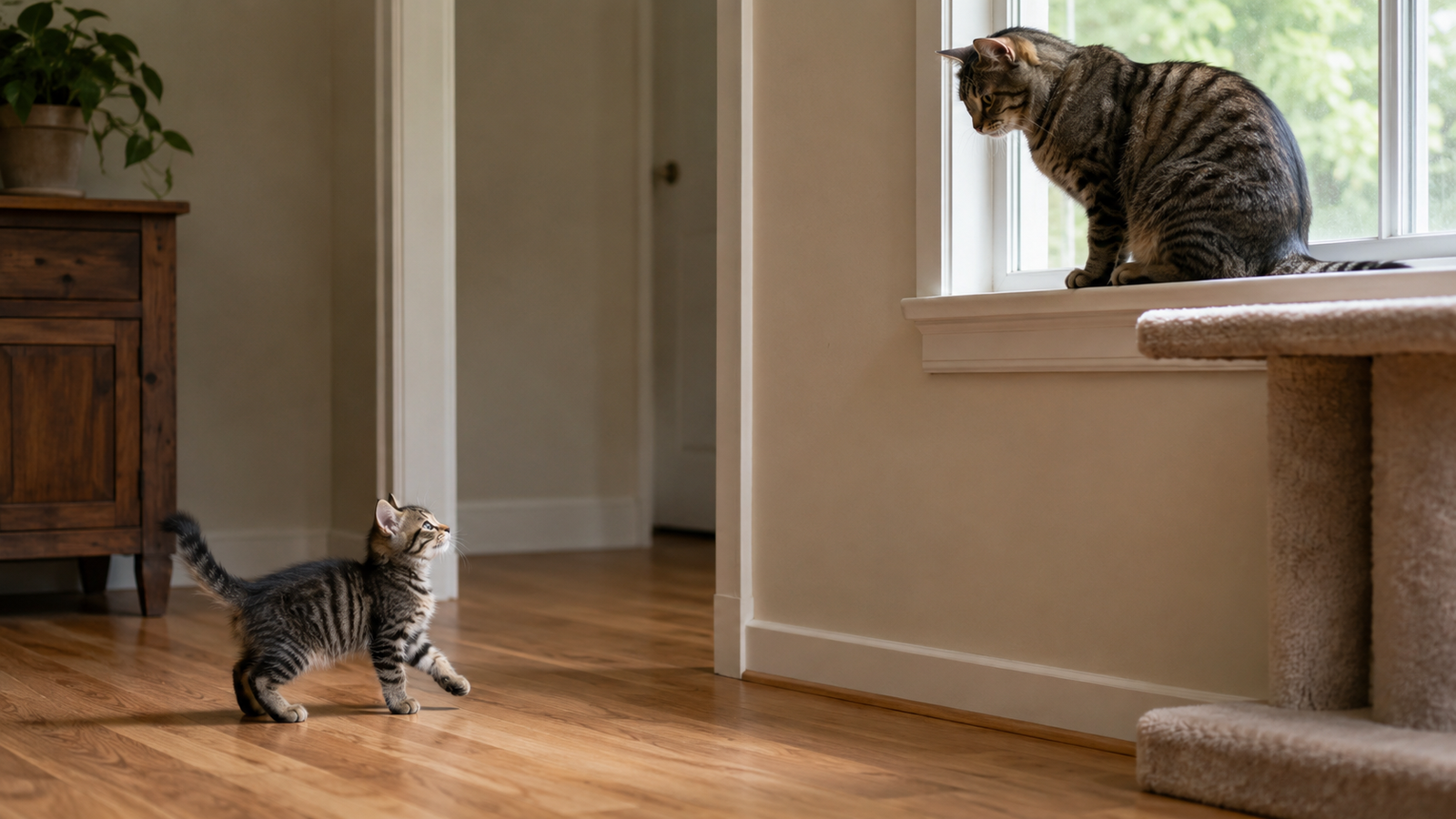
Introducing a kitten to an adult cat follows the same overall process as introducing two adults, but the dynamics are different enough to matter. The main pitfall is treating the introduction as easier than it is because “it’s just a kitten.”
What’s different about a kitten introduction
Adult cats generally accept kittens more readily than they accept other adults. A kitten isn’t a territorial threat in the same way another grown cat is, and many older cats tolerate kittens even when they wouldn’t tolerate an adult newcomer.
The problem is energy, not territory. Kittens have very little of what an adult cat considers appropriate behavior. They pounce on tails, ambush from behind furniture, climb on sleeping cats, and want to play at three in the morning. An adult cat can find this exhausting even when they don’t feel threatened by it.
This shows up as a specific pattern: the introduction technically succeeds, but the older cat becomes stressed, starts hiding more, loses appetite, or develops stress-related health issues because they can’t get away from the kitten’s constant demands.
Give your older cat somewhere the kitten can’t reach
The most important thing you can do for your older cat is give them elevated space and hiding spots the kitten can’t access.
- Tall cat trees the kitten isn’t yet coordinated enough to climb
- Shelves or high perches
- A room with a baby gate the older cat can jump but the kitten can’t
- Cardboard boxes or covered beds placed in quiet corners
The older cat needs to know they can leave at any time. A cat who has escape routes rarely feels the need to use them constantly, but a cat with no escape routes stays on edge all the time.
Burn off kitten energy before the older cat has to deal with it
A tired kitten is a much better companion than a bored kitten. Set aside time each day, ideally right before feeding, to play with the kitten hard enough to actually tire them out. Wand toys, chase toys, laser pointers used properly (ending on a physical toy the kitten can catch) all work well.
Structured play does two things. It reduces the kitten’s overflow energy that would otherwise land on the older cat, and it builds a bond between the kitten and you, so you’re their primary play outlet rather than the older cat by default.
Watch your older cat for stress signs
The older cat often won’t complain outwardly, so you have to watch for indirect signs that the kitten’s presence is too much.
- Hiding more than usual, especially in places they didn’t hide before
- Eating less or eating only when the kitten is asleep or in another room
- Litter box changes, including going outside the box
- Over-grooming, especially in patches
- Increased vocalization or grumpiness
- Weight loss over the first few weeks
If you see these, the kitten needs more structured containment. Keep them separated more of the day, extend play sessions to burn energy, and let the older cat have full run of the house without the kitten present for extended periods.
Don’t shortcut the barrier stage
Follow the same steps as any other introduction. The temptation with a kitten is to skip the visual barrier stage because the kitten seems harmless. Your older cat doesn’t necessarily see it that way, and a bad first impression is still a bad first impression regardless of size difference.
Kitten introductions often move faster than adult-to-adult introductions, sometimes finishing in one to two weeks rather than three to four, but let your older cat set the pace.
Special Situations
Most introductions fit the standard pattern of one resident cat meeting one new cat. A few don’t, and each has its own dynamics.
Introducing two kittens
This is usually the easiest introduction you’ll ever do. Young cats accept each other much more readily than adults do, and two kittens often become bonded companions within days. That said, don’t skip the process entirely.
Separate them for the first day so both kittens can decompress from their trip home. Do a short scent swap over a day or two, then let them see each other through a barrier before allowing physical contact. The whole timeline often finishes in under a week.
Two kittens raised together generally develop a strong bond and are usually less demanding of your attention than a single kitten. If you’re already committed to getting one kitten, adopting a second at the same time is often easier than adding one later.
Introducing a new cat to a home that recently lost a cat
Cats grieve. A surviving cat who has lost a longtime companion often shows real behavioral changes: searching the house for the missing cat, vocalizing more, sleeping in unusual places, appetite changes, or becoming clingier or more withdrawn.
Bringing a new cat home too quickly can add stress on top of grief, and the grieving cat is often less able to handle a new introduction. Give the surviving cat time. A few weeks at minimum, longer if they’re clearly still adjusting.
When you do bring a new cat home, don’t position them as a replacement. Your surviving cat isn’t looking for a substitute for their friend. They’re figuring out what their life looks like without that cat. The new arrival is a separate cat with their own personality, and the two may bond eventually or may not. Either outcome is fine.
When multiple resident cats meet one new cat
If you already have two or more cats and you’re adding one more, don’t introduce the new cat to the whole group at once. Introduce one resident cat at a time, starting with your most social and easygoing cat.
A rough sequence:
- Scent swap between the new cat and all resident cats simultaneously
- Visual introductions through a barrier with the most social resident cat first
- Physical meetings with that one cat until the pair is comfortable
- Repeat with the next resident cat, one at a time
- Only after each pair has met individually should the whole group be in a room together
Group introductions where one new cat faces multiple resident cats at once can overwhelm the newcomer, even when the resident cats are normally friendly. One at a time keeps the encounters fair and gives the new cat a chance to build an individual relationship with each resident.
Adult cats from different households
This is the slowest and hardest version of the process. When two adult cats from different homes come together, neither cat has a home-territory advantage, and both feel displaced by the presence of the other.
What that means in practice:
- Expect the full timeline to run longer than the standard four weeks, often six to eight weeks or more
- Both cats need their own dedicated space for the first several weeks
- Scent swapping matters more than usual because neither cat’s scent is already established in the shared space
- Personality matching matters enormously. Two confident, territorial adults may never fully accept each other, while two easygoing adults may adjust quickly
Blended households after a move-in or marriage are the most common version of this scenario. A rushed introduction can create tension that lasts for years.
How to Tell the Introduction Worked
At some point the introduction stops being an introduction and becomes daily life. Knowing when you’ve reached that point tells you when to stop supervising, relax the separation setup, and let your cats settle into a normal routine together.
Signs the introduction has succeeded
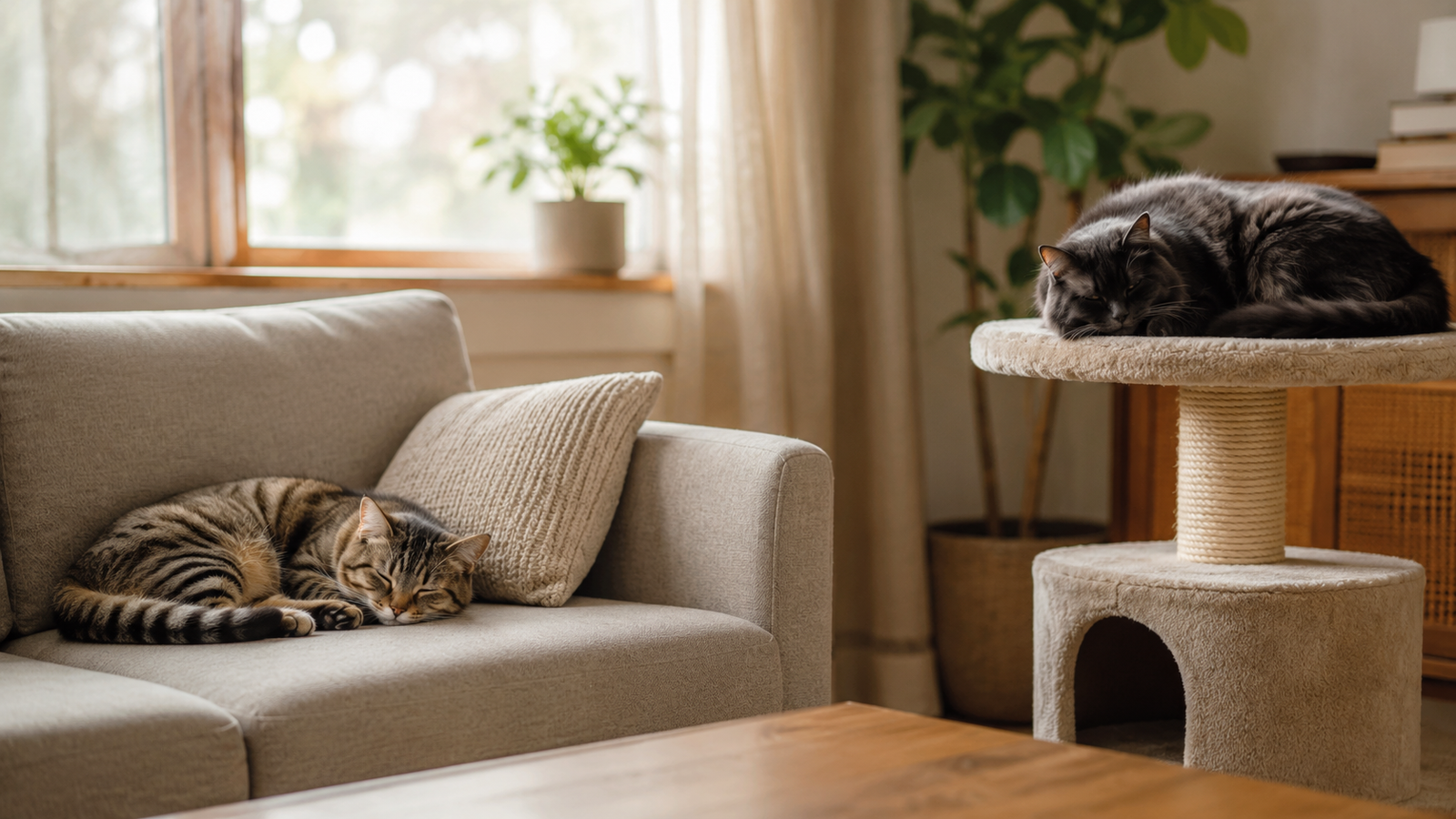
You’re looking for consistent, calm behavior over days and weeks, not one good afternoon. The most important signs are the absence of tension. Active bonding is a bonus, not a requirement.
Absence of tension. These matter most:
- Both cats share space voluntarily, including sleeping in the same room
- They eat near each other without tension
- They pass each other in hallways or doorways without hissing or freezing
- Neither cat is guarding food, water, litter boxes, or favorite resting spots
- Relaxed body language when the other cat is nearby: loose posture, tails up or neutral, no dilated pupils or flattened ears
Active bonding. These are a bonus, not a requirement:
- Play behavior between them, even if it looks rough, as long as neither cat is avoiding it afterward
- Mutual grooming, which is a strong bonding signal
Two cats who coexist calmly without ever grooming or playing together are still a successful introduction.
When you can leave them alone unsupervised
Once the cats have had multiple calm supervised sessions together, including some longer ones with no signs of aggression, they can start spending short periods unsupervised. Begin with short absences of thirty minutes to an hour, and extend from there as long as everything continues to look normal.
For the first weeks of unsupervised time:
- Set up a camera in the main shared space so you can check in on the cats when you’re not home.
- Keep the new cat’s original room accessible with food, water, and a litter box in it, even after the cats are living together. Both cats benefit from having a space to retreat to.
- Watch for regression when you resume unsupervised time after any household change: a trip, a visitor, a new piece of furniture, anything that raises stress levels.
- If either cat starts hiding again, avoiding shared spaces, or blocking resources, go back to supervised time for a few days and figure out what triggered it.
How long until they’re really settled
Most pairs of cats reach a stable dynamic within two to three months of first meeting. Some are settled sooner, some take six months or more. The dynamic can also shift over time as the cats age, especially when a kitten grows up or a senior cat’s health changes.
A settled multi-cat household isn’t one where the cats never disagree. Occasional hissing, brief chases, and short standoffs over a favorite spot are normal between cats who otherwise coexist fine.
Frequently Asked Questions
How long does it take to introduce two cats?
Most proper introductions take three to four weeks from arrival to unsupervised time together. Some pairs finish faster, especially kittens or two easygoing adults. Others need two or three months, particularly if one cat is shy, has a history of trauma, or is meeting another confident adult. Let your slower cat set the pace rather than aiming for a specific date.
Do both cats need to be neutered before I introduce them?
Ideally, yes. Intact cats have hormonal drives that make territorial behavior much stronger, and introductions between unneutered cats are harder than they need to be. If either cat isn’t fixed yet, get that handled before starting the introduction process. It won’t guarantee success, but it removes a real obstacle that would otherwise work against you.
Can I skip the separation phase if my cats seem fine?
Not recommended. Cats often appear calm at a first meeting and then show problems days later once territory boundaries start to be established. Skipping the separation and scent-swapping stages is one of the most common reasons introductions that seem to work initially end up in ongoing conflict. The upfront time is much shorter than the time it takes to repair a bad relationship.
What if my cats hiss at each other through the door?
Some hissing early in the process is normal and doesn’t mean the introduction is failing. It’s how cats communicate uncertainty about an unfamiliar scent. What matters is whether the hissing decreases over the first week of scent swapping. If both cats are still growling or hissing intensely through the door after seven to ten days, slow down, add more scent swapping, and don’t move to visual introductions yet.
Should I let them fight it out?
No. This is a persistent myth and it’s wrong. Cats don’t work things out by fighting. Fights create lasting hostility, injuries that can abscess and require veterinary treatment, and stress responses that can trigger real medical problems. Always separate fighting cats using a blanket or sight blocker, never with your bare hands, and treat any fight as a signal to back up to an earlier stage of the introduction.
Can I use pheromone diffusers to help?
Feliway MultiCat is the pheromone diffuser with the most evidence behind it for multi-cat households, using a synthetic version of a pheromone that promotes calm associations between cats. Place one in the shared living space where both cats will spend the most time, ideally a few days before the new cat arrives so it has time to build up in the environment. Diffusers aren’t a substitute for a proper introduction, but they can take the edge off for anxious cats and are worth trying when the standard process is difficult.
| Preview | Product | Price | |
|---|---|---|---|

|
FELIWAY MultiCat Cat Calming Pheromone Diffuser Kit | Helps Reduce Fighting, Tension and Aggression... | $24.99 | View on Amazon |
What Matters Most
Whether you’re introducing a new kitten, bringing home a shelter cat, or reintroducing two cats who suddenly can’t stand each other, the approach is the same: take it slowly and let your cats set the pace.
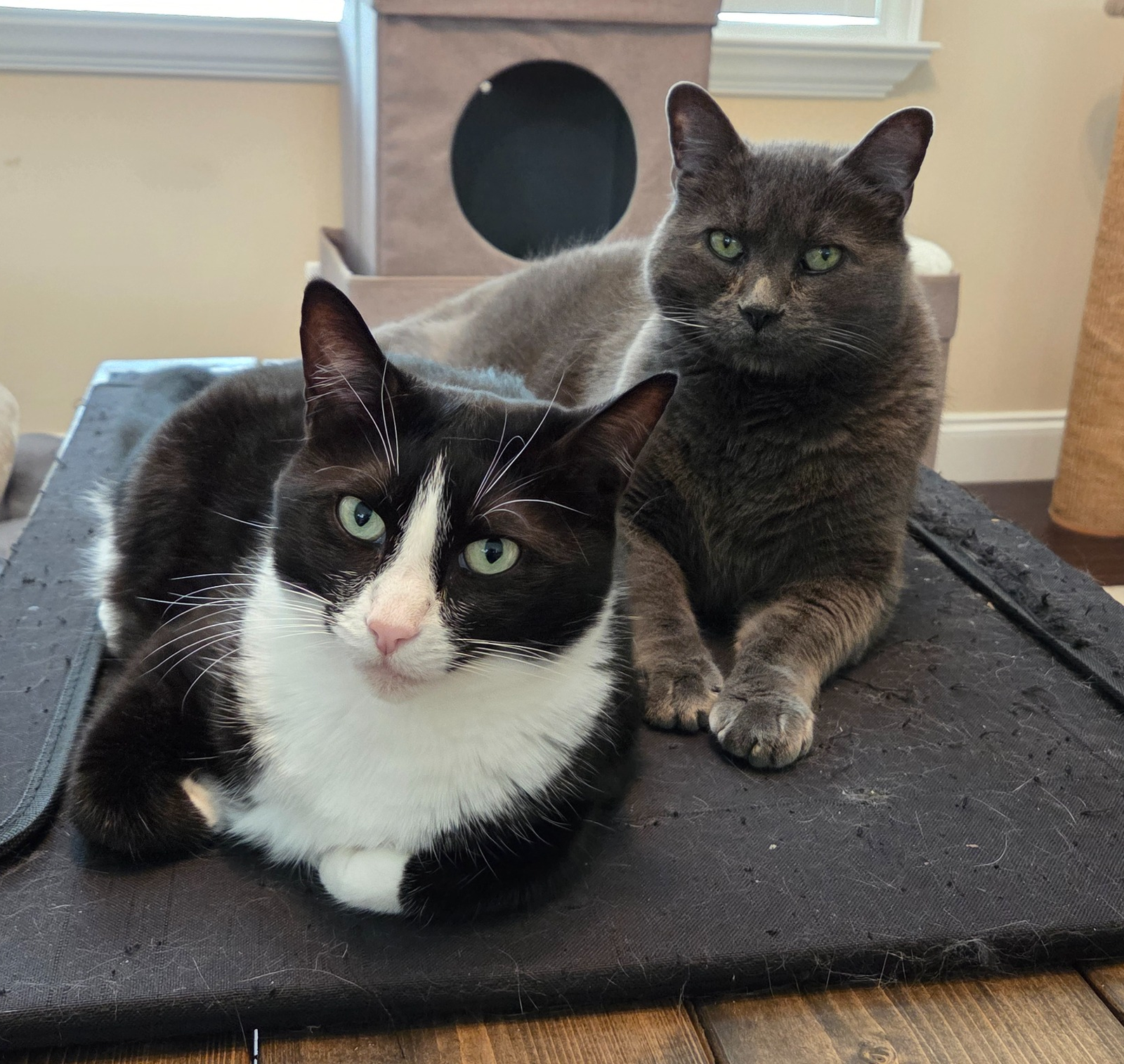
The goal isn’t friendship. It’s two cats who can share a home without conflict. Some pairs bond closely, while others are simply comfortable living alongside each other.
Debbie Reid is the founder and chief editor of CatPedia.net, with over 25 years of hands-on experience in feline care, rescue, and behavior research. Inspired by her rescue cats Snickers and Bigboy, she collaborates with animal welfare resources and consults veterinary literature to turn complex feline health, nutrition, and behavior topics into clear, actionable guides.