Has your cat started peeing outside the litter box? It’s one of the more frustrating things a cat owner deals with, but it’s almost always fixable once you know what’s causing it.
The most common culprits are health problems, a litter box setup your cat isn’t comfortable with, or stress from something in their environment.
Rule Out a Medical Problem First
If your cat suddenly starts peeing in the wrong places, a health issue is one of the first things to consider. Urinary tract infections, bladder inflammation (feline idiopathic cystitis), kidney disease, and diabetes can all make urination painful or create a sudden urgency that leads to accidents outside the box.
Older cats may also develop arthritis that makes stepping into a high-sided box uncomfortable. If this came on suddenly and your cat has no history of litter box problems, a vet visit is the right first move before assuming it’s behavioral.
Signs that point to a medical cause include straining to urinate, frequent trips to the box with little output, blood in the urine, or crying while urinating. These warrant a same-day call to your vet.
When the Litter Box Is the Problem
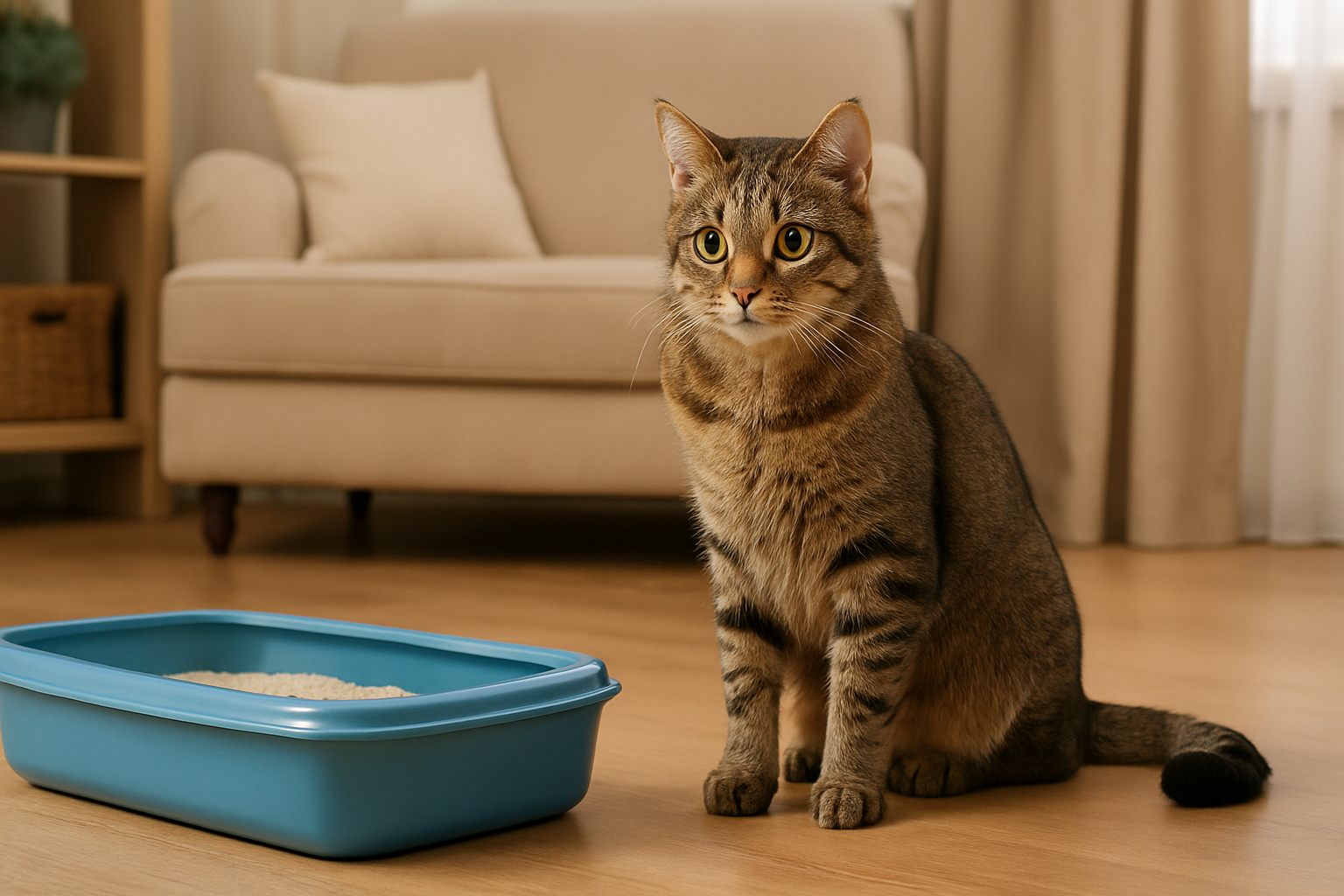
Cats have strong preferences about where and how they eliminate. If the litter box doesn’t meet their standards, they’ll find somewhere that does. The most common setup problems include:
- Not cleaned often enough. Most cats want a clean box every time. If it hasn’t been scooped in 24 hours, that can be enough to push them elsewhere.
- Wrong location. A box placed near loud appliances, in a high-traffic area, or somewhere the cat feels cornered is a box they may refuse to use.
- Too few boxes. The general rule is one box per cat, plus one extra. In multi-cat homes, competition over box access is a common driver of inappropriate elimination.
- Scented litter. What smells pleasant to people can be overwhelming to a cat’s nose. Unscented litter is almost always the better choice.
- Box too small. Cats should be able to turn around and dig comfortably. A box that’s too small often gets rejected.
- Hood or liner they dislike. Some cats won’t use covered boxes at all. Others object to plastic liners. If you’ve recently added either, try removing them.

Stress and Anxiety
Cats are sensitive to changes in their environment, and stress is one of the more underestimated causes of litter box avoidance. A new pet, a new person in the home, construction noise, a change in your schedule, or even a neighbor’s cat visible through a window can be enough to disrupt their sense of security.
When cats feel anxious, they sometimes urinate on soft surfaces like laundry, bedding, or upholstered furniture. This behavior isn’t spiteful. Cats often seek out items that carry their owner’s scent when they’re unsettled, and urinating on those items is a way of self-soothing and marking something as safe.
If nothing obvious has changed but the problem started recently, think smaller: new cleaning products, furniture rearrangement, or tension between pets that you may not have noticed. Cats often react to things that seem minor from a human perspective.
Urine Marking Versus Inappropriate Elimination
Not all out-of-box urination is the same. There’s a difference between a cat who squats and leaves a puddle and a cat who backs up to a vertical surface and sprays.
Spraying is territorial marking behavior, more common in unneutered males but possible in any cat. It’s usually triggered by perceived threats to their territory, including other cats, new smells, or changes in the home. Spaying and neutering significantly reduces spraying in most cats, but it can still occur in fixed animals under stress.
Puddle-style accidents are usually tied to a medical issue or litter box problem, while spraying is more often about territory and stress.
Why Cats Pee in the Same Spot Repeatedly
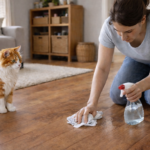
Once a cat has urinated somewhere, the scent can draw them back even if the area looks clean. Standard cleaning products don’t fully break down the compounds in cat urine, which means the spot continues to register as a bathroom location to the cat.
Enzymatic cleaners are designed specifically to break down urine at the molecular level, which eliminates the signal. Using anything else typically leaves enough residue to encourage a repeat visit.

How to Stop Your Cat from Peeing Outside the Litter Box
Work through these steps in order.
- See your vet. Rule out UTIs, bladder inflammation, kidney issues, and arthritis before making any other changes.
- Evaluate the box setup. Scoop daily, confirm there are enough boxes, and check that each is in a quiet, accessible location.
- Switch to unscented, low-dust litter. If you’ve changed litters recently, go back to what worked.
- Try a larger, uncovered box. Some cats simply need more space or fewer walls.
- Clean accidents with an enzymatic cleaner. Standard cleaners often leave behind enough scent for cats to keep returning to the same spot.
- Reduce sources of stress. Add vertical space, more play sessions, and predictable routines. If you have multiple cats, confirm each one has enough resources.
- Consider a pheromone diffuser. Products like Feliway can help lower ambient anxiety in cats prone to stress-related elimination.
Frequently Asked Questions
Why is my cat peeing outside the litter box even though it’s clean?
Cleanliness is only one factor. The box location, size, litter type, or number of boxes may still be off. Stress and underlying medical issues can also cause avoidance regardless of how clean the box is.
Why did my cat suddenly start peeing outside the litter box after years with no problems?
Sudden changes usually point to a medical issue, especially in older cats. It’s worth a vet visit to rule out a UTI, bladder inflammation, kidney disease, or arthritis before assuming it’s behavioral.
Why is my cat peeing on my clothes and bedding?
Cats often target soft items that carry their owner’s scent when they’re feeling anxious or unwell. It’s not a deliberate act of defiance. Address the underlying cause and keep laundry off the floor while you do.
Getting Things Back to Normal
Most litter box problems are solvable once you identify the cause. Start with a vet visit to rule out anything medical, then work through the box setup and environment. If things don’t improve, your vet can help determine whether additional testing or behavioral support makes sense.
Debbie Reid is the founder and chief editor of CatPedia.net, with over 25 years of hands-on experience in feline care, rescue, and behavior research. Inspired by her rescue cats Snickers and Bigboy, she collaborates with animal welfare resources and consults veterinary literature to turn complex feline health, nutrition, and behavior topics into clear, actionable guides.