
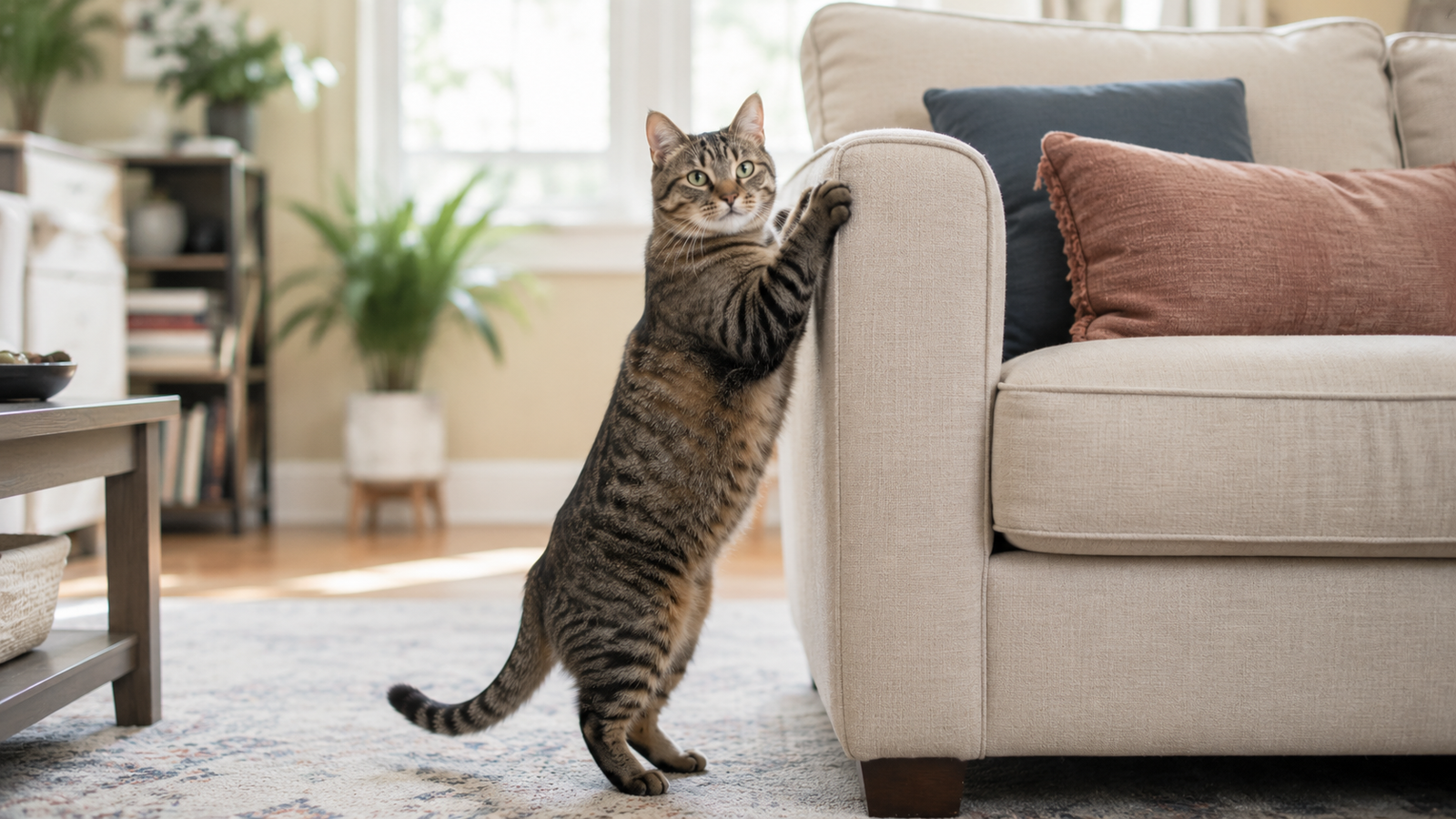
If your cat is tearing up the couch, the carpet, or your favorite chair and you have started wondering about declawing, you are not alone. Scratching is one of the most common reasons cat owners look into it, especially when they have already tried redirecting their cat and nothing seems to stick.
But declawing is a bigger procedure than many people realize. It is not the same as trimming nails, and it can affect your cat’s comfort, movement, and behavior long after surgery. Before you decide, it helps to understand what declawing actually involves, why many veterinarians and animal welfare groups oppose it, where it may be restricted by law, and which safer alternatives can protect both your furniture and your cat.
Before You Decide
Declawing a cat is not just removing the claws. It usually involves surgically removing the last bone of each toe where the claw grows. Because scratching is normal cat behavior and declawing can cause pain and complications, most cat owners are better off trying safer, less invasive options first.
What Is Declawing a Cat?
Declawing, also called onychectomy, is a surgical procedure that removes a cat’s claws by taking off the part of the toe where the claw grows. In many cases, that means removing the last bone of each toe on the front paws.
That is why declawing is different from a simple nail trim. A nail trim shortens the claw. Declawing removes the claw-producing part of the toe so the claw cannot grow back normally.
Some clinics may use different surgical methods, such as a scalpel, clipper, or laser, but the basic goal is the same: permanently stop the claw from growing. That permanence is part of what makes the decision so serious.
Why Do Cats Scratch in the First Place?
Cats do not scratch because they are being spiteful. Scratching is normal, natural behavior. It helps cats stretch their bodies, shed the outer layers of their claws, mark territory, and release excitement or stress.
That is why a cat may scratch after waking up, when you come home, after using the litter box, or during a burst of playful energy. To us, it may look like furniture damage. To the cat, it is communication, exercise, grooming, and comfort all rolled into one.
The goal is not to stop a cat from scratching completely. The goal is to give them better places to scratch and make the wrong places less rewarding.
Is Declawing Bad or Harmful to Cats?
For most healthy cats, declawing is not considered a good first choice, and the reason comes down to what the surgery actually does. Cats walk on their toes, so removing part of each toe changes the structure of the paw and can affect how they stand, walk, jump, and balance.
Some cats recover without obvious long-term problems, but others may have pain, sensitivity, infection, regrowth of claw tissue, changes in gait, or reluctance to use certain types of litter. A cat that feels pain in the paws may avoid the litter box because digging hurts, or may bite more because scratching is no longer an option. Cats are also very good at hiding discomfort, so a cat may seem “fine” while still quietly changing how they move, play, or respond to touch.
This is why many veterinarians, feline organizations, and animal welfare groups discourage or oppose elective declawing. The concern is not just the surgery itself. It is the possibility of long-term pain, behavior changes, and the loss of a natural defense, all to solve a behavior that is normal for cats. When the issue is furniture scratching, rough play, or accidental scratches, there are usually better options to try first.
Is Declawing a Cat Ever Medically Necessary?
In rare cases, yes. Declawing may be medically necessary if a cat has a serious injury, tumor, infection, or deformity affecting a toe or claw. In those cases, surgery is being done to treat the cat’s medical problem, not to protect furniture.
That distinction matters. A medically necessary toe or claw amputation is different from elective declawing done because a cat scratches household items.
If your vet brings up surgery for a medical reason, ask what problem is being treated, whether one toe or multiple toes are affected, and what other options exist. A good vet should be willing to explain the reason clearly.
Is It Illegal to Declaw a Cat?
Declawing laws depend on where you live. Some states, cities, and countries ban or restrict elective cat declawing, while others still allow it when performed by a licensed veterinarian.
Because laws can change, it is best to check your current state, city, or local veterinary rules before assuming the procedure is legal. Some areas may allow declawing only when it is medically necessary for the cat.
Even where declawing is legal, many veterinarians may refuse to do it as an elective procedure. Others may require a full consultation first, especially if the reason is furniture damage or normal scratching behavior.
How Much Does It Cost to Declaw a Cat?
The cost to declaw a cat can vary widely based on your location, the clinic, the cat’s age and health, the method used, pain control, pre-surgery bloodwork, and follow-up care. Some people search for the price first, but cost should not be the main deciding factor.
As of 2026, you may see prices quoted roughly between $200 and $1,200, with laser declawing usually costing more than a traditional scalpel procedure. But pricing alone does not tell you whether the procedure is appropriate for your cat.
The bigger question is what the surgery may cost your cat physically and behaviorally. A cheaper procedure is not better if pain control, monitoring, or aftercare are poor. A more expensive procedure still does not remove the welfare concerns that come with elective declawing.
If you are asking about cost because scratching damage is getting expensive, it may help to price out alternatives first. Scratching posts, nail trims, nail caps, couch covers, double-sided furniture tape, and behavior support are usually much less invasive than surgery.
Alternatives to Declawing a Cat
Most scratching problems can be improved with a better setup. Cats need their own scratching surfaces, and those surfaces need to feel more satisfying than the furniture they are already choosing.
Start by looking at where your cat scratches now. If they scratch the side of the couch, they may prefer a tall vertical surface. If they scratch rugs or carpet, they may need a horizontal scratcher. If they scratch after waking up, put a scratcher near their favorite nap spot.
Use the Right Scratching Posts
A good scratching post should be sturdy, tall enough for a full-body stretch, and covered in a texture your cat likes. Sisal, cardboard, carpet, and wood all feel different, so some cats need a little experimenting before you find their favorite.
Wobbly posts are a common reason cats ignore them. If the post tips, shakes, or feels flimsy, your cat may go right back to the couch because the couch is stable.
Trim Your Cat’s Nails Regularly
Keeping nails trimmed makes a real difference, and you do not have to cut much. Just taking off the sharp hook at the tip is often enough to keep furniture from getting shredded.
If your cat hates nail trims, start small. Touch one paw, reward them, and stop. Later, try one nail. Many cats do better with short, calm sessions instead of one big struggle.
Try Nail Caps
Nail caps are small soft covers that fit over the cat’s claws. They do not stop the urge to scratch, but they can reduce damage while you work on redirecting the behavior.
They are not perfect for every cat. Some cats tolerate them well, while others chew them off or dislike the feeling. If you are unsure how to apply them, your vet or groomer may be able to show you.
Protect the Furniture While You Retrain
Furniture protection can help break the habit. Double-sided tape, washable couch covers, clear scratch guards, or temporarily blocking access to a favorite scratching spot can make the furniture less appealing.
At the same time, place a better scratcher right next to the problem area. Once your cat starts using the scratcher, you can slowly move it to a better location.
Reward the Scratching You Want
When your cat uses the scratching post, reward them right away. A treat, praise, play session, or a little catnip on the scratcher can help make the new spot more appealing.
Avoid yelling or spraying your cat with water. That may scare them, but it does not teach them where to scratch. It can also make some cats more stressed, which may increase unwanted scratching.
Reduce Stress That Drives Scratching
Some scratching gets worse when a cat feels stressed. New pets, outdoor cats near windows, household changes, boredom, or conflict with another cat can all increase marking behavior.
If your cat suddenly starts scratching more than usual, look at what changed in the home. More play, more vertical space, more resting spots, and separate resources for each cat can help reduce tension.
What If Your Cat Scratches People?
If your cat scratches people during play, the issue may be overstimulation, fear, or too much hand play. Hands should not be used as toys. Use wand toys, toss toys, or interactive play instead so your cat has something appropriate to grab and kick.
If your cat scratches when picked up or petted, watch their body language. A twitching tail, pinned ears, rippling skin, or sudden stillness can mean they are done. Stopping before they have to scratch teaches them that you listen.
For cats that scratch aggressively or unpredictably, it is worth talking to your vet. Pain, arthritis, skin irritation, fear, and stress can all make a cat more reactive.
What If Someone in the Home Has a Medical Risk?
Some people consider declawing because a person in the home has fragile skin, a bleeding disorder, immune system concerns, or another medical issue. These situations are real, and the answer is not the same for every household.
For higher-risk households, the basics in this article still apply (regular nail trims, nail caps, scratching outlets), but a few extras can help: long sleeves or gloves during handling, wound-care supplies kept on hand, and calm pickup routines that avoid startling the cat. Talk with both your veterinarian and the person’s doctor before deciding anything permanent. A good vet can also flag whether your specific cat’s behavior is high-risk enough to warrant a behaviorist consult.
Declawing should not be the automatic answer. The right call depends on the cat, the person’s health, and whether the safer options can realistically manage the risk.
FAQs About Declawing a Cat
How long does it take a cat to recover from declawing?
Most cats need about two weeks of restricted activity after surgery, with special paper litter instead of clay during that time so the paws can heal. Some cats limp or favor their paws for several weeks, and a smaller number develop longer-term sensitivity or behavior changes. Always follow your vet’s specific aftercare instructions.
Do declawed cats still scratch?
Many declawed cats still go through the motions of scratching because the behavior is instinctive. They may stretch and rub their paws on surfaces even without claws.
Can a declawed cat go outside?
Declawed cats should be kept indoors. Without front claws, they lose a key way to defend themselves, climb to safety, and grip surfaces while escaping a threat. Even cats that were outdoor or indoor-outdoor before surgery are at higher risk afterward and should be transitioned to fully indoor life.
Is Declawing a Cat the Right Choice?
For almost every cat, declawing is not the answer to a scratching problem. There are safer ways to protect your home while still letting your cat be a cat, and most of them work given a few weeks of honest effort.
If you have tried the full plan and the scratching is still out of hand, that is the moment to bring your vet or a feline behavior consultant into the conversation, especially if fear, stress, or conflict with another pet might be driving it. A permanent surgical decision deserves more than one opinion.
Your cat’s claws are part of how they move, stretch, play, and feel secure. Protecting your furniture matters, but so does protecting your cat’s comfort and quality of life.
Debbie Reid is the founder and chief editor of CatPedia.net, with over 25 years of hands-on experience in feline care, rescue, and behavior research. Inspired by her rescue cats Snickers and Bigboy, she collaborates with animal welfare resources and consults veterinary literature to turn complex feline health, nutrition, and behavior topics into clear, actionable guides.