
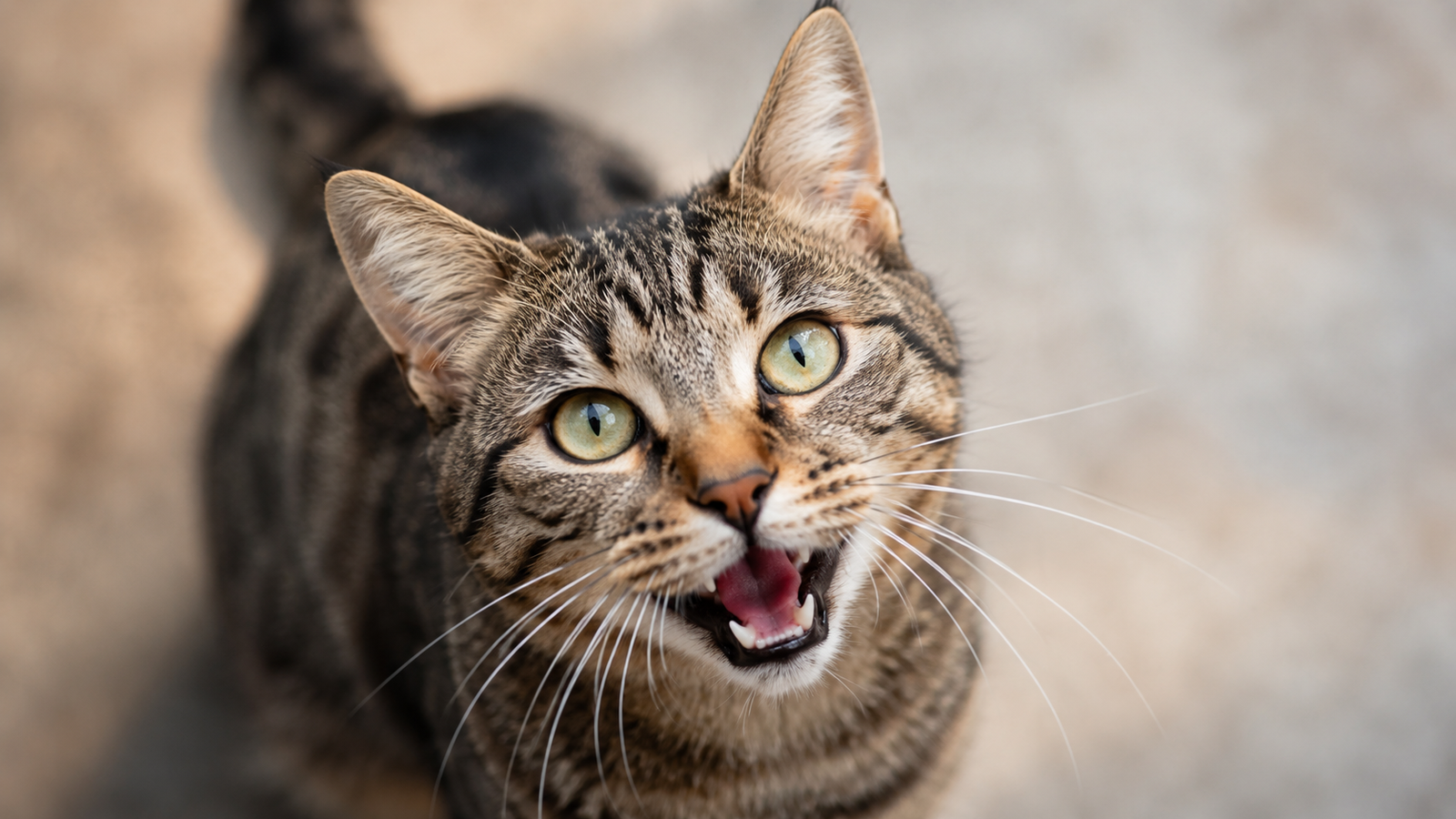
Cats don’t cry the way people do. They don’t shed emotional tears, even when they’re stressed, scared, or grieving.
Their eyes may get watery and they may be more vocal at times, but there’s usually a medical or behavioral reason behind it rather than sadness.
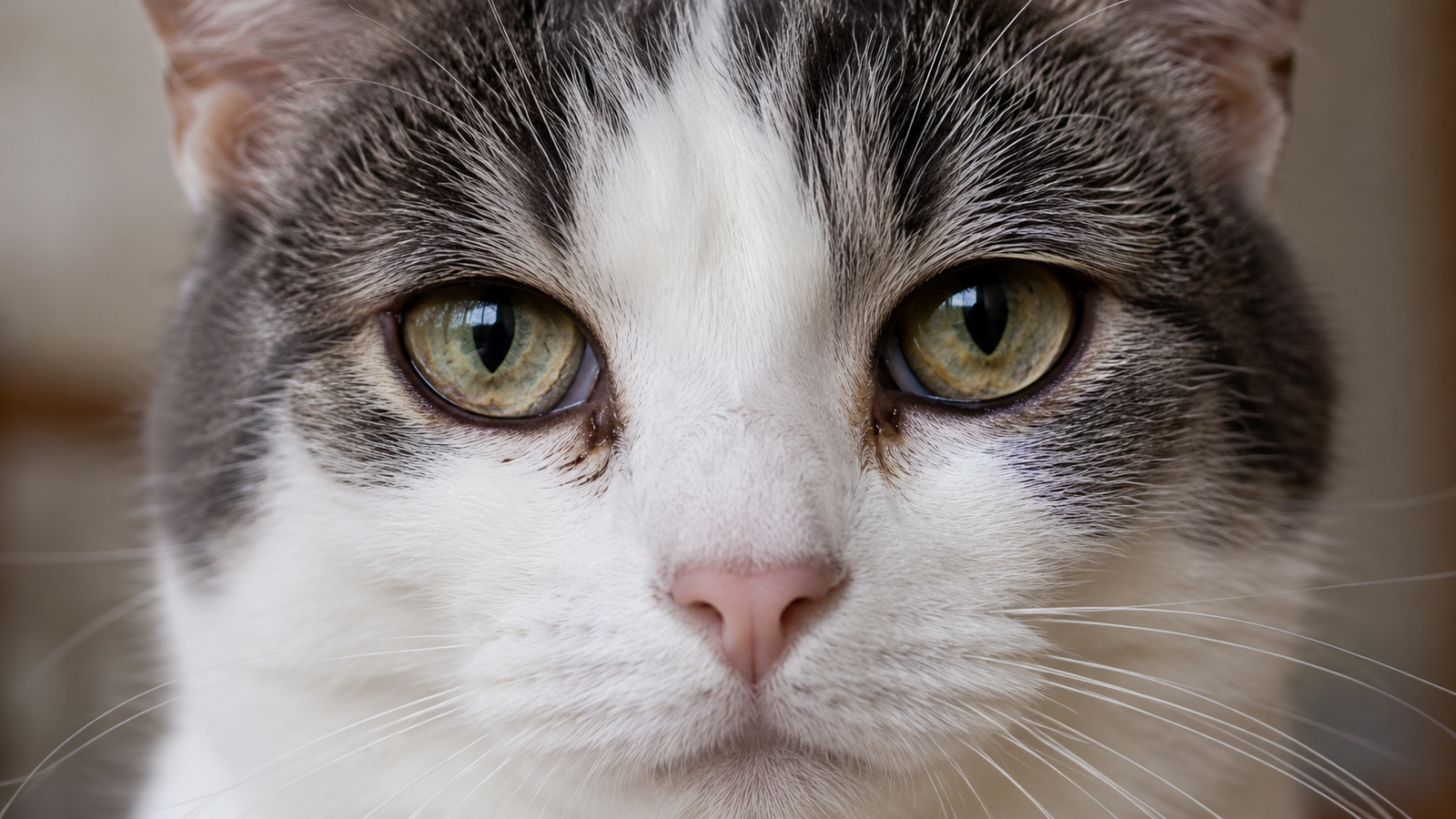
Why Your Cat’s Eyes Might Be Watering
Cats do produce tears, but only to keep their eyes clean and lubricated. They aren’t tied to emotion the way human tears are.
So if your cat has watery eyes, it isn’t a sign that they’re sad. It usually means something is irritating the eye or affecting how tears drain from it.
When a cat’s eyes water more than usual, vets call it epiphora. It simply means tears are spilling over instead of draining the way they should. Some causes are minor, and others need veterinary care.
Common reasons for watery eyes in cats include:
- Dust, pollen, or other irritation in the eye
- Conjunctivitis, sometimes called pink eye
- Upper respiratory infections
- Feline herpesvirus, a common cause of ongoing eye discharge
- Allergies
- Blocked or narrow tear ducts
- Scratches or ulcers on the cornea
- Dry eye, which can actually cause the body to produce thin, watery tears
- Eyelid problems like entropion
- Glaucoma or other internal eye pressure issues
Breed can also play a role. Short-nosed cats like Persians, Himalayans, and Exotic Shorthairs often have watery eyes because of the shape of their skulls. Their tear ducts don’t drain well, so tears tend to spill onto their faces. Some daily eye-wiping is normal for these breeds, but any sudden change is still worth a vet visit.
Why Cats Cry Out
Cats cry to communicate, and the type of sound can give you clues about what they need. If the issue is vocal crying rather than watery eyes, it usually comes from one of a few common causes.
- Hunger or thirst, often around regular mealtimes
- Wanting attention or interaction
- Boredom or loneliness, especially in single-cat homes
- Stress or anxiety from changes at home
- Mating behavior in cats that aren’t spayed or neutered, often in the form of a loud yowl or caterwaul
- Pain or illness, which can come through as a moan, wail, or unusual meow
- Cognitive changes in senior cats, sometimes heard as nighttime yowling
If your cat is crying while using the litter box, treat it as urgent. It can be a sign of a urinary blockage, which is a true emergency.
Crying at Different Life Stages
Age plays a big role in why cats cry. A kitten, an adult, and a senior cat can all make similar sounds for very different reasons.
Kittens
A new kitten in a new home often cries during the first few nights. They’re adjusting to the loss of their mother and littermates, and the change can be stressful. This usually settles within a week or two with patience and a warm, quiet space. Kittens also cry when they’re cold, hungry, or stuck somewhere they can’t get out of, so it’s worth a quick check anytime the crying seems urgent.
Adult Cats at Night
Younger adult cats may cry at night out of boredom. The house is quiet, you’re asleep, and they’re ready to be active. A good play session before bed, followed by a meal, can help settle them.
Senior Cats
Older cats may cry because of cognitive decline, vision changes, or discomfort. If your senior cat has suddenly started yowling, especially at night, it’s worth a vet visit to check for issues like thyroid disease, high blood pressure, or pain.
How Cats Show Sadness
Even though cats don’t cry from sadness, they still feel it. A sad cat usually communicates through changes in behavior rather than tears or loud crying. Some of the more common signs include:
- Hiding more than usual
- Sleeping more or seeming low in energy
- Eating less or losing interest in treats
- Grooming less
- Becoming clingy or following you around
- Withdrawing from people or other pets
One sign on its own isn’t always cause for concern, but several together, especially after a change at home, is worth paying attention to.
When to Call the Vet
Most crying has a simple explanation, but certain signs should always be checked by a vet.
- Watery eyes that don’t clear up within a day or two
- Thick, yellow, green, or bloody eye discharge
- Squinting or pawing at the eyes
- Sudden changes in vocalizing, especially in a normally quiet cat
- Crying while using the litter box
- Crying along with vomiting, weight loss, lethargy, or hiding
- Any sign of pain, like limping, flinching, or a hunched posture
Cats are very good at hiding discomfort, so vocalizing about it usually means something has been going on for a while. It’s always worth checking in with your veterinarian if something feels off.
How to Help a Crying Cat
If your vet has ruled out medical issues, there are simple things you can do at home to help a vocal cat feel calmer.
Stick to a routine. Cats do best with predictable meal times, play, and quiet time. A steady schedule alone can cut down on a lot of attention-seeking crying.
Keep them busy. Window perches, scratching posts, puzzle feeders, and rotating toys help prevent boredom. If your cat is alone for long stretches, a pet sitter or a second cat may help.
Give them a calm space. A cozy bed in a quiet corner gives an anxious cat somewhere safe to retreat.
Frequently Asked Questions
Do cats cry tears when they are sad?
No. Cats don’t shed emotional tears. If your cat seems sad and has watery eyes, the two are almost always unrelated, and the tears usually point to a medical issue.
Why is only one of my cat’s eyes watering?
A single watery eye often points to a localized issue like a scratch, a foreign object, a blocked tear duct, or an early infection. It’s worth a vet visit to figure out the cause.
Do cats cry when they are in pain?
Cats often hide pain, but when it shows, it can come through as yowling, moaning, or unusual meowing. Other signs include hiding, eating less, or changes in movement.
Do cats grieve when another pet dies?
Yes. Cats can grieve the loss of another pet or a person. You may see them searching the house, calling out, eating less, or becoming withdrawn. Most cats adjust with time, attention, and a steady routine.
Why does my cat cry when I leave the house?
Cats can develop separation anxiety, especially when closely bonded to one person. Leaving an item with your scent, providing engaging toys, and considering a companion pet can help.
Can cats cry from happiness?
Not with tears, but a happy cat often greets you with chirps, trills, or soft meows. Those sounds are usually your cat’s way of saying they’re glad to see you.
Is My Cat Really Crying?
Cats don’t cry the way people do, but they have plenty of other ways to show how they’re feeling. Watery eyes usually come down to a medical issue, while crying sounds can mean anything from hunger to stress to pain. The more you tune in to your cat’s normal patterns, the easier it is to spot when something has changed. And whenever something feels off, it’s always worth checking in with your veterinarian.
Debbie Reid is the founder and chief editor of CatPedia.net, with over 25 years of hands-on experience in feline care, rescue, and behavior research. Inspired by her rescue cats Snickers and Bigboy, she collaborates with animal welfare resources and consults veterinary literature to turn complex feline health, nutrition, and behavior topics into clear, actionable guides.