Most cats are lactose intolerant, even though you’d never guess it from how enthusiastically they go after a bowl of milk. The craving is real. The ability to digest it, for most cats, is not. Here’s what’s actually going on and what to give your cat instead.
What Is Lactose Intolerance in Cats?
Lactose is the natural sugar found in milk and dairy products. To digest it, the body needs an enzyme called lactase. Kittens are born producing lactase, which is what allows them to nurse from their mothers. But as they wean and move to solid food, their bodies gradually produce less and less of it. In most adult cats, lactase production drops to the point where dairy becomes genuinely hard to digest.
When lactose isn’t broken down properly, it passes into the intestines undigested and begins to ferment. That fermentation causes the uncomfortable symptoms cat parents know all too well: gas, bloating, loose stools, and diarrhea, often showing up 8 to 12 hours after your cat drinks milk.
So Why Does My Cat Want Milk So Badly?
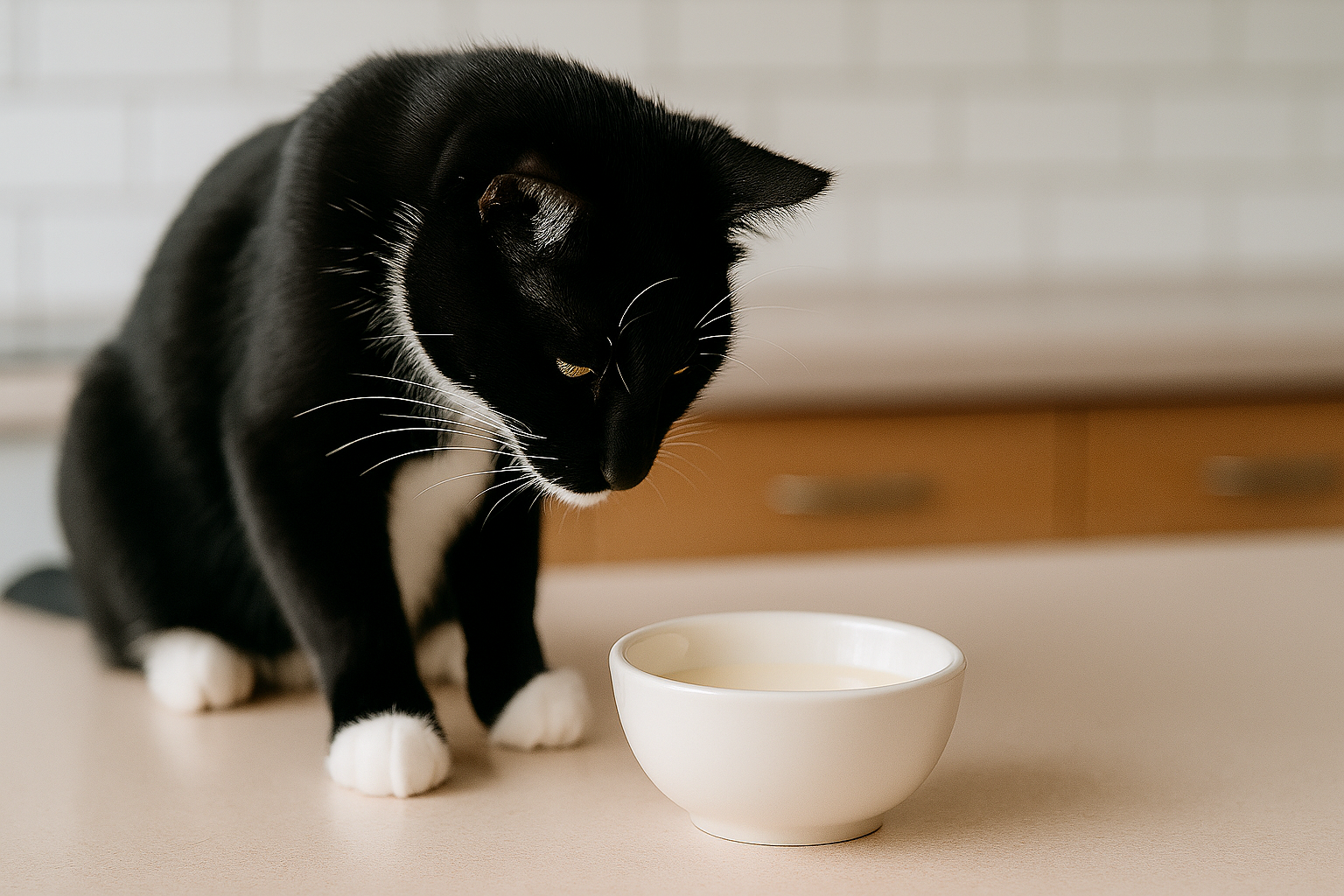
Cats are drawn to the fat and protein in dairy. Milk, cream, and cheese smell rich and appealing to them. Their sense of smell is remarkably powerful, and high-fat foods are naturally attractive. The problem is that wanting something and tolerating it are two very different things
A cat who eagerly finishes a saucer of cream isn’t telling you she’s fine with dairy. She’s telling you it smells amazing. What happens a few hours later is a different story.
Not every cat reacts the same way. Some cats can handle a small amount of dairy without obvious symptoms, while others are noticeably sensitive even to a bite of cheese. There’s no reliable way to predict which camp your cat falls into without watching how she responds. And even cats who seem to tolerate dairy may still be experiencing low-grade digestive discomfort that isn’t obvious from the outside.
Because of this, most veterinarians recommend avoiding regular dairy treats, even if your cat seems to tolerate them.
What About Kittens?
Kittens do produce lactase, but that doesn’t make cow’s milk a safe choice for them either. Cow’s milk has a very different composition from a mother cat’s milk, with more lactose and different protein ratios, and it can still cause digestive upset. If you’re caring for a young kitten who needs milk, a kitten milk replacer formula is always the right call.
Signs Your Cat May Have Had Too Much Dairy
If your cat got into some milk or cheese, keep an eye out for these signs over the next several hours:
- Diarrhea or loose stools
- Vomiting
- Bloating or a visibly uncomfortable belly
- Excessive gas
- Lethargy or reluctance to move around
Most cases of dairy-related upset resolve on their own within a day. But if your cat seems especially unwell, is vomiting repeatedly, or shows signs of dehydration, it’s always worth checking in with your veterinarian.
Safer Treats Your Cat Will Actually Love
Your cat doesn’t need dairy to feel spoiled. These are some easy, cat-friendly alternatives that deliver the satisfaction without the side effects:
- Lactose-free cat milk, made specifically for cats and widely available at pet stores, is a genuinely safe occasional treat
- Plain cooked chicken or turkey is simple, protein-rich, and almost always a hit
- Freeze-dried meat treats have great texture and flavor with nothing on the ingredients list to worry about
- A small spoonful of plain canned pumpkin is easy on digestion and often well-tolerated by even sensitive cats

Should You Give Your Cat Dairy?
Most cats are better off without it. A small accidental taste won’t cause lasting harm, but dairy doesn’t offer any real nutritional benefit for cats, and for most, it comes with digestive consequences. Stick with treats made for cats, and save the milk for your cereal.
Debbie Reid is the founder and chief editor of CatPedia.net, with over 25 years of hands-on experience in feline care, rescue, and behavior research. Inspired by her rescue cats Snickers and Bigboy, she collaborates with animal welfare resources and consults veterinary literature to turn complex feline health, nutrition, and behavior topics into clear, actionable guides.