The Burmese cat breed has a way of getting under your skin quickly. They’re compact, glossy, and built like they mean business, but the second they climb into your lap and start purring, the whole serious cat image falls apart. They’re charming, affectionate, and genuinely obsessed with their people in a way that’s hard not to love.
They’re also more demanding than they look. Burmese cats want to be involved in everything, and they’ll let you know if you’re not paying enough attention. That’s a feature for the right owner and a dealbreaker for someone who prefers a more independent cat.
Here’s what it’s actually like to live with a Burmese cat, from personality and daily habits to grooming, health, and whether they’re the right fit for your home.
Quick Breed Facts
- Origin: Burma (Myanmar); developed in the U.S. and U.K.
- Breed registries: CFA, TICA, FIFe, GCCF, ACFA
- Weight range: 8–12 lbs (males), 6–10 lbs (females)
- Lifespan: 12–18 years
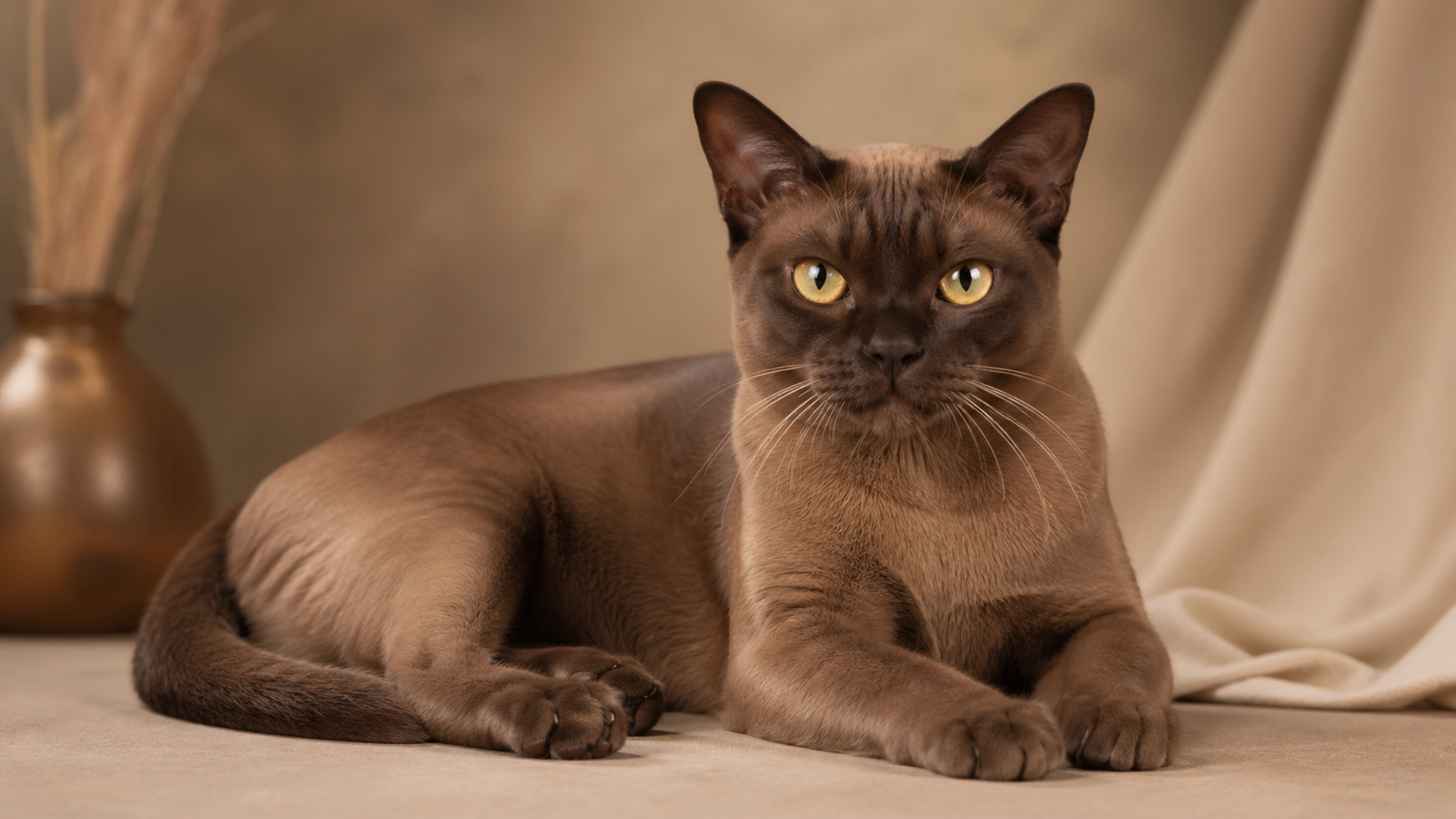
- Coat: Short, sleek, satin-like
- Colors and patterns: Solid sable, champagne, blue, platinum (more in U.K. lines)
- Eye color: Gold to deep yellow
- Grooming: Low-maintenance
- Activity level: Moderate to high
- Affection level: Very high
- Vocality: Talkative
- Good with children: Yes
- Good with other pets: Yes
History & Origin of the Burmese Cat Breed
The Burmese cat breed traces back to a single cat named Wong Mau, a small walnut-brown cat brought from Burma (now Myanmar) to the United States in the 1930s. When paired with Siamese cats, she produced kittens that were noticeably different, sleek, muscular, and with a rich, glossy brown coat that didn’t look quite like either parent. Breeders quickly recognized they had something worth developing, and the Burmese breed was born.
Over time, American and British breeders developed slightly different lines. American Burmese cats became stockier with rounder features, while British lines stayed leaner and allowed a wider range of colors. Both share the same people-loving personality that has made the Burmese one of the most consistently popular cat breeds in the world.
Burmese Cat Personality & Temperament
If you want a cat that keeps to itself, the Burmese is not it. These cats are social, vocal, and genuinely interested in whatever you’re doing. They follow their people from room to room, greet visitors at the door, and have no problem chirping or trilling to get your attention when they feel ignored. It’s not neediness exactly. It’s more like having a very opinionated roommate who likes you a lot.
They’re also playful well into adulthood, which keeps life with a Burmese interesting. They’re confident around strangers, adaptable to busy households, and tend to bond with the whole family rather than just one person. The flip side is that they don’t do well with long stretches alone. If you’re out of the house for most of the day, a companion animal makes a real difference for this breed.
Burmese Cat Appearance & Physical Traits
The Burmese cat breed has a compact, muscular build that feels surprisingly solid for their size. The classic description is “a brick wrapped in silk,” and it’s accurate. Their rounded head, expressive golden eyes, and short satin-like coat give them a polished, elegant look. Color options include rich sable, champagne, blue, and platinum, with British lines offering a broader range.
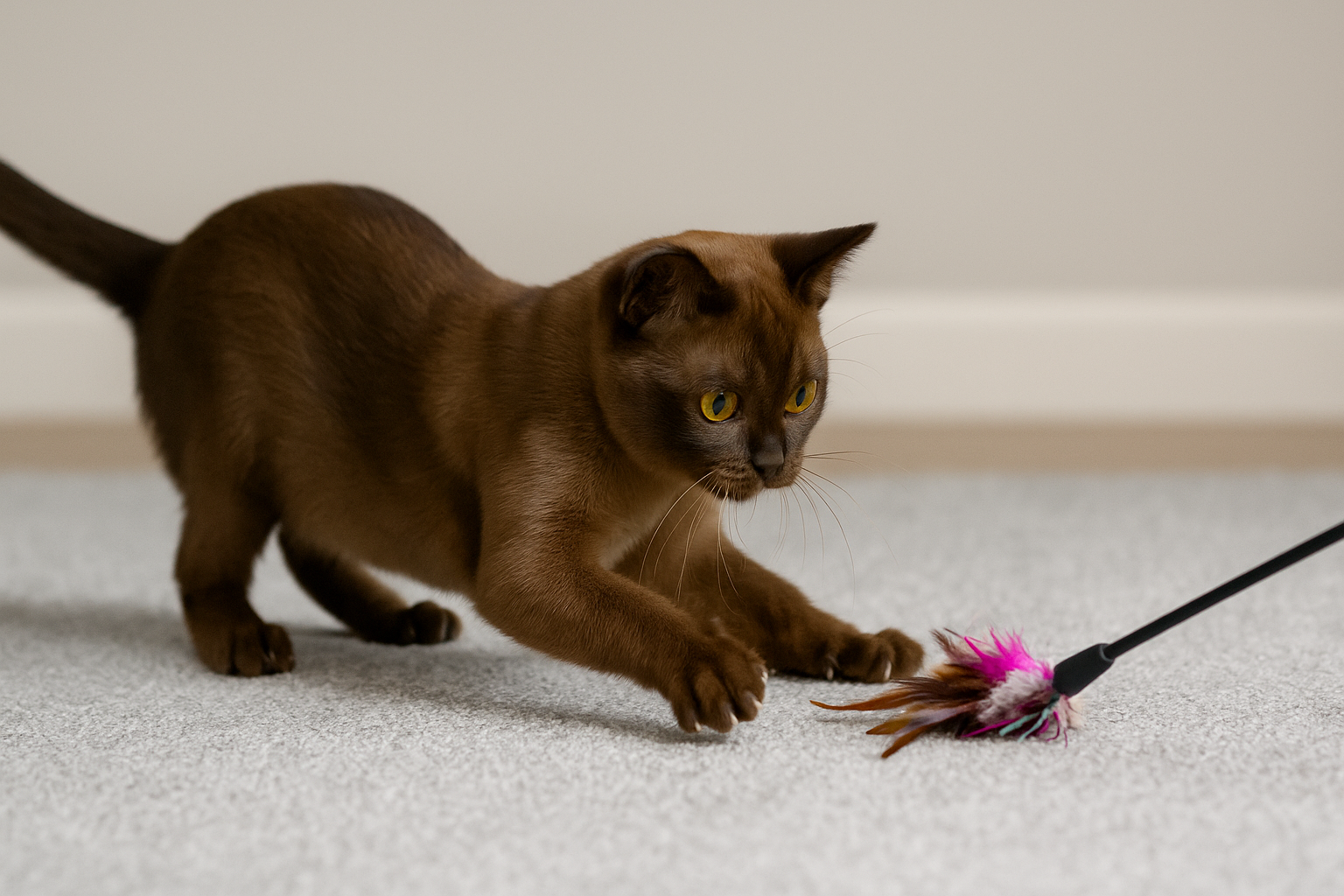
Despite their athletic build, Burmese cats move gracefully and tend to be agile climbers. Their coat is one of the lowest-maintenance in the cat world, short, fine, and close-lying, with a natural sheen that requires very little effort to keep looking good.
Burmese Cat Grooming & Shedding
The Burmese cat breed is about as low-maintenance as cats get when it comes to grooming. Their short, fine coat sheds minimally and rarely mats. A quick brush once a week is enough to keep things tidy and remove loose hair, and most Burmese cats enjoy the attention that comes with it.
Beyond coat care, the usual basics apply: nail trims every couple of weeks, regular ear checks, and dental care. Burmese cats can be particular about litter box cleanliness, so keeping it consistently clean and sticking with unscented litter like Dr. Elsey’s tends to work best.

Activity & Play
Burmese cats are more athletic than their compact size suggests. They’re agile climbers, enthusiastic chasers, and many will play fetch without any training. They stay kitten-like well into adulthood, which means daily play isn’t optional. It’s genuinely needed to keep them happy and out of mischief. A bored Burmese will find something to do, and it won’t always be something you approve of.
Puzzle feeders, wand toys, and interactive play sessions are all good fits for this breed. They also appreciate vertical space. A tall, sturdy cat tree gives them somewhere to climb, perch, and keep an eye on household activity, which is exactly where a Burmese wants to be.
What Do Burmese Cats Eat?
Burmese cats do best on a high-protein, meat-based diet with animal protein listed as the first ingredient. Because they can be prone to weight gain and diabetes if overfed or under-stimulated, portion control and regular mealtimes are more important than free-feeding. A mix of wet and dry food works well for most Burmese cats. Wet food supports hydration and urinary health, while dry food adds some dental benefit.
Fresh water should always be available. Given how active and social Burmese cats are, keeping them engaged at mealtimes with a puzzle feeder can slow down eating and add a bit of mental stimulation at the same time.
Burmese Cat Health & Lifespan
The Burmese cat breed is generally healthy and long-lived, with most cats reaching 12 to 18 years and some living into their twenties with good care. That said, there are a few breed-specific conditions worth knowing about. Some Burmese carry a gene linked to craniofacial abnormalities, though responsible breeding has made this much less common. Feline hyperesthesia syndrome, which causes skin twitching or sudden bursts of erratic behavior, does appear in the breed occasionally and is usually manageable with veterinary guidance.
Weight management is worth paying attention to since Burmese cats can be prone to diabetes, particularly if they’re carrying extra pounds and not getting enough exercise. Choosing a reputable breeder who screens for hereditary conditions is the best starting point, and regular vet checkups help catch anything early.
Family Compatibility
The Burmese cat breed is one of the better choices for families. They bond with multiple people rather than attaching to just one, handle the noise of an active household reasonably well, and are patient enough with children who know how to interact with cats. Their sociable nature means they rarely hide from guests and tend to warm up quickly to new people and animals.
They also suit seniors and solo owners who are home often and want a genuinely affectionate companion. The main caveat is the same one that applies to most social breeds. They don’t do well being left alone for long stretches. If your schedule keeps you out of the house most of the day, adopting two cats so they can keep each other company is worth seriously considering.
Recommended Supplies for a Burmese Cat
Burmese cats are active, curious, and people-oriented, so the right setup focuses on enrichment as much as comfort. The basics matter, but what keeps a Burmese genuinely happy is having things to do and places to be.
- Tall, sturdy cat tree with multiple perches
- Interactive toys including wand toys and puzzle feeders
- Soft, warm bed or heated pad for downtime
- Wide, shallow food and water bowls to avoid whisker fatigue
- Unscented, consistently cleaned litter box

Burmese Cat Price and Cost
From a reputable breeder, Burmese cat kittens typically cost between $1,000 and $1,500 for a pet-quality cat. Show-quality kittens from champion lines can cost more depending on the breeder and pedigree. Prices vary by region, so it’s worth researching breeders in your area and asking about health testing and socialization practices before committing.
Adoption is another option. Burmese cats are less commonly found in shelters than mixed breeds, but breed-specific rescues do exist. Adoption fees are typically much lower, and you’d be giving a cat a second home, which is worth considering if you’re not set on a kitten.
Burmese Cat FAQs
Are Burmese cats hypoallergenic?
No, Burmese cats are not hypoallergenic. Their short coat and minimal shedding may make them slightly easier for mild allergy sufferers, but they still produce the same allergens as other cats.
How long do Burmese cats live?
Most Burmese cats live 12 to 18 years, with some reaching their twenties with good care. They are one of the longer-lived cat breeds when kept healthy and at a good weight.
How much does a Burmese cat cost?
Pet-quality Burmese kittens from a reputable breeder typically cost between $1,000 and $1,500. Show-quality cats can cost more. Adoption through a rescue is a more affordable option.
Are Burmese cats good with kids or other pets?
Yes. Burmese cats are sociable, patient, and adaptable, which makes them a good fit for families with children and other pets. They tend to get along well with other cats and cat-friendly dogs when introduced gradually.
Do Burmese cats shed a lot?
No. The Burmese cat breed is one of the lowest-shedding cats around. Their short, fine coat sheds minimally and is easy to maintain with a quick weekly brush.
What do Burmese cats eat?
Burmese cats do best on a high-protein, meat-based diet. Look for cat food with animal protein as the first ingredient and avoid fillers. A mix of wet and dry food works well for most Burmese cats.
Is the Burmese Cat Breed Right for You?
If you want a cat that’s genuinely affectionate, entertaining, and fully invested in being part of your daily life, the Burmese cat breed is hard to beat. They suit households where someone is home regularly, families with kids, and anyone who wants a cat that actually acts like it likes you.
The honest caveat is that they need more interaction than most breeds. If you travel frequently or work long hours without a plan for keeping them company, a more independent breed might be a better fit. But if you can meet that need, the Burmese will give you back more than you put in, and then some.
Debbie Reid is the founder and chief editor of CatPedia.net, with over 25 years of hands-on experience in feline care, rescue, and behavior research. Inspired by her rescue cats Snickers and Bigboy, she collaborates with animal welfare resources and consults veterinary literature to turn complex feline health, nutrition, and behavior topics into clear, actionable guides.