Maine Coon cats have a way of making every other cat seem a little underwhelming by comparison. They’re big, sociable, and surprisingly dog-like in the way they follow you around and actually seem interested in what you’re doing. It’s hard not to be charmed by them.
They’re also one of the easier large breeds to live with. Laid-back enough for a busy household, playful enough to keep things interesting, and affectionate without being needy. That said, the size and the coat are real commitments, and there are a few health things worth knowing before you bring one home.
Here’s what it’s actually like to live with a Maine Coon cat, from personality and daily habits to grooming, health, and whether they’re the right fit for your home.
Quick Breed Facts
- Origin: United States (Maine)
- Breed registries: CFA, TICA, FIFe
- Weight range: 10–25 lbs
- Lifespan: 12–15 years
- Coat: Long, thick, water-repellent
- Colors and patterns: Wide variety, including tabby, solid, tortie
- Eye color: Gold, green, copper (blue in some whites)
- Grooming: Moderate — weekly brushing required
- Activity level: Moderate
- Affection level: High
- Vocality: Chatty with chirps and trills
- Good with children: Yes
- Good with other pets: Yes
History & Origin of the Maine Coon Cat
The Maine Coon is one of the oldest natural cat breeds in North America, and its exact origins are still debated. The most likely explanation is that longhaired cats brought over by European sailors bred with local domestic cats over generations, gradually developing the thick coats, tufted paws, and hardy builds that suited the cold winters of Maine. Some enthusiasts go further and credit Viking seafarers, though that’s never been confirmed.
What is clear is that Maine Coons were working cats long before they were show cats. They earned their keep as farm mousers in the 1800s and were popular enough to appear at some of the earliest cat shows in the United States. Their popularity faded for a while as more exotic imported breeds took the spotlight, but the breed made a strong comeback in the second half of the 20th century. Today the Maine Coon is Maine’s official state cat and one of the most popular pedigreed breeds in the world.
Maine Coon Cat Personality & Temperament
Maine Coons are often called the gentle giants of the cat world, and it’s a fair description. Despite their size, they tend to be patient, easygoing, and genuinely sociable. They’re the kind of cat that greets you at the door, follows you from room to room, and takes a polite interest in whatever you’re doing without getting in the way. Not clingy, just present.
They’re also playful in a way that tends to stick around longer than with most cats. Maine Coons often stay kitten-like well into adulthood, and many will play fetch, chase toys, or entertain themselves with puzzle feeders without much prompting. They’re confident enough to handle a busy household and sociable enough to warm up to strangers fairly quickly, which makes them a solid choice for families.
Maine Coon Cat Size and Weight
Maine Coons are one of the largest domestic cat breeds in the world. Males typically weigh between 15 and 25 pounds, while females are smaller, usually coming in between 10 and 15 pounds. They’re also long-bodied, with some cats reaching over 40 inches from nose to tail tip.
One thing that surprises a lot of new owners is how slowly Maine Coons mature. They don’t reach their full size until around 3 to 5 years of age, which is significantly longer than most breeds. So if you bring home a Maine Coon kitten, expect them to keep growing for quite a while.
Maine Coon Cat Appearance and Physical Traits
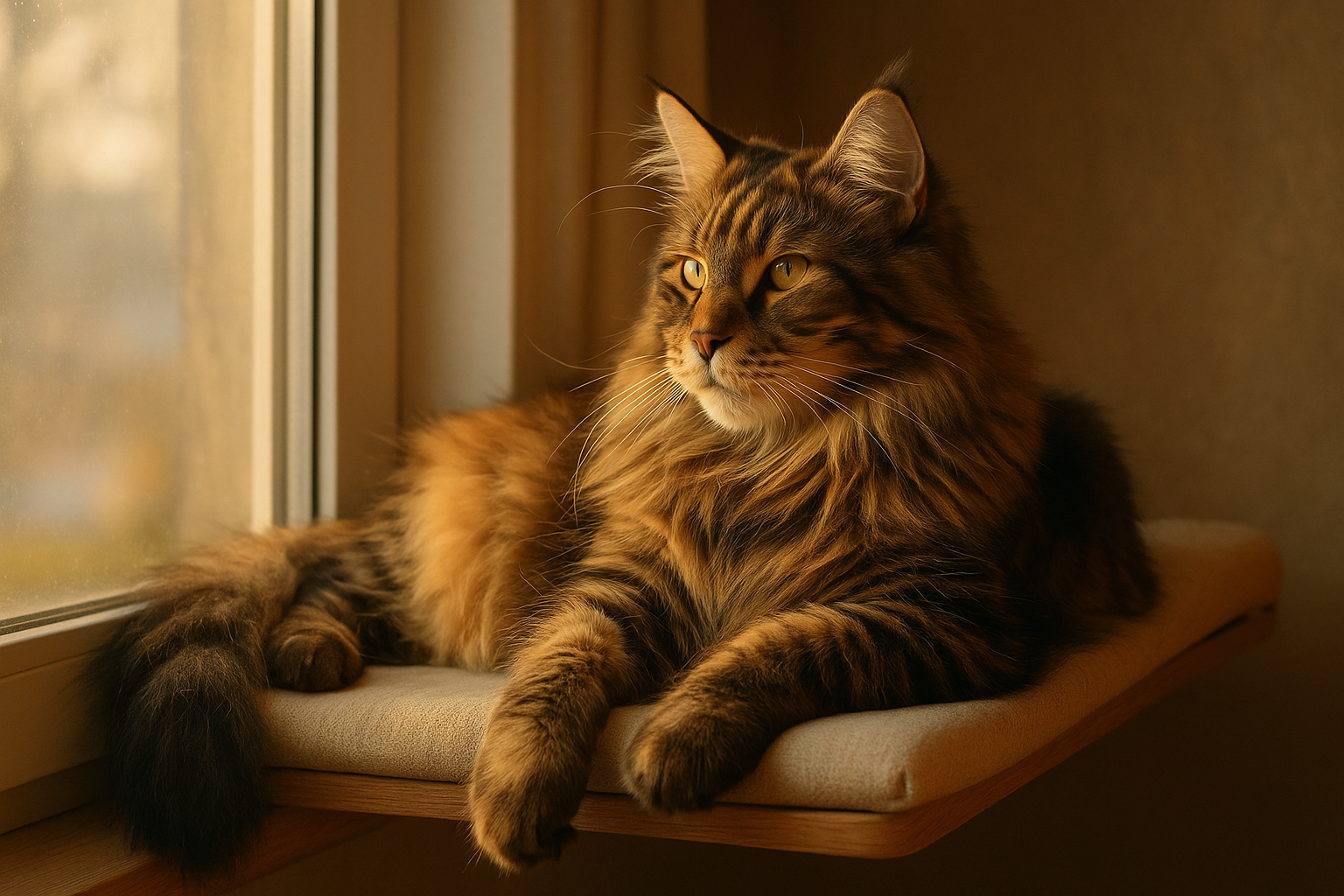
The Maine Coon is hard to mistake for anything else. The long, bushy tail, tufted ears, and thick ruff around the neck give them a distinctly wild, almost lynx-like appearance. Their bodies are large and muscular with a rectangular build, and males in particular can reach impressive sizes, sometimes over 20 pounds.
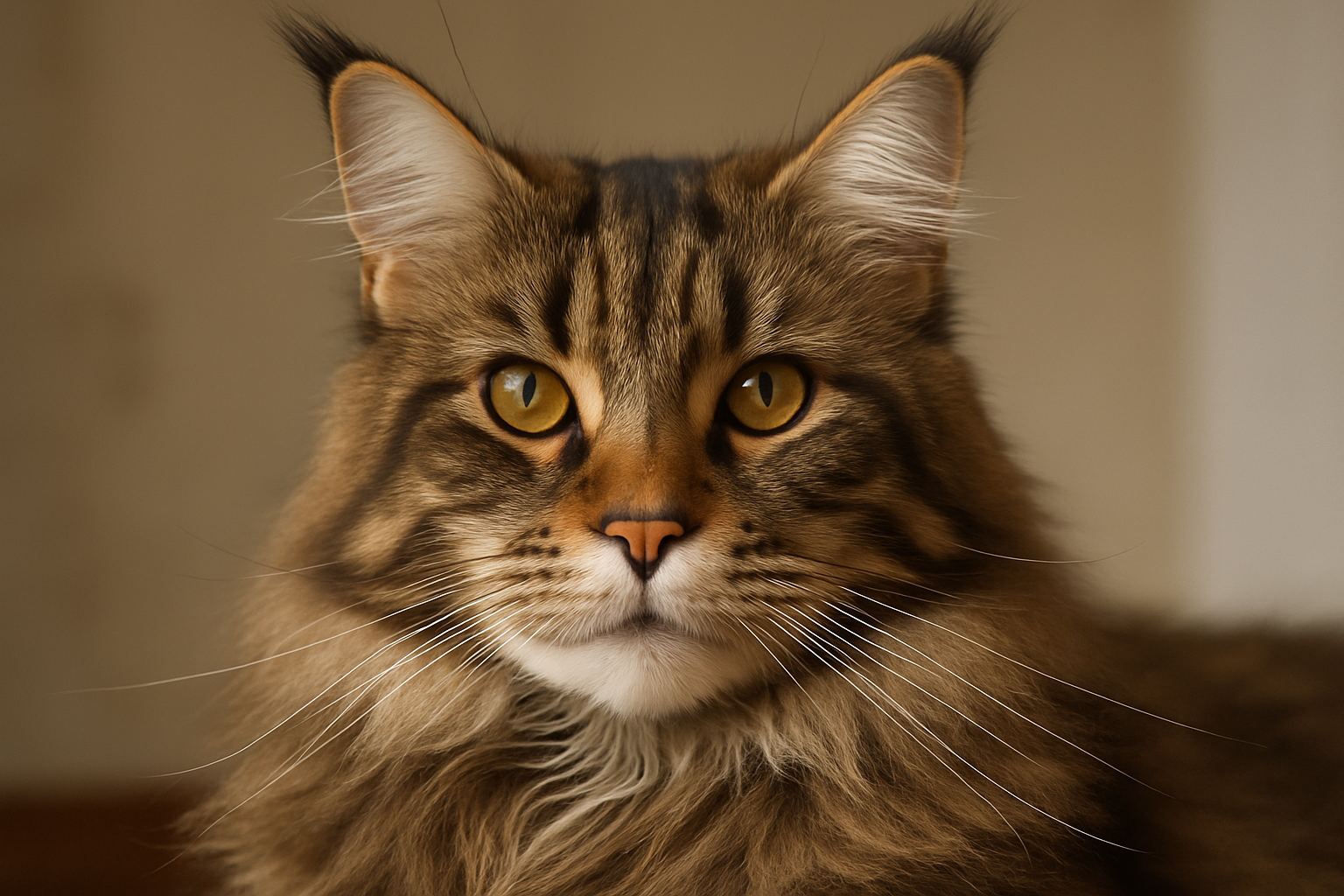
Their coat is long but silky rather than fluffy, which means it’s less prone to matting than you might expect. Many Maine Coons also have tufts of fur between their toes, a throwback to their cold-climate origins that makes them look like they’re wearing little snow boots. Eye color ranges from gold and green to copper, with blue eyes appearing in some white cats.
Maine Coon Cat Grooming and Shedding
The Maine Coon coat is lower maintenance than it looks, but it still needs consistent attention. Brushing once or twice a week is usually enough to keep tangles at bay and manage everyday shedding. During spring and fall when shedding peaks, more frequent grooming helps a lot, and a wide-toothed comb used alongside a slicker brush makes a noticeable difference.
Most Maine Coons don’t need regular baths, but an occasional wash every few months can help reduce shedding and keep the coat looking its best. Beyond that, the usual basics apply: nail trims every couple of weeks and ear checks for wax or debris.
Activity & Play
Maine Coons are moderately active and tend to stay playful well into adulthood. They enjoy climbing, chasing, and anything that taps into their hunting instincts. A tall, sturdy cat tree is practically essential since they love to be up high and they’re heavy enough to topple anything flimsy. Feather wands, puzzle feeders, and even a good game of fetch are all fair game with this breed.
One quirk worth knowing: Maine Coons are unusually fascinated by water. Many will dip a paw in their water bowl, bat at running faucets, or try to supervise bath time. It’s harmless and honestly pretty entertaining, but a cat water fountain tends to go over very well with this breed for that reason.
What Do Maine Coon Cats Eat?
Maine Coons are large cats with big appetites, and their diet should reflect that. A high-protein, meat-based food with animal protein listed as the first ingredient is the right starting point. Because of their size, portion control matters more than it might with a smaller cat — Maine Coons can be prone to weight gain if they’re overfed or under-stimulated, and carrying extra weight puts additional strain on their joints.
Wet food is worth including in the rotation since it helps with hydration and supports urinary health. Fresh water should always be available, and given their fascination with moving water, a cat fountain is often a worthwhile investment.
Maine Coon Cat Health Issues and Lifespan
Maine Coon cats typically live 12 to 15 years, with some reaching beyond that with good care. They’re generally a robust breed, but like most purebreds they do carry some hereditary health risks worth being aware of. The most common are hypertrophic cardiomyopathy (HCM), a form of heart disease that can develop silently over time, hip dysplasia, and spinal muscular atrophy. Responsible breeders screen for these conditions, so asking about genetic testing before buying from a breeder is always a good idea.
Regular vet checkups, a quality diet, and keeping them at a healthy weight are the best things you can do for their long-term health. If you’re adopting, a vet exam shortly after bringing them home helps establish a baseline and catch anything early.
Family Compatibility
Few cat breeds handle the noise and unpredictability of a busy family home as well as the Maine Coon. They’re patient with children, tolerant of other pets including dogs, and confident enough not to bolt every time something unexpected happens. Their sociable nature means they tend to bond with multiple family members rather than bonding with just one person, which works well in households with kids.
They’re also a good fit for quieter homes and solo owners. Maine Coons form strong bonds with their people and like to be involved in daily life, but they’re not demanding about it. They’ll settle nearby and keep you company without requiring constant interaction. The main thing they don’t do well with is long stretches of being completely alone, so a companion animal helps if you’re out of the house for most of the day.
Recommended Supplies for a Maine Coon Cat
Maine Coons need supplies that match their size. Standard cat furniture and litter boxes are often too small, and it’s worth getting the right setup from the start rather than replacing things later.
- Oversized litter box with plenty of room to turn around
- High-protein food sized for large breeds
- Tall, heavy-duty cat tree with stable base
- Wide-toothed comb and slicker brush for coat maintenance
- Cat water fountain to encourage drinking
- Large scratching post or pad

Maine Coon Cat Price and Cost
Maine Coons are one of the pricier domestic cat breeds, and the cost varies quite a bit depending on where you get one. From a reputable breeder, expect to pay between $1,000 and $2,000 for a pet-quality kitten. Show-quality cats from champion bloodlines can run $2,500 or more depending on the breeder and lineage.
The price reflects more than just the kitten itself. Responsible breeders invest in genetic health screening for conditions like HCM and hip dysplasia, early vaccinations, deworming, and socialization. That upfront cost can save you significantly in vet bills down the line.
Adoption is another route worth considering. Maine Coons are less commonly found in shelters than mixed breeds, but breed-specific rescues do exist and adoption fees are typically $100 to $300. It takes more patience to find one this way, but it’s a genuine option if you’re not set on a kitten from a breeder.
Maine Coon Cat FAQs
Are Maine Coon cats hypoallergenic?
No, Maine Coons are not hypoallergenic. They produce the same allergy-triggering proteins as other cats, and their thick, long coat means more fur in your environment. They’re not a good choice for anyone with significant cat allergies.
How big do Maine Coon cats get?
Maine Coons are one of the largest domestic cat breeds. Males typically weigh between 15 and 25 pounds, while females usually range from 10 to 15 pounds. They’re also slow to mature and don’t reach their full size until around 3 to 5 years of age.
How long do Maine Coon cats live?
Most Maine Coons live 12 to 15 years with proper care. Regular vet visits, a quality diet, and keeping them at a healthy weight all contribute to a longer, healthier life.
Do Maine Coon cats shed a lot?
They shed year-round with heavier shedding in spring and fall. Weekly brushing keeps it manageable, and their coat is less prone to matting than many other longhaired breeds.
Are Maine Coon cats good with kids or other pets?
Yes. Maine Coons are known for being patient, tolerant, and adaptable, which makes them one of the better breeds for families with children and other animals. They tend to get along well with dogs when introduced properly.
Is the Maine Coon Cat Right for You?
If you want a big, sociable, personality-filled cat that fits into family life without much drama, the Maine Coon is hard to beat. They’re easy to like, relatively easy to live with, and tend to form genuinely close bonds with their people. The size and grooming commitment are real, but for most Maine Coon owners they’re a small trade-off for everything else the breed brings.
The one honest caveat is that they don’t do well being ignored. They want to be part of your life, not just living alongside it. If that sounds like your kind of cat, the Maine Coon is probably exactly what you’re looking for.
Debbie Reid is the founder and chief editor of CatPedia.net, with over 25 years of hands-on experience in feline care, rescue, and behavior research. Inspired by her rescue cats Snickers and Bigboy, she collaborates with animal welfare resources and consults veterinary literature to turn complex feline health, nutrition, and behavior topics into clear, actionable guides.