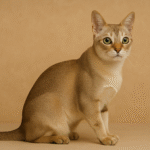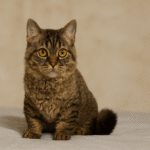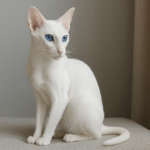
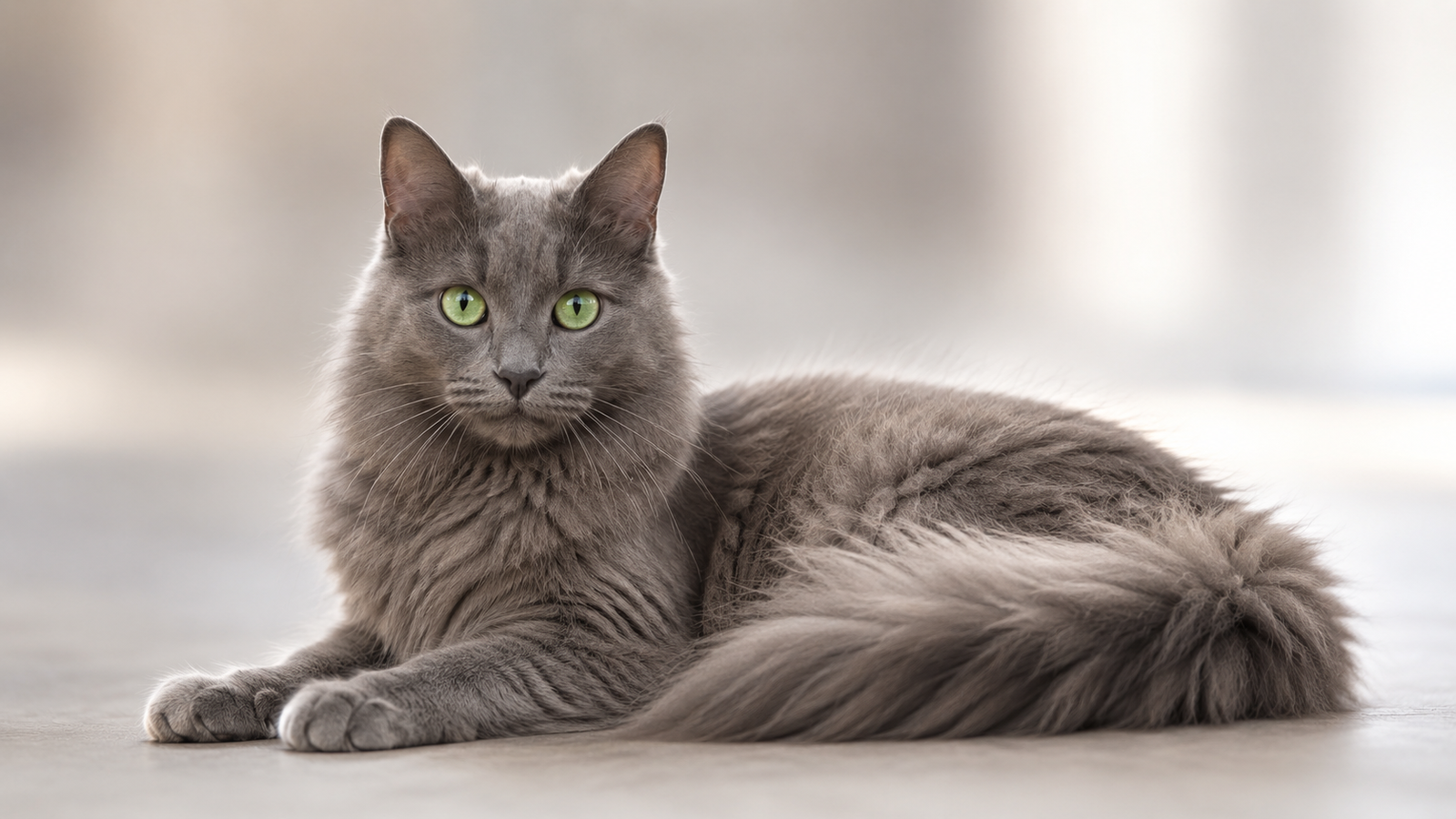
The Nebelung cat is one of the rarer domestic breeds, and its appearance is a large part of why people seek them out. The semi-long blue coat with silver-tipped guard hairs has a soft, misty quality in natural light, and the vivid green eyes make the overall look even more striking.
The personality is a different story. Nebelungs are slow to trust, sensitive to change, and poorly suited to chaotic households. They are not the confident, sociable cat their appearance might suggest. Once they feel secure, they become calm, loyal cats that bond closely with their people, but that security takes time to earn.
This guide covers the Nebelung cat’s personality, appearance, grooming needs, health, cost, and whether this quiet breed is the right fit for your home.
Quick Breed Facts
- Origin: United States (Denver, 1980s)
- Breed registries: TICA, WCF, LOOF, GCCF
- Weight range: 8–15 lbs (males), 5–11 lbs (females)
- Lifespan: 13–18 years
- Coat: Semi-long, double coat with silver-tipped guard hairs
- Colors and patterns: Solid blue only
- Eye color: Vivid green (yellow in kittens, green by adulthood)
- Grooming: Low to moderate
- Activity level: Moderate
- Affection level: High with family, reserved with strangers
- Vocality: Quiet, soft-spoken
- Good with children: Yes, with calm older children
- Good with other pets: Yes, with slow introductions
History & Origin of the Nebelung Cat
The Nebelung is a relatively young breed. In 1984, Denver-based breeder Cora Cobb’s son owned a black domestic shorthair named Elsa, whose litter included a longhaired blue male kitten with bright green eyes. Cobb named him Siegfried, after the hero of Wagner’s Ring cycle (a series of German operas). A second litter the following year produced a similar female kitten, Brunhilde, and those two cats became the foundation of the breed.
Cobb worked with TICA geneticist Dr. Solveig Pflueger to write a breed standard, using the Russian Blue standard as the starting point and adding the semi-long coat. The breed name comes from the German word for “mist” and ties to the Wagnerian theme. TICA granted new breed status in 1987 and full championship status in 1997. The Nebelung is also recognized by LOOF, WCF, and GCCF, though CFA does not currently recognize the breed.
Nebelung Cat Personality & Temperament
Nebelungs are reserved cats, and that’s the defining trait of the breed. They take weeks or months to warm up to new people, hide when the doorbell rings, and generally avoid the kind of confident, social behavior you’d see in a Burmese or Maine Coon. Routine matters to them more than to most breeds, and sudden changes in household schedule, new furniture, or visiting houseguests can throw a Nebelung off for days.
Once they trust you, the personality shifts. With family they’re affectionate and attentive, bonding closely with one or two people rather than the household at large. They’re soft-voiced when they do speak, and most owners describe them as quiet observers. For a calm owner who values steady, devoted companionship, that works well.
Nebelung Cat Appearance & Physical Traits
The Nebelung is a medium-sized cat with a long, lean body and a graceful, muscular build. The coat is the most distinctive feature: a semi-long double coat in solid blue, with silver-tipped guard hairs that give the cat a misty, shimmering look in natural light. The tail is plumed, and there are usually tufts of fur between the toes and behind the ears.
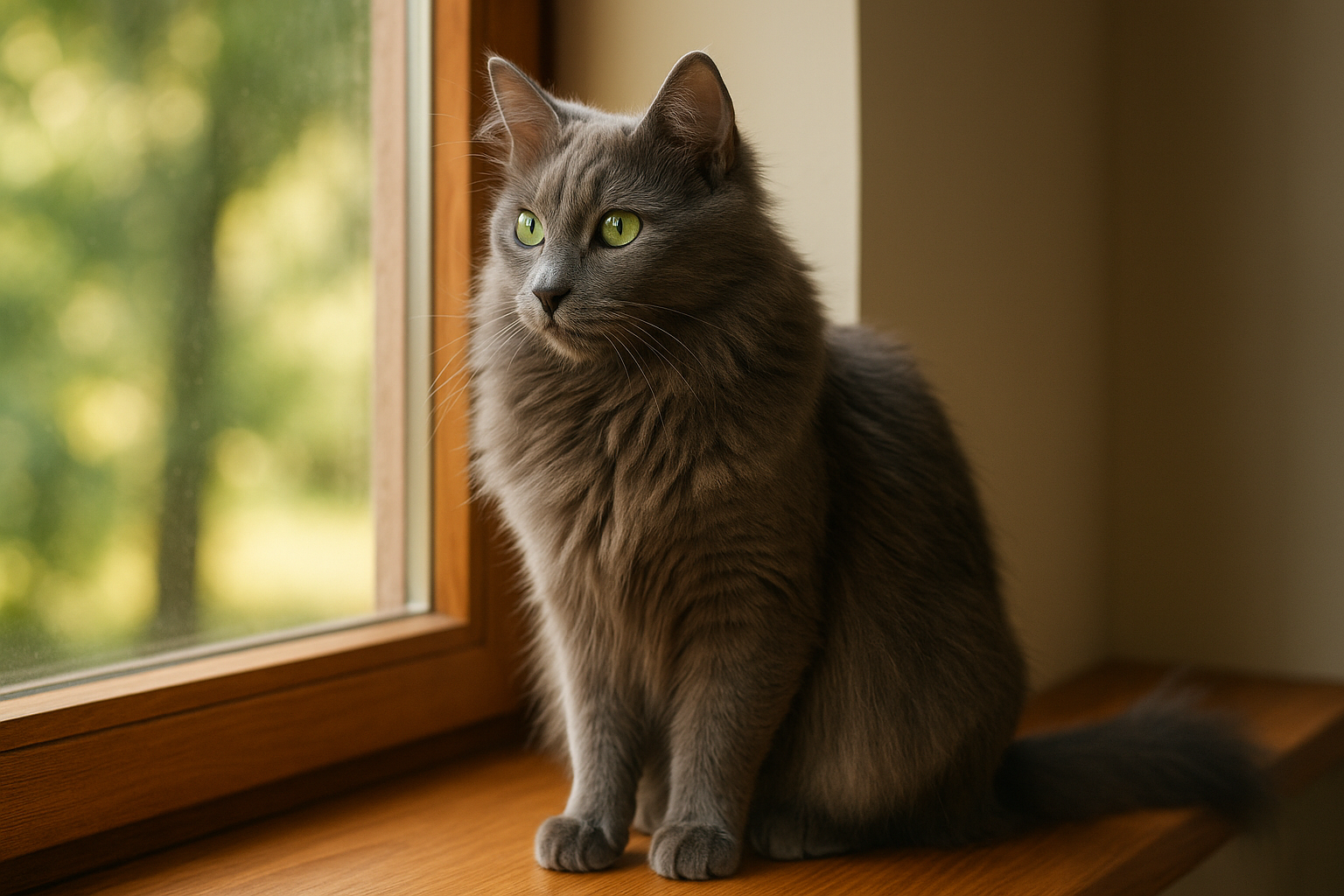
Eye color is one of the breed’s signatures. Kittens are born with yellow eyes that gradually shift to green over the first two years. Adults have vivid green eyes that stand out against the blue coat. Nebelungs are slow to mature physically as well, with most cats not reaching their full coat and body development until around age two.
Nebelung Cat Grooming & Shedding
Despite the semi-long coat, Nebelungs are easier to groom than most longhaired breeds. The fur is fine and silky rather than dense, and it doesn’t mat easily. A weekly brushing with a wide-toothed comb followed by a slicker brush keeps the coat in good condition and removes loose hair before it ends up on the furniture. During spring and fall shedding seasons, brushing two or three times a week handles the heavier coat turnover.
Beyond coat care, the usual basics apply: nail trims every couple of weeks, regular ear checks, and dental care.
Activity & Play
Nebelungs are moderately active rather than high-energy. They enjoy climbing, perching, and watching the household from above, which makes a tall cat tree more useful for them than open floor space. They’ll engage in structured play sessions with wand toys, ball tracks, and puzzle feeders, but they’re not the kind of cat that runs laps around the house at 2am. A few short play sessions a day should keep them content.
They also don’t tolerate rough play well. A Nebelung that gets startled or handled too forcefully will retreat and may take a while to come back out. Calm, predictable play tends to work best, and many Nebelungs will learn to play fetch with a small toy if the household is patient enough to teach them.

Nebelung Cat Health & Lifespan
Nebelungs are generally a healthy breed, with most cats living 13 to 18 years. Because the breed is still relatively young and the gene pool is small, there isn’t a long list of well-documented hereditary conditions specific to Nebelungs. That said, the small gene pool is itself something to ask breeders about. Reputable Nebelung breeders are careful about outcrossing and health testing to keep the population genetically diverse.
Family Compatibility
Nebelungs do best in calm, predictable households. They suit single owners, older couples, and quiet families where routines are consistent. They can do well with children if the kids are old enough to understand that this is a cat that needs gentle handling and quiet space. Toddlers and very young children are usually a poor match because the unpredictability stresses the cat out.
They get along reasonably well with other calm cats and cat-friendly dogs when introductions are slow and gradual. Rushing the process or expecting them to adapt quickly tends to backfire. Households with frequent guests, loud parties, or constant noise are not a good environment for a Nebelung. In that kind of setting, a Nebelung may spend most of its time out of sight rather than with the family.
Recommended Supplies for a Nebelung Cat
For Nebelungs, placement matters as much as the supplies themselves. This reserved breed does best with quiet resting spots, vertical space, and a litter box setup that feels clean and low-traffic.
- Tall cat tree with enclosed perches or hideouts
- Soft, supportive bed placed somewhere quiet
- Wide-toothed comb and slicker brush for weekly grooming
- Wand toys and puzzle feeders for structured play
- Sturdy scratching post in a low-traffic area
- Roomy litter box in a quiet spot; keep it consistently clean, since Nebelungs can be picky about dirty or exposed boxes

Nebelung Cat Price and Cost
Nebelung kittens from a reputable breeder typically cost between $600 and $1,200, with show-quality kittens or rare lines running higher. The breed’s small population means waitlists are common, and finding a breeder in your region may take time. Nebelungs almost never appear in general shelters, but Russian Blue rescues occasionally take in surrendered Nebelungs or mislabel them, so checking those rescues is worth the effort if adoption is a priority.
Nebelung Cat FAQs
Are Nebelung cats hypoallergenic?
No, Nebelungs are not officially hypoallergenic. They produce the Fel d 1 protein like all cats. Some allergy sufferers report fewer symptoms around Nebelungs, but there’s no reliable evidence that the breed is safer for people with cat allergies. Spending time with one before committing is the only real way to know.
How are Nebelungs different from Russian Blues?
The two breeds share a blue coat, green eyes, and similar foreign body type. The main difference is coat length: Russian Blues have a short, dense plush coat, while Nebelungs have a semi-long, silky double coat with a plumed tail. Personality is similar in both breeds, with Nebelungs often described as slightly more reserved.
How much does a Nebelung cat cost?
Pet-quality Nebelung kittens from a reputable breeder typically cost between $600 and $1,200. Show-quality kittens or those from established lines can cost more. Because the breed is rare, expect waitlists and limited availability in some regions.
Do Nebelung cats shed a lot?
They shed moderately year-round with heavier shedding in spring and fall. Weekly brushing keeps it manageable, and the silky coat doesn’t mat the way denser longhaired coats do.
Are Nebelung cats good for families?
Yes, in calm households. Nebelungs do well with adults, older children, and other calm pets. They struggle in loud, chaotic, or unpredictable environments and aren’t a good match for families with toddlers or frequent houseguests.
Is the Nebelung Cat Right for You?
The Nebelung is not a good fit for busy households, families with young children, or anyone who wants a cat that’s immediately friendly with guests and comfortable in a changing environment. This breed needs stability, and without it, a Nebelung may spend more time hiding than bonding with the family.
The right home is calm and consistent, with people who are patient enough to let trust build slowly. In that setting, Nebelungs are quietly affectionate, closely bonded, and content with a stable routine and familiar people around them.
Debbie Reid is the founder and chief editor of CatPedia.net, with over 25 years of hands-on experience in feline care, rescue, and behavior research. Inspired by her rescue cats Snickers and Bigboy, she collaborates with animal welfare resources and consults veterinary literature to turn complex feline health, nutrition, and behavior topics into clear, actionable guides.