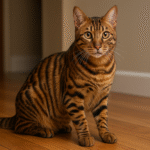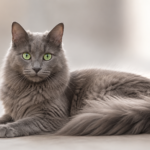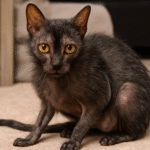
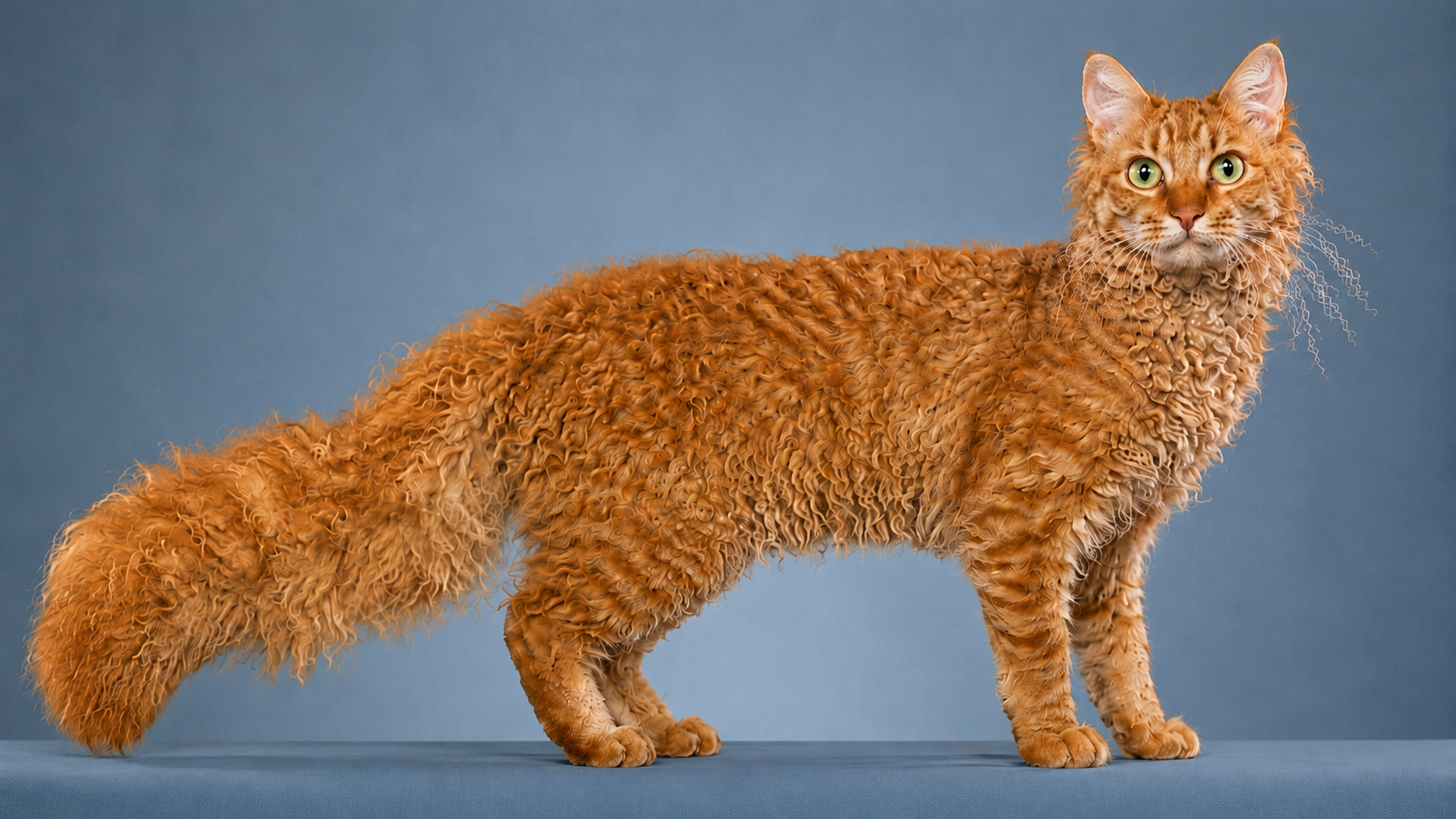
LaPerm cats have soft curls across the body, kinked whiskers, and a slightly tousled, almost windswept appearance. It’s a coat that invites people to reach out and touch, and most LaPerms are happy to oblige.
LaPerms are affectionate, moderately playful, and easier to groom than their curly coats suggest. Their low shedding also makes them a reasonable option for households with mild allergies.
Quick Breed Facts
- Origin: United States (Oregon)
- Breed registries: CFA, TICA, GCCF, FIFe
- Weight range: 6–12 lbs
- Lifespan: 12–15 years
- Coat: Curly or wavy, shorthaired or longhaired
- Colors and patterns: All colors and patterns accepted
- Eye color: All colors, including odd-eyed
- Grooming: Low maintenance
- Activity level: Moderate
- Affection level: High
- Vocality: Low to moderate
- Good with children: Yes
- Good with other pets: Yes
History & Origin of the LaPerm Cat
The LaPerm breed traces back to a single kitten born on a cherry farm in The Dalles, Oregon, in 1982. The kitten, later named Curly, was born bald and developed a soft, wavy coat as she grew. Her owner, Linda Koehl, didn’t think much of it at first, but when more curly-coated kittens started appearing in subsequent litters, it became clear that something unusual was being passed down. The trait turned out to be caused by a dominant mutation, so a kitten could develop the curly coat if just one parent passed it on.
The name LaPerm came from the obvious resemblance to a permed hairstyle, and the breed was developed through outcrossing to a range of domestic cats, which is part of why LaPerms come in such a wide variety of colors and patterns. TICA granted championship status in 2002, and CFA followed in 2008. The breed remains relatively uncommon outside breeder circles, but its distinctive look and easy temperament have built a steady following worldwide.
LaPerm Cat Personality & Temperament
LaPerms are people-oriented. They follow their humans from room to room, settle in nearby while you work, and tend to involve themselves in whatever is happening. They’re not loud about it, and they’re not demanding in the way some of the more vocal breeds can be. They just want to be where you are.
They’re also playful and curious, with a strong investigative streak that lasts well into adulthood. Many LaPerms learn to open cabinets, fetch small toys, or perch on shoulders without being taught. Their intelligence shows up in small, persistent ways rather than dramatic ones. They’re confident around strangers, adaptable to busy households, and tend to bond with everyone in the family rather than choosing one favorite person.
LaPerm Cat Appearance and Physical Traits
The LaPerm’s coat is the defining feature, and it’s unlike anything else in the cat world. The curls range from loose waves to tight ringlets, with the most pronounced curling typically appearing on the belly, throat, and at the base of the ears. Even the whiskers are curly, which is one of those small details that makes the breed instantly recognizable up close. LaPerms come in both shorthaired and longhaired varieties, with longhaired cats showing more dramatic ringlets and a noticeable ruff around the neck.
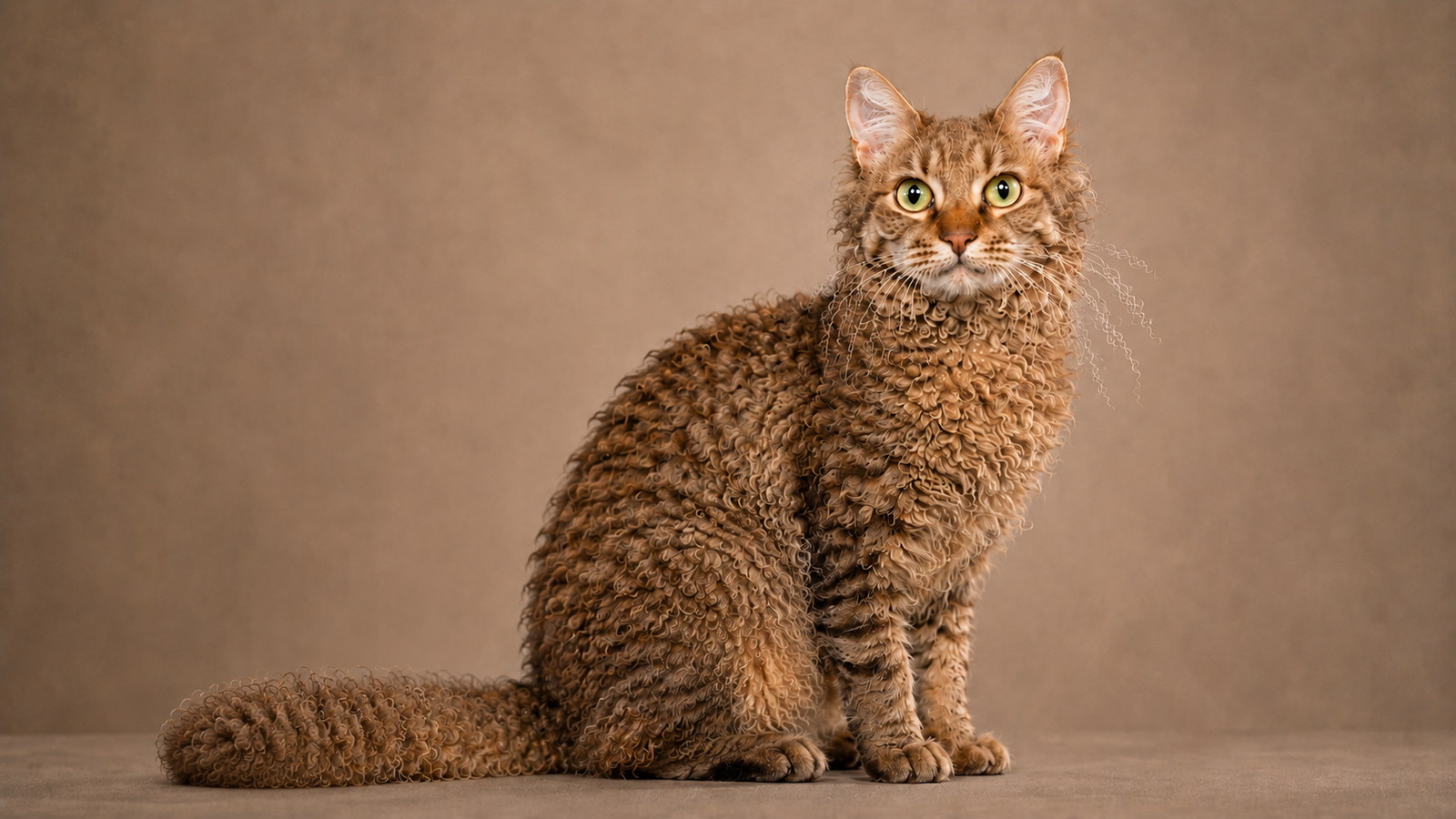
Body-wise, LaPerms are medium-sized and moderately built, with a lean, athletic frame that’s more graceful than substantial. They come in every color and pattern recognized in cats, from solid colors to tabby, tortoiseshell, calico, colorpoint, and everything in between. Eye color is equally variable and isn’t tied to coat color the way it is in many breeds.
LaPerm Cat Grooming and Shedding
Despite the elaborate coat, LaPerm grooming is straightforward. The curls don’t mat the way longhaired straight coats can, and over-brushing actually works against the breed by flattening out the texture that defines them. A gentle comb-through once a week is usually all that’s needed, and many shorthaired LaPerms can go longer than that without issue.
LaPerms do shed, but considerably less than most breeds. They typically go through a more noticeable shed once or twice a year, and some females shed their entire coat after pregnancy before it grows back in. Outside of those periods, daily fur around the house is minimal. The usual basics still apply: nail trims every couple of weeks, ear checks, and dental care.
Activity & Play
LaPerms are moderately active and stay playful well into adulthood. They’re climbers and explorers by nature, so vertical space matters more than floor space. A cat tree, a few accessible shelves, or a window perch all work well. They enjoy interactive play with wand toys and puzzle feeders, and many will play fetch without any formal training.
They’re not as relentless as some higher-energy breeds, but they still benefit from focused interactive play each day. They’re also capable of entertaining themselves between sessions, especially when they have climbing space, puzzle toys, or something interesting happening outside a window.

LaPerm Cat Health and Lifespan
LaPerms are considered a healthy breed overall, and the gene responsible for their curly coat has not been linked to a particular health disorder. There are currently no diseases known to occur consistently enough in LaPerms to be considered breed-specific.
That does not mean every LaPerm will remain free of health problems. Responsible breeders should know the health history behind their cats, arrange appropriate veterinary screening, and test domestic outcrosses before introducing them into a breeding program. Prospective owners should ask about the health and longevity of the kitten’s parents and close relatives rather than relying on a generic DNA panel alone.
Most LaPerms live around 12 to 15 years, although some live longer. Routine veterinary care, dental attention, appropriate portions, and regular activity remain important throughout their lives.
Family Compatibility
LaPerms suit families well. They’re patient with respectful children, sociable with other pets including cat-friendly dogs, and confident enough to handle the normal activity of a busy household. They tend to stay in the middle of things rather than disappearing when life gets noisy.
They’re also a strong fit for solo owners and seniors who want a cat that actively engages with them. The main thing LaPerms don’t do well with is being left alone for long stretches. They want company, and an empty house for ten hours a day isn’t something they take in stride. If your schedule keeps you out of the house most of the day, a second cat or another companion animal helps a lot.
Recommended Supplies for a LaPerm Cat
- Wide-toothed comb for occasional detangling
- Mid-height cat tree with multiple perches
- Window perch for watching outside activity
- Interactive wand toys and puzzle feeders
- Sturdy scratching post
- Cat-safe shampoo for occasional baths

LaPerm Cat Price and Cost
LaPerm kittens from a reputable breeder typically cost between $800 and $1,500, with show-quality cats from established lines running higher. Because LaPerms remain relatively uncommon outside breeder circles, finding one through a shelter is unlikely, but breed-specific rescues occasionally have adult LaPerms looking for homes, often surrendered by owners who underestimated how much company the breed wants.
LaPerm Cat FAQs
Are LaPerm cats hypoallergenic?
No. LaPerms are low-shedding, but they still produce Fel d 1 and other proteins that can trigger cat allergies. A curly coat does not make a cat hypoallergenic, and individual reactions vary. Anyone with cat allergies should spend time around the specific cat before deciding to bring one home.
How long do LaPerm cats live?
Most LaPerms live 12 to 15 years, with some reaching beyond that with good care. Regular vet visits, a quality diet, and keeping them at a healthy weight all contribute to a longer life.
Do LaPerm cats shed a lot?
No. LaPerms are low-shedding overall, though they may go through one or two heavier shedding periods a year. Females sometimes shed their entire coat after pregnancy before it grows back in.
Are there shorthaired and longhaired LaPerms?
Yes. Both varieties are recognized, and both show the breed’s signature curls. Longhaired LaPerms tend to have more pronounced ringlets and a fuller ruff, while shorthaired LaPerms have a wavier, more tousled appearance.
Is the LaPerm part of the Rex cat group?
LaPerms are often grouped with rex-type cats because of their curly coats, but the LaPerm mutation is a separate dominant gene, distinct from the recessive mutations behind the Cornish Rex and Devon Rex. The breeds look related but aren’t.
Are LaPerm cats good with kids or other pets?
Yes. LaPerms are patient, sociable, and adaptable, which makes them a strong fit for families with children and other animals. They tend to get along well with cat-friendly dogs when introduced properly.
Is the LaPerm Cat Right for You?
LaPerms suit families, solo owners, and seniors who want an affectionate cat that’s involved in daily life without being demanding. They usually do well with other pets but may not be a good fit for homes where they would be left alone for most of the day.
Debbie Reid is the founder and chief editor of CatPedia.net, with over 25 years of hands-on experience in feline care, rescue, and behavior research. Inspired by her rescue cats Snickers and Bigboy, she collaborates with animal welfare resources and consults veterinary literature to turn complex feline health, nutrition, and behavior topics into clear, actionable guides.