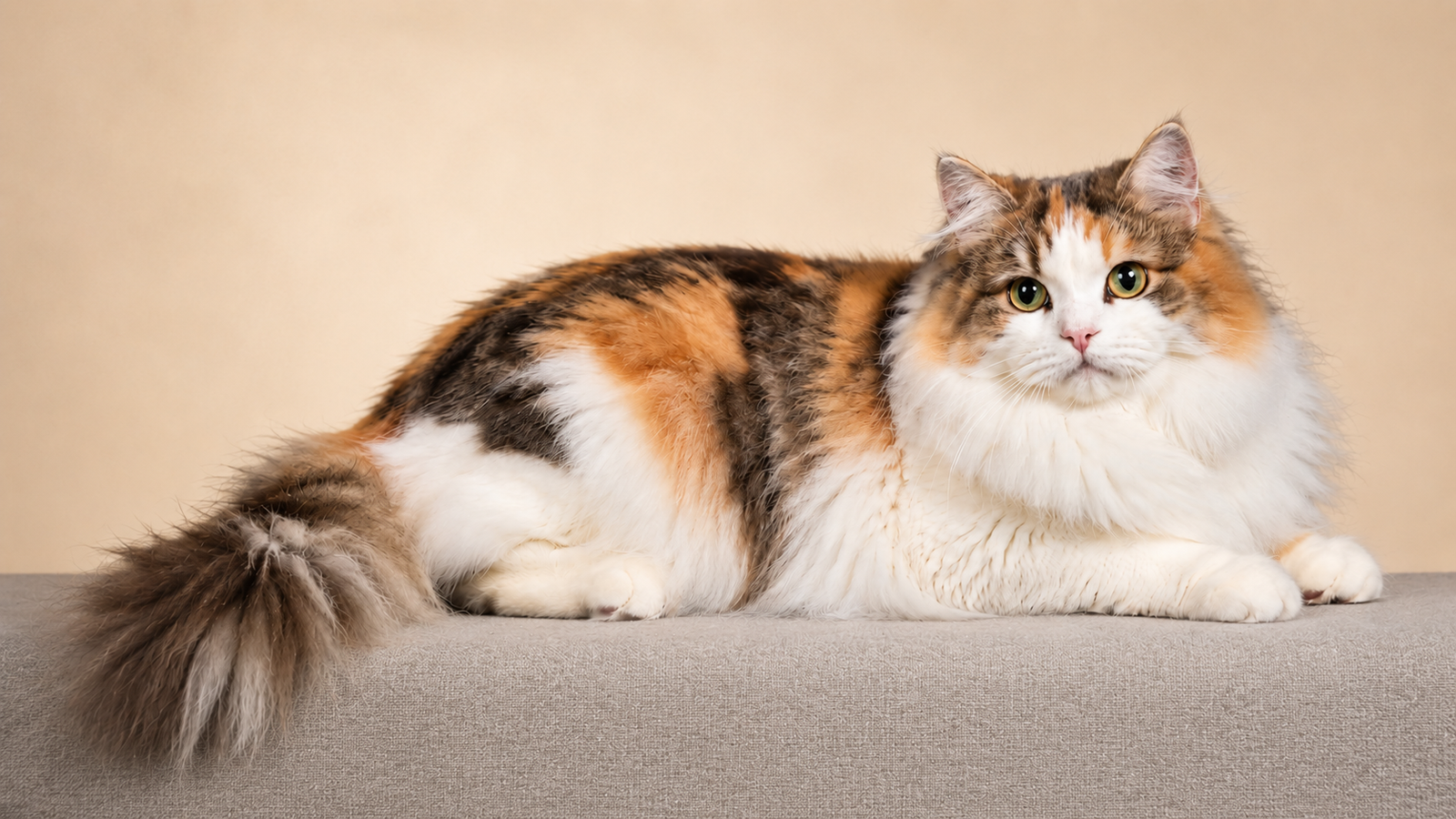
Ragamuffin cats look like oversized plush toys, with large bodies and soft, silky coats. They are unusually relaxed about being handled and often go limp when picked up, then settle into your lap for as long as you’ll let them. They are also sociable—the kind of cat that follows you from room to room and greets visitors at the door.
Ragamuffins are easygoing, but they are not low-maintenance. They don’t do well with long stretches alone, and their size and coat are real commitments.
Here’s what it’s actually like to live with a Ragamuffin cat, from personality and daily habits to grooming, health, and whether they’re the right fit for your home.
Quick Breed Facts
- Origin: United States (1990s)
- Breed registries: CFA, ACFA, GCCF, CCA-AFC
- Weight range: 10–20+ lbs
- Lifespan: 12–18 years
- Coat: Semi-long, silky, rabbit-like texture
- Colors and patterns: Nearly all colors and patterns accepted
- Eye color: Any color, including odd-eyed
- Grooming: Low to moderate
- Activity level: Moderate
- Affection level: Very high
- Vocality: Low
- Good with children: Yes
- Good with other pets: Yes
History & Origin of the Ragamuffin Cat
The Ragamuffin traces directly back to the Ragdoll program developed by Ann Baker in the 1960s. In the early 1990s, a group of breeders broke away from Baker’s tightly controlled International Ragdoll Cat Association because its restrictive licensing terms made it difficult to develop the breed further.
To broaden the gene pool, the founding breeders outcrossed to Persians and domestic longhairs. The result shares the Ragdoll’s plush build and mellow temperament but has a wider range of colors and patterns, a rounder face, and a plushier coat. The new line needed its own name, and the breeders chose Ragamuffin. ACFA granted the breed championship status in 2001, followed by CFA in 2011. TICA does not currently recognize the breed.
Ragamuffin Cat Personality & Temperament
Ragamuffins are calm, people-focused cats that follow their owners from room to room and greet visitors without hesitation. Their attachment to their people has earned them the nickname “Velcro cats” among breeders. Many will relax or go limp when picked up, a trait inherited from their Ragdoll heritage that makes them easy to handle for grooming, vet visits, and families with young children.
They stay playful well into adulthood without ever becoming intense about it. A Ragamuffin will chase a wand toy, learn to fetch, and some take to leash walking with a bit of training. They are quiet cats with soft voices they use sparingly. They don’t do well with long stretches alone. This is a breed that wants to be part of daily life.
Ragamuffin Cat Appearance and Physical Traits
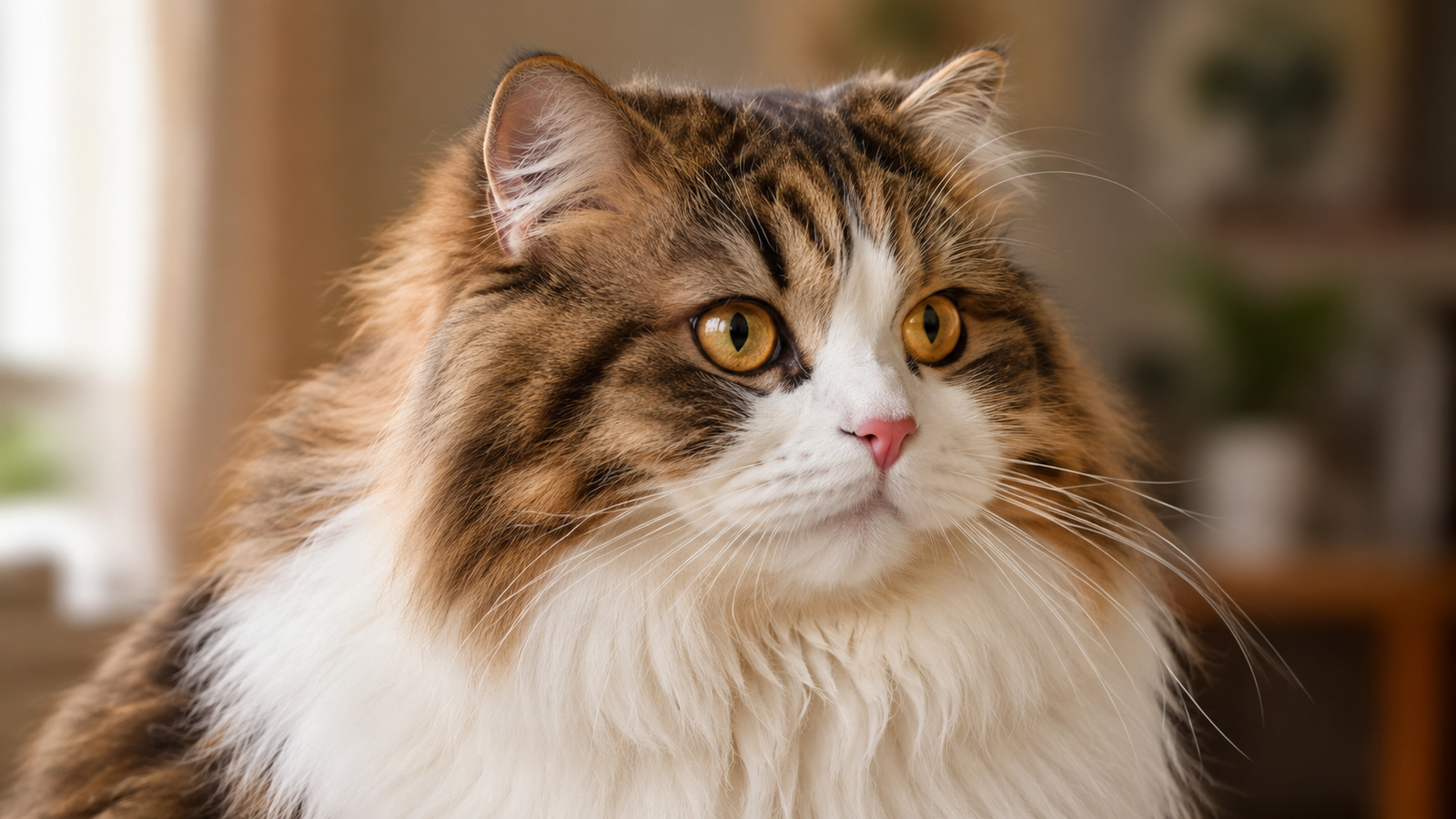
Ragamuffins are large, heavy-boned cats with a substantial, muscular build. Males often reach 15 to 20 pounds and sometimes more, while females typically fall between 10 and 15. They are slow to mature and don’t reach full size until around four years old.
Their semi-long, silky coat has a soft, rabbit-like texture and resists matting better than many longhaired coats. Common features include a full ruff around the neck, a plumed tail, and tufts of fur between the toes. Ragamuffins appear in nearly every color and pattern, including solid, tabby, tortoiseshell, calico, and pointed varieties. Their eyes can be any color, including odd-eyed combinations, and the face is round with a slight nose dip and walnut-shaped eyes.
Ragamuffin Cat Grooming and Shedding
The Ragamuffin coat is semi-long and silky, with a soft, plush texture that resists tangling. Weekly brushing is usually enough to remove loose hair and keep the coat in good condition, though more frequent grooming may be needed during heavier spring and fall shedding. A wide-toothed comb works well through the ruff and britches without pulling.
Most Ragamuffins tolerate grooming well. Beyond brushing, they need nail trims every couple of weeks, regular ear checks, and dental care.
Activity & Play
Ragamuffins are moderately active cats. They enjoy interactive toys and puzzle feeders but don’t need the constant stimulation that high-energy breeds do. A feather wand and a few rotating toys are usually enough.
They are not driven climbers. Their size makes stability more important than height, so a sturdy mid-height cat tree with wide platforms gets more use than a narrow tower. A window perch is often a better investment than elaborate vertical setups.

Ragamuffin Cat Health Issues and Lifespan
Ragamuffins typically live 12 to 18 years with good care. Two hereditary conditions turn up often enough that responsible breeders screen for both. Hypertrophic cardiomyopathy (HCM) is a form of heart disease that can develop silently over time. A DNA test is available for the HCM mutation associated with Ragdolls and is also appropriate for Ragamuffins, although it cannot rule out every possible cause of the disease. Some breeders also have their breeding cats examined periodically by a veterinary cardiologist.
Polycystic kidney disease (PKD) is another concern because Persians were used in the breed’s development. PKD is caused by a dominant mutation in the PKD1 gene, meaning a cat only needs to inherit it from one parent to be affected. Carriers can be identified with a DNA test, so ask any breeder for both parents’ HCM and PKD1 results along with any available cardiac screening records.
Their appetite combined with a relatively low activity level makes weight gain a genuine risk. Unrestricted access to food can make it difficult to control, so measured portions of a complete and balanced cat food are a better choice than free-feeding. Carrying extra weight strains the joints and raises the risk of diabetes.
Family Compatibility
Ragamuffins are one of the better large breeds for families. Their patience and tolerance for handling make them well-suited to households with young children, and their tendency to walk away from a situation rather than escalate it is a practical trait when kids are involved. They bond with the whole household rather than one person, which works well in busier homes.
They get along with dogs and other cats when introduced gradually, and their even temperament means they usually settle in without much disruption.
Recommended Supplies for a Ragamuffin Cat
- Oversized cat bed with supportive padding
- Mid-height cat tree with wide, stable perches
- Window perch with a high weight capacity
- Wide-toothed comb and slicker brush for coat care
- Large litter box with room to turn comfortably
- Puzzle feeder to slow eating and provide mental stimulation

Ragamuffin Cat FAQs
Are Ragamuffin cats hypoallergenic?
No. Ragamuffins produce the same Fel d 1 protein that triggers most cat allergies, and their semi-long coat means more fur in your environment. They are not a good choice for anyone with significant cat allergies.
How is a Ragamuffin different from a Ragdoll?
Ragamuffins and Ragdolls share a common origin and a similar mellow temperament, but the differences are real. Ragamuffins come in nearly every color and pattern, while Ragdolls are limited to pointed varieties. Ragamuffins have a rounder face with walnut-shaped eyes compared to the Ragdoll’s more angular head and oval eyes, and the coat texture is slightly plushier.
How big do Ragamuffin cats get?
Ragamuffins are one of the larger domestic cat breeds. Males typically weigh 15 to 20 pounds, with some exceeding that, while females usually fall between 10 and 15 pounds. They don’t reach full size until around four years old.
How long do Ragamuffin cats live?
Most Ragamuffins live 12 to 18 years with proper care. Regular vet visits and keeping them at a healthy weight are the most important factors.
How much does a Ragamuffin cat cost?
Ragamuffin kittens from a reputable breeder typically cost between $1,200 and $2,500, with show-quality kittens from championship lines reaching $3,000 to $3,500. Adoption fees through breed-specific rescues typically fall between $150 and $400.
Do Ragamuffin cats shed a lot?
They shed year-round with heavier shedding in spring and fall. Weekly brushing keeps it manageable, and the plush coat texture resists matting better than many other longhaired breeds.
Are Ragamuffin cats good with kids or other pets?
Yes. Ragamuffins are patient and rarely reactive, which makes them a practical choice for families with children. They tend to get along with dogs and other cats when introduced gradually.
Is the Ragamuffin Cat Right for You?
If you want a large, people-focused cat that tolerates handling well and fits into family life without much drama, the Ragamuffin is a strong candidate. They suit families with children, multi-pet homes, and quieter households equally well.
Where they struggle is solitude. They need a household where someone is home most of the day, or another animal to keep them company when no one is around.
Debbie Reid is the founder and chief editor of CatPedia.net, with over 25 years of hands-on experience in feline care, rescue, and behavior research. Inspired by her rescue cats Snickers and Bigboy, she collaborates with animal welfare resources and consults veterinary literature to turn complex feline health, nutrition, and behavior topics into clear, actionable guides.