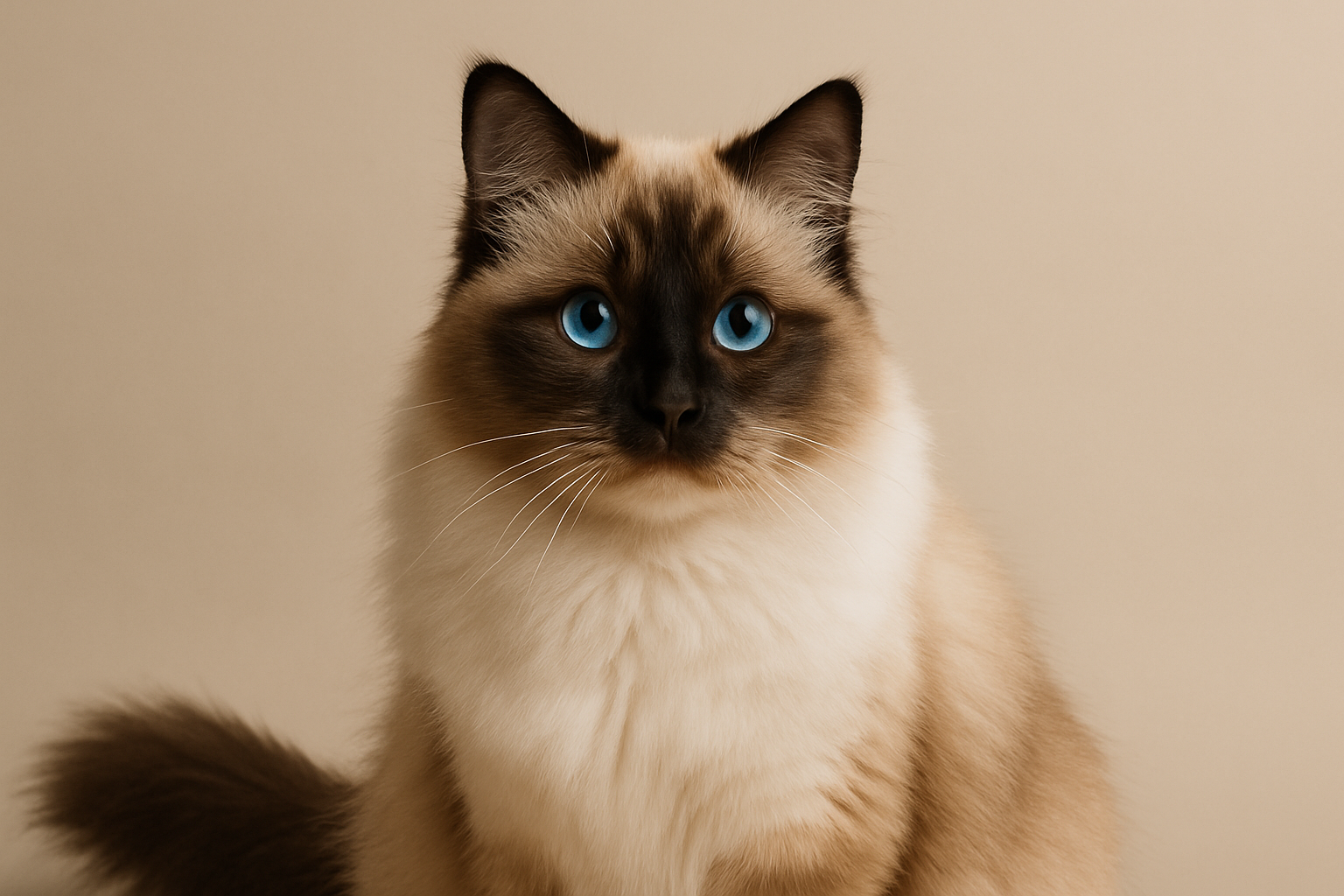
Ragdoll cats are known for being large, calm, and unusually easygoing. They tend to move through life at a slower pace than many breeds, and for a lot of people, that’s exactly the appeal.
But “easygoing” doesn’t mean low-maintenance. Ragdolls are social cats that notice when their people are gone, and their large size and semi-long coats come with real care requirements. They’re also slow to mature and prone to a few hereditary health conditions you should know about before bringing one home.
Quick Breed Facts
- Origin: United States (California)
- Breed registries: CFA, TICA, FIFe
- Weight range: 10–20+ lbs
- Lifespan: 12–17 years
- Coat: Semi-long, silky, low-mat
- Colors and patterns: Seal, blue, chocolate, lilac, cinnamon, fawn | colorpoint, mitted, bicolor
- Eye color: Blue (all Ragdolls)
- Grooming: Moderate — weekly brushing
- Activity level: Moderate
- Affection level: Very high
- Vocality: Quiet to moderate
- Good with children: Yes
- Good with other pets: Yes
History & Origin of the Ragdoll Cat
The Ragdoll cat is one of the newer established breeds, tracing back to a single white longhaired cat named Josephine in 1960s California. Breeder Ann Baker noticed that Josephine’s offspring had an unusual combination of traits: they were large, placid, and went limp when picked up, almost like a ragdoll, which is where the breed name comes from. Baker began selectively breeding for those qualities, and what she developed eventually became the foundation for the modern Ragdoll.
The breed’s early years were complicated. Ann Baker trademarked the Ragdoll name and required breeders to operate under her own registry with strict contracts and royalty payments. Two of her earliest breeders, Denny and Laura Dayton, broke away in 1975 to pursue mainstream recognition through TICA and CFA. Most modern Ragdolls trace back to their lines rather than Baker’s original registry, and the breed was formally recognized by TICA in 1979 and CFA in 2000. Today the Ragdoll is consistently ranked among the most popular pedigreed cat breeds in the world.
Ragdoll Cat Personality & Temperament
Ragdolls are affectionate without being demanding. They follow their people around, settle nearby during quiet moments, and tend to show up whenever something is happening in the house. They’re not the type to tear through rooms at odd hours or yell for attention, but they’re also not the type to disappear for hours on end. You usually know where your Ragdoll is because it’s somewhere near you.
They’re also more playful than their relaxed reputation suggests. Ragdolls respond well to interactive toys, fetch is a real possibility with this breed, and they stay engaged with play well into adulthood. What they lack is the intensity and restlessness of higher-energy breeds. They’ll play hard for a while, then go right back to stretching out somewhere soft.
Ragdolls also tend to trust people easily, including strangers. That’s charming in a home setting but it also means they don’t do well as outdoor cats. They have almost no street sense and will approach unfamiliar people and animals without hesitation.
Ragdoll Cat Appearance & Physical Traits
Ragdolls are large, well-built cats with a soft, semi-long coat and deep blue eyes that stay consistent across every color variation in the breed. The coat has a silky texture rather than a thick, fluffy undercoat, which is part of why it doesn’t mat as readily as you’d expect from a longhaired cat. Their bodies are muscular and broad-chested, and males in particular can look almost imposing when fully grown.
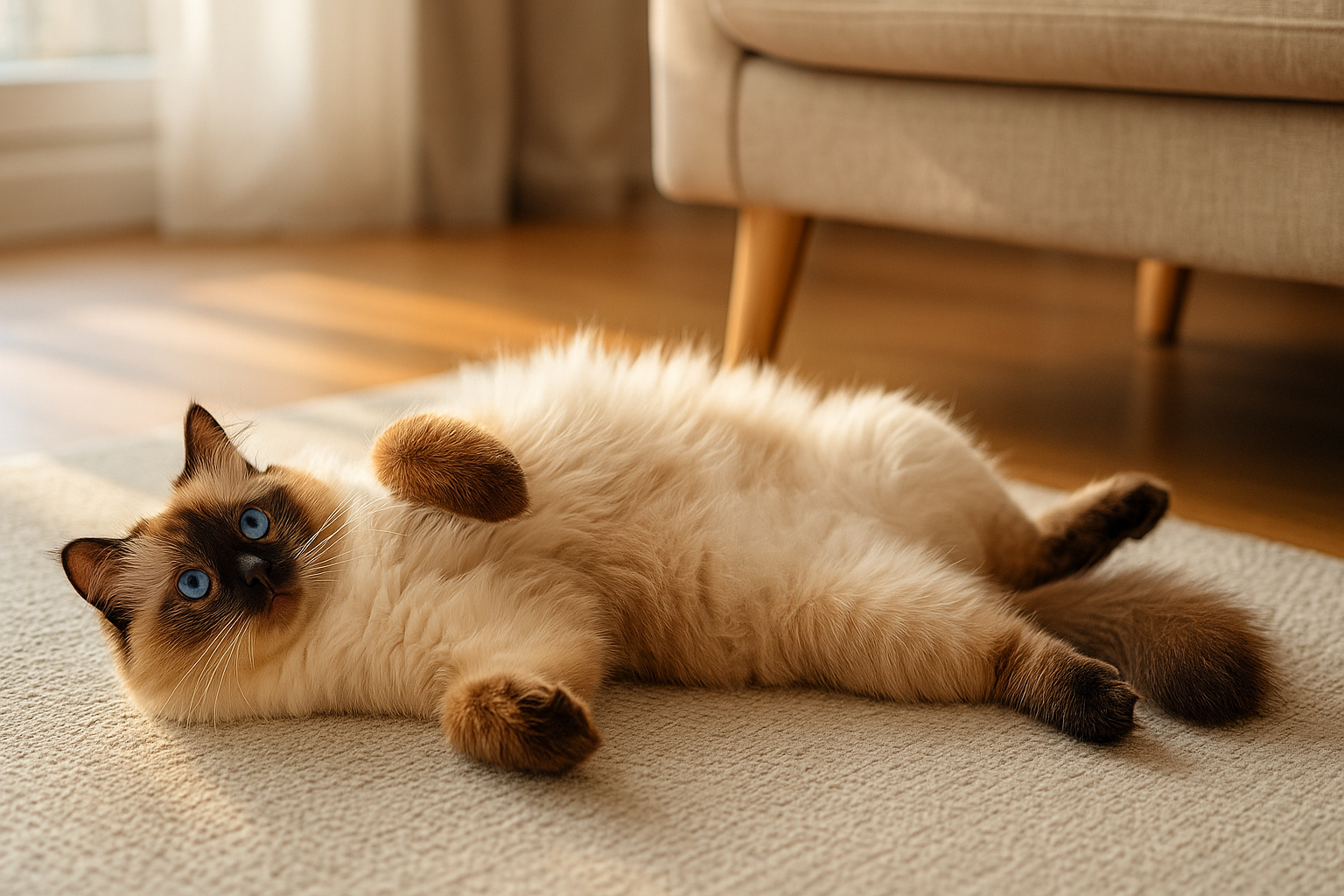
The breed comes in six main colors and three patterns. Colorpoint Ragdolls have darker color on the face, ears, legs, and tail with a lighter body. Mitted Ragdolls have the same coloring but with white paws and a white chin. Bicolor Ragdolls have an inverted V of white on the face and white on the legs and underbelly.
Like Maine Coons, Ragdolls mature slowly. Most don’t reach their full size until around four years of age, so a Ragdoll kitten will keep developing noticeably for a long time after you bring them home.
Ragdoll Cat Grooming & Shedding
The Ragdoll coat is more forgiving than the length suggests. Because the fur is silky rather than dense and woolly, it doesn’t tangle easily, and a brushing session once or twice a week is usually enough to stay ahead of shedding and keep things looking tidy. During spring and fall the shedding increases, so brushing more frequently during those periods keeps it under control. A wide-tooth comb followed by a soft slicker brush works well for this coat type.
Ragdolls generally tolerate grooming well, especially when it’s introduced early. Most come to enjoy the routine. Beyond coat care, keep up with nail trims every couple of weeks and check the ears regularly for wax buildup. Their coat can also trap debris around the base of the tail, so a quick check there is worth adding to the routine.
Activity & Play
Ragdolls are moderately active cats with a playful streak that sticks around into adulthood. They enjoy wand toys, chase games, and many will play fetch on their own terms. What they don’t do is climb aggressively or treat your home like an obstacle course. A solid cat tree with comfortable perches gets more use than anything acrobatic, and a window view keeps them mentally occupied during quieter parts of the day.
Because they’re large cats with a tendency toward weight gain, daily play isn’t optional. Even short sessions make a difference in keeping them at a healthy weight and preventing the boredom that leads to overeating. Puzzle feeders work particularly well with this breed since they slow down meals and give the cat something to work through between play sessions.
Ragdoll Cat Health & Lifespan
Ragdolls typically live 12 to 17 years with good care, and some reach beyond that. They’re a generally healthy breed, but like most purebreds they carry some hereditary risks worth keeping an eye on. Hypertrophic cardiomyopathy (HCM) is the most significant, a form of heart disease that can develop without obvious symptoms. Responsible breeders screen for it, and asking about cardiac testing before buying from a breeder is always a reasonable request. Regular cardiac checkups as the cat ages are a good idea regardless.
Polycystic kidney disease (PKD) has also been documented in some Ragdoll lines, though genetic testing has made it far less common in well-managed breeding programs. Weight management is worth paying close attention to throughout the cat’s life. Ragdolls have healthy appetites and can put on weight easily, which over time puts strain on their joints and cardiovascular system. A high-protein, meat-based diet with measured portions rather than free-feeding is the right approach for most of them. Wet food is worth including regularly since it helps with hydration and supports kidney health. Fresh water should always be available.
Family Compatibility
Ragdolls handle busy households well. They’re patient with children, calm around dogs when introduced properly, and rarely bolt from unexpected noise or commotion. Their default setting is friendly rather than wary, which makes them easier to integrate into a household with existing pets than many breeds. They usually bond with the whole family instead of focusing on just one person, which works well in homes with multiple people.
They suit quieter households and solo owners just as well. Ragdolls are content to spend time near you without being demanding about it, and they adapt their energy to the pace of the household. What they don’t handle well is being alone for long stretches of the day on a consistent basis. If your schedule means the house is empty most of the day, they usually do better with another cat around for company.
Recommended Supplies for a Ragdoll Cat
Size up on everything and focus on comfort over novelty.
- Oversized litter box with high sides and plenty of turning room
- Sturdy cat tree with wide, cushioned perches at multiple heights
- Wide-tooth comb and slicker brush for weekly coat maintenance
- Interactive wand toys and puzzle feeders
- Large, stable scratching post
- Cat water fountain to encourage consistent drinking

Ragdoll Cat Price
Ragdoll kittens from a reputable breeder typically cost between $1,000 and $2,500, with rarer color variations like cinnamon or fawn bicolor pushing toward the higher end. Cats from champion bloodlines or show breeders can exceed that range depending on pedigree and location. Ragdoll-specific rescues do exist and are worth checking if you’re open to an adult cat. Many rehomed Ragdolls come from owners who underestimated the time commitment this breed needs, and they typically arrive already vetted and with their personality fully established.
Ragdoll Cat FAQs
Are Ragdoll cats hypoallergenic?
No. Ragdolls produce the same Fel d 1 protein that triggers most cat allergies. Their coat sheds less densely than some longhaired breeds, but they are not a good fit for anyone with significant cat allergies.
How big do Ragdoll cats get?
Ragdolls are one of the larger domestic cat breeds. Males typically weigh between 15 and 20 pounds, while females range from 10 to 15 pounds. They don’t reach their full size until around four years of age.
How long do Ragdoll cats live?
Most Ragdolls live 12 to 17 years with proper care. Regular vet visits, a quality diet, cardiac screening as they age, and keeping them at a healthy weight all contribute to a longer life.
How much do Ragdoll cats cost?
From a reputable breeder, expect to pay between $1,000 and $2,500 for a Ragdoll kitten. Rarer colors and show-quality cats from champion lines can cost more. Breed-specific rescues are a more affordable route and worth checking.
Is the Ragdoll similar to the Birman cat?
The two breeds share some visual overlap, including blue eyes and semi-long coats with pointed coloring. Ragdolls are generally larger and more relaxed in temperament. Birmans tend to be slightly more active and independent. If you’re deciding between them, the differences in size and energy level are the most practical distinctions.
Is the Ragdoll Cat Right for You?
The Ragdoll suits people who want a big, soft cat that’s happy to be around them without making a production of it. They usually get along well with kids, other pets, and households that are either loud or quiet. The one thing they’re picky about is being left on their own.
Ragdolls don’t do well when they’re left alone all day, every day. If you’re gone most of the time, this probably isn’t the right breed unless they have another pet around for company. If you’re home a lot, or you can pair them with another pet, you’ll have a cat that follows you around for the next 15 years and doesn’t ask for much in return.
Debbie Reid is the founder and chief editor of CatPedia.net, with over 25 years of hands-on experience in feline care, rescue, and behavior research. Inspired by her rescue cats Snickers and Bigboy, she collaborates with animal welfare resources and consults veterinary literature to turn complex feline health, nutrition, and behavior topics into clear, actionable guides.