Birman cats have a way of winning people over without making a big deal of it. The deep blue eyes and white-gloved paws get your attention first, but what tends to keep owners loyal is the temperament — calm, affectionate, and genuinely interested in being around people without constantly demanding attention.
They’re also one of the easier companions to live with day to day. Sociable enough for a busy family home, gentle enough for quieter households, and adaptable enough to get along with kids and other pets without much drama. That said, they’re not a breed that does well being left alone for long stretches, and they do need consistent company to stay happy.
Here’s what it’s actually like to live with a Birman cat, from personality and daily habits to grooming, health, and whether they’re the right fit for your home.
Quick Breed Facts
- Origin: Burma (Myanmar) legend; developed in France
- Breed registries: CFA, TICA, FIFe, GCCF
- Weight range: 7–12 lbs (males typically larger)
- Lifespan: 12–16 years
- Coat: Medium-length, silky, minimal undercoat
- Colors and patterns: Colorpoint with white gloves (mitted); seal, blue, chocolate, lilac, red, cream, and tortie points
- Eye color: Deep blue
- Grooming: Light to moderate — weekly brushing required
- Activity level: Moderate
- Affection level: Very high
- Vocality: Quiet to moderate
- Good with children: Yes
- Good with other pets: Yes
History & Origin of the Birman Cat
The Birman’s story has always come with a layer of legend attached to it. According to the most popular version, these cats lived alongside temple priests in Burma, where their gentle nature was considered sacred. Whether any of that holds up historically is impossible to say, but it has given the breed its other name: the Sacred Cat of Burma.
What is documented is that the modern Birman was developed in France in the early twentieth century, where breeders worked to preserve the colorpoint coat, the distinctive white-gloved paws, and the calm, people-oriented personality. The breed nearly disappeared during World War II when the breeding population was decimated, but dedicated breeders rebuilt it in the years that followed. The Birman has been recognized by major registries worldwide ever since and has maintained a steady following for good reason.
Birman Cat Personality & Temperament
Birmans are one of those breeds that gets the balance right. They want to be near their people, but they do not make a nuisance of themselves about it. They follow you from room to room, settle somewhere nearby while you work, and are genuinely glad to see you when you come home. It is a quiet kind of companionship that tends to suit a wide range of households.
They are also reliably good with people outside the immediate family. Birmans tend to greet visitors with curiosity rather than suspicion and warm up quickly without being over the top about it. Their communication is mild — soft chirps and occasional trills rather than the kind of persistent vocal demands you get from more talkative breeds. That said, they will let you know if they feel ignored for too long.
Birman Cat Appearance & Physical Traits
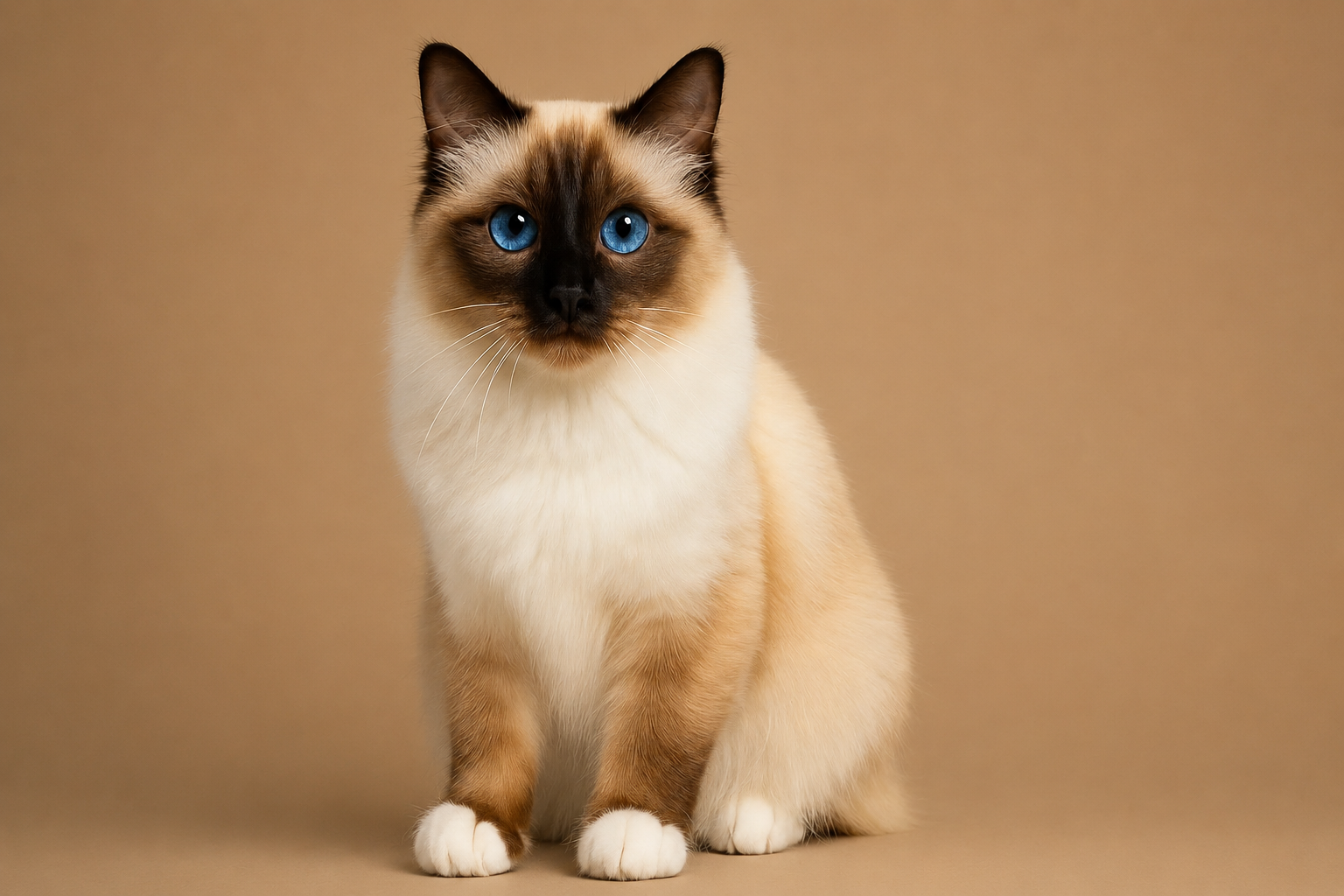
The Birman is a medium to large cat with a sturdy, well-rounded build and a coat that looks more high-maintenance than it actually is. The fur is medium-length and silky with very little undercoat, which means it drapes rather than puffs and stays relatively tangle-free. The color pattern is always colorpoint — darker on the face, ears, legs, and tail — with a paler, often creamy body.
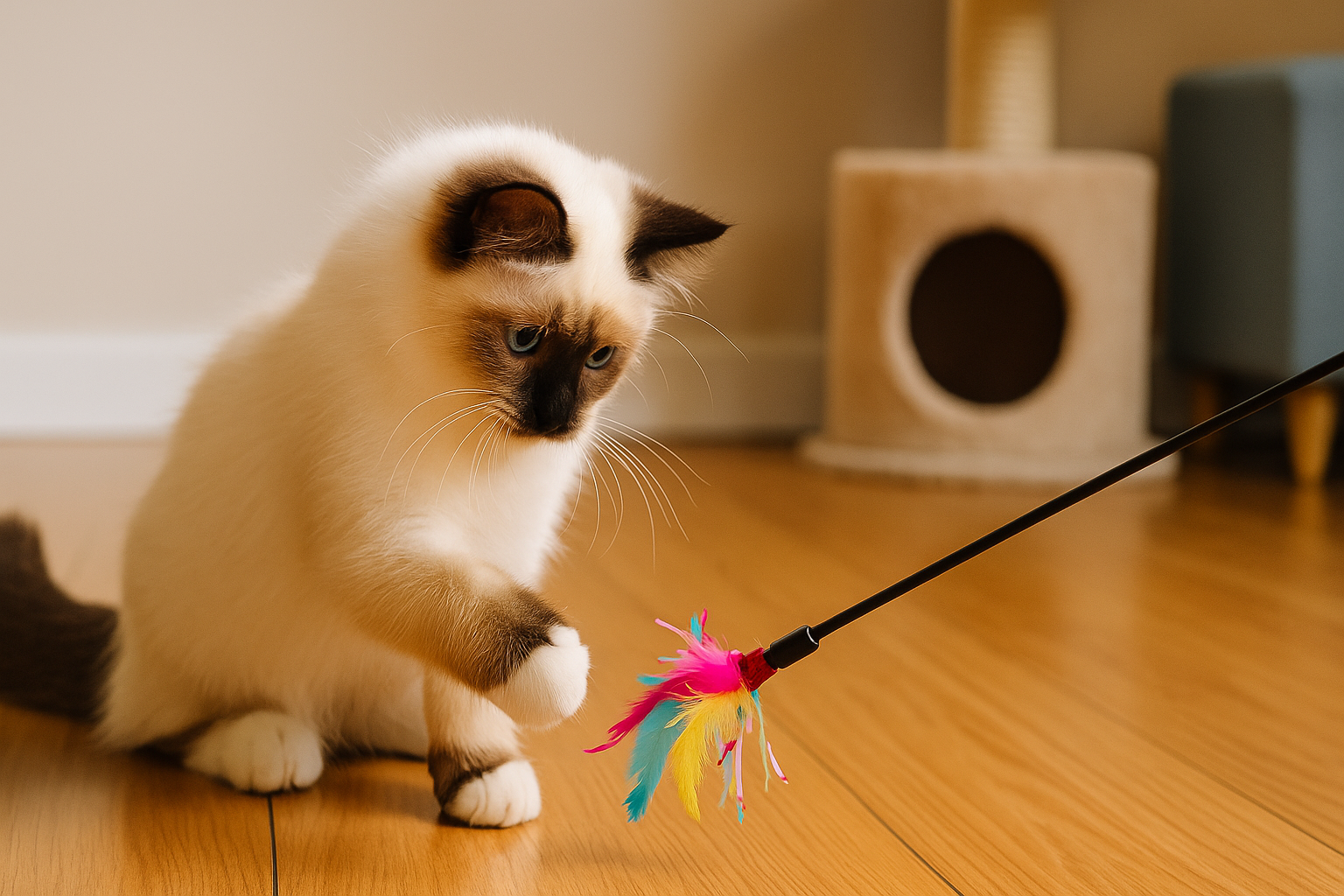
The defining physical trait is the white gloves on all four paws. The front paws have clean, even white markings, while the rear paws show longer lacing that runs up the back of the leg. The eyes are always a deep, vivid blue that stands out sharply against the darker facial mask. The overall look is elegant without being extreme, and it is one that ages gracefully.
Birman Cat Grooming & Shedding
The Birman coat is one of the more manageable medium-length coats you will encounter. Because there is very little undercoat, it does not mat the way Persian or Maine Coon coats can. A thorough brushing once a week is usually enough to keep it looking smooth and to catch loose hair before it ends up on your furniture. During spring and fall when shedding picks up, more frequent sessions help.
Beyond the coat, the usual basics apply: nail trims every couple of weeks, regular ear checks for wax buildup, and dental care to keep the mouth healthy. Birmans tend to be cooperative during grooming once they are used to it, which makes the routine easier to stick to over time.
Activity & Play
Birmans sit comfortably in the moderate activity category. They are playful, particularly as kittens, and enjoy interactive sessions with feather wands, puzzle feeders, and toys that tap into their hunting instincts. At the same time, they are not a breed that demands constant entertainment or becomes destructive when under-stimulated. A daily play session and a few good toys are usually enough to keep them satisfied.
Vertical space is appreciated. A cat tree with a perch near a window is a reliable hit with this breed — they like to observe the household and the outdoors from a comfortable height. Once their energy is spent, they are content to curl up beside you for a long rest, which is a combination most cat owners find genuinely appealing.

Birman Cat Health & Lifespan
Birman cats typically live 12 to 16 years, with some reaching beyond that with good care. They are generally a robust breed without the heavy burden of hereditary conditions that affects some other pedigreed cats. The most notable documented issue is a rare congenital condition involving coat sparseness combined with immune deficiency, but responsible breeding has made this extremely uncommon in modern lines.
Weight management is the main thing to keep an eye on, since Birmans can be prone to weight-related issues if their diet is not monitored. Routine vet care and keeping them at a healthy weight are the biggest factors in long-term health. Starting dental care early also pays off — it has a real impact on quality of life as they age.
Family Compatibility
Birmans are one of the more reliably family-friendly breeds you can choose. They are patient with children who interact with them respectfully, tolerant of other cats, and usually willing to coexist with calm, cat-friendly dogs when introductions are handled gradually. Their sociable nature means they rarely retreat from guests and tend to adapt to changing household dynamics without much drama.
They also suit quieter homes and solo owners who are around regularly and want a genuinely affectionate companion. The main thing they do not do well with is long stretches of being completely alone, so a companion animal helps if you are out of the house for most of the day.
Recommended Supplies for a Birman Cat
Birmans are not especially demanding when it comes to supplies, but they do appreciate a comfortable setup and a few good outlets for play and climbing.
- Mid-height cat tree or climbing shelves with a window perch
- Soft beds and cozy resting spots in main living areas
- Interactive wand toys and puzzle feeders for daily play
- Gentle slicker brush and wide-tooth comb for weekly grooming
- Litter box sized at 1.5 times body length, kept consistently clean
- Cat water fountain to encourage regular drinking
Birman Cat Price and Cost
Birman kittens from a reputable breeder typically cost between $700 and $2,000, with show-quality cats from champion lines running higher. Adoption is worth considering if you’re open to an adult cat — Birmans tend to settle into new homes well, and an adult gives you a much clearer sense of personality than a kitten. Birman rescues and breed-specific adoption groups can occasionally be found, with fees usually falling between $100 and $400.
Birman Cat FAQs
Are Birman cats hypoallergenic?
No, Birman cats are not hypoallergenic. They produce the same allergy-triggering proteins as other cats. Their lower-shedding coat may be slightly more tolerable for mild allergy sufferers, but they are not a good choice for anyone with significant cat allergies.
How much do Birman cats cost?
Pet-quality Birman kittens from a reputable breeder typically run between $700 and $2,000. Show-quality cats or those from champion lines can cost more. Adoption through a Birman rescue is a more affordable route, with fees usually falling between $100 and $400.
How long do Birman cats live?
Most Birmans live 12 to 16 years with proper care, and some reach beyond that. Regular vet checkups, a quality diet, and keeping them at a healthy weight are the most important factors in a long, healthy life.
Do Birman cats shed a lot?
Not excessively. Their silky coat with minimal undercoat sheds less than many other medium-length breeds. Weekly brushing keeps it under control without requiring a major time investment.
Are Birman cats good with kids or other pets?
Yes. Birmans are known for being patient, sociable, and adaptable, which makes them a good fit for families with children and other pets. They tend to get along well with dogs when introduced gradually.
Are Birmans good apartment cats?
Yes. Their moderate activity level and calm temperament make them well-suited to apartment living. They need daily interaction, a few good toys, and ideally a perch with a view, but they do not require a lot of space to be content.
Is the Birman Cat Right for You?
If you want a beautiful, calm, and genuinely affectionate cat that fits into daily life without much drama, the Birman is one of the easiest breeds to recommend. They’re easy to like, relatively easy to live with, and tend to form close bonds with their people across the whole household. The grooming commitment is lighter than the coat suggests, and their adaptability makes them a solid fit for a wide range of homes.
The one thing they don’t do well with is being left alone for long stretches. They want to be part of your life, not just living alongside it. If that sounds like your kind of cat, the Birman is probably exactly what you’re looking for.
Debbie Reid is the founder and chief editor of CatPedia.net, with over 25 years of hands-on experience in feline care, rescue, and behavior research. Inspired by her rescue cats Snickers and Bigboy, she collaborates with animal welfare resources and consults veterinary literature to turn complex feline health, nutrition, and behavior topics into clear, actionable guides.