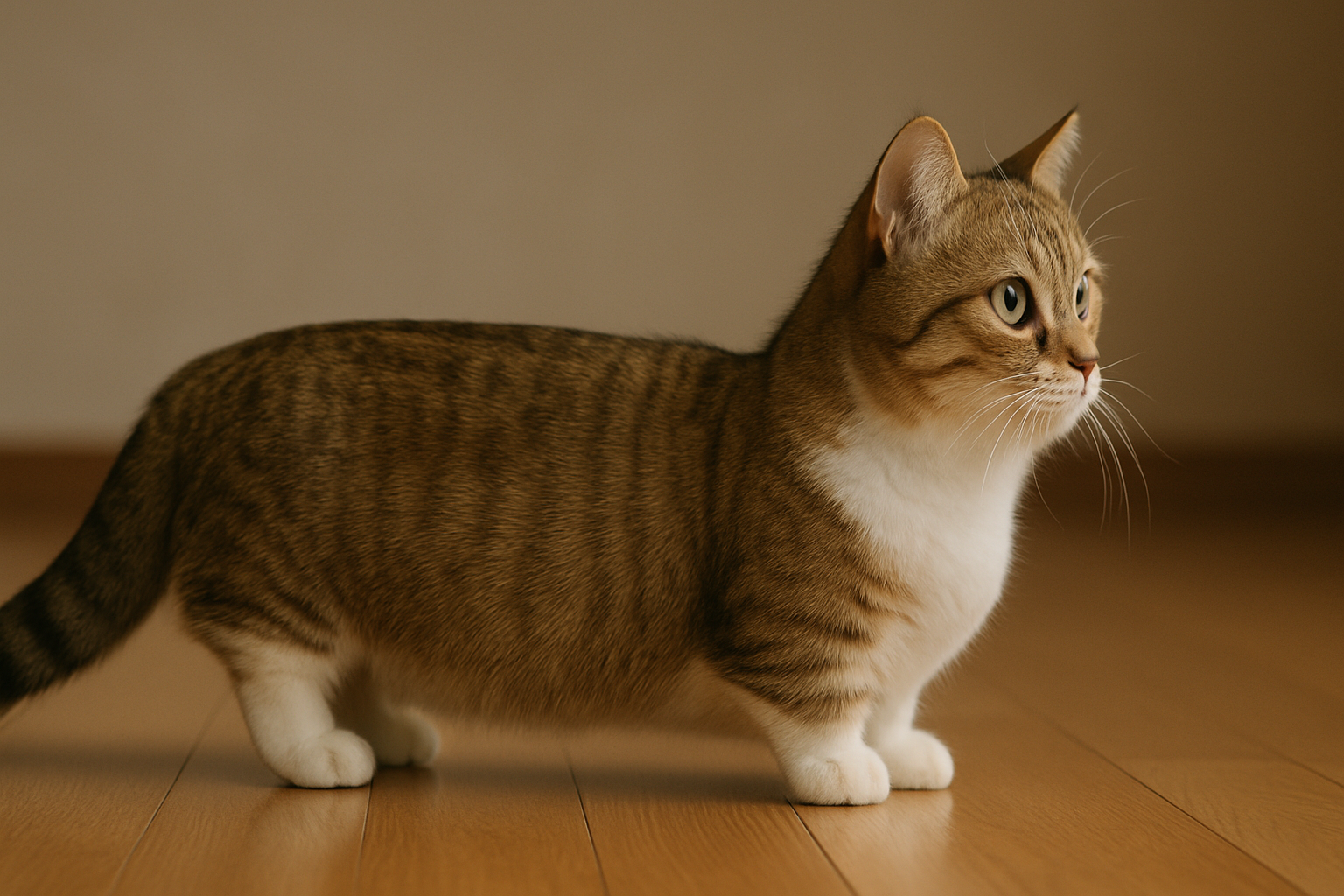
Munchkin cats are best known for their short legs and long, low bodies. It’s the feature that gets all the attention, but it’s only one part of what makes the breed interesting. These cats are confident, playful, and a lot more athletic than their build suggests.
They’re also one of the more debated breeds in the cat world. The short legs come from a genetic mutation, and there’s ongoing disagreement among breeders, registries, and vets about whether breeding for that trait is ethical. Munchkins themselves are often healthy and active, but there are a few breed-specific concerns worth understanding before bringing one home.
Quick Breed Facts
- Origin: United States (Louisiana)
- Breed registries: TICA (not recognized by CFA)
- Weight range: 5–9 lbs
- Lifespan: 12–15 years
- Coat: Short or long, plush or silky
- Colors and patterns: All colors and patterns accepted
- Eye color: Wide variety
- Grooming: Low to moderate
- Activity level: High
- Affection level: High
- Vocality: Moderate
- Good with children: Yes
- Good with other pets: Yes
History & Origin of the Munchkin Cat
Short-legged cats have shown up in records going back to the 1940s, but the breed as we know it today started with a single cat in Louisiana in 1983. A music teacher named Sandra Hochenedel rescued a pregnant stray with unusually short legs from under a truck and named her Blackberry. When Blackberry’s kittens were born with the same short legs, it became clear the trait was heritable, caused by a mutation that affects bone growth in the legs rather than an injury or one-off quirk. Hochenedel named the breed after the small characters in The Wizard of Oz, and Blackberry became the foundation cat behind the modern Munchkin breed.
TICA officially recognized the Munchkin in 1995, though the decision was controversial enough that one of the judges resigned in protest. The CFA still doesn’t recognize the breed, and several European registries have taken similar positions over concerns about deliberately breeding for a skeletal mutation. Supporters argue that Munchkins themselves tend to be healthy and active, and that the gene doesn’t cause the joint and spine problems seen in dwarf dog breeds like dachshunds. The argument has stayed largely the same for almost three decades, even as the breed has continued to grow in popularity, especially in the US and Japan.
Munchkin Cat Personality & Temperament
Munchkins are sociable, outgoing, and far more confident than their size suggests. They tend to act like kittens well into adulthood, chasing toys, investigating anything new, and demanding to be part of whatever’s happening in the household. They’re not shy cats. They greet visitors, follow their people from room to room, and have no problem letting you know when they want attention.
They’re also smart in a way that occasionally gets them into trouble. Munchkins figure out routines quickly, learn their names, and many will fetch or come when called. They have a magpie streak too, with a habit of stashing small objects, hair ties, bottle caps, anywhere they can find a good hiding spot. It’s part of what makes them entertaining to live with, though you’ll spend a fair amount of time wondering where your earbuds went.
Munchkin Cat Appearance & Physical Traits
Munchkins have a low, elongated silhouette that sets them apart from any other breed. Their legs are roughly half the length of a typical cat’s, while the body, head, and tail are all standard size. The result is a cat that sits close to the ground with a normal-proportioned upper half, often compared to a corgi in shape.
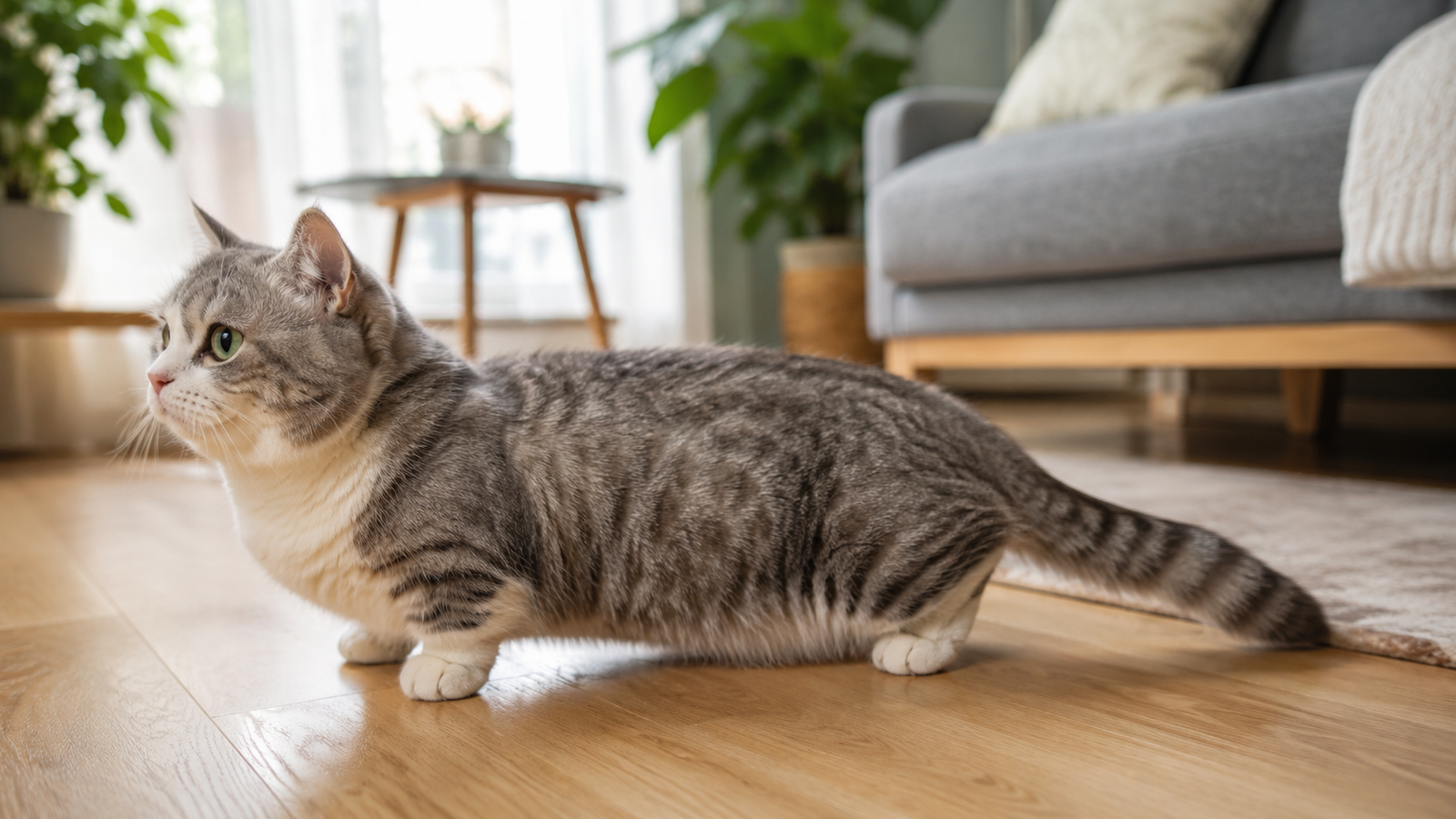
Munchkins come in two coat types. The shorthaired variety has a plush, dense coat that lies close to the body, while the longhaired version has a silky, semi-flowing coat that’s longer around the ruff and tail. Every color and pattern you can find in domestic cats appears in Munchkins, from solid black to calico to dramatic tabby markings. Eye color varies just as widely, with no breed standard tying eye color to coat.
Munchkin Cat Grooming & Shedding
Grooming a Munchkin cat is relatively straightforward, though it depends on coat length. Shorthaired Munchkins need a weekly brush to manage shedding and keep the coat looking good. Longhaired Munchkins benefit from two or three brushings a week to prevent mats, especially around the belly, armpits, and back legs where their shorter limbs make self-grooming harder to reach.
Some Munchkins struggle to clean their hindquarters and lower belly as thoroughly as longer-legged cats, so an extra pass with a brush or grooming glove around those areas helps. Beyond coat care, standard maintenance applies: nail trims every couple of weeks, ear checks, and dental care.
Activity & Play
Munchkins are faster and more agile than their build suggests. They won’t clear the heights a Bengal or Maine Coon manages in a single leap, but they’ll find creative routes up cat trees, onto sofas, and across countertops using furniture as stepping stones. They’re built more like sprinters than climbers, and they put that to use during their frequent zoomie sessions.
Daily play is important for this breed. Wand toys, balls, puzzle feeders, and tunnels all work well. Munchkins have strong prey drive and will stalk and pounce on toys with full commitment. They also play well with other cats, so a second Munchkin or a similarly playful breed gives them a built-in playmate during the day. Low-profile cat trees and ramps help them access higher perches without the strain of constant jumping.

Munchkin Cat Health & Lifespan
Most Munchkin cats live 12 to 15 years, which is on par with other domestic breeds. The short legs come from a mutation called chondrodysplasia, which shortens the long bones of the legs but leaves the spine, ribs, and joints structurally normal. That’s an important distinction, because it means Munchkins don’t have the cartilage and joint problems associated with dwarf dog breeds like dachshunds and corgis. Most Munchkins are healthy, active cats that live full lives without serious mobility issues.
That said, the breed does have a few conditions that appear more often than in the general cat population. Lordosis is an inward curvature of the spine that ranges from mild to severe, and pectus excavatum is a sunken chest deformity that affects breathing in serious cases. Neither is unique to Munchkins, but both show up at higher rates and are part of why responsible breeding matters so much with this breed. Reputable breeders screen for structural issues and avoid pairings likely to produce them.
Weight management is the other major piece. Munchkins can gain weight easily, and extra pounds put real strain on their shorter frame over time. A measured, high-protein diet works better than free-feeding for this breed, and daily play helps keep weight in check. Routine vet checkups also help catch any spinal or chest concerns early, when they’re easier to manage.
Family Compatibility
Munchkin cats fit into family life well. They’re patient with children, sociable around other pets, and confident enough that they don’t spook easily in a busy household. Their small size and short legs do mean some extra care around toddlers or boisterous dogs, since they can’t always get out of the way as quickly as a longer-legged cat. Supervised introductions and clear escape routes solve most of that.
They also do well in apartments, which makes them a practical option for city living. They’re not heavy climbers by nature, so they don’t need the towering vertical setups that breeds like the Bengal demand, though they do appreciate window perches, sunny spots, and somewhere cozy to retreat to. The one thing they don’t handle well is being alone for long stretches, so a second cat or a household where someone is home regularly is a much better fit than long workdays with no company.
Recommended Supplies for a Munchkin Cat
Munchkin cats need a setup that accounts for their short legs without limiting their natural curiosity.
- Low-profile litter box with easy entry
- Pet ramps or steps for reaching beds, windows, and perches
- Short-to-mid-height cat tree with accessible levels
- Interactive puzzle feeders and wand toys
- Soft bedding placed at floor level
- Wide, shallow food and water bowls

How Much Are Munchkin Cats?
How much are Munchkin cats from a reputable breeder usually comes down to coat length, color, and lineage, with pet-quality kittens running between $800 and $2,000 and show-quality cats from established lines pushing higher. Because the breed isn’t recognized by every registry, finding a breeder who screens for lordosis, pectus excavatum, and other structural issues takes more research than with mainstream breeds, but that screening is what you’re actually paying for at breeder prices. Munchkins do occasionally turn up in shelters and breed-specific rescues, often from owners who didn’t realize how social and active the breed actually is, and adoption fees there typically fall between $100 and $300.
Munchkin Cat FAQs
Are Munchkin cats hypoallergenic?
No, Munchkin cats are not hypoallergenic. They produce the same Fel d 1 protein that causes most cat allergies. Shorthaired Munchkins may shed slightly less than longhaired varieties, but the breed isn’t a safe choice for anyone with significant cat allergies.
How much are Munchkin cats?
Pet-quality Munchkin kittens from a reputable breeder typically cost between $800 and $2,000. Coat length, color, lineage, and breeder reputation all affect the price. Adoption through a breed rescue is a more affordable option, usually $100 to $300.
Do Munchkin cats have health problems?
Most Munchkins are healthy, but the breed has higher rates of lordosis and pectus excavatum than the general cat population. The short-leg mutation itself doesn’t cause joint disease the way dwarfism does in some dog breeds. Choosing a careful breeder is the best way to reduce these risks.
How big do Munchkin cats get?
Munchkins are small cats, typically weighing 5 to 9 pounds at maturity. Their legs are noticeably shorter than average, but their bodies are normal length, giving them a low, elongated build rather than an overall miniature appearance.
Are Munchkin cats good with kids and other pets?
Yes. Munchkin cats are sociable, patient, and adaptable, which makes them a good fit for families and multi-pet households. Their small size means a bit of extra supervision is smart around very young children and large or rough-playing dogs.
Can Munchkin cats jump?
Yes, just not as high as longer-legged breeds. Munchkins are agile and athletic for their build, but they tend to use stepping stones, furniture, and ramps to reach higher spots rather than clearing them in one leap.
Is the Munchkin Cat Right for You?
If you want a small, social, engaging cat with a look unlike any other breed, the Munchkin may be a good fit. They’re affectionate without being demanding, playful without being destructive, and adaptable enough for apartment living or a full family household. For the right owner, they’re one of the most charming breeds you can bring home.
The real consideration with this breed isn’t the cat itself but the breeder. The ethical debate around Munchkins is real, and structural health problems can show up more often when pairings are careless. Ask any breeder you’re considering about their screening for lordosis and pectus excavatum, and walk away if the answers are vague.
Debbie Reid is the founder and chief editor of CatPedia.net, with over 25 years of hands-on experience in feline care, rescue, and behavior research. Inspired by her rescue cats Snickers and Bigboy, she collaborates with animal welfare resources and consults veterinary literature to turn complex feline health, nutrition, and behavior topics into clear, actionable guides.