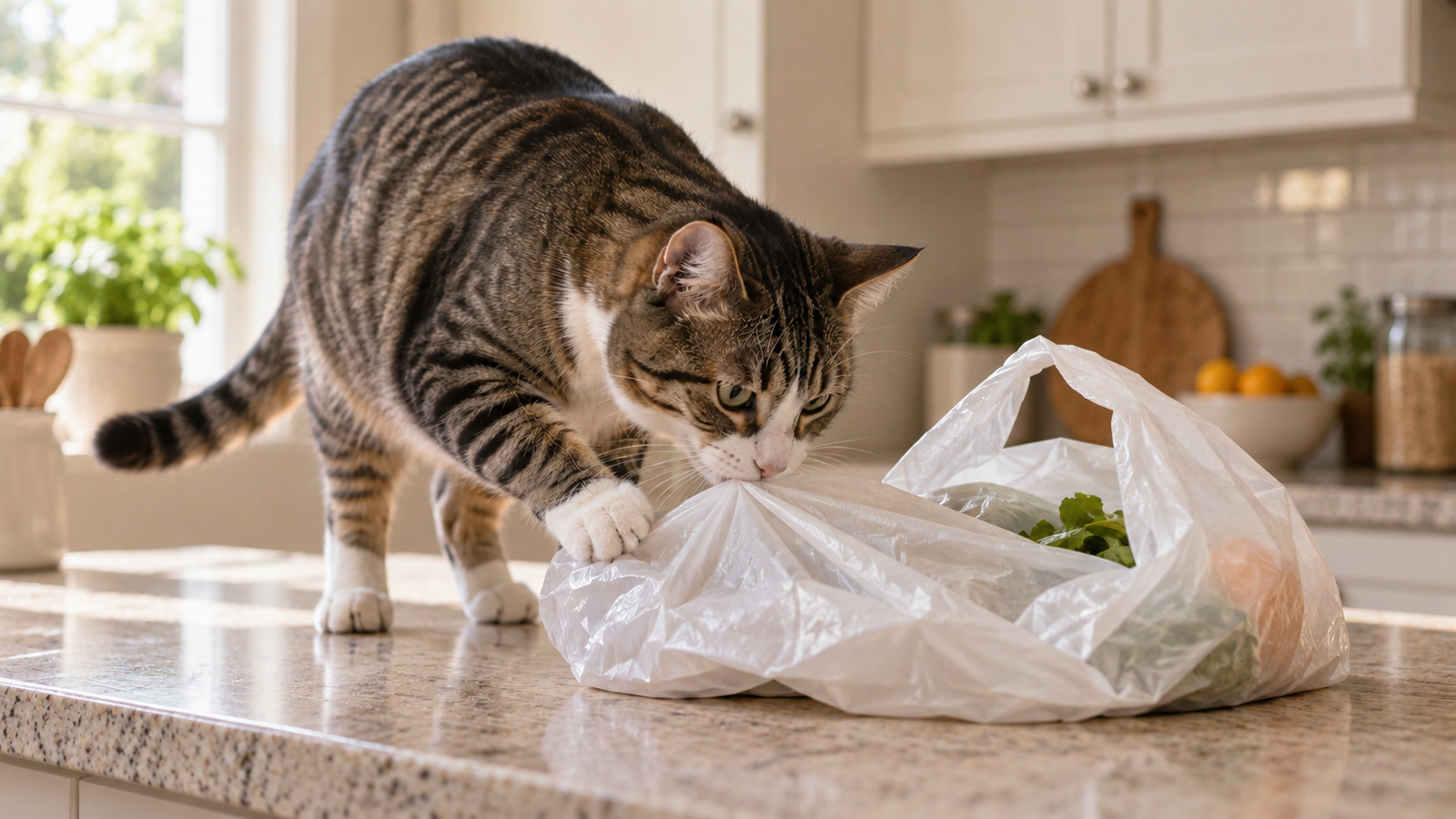
You put away the groceries, turn your back for ten seconds, and hear that familiar crinkle. Your cat has found the plastic bags again.
For most cats, the appeal is a mix of sound, texture, and smell. Plastic crackles and shifts under a paw, feels unusual against their teeth, and may still smell like the food it carried. That can lead to a curious nibble or a full chewing session.
Why Do Cats Chew on Plastic?
They Like How It Feels
Cats sometimes bite unfamiliar objects to test them. Plastic is firmer than fabric but has more give than wood or metal, and some cats like the pressure against their teeth and gums.
Once a cat takes a liking to that texture, they may seek it out again in grocery bags, food wrappers, shower curtains, and other plastic items.
It Smells Like Food
Plastic holds smells well. A grocery bag may still smell like chicken, deli meat, or the treats that rode home inside it.
Sandwich wrappers, cat food bags, and plastic packaging from the trash may be even more tempting because food oils and odors can remain after the food is gone.
They’re Bored
Some cats chew plastic simply because they’re bored. A loose bag or wrapper is easy to bat, bite, and drag around when nothing more interesting is happening.
They Know It Gets Your Attention
A cat quickly learns that biting a plastic bag makes you look up, call their name, or walk across the room. What began as curiosity can become a reliable way to get your attention.
This is more likely if the chewing happens at the same time each day or stops once you feed, play with, or talk to your cat.
Chewing Can Be Self-Soothing
Some cats lick, suck, or chew soft plastic to calm themselves, much like they may knead a blanket or suck on fabric.
You may notice more chewing after a move, a change in routine, or the arrival of another pet. Even an outdoor cat appearing at the window can add stress.
Look for other changes in your cat’s behavior. Hiding, overgrooming, spraying, eating less, or becoming more jumpy may mean the plastic chewing is part of a larger stress problem.
Your Kitten Is Teething
Kittens explore with their mouths, and sore gums give them another reason to chew. The urge often becomes stronger as the adult teeth replace the baby teeth between about 3 and 7 months old.
Plastic may feel good against sore gums, but it isn’t a safe teething toy. Offer kitten teething toys that can handle biting without breaking into small pieces.
Their Mouth Hurts
Dental pain can change how an adult cat uses their mouth. Some cats avoid chewing, while others begin mouthing or biting unusual objects.
Bad breath, drooling, dropping food, pawing at the mouth, or chewing on one side all point to a possible dental problem. If the plastic chewing began suddenly and you notice any of these signs, schedule a dental exam.
Is Chewing Plastic a Sign of Pica?
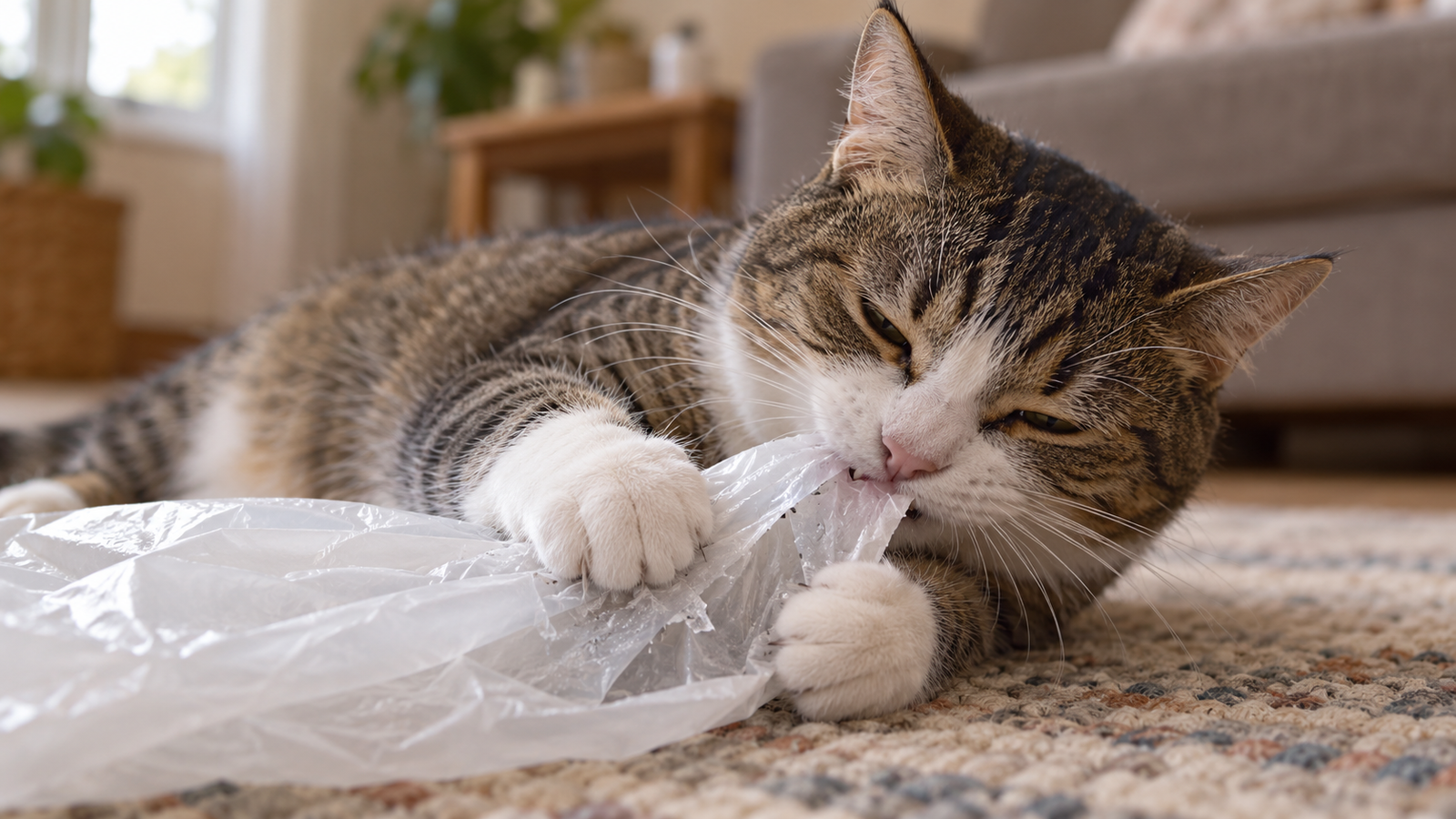
Not always. Pica means a cat repeatedly eats things that aren’t food. Chewing a bag and leaving it covered in tooth marks isn’t the same as tearing off pieces and swallowing them.
Tooth marks on a bag are just chewing. Missing pieces mean your cat may be swallowing the plastic.
Cats with pica may also eat or swallow:
- Fabric and shoelaces
- String, ribbon, or dental floss
- Rubber bands and hair ties
- Paper or cardboard
- Cat litter
- Foam, tape, or pieces of toys
If your cat is also eating cat litter or swallowing other objects, tell your vet. A pattern of eating several non-food items makes pica more likely.
According to VCA Animal Hospitals, pica may be tied to anxiety, compulsive behavior, anemia, malnutrition, diabetes, hyperthyroidism, and some digestive or brain conditions.
Is It Dangerous for Cats to Chew Plastic?
Yes. The greatest risk is that your cat will swallow a piece that becomes stuck in the stomach or intestines.
Soft plastic may look harmless, but it can fold into a tight wad, much like a sock blocking a drain. Long strips can be even more dangerous because they may cause the intestines to bunch up.
Chewing plastic can also:
- Cut your cat’s gums or tongue
- Become stuck between the teeth
- Cause gagging or choking
- Expose your cat to cleaners, spoiled food, or other harmful substances
- Block part or all of the digestive tract
Plastic bags bring two more risks. A cat can get tangled in the handles or crawl inside and become trapped. Cut the handles before storing bags for recycling, and keep the bags in a closed cabinet.
Compostable and plant-based bags aren’t safe chew toys either. They may break down in a compost bin, but your cat still can’t digest them.
A partial blockage may cause mild or on-and-off symptoms at first. Your cat might even pass some stool, so a normal litter box visit doesn’t prove that everything is clear.
What Should You Do If Your Cat Swallowed Plastic?
Take away the remaining plastic and check how much is missing. Note what kind it was, when your cat may have swallowed it, and whether it had food or chemicals on it.
Call your veterinarian if you know or strongly suspect that plastic was swallowed. A tiny, smooth piece may pass, but there is no reliable way to predict that at home.
Go to an emergency vet right away if your cat has any of these signs:
- Repeated vomiting or dry heaving
- Gagging, choking, or trouble breathing
- Drooling or repeated swallowing
- Refusing food
- A painful, tight, or swollen belly
- Low energy, hiding, or unusual weakness
- Straining to poop or producing very little stool
- Plastic hanging from the mouth or anus
Never pull plastic, string, or ribbon from your cat’s mouth or rear end. Part of it may be caught inside, and pulling can damage the intestines.
Don’t make your cat vomit or give oil, bread, or other home remedies. Your vet may recommend an exam, X-rays, or an ultrasound. Plastic doesn’t always show clearly on a standard X-ray, but a vet can look for signs of a blockage.
Some small pieces pass on their own with close veterinary monitoring. Others have to be removed with a scope or surgery.
How to Stop a Cat From Chewing on Plastic
The best way to stop the chewing is to keep plastic out of reach and give your cat safer things to bite and play with.
- Store grocery bags, food wrappers, packing material, and trash bags behind closed doors.
- Use a trash can with a lid your cat can’t lift or knock over.
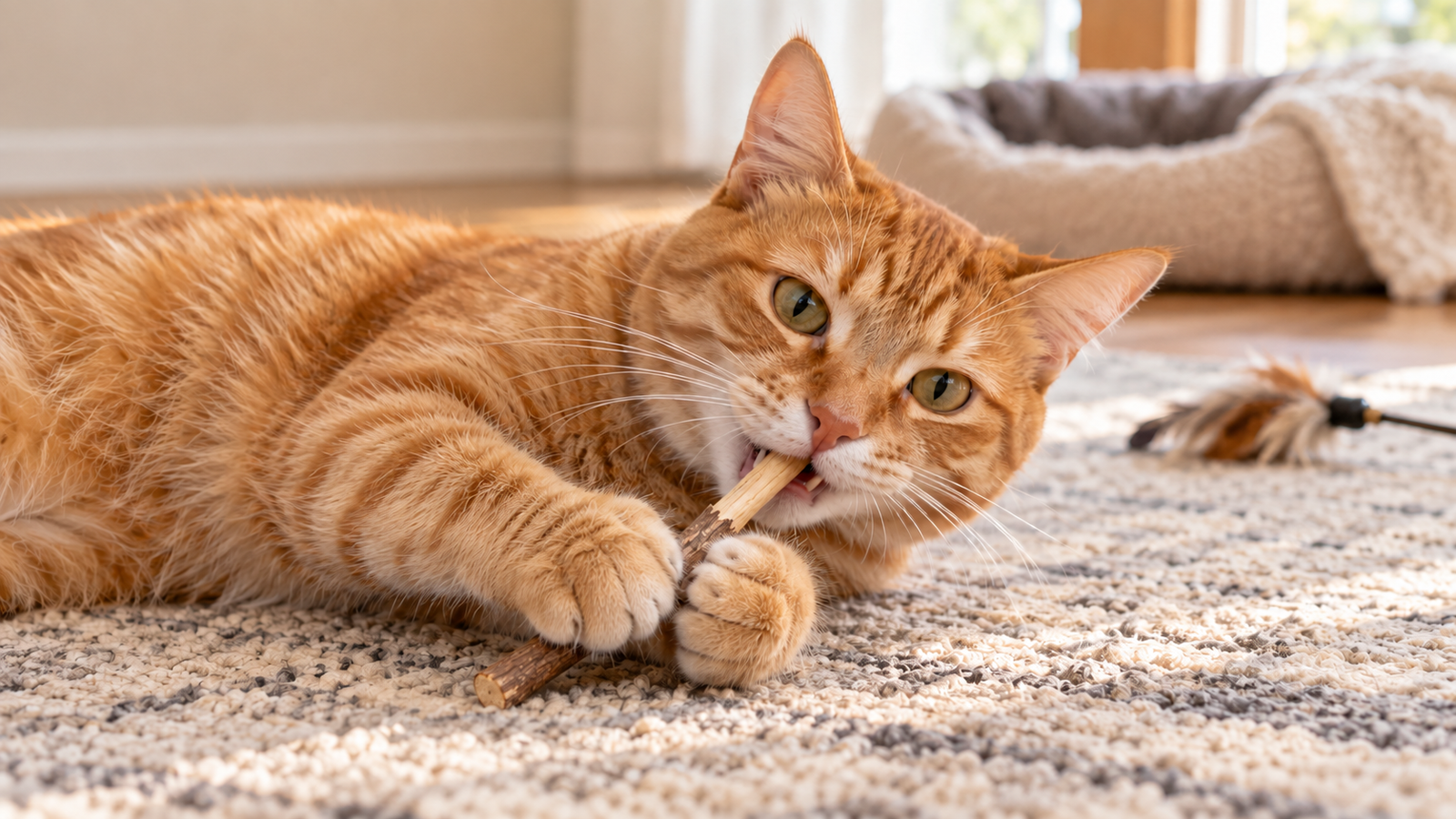
- Offer sturdy cat toys, supervised silvervine sticks, or chew toys that don’t shed pieces.
- Use a wand toy to give your cat a chance to stalk, chase, and catch something each day.
- Try puzzle feeders or hide small portions of kibble for your cat to find.
Don’t yell, spray your cat with water, or chase them away from the plastic. Punishment can add stress and may teach your cat to chew only when you aren’t watching.
Debbie Reid is the founder and chief editor of CatPedia.net, with over 25 years of hands-on experience in feline care, rescue, and behavior research. Inspired by her rescue cats Snickers and Bigboy, she collaborates with animal welfare resources and consults veterinary literature to turn complex feline health, nutrition, and behavior topics into clear, actionable guides.