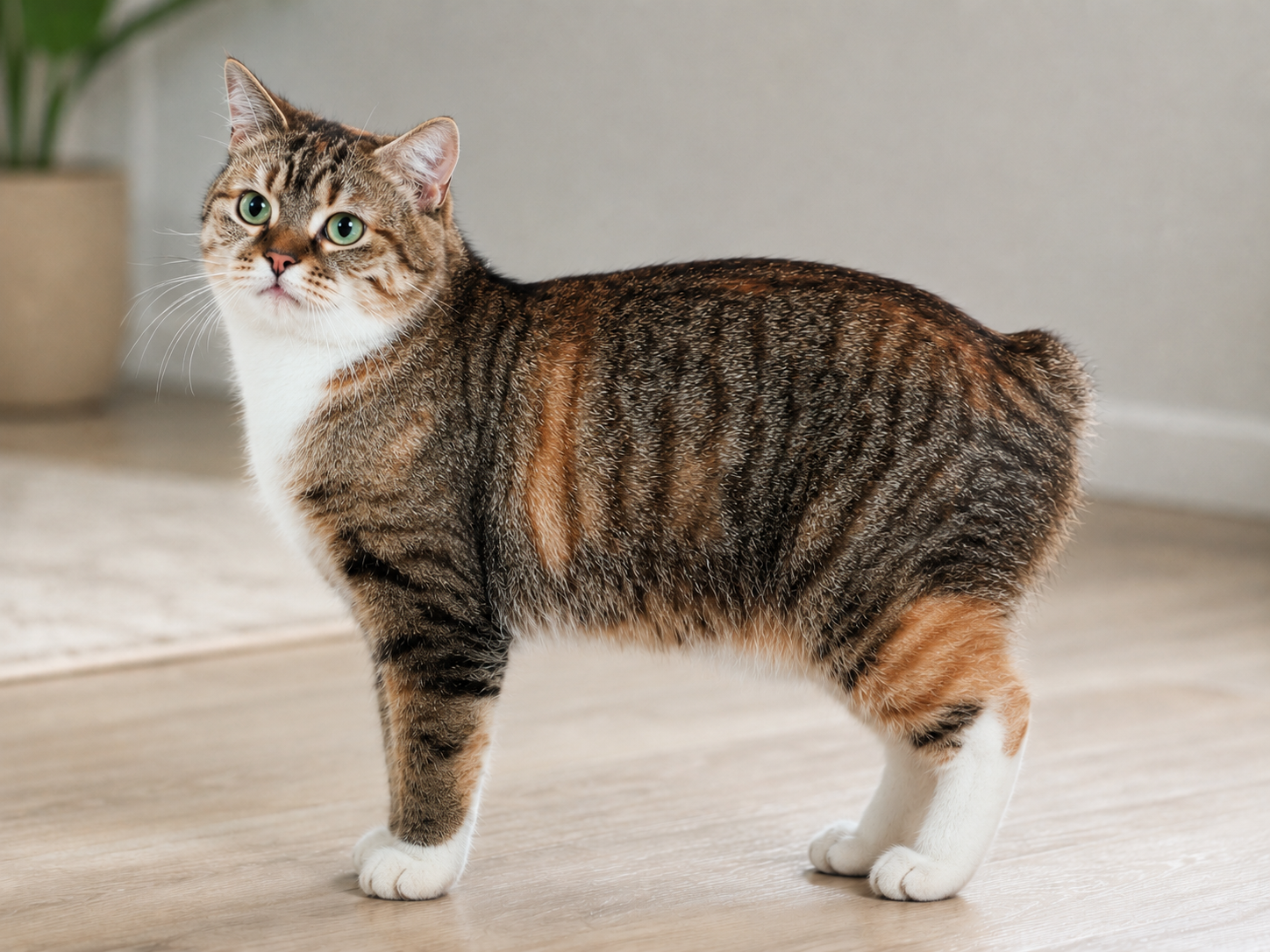
The Manx cat has one of the most recognizable shapes in the cat world. The rounded body, powerful back legs, and naturally short or missing tail give the breed a sturdy, compact look that stands out on its own.
But the Manx is more than a tailless cat. They tend to be loyal, playful, and closely involved in daily life. Many follow their people from room to room, greet them at the door, and stay nearby without the constant demands of more vocal breeds.
While the tail is part of the breed’s charm, the gene that shortens it can also affect the spine, so a careful breeder and a clear health history are especially important with the Manx.
Quick Breed Facts
- Origin: Isle of Man
- Breed registries: CFA, TICA
- Weight range: 8–12 lbs
- Lifespan: 12–16 years
- Coat: Short or long, dense double coat
- Colors and patterns: Wide variety; no color restrictions
- Eye color: Gold, green, copper, blue, or odd-eyed
- Grooming: Moderate
- Activity level: Moderate to high
- Affection level: High
- Vocality: Low to moderate
- Good with children: Yes
- Good with other pets: Yes, with proper socialization
History & Origin of the Manx Cat
The Manx cat comes from the Isle of Man, a small island in the Irish Sea between England and Ireland. The missing tail traces back to a natural genetic mutation in the island’s cat population. Because the island had a limited number of cats and little new bloodstock arriving, the mutation spread quickly through a small, closed gene pool and became a defining trait of the local cats.
The breed was iconic enough that it took the island’s name and was exported widely once cat fanciers took an interest. The Manx is one of the older recognized breeds and is registered today with both the CFA and TICA. A long-haired version exists as well, known as the Cymric cat, which carries the same personality and tailless trait under a thicker, flowing coat.
Manx Cat Personality & Temperament
Manx cats are affectionate, loyal, and far more people-oriented than their quiet reputation suggests. Owners often describe them as dog-like, and the comparison fits. They follow their people from room to room, meet you at the door, and many learn to play fetch or walk on a leash without much coaxing. They want to be involved without being demanding about it, which is part of what makes the breed easy to live with.
They’re also intelligent and stay playful well into adulthood, so a Manx household tends to stay lively. Most are confident around new people and adapt well to a busy home, though some are reserved with strangers at first and benefit from early socialization. They’re a quiet breed overall, communicating with the occasional soft trill rather than constant noise.
Manx Cat Appearance & Physical Traits
The Manx has a compact, rounded body with a muscular build that feels solid and well-padded. The tail itself comes in four recognized types. A completely tailless Manx is called a “rumpy,” a cat with a small bump is a “riser,” a short stub is a “stumpy,” and a near full-length tail is a “longy.” All of these are part of the breed, though the fully tailless look is the one most associated with it.
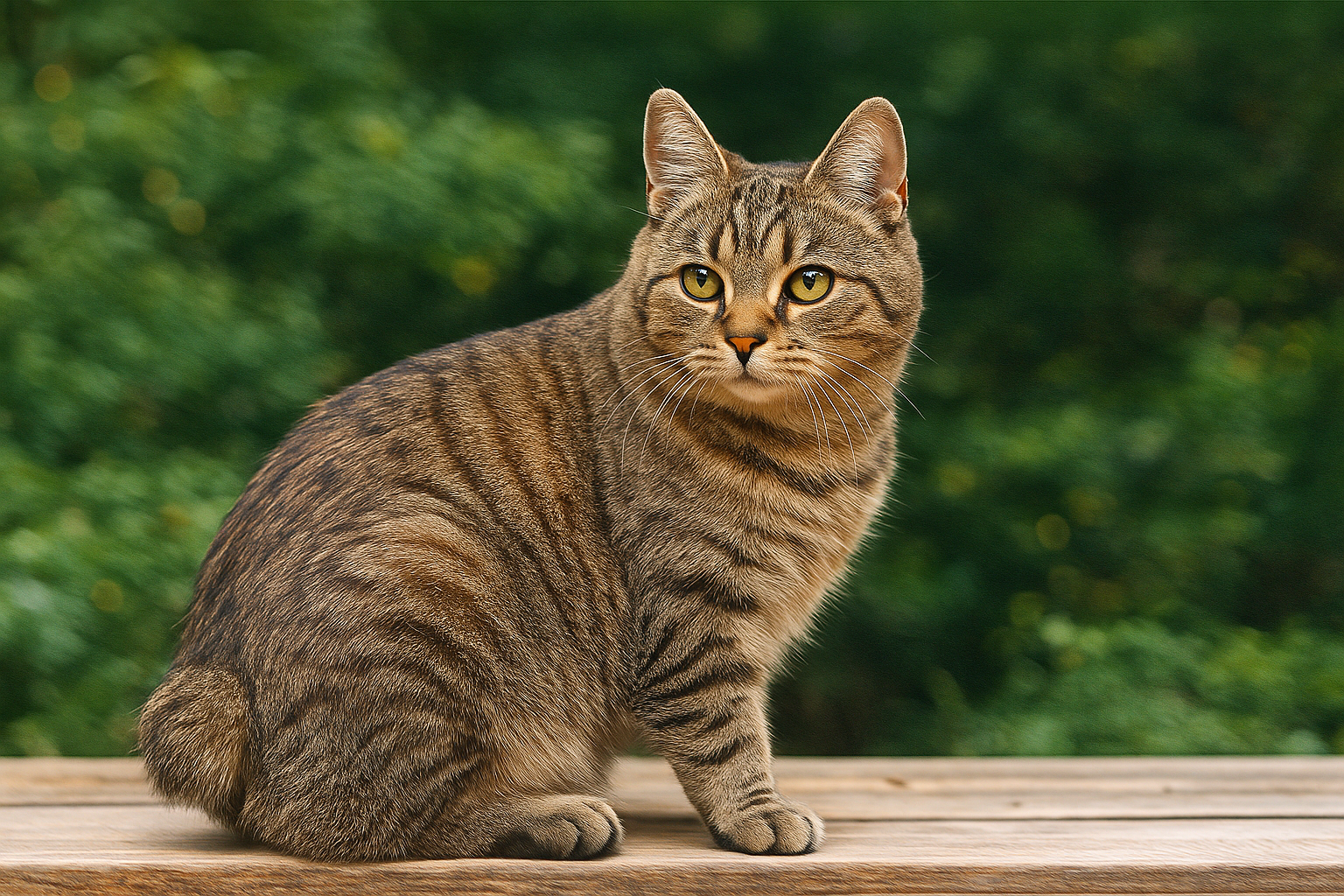
Their back legs are noticeably longer than the front legs, which gives them a slight slope from shoulder to rump and the bouncy, rabbit-like gait the breed is known for. The head is round with full cheeks, large eyes, and ears that tilt slightly outward. The coat can be short or long, and Manx cats come in nearly every color and pattern, from tabby and tortie to solid white or black. The dense double coat gives them a plush, rounded appearance regardless of length.
Manx Cat Grooming & Shedding
The Manx coat is dense and double-layered, which provides good insulation but does ask for regular attention. Short-haired Manx cats need brushing once or twice a week to remove loose hair, while long-haired Cymrics need a little more. Expect heavier shedding in spring and fall when the coat turns over, and step up brushing during those stretches to keep it manageable.
Beyond the coat, the usual basics apply: nail trims every couple of weeks, regular ear checks, and dental care. Manx cats are good self-groomers and stay fairly clean on their own, so brushing sessions are as much about bonding as upkeep.
Activity & Play
Manx cats are more athletic than their compact build suggests, with powerful hind legs made for jumping and quick bursts of speed. Many love tunnels, leaping onto furniture, and chasing wand toys, and the breed’s strong hunting instinct makes them capable mousers. A sturdy cat tree and daily interactive play sessions keep that energy pointed in a useful direction.
That said, activity levels vary from cat to cat. Some Manx stay busy most of the day, while others are happy with a few short play sessions before settling into a favorite spot. Puzzle feeders and short training sessions suit the breed well, since they’re smart enough to stay engaged and enjoy the mental work as much as the physical.

Manx Cat Health & Lifespan
Manx cats typically live 12 to 16 years, and most are healthy with proper care. The breed’s defining health concern is Manx syndrome, caused by the same gene responsible for the missing tail. When the gene affects spinal development too strongly, it can lead to spina bifida, bladder or bowel control problems, and hind leg weakness or partial paralysis. Symptoms usually show within the first few months of life, which is why reputable breeders hold kittens before placing them.
Manx cats with longer tails are far less likely to be affected, and responsible breeders never pair two fully tailless cats together for exactly that reason. Asking a breeder about their screening practices and how they manage spinal risk is one of the most important questions to raise before buying a Manx kitten.
Diet plays a role too. A high-protein food with animal protein as the first ingredient suits the breed well, and keeping a Manx at a healthy weight matters more than it might for other cats. Extra pounds add strain to the spine and joints, which is the last thing a breed already prone to spinal issues needs. Regular vet checkups round out the picture, and they help catch any developing problems early.
Family Compatibility
The Manx is a strong fit for family life. They’re affectionate and gentle, often bond with the whole household rather than a single person, and many enjoy being part of children’s games. They’re patient with respectful handling and playful without being too rough, which makes them a good match for homes with kids old enough to interact with a cat properly.
Most Manx cats also do well with other pets, including dogs, when introductions are handled gradually. Their sociable, even-tempered nature makes them a sensible pick for multi-pet households and first-time owners alike. Like most social breeds, they don’t love being left completely alone for long stretches, so a companion animal helps if the house is empty most of the day.
Recommended Supplies for a Manx Cat
A few well-chosen items support both the Manx’s playful side and the spinal comfort some cats in the breed need.
- Sturdy cat tree with stable, well-cushioned perches
- Soft, supportive bed for spine and joint comfort
- Tunnels and interactive toys for active play
- Puzzle feeders for mental stimulation
- Wide, shallow food and water bowls to avoid whisker fatigue
- Roomy, easy-to-clean litter box

Product Tip: For a breed where spinal comfort can be an issue, the bed matters more than usual. The Bedsure Calming Cat Bed has raised sides and a cushioned base, giving a Manx something supportive to settle into rather than a flat surface.
Manx Cat Price and Cost
Manx kittens from a reputable breeder typically cost between $400 and $1,200, with price depending on tail type, pedigree, and breeder reputation. Because the breed carries real spinal health risks, paying for a breeder who screens carefully and holds kittens long enough to rule out Manx syndrome is one place where spending more is the safer choice. Manx cats and Manx mixes do turn up in shelters and breed rescues, and adopting an adult has the added benefit of a cat whose spinal health is already known rather than still developing.
Manx Cat FAQs
Why do Manx cats have no tail?
The taillessness comes from a natural genetic mutation that affects tail development. The gene produces a range of tail types, from completely tailless (“rumpy”) to a small bump (“riser”), a short stub (“stumpy”), or a full-length tail (“longy”).
Are all Manx cats completely tailless?
No. Manx cats come in several tail types, and many have a partial or even full tail. Breeders often focus on the fully tailless look, but risers, stumpies, and longies are all part of the breed and recognized by registries.
Are Manx cats hypoallergenic?
No, Manx cats are not hypoallergenic. They produce the same Fel d 1 protein as other cats. Some people report milder reactions, but anyone with significant cat allergies should spend time around a Manx before committing.
How much does a Manx cat cost?
Manx kittens from a reputable breeder usually range from $400 to $1,200 depending on tail type, pedigree, and breeder. Adoption through a shelter or breed rescue is a more affordable route.
How do Manx cats compare to bobtail cats?
Manx and bobtail cats both have short tails, but they’re separate breeds with different genetics. The Kurilian Bobtail and Japanese Bobtail have kinked or curved tails from unrelated genes. Only the Manx carries the gene tied to spinal development and Manx syndrome.
Is the Manx Cat Right for You?
The Manx is a good fit for someone who wants a cat that stays involved without being constantly demanding. They’re affectionate, playful, and adaptable enough for families, multi-pet homes, and owners who enjoy some dog-like loyalty in a cat.
They do need an owner who takes the breed’s health history seriously. Because the gene behind the short or missing tail can also affect the spine, it helps to know as much as possible about a Manx cat’s background before bringing one home. If you’re comfortable with that, the Manx can be a loyal, entertaining companion with a look and personality all its own.
Debbie Reid is the founder and chief editor of CatPedia.net, with over 25 years of hands-on experience in feline care, rescue, and behavior research. Inspired by her rescue cats Snickers and Bigboy, she collaborates with animal welfare resources and consults veterinary literature to turn complex feline health, nutrition, and behavior topics into clear, actionable guides.