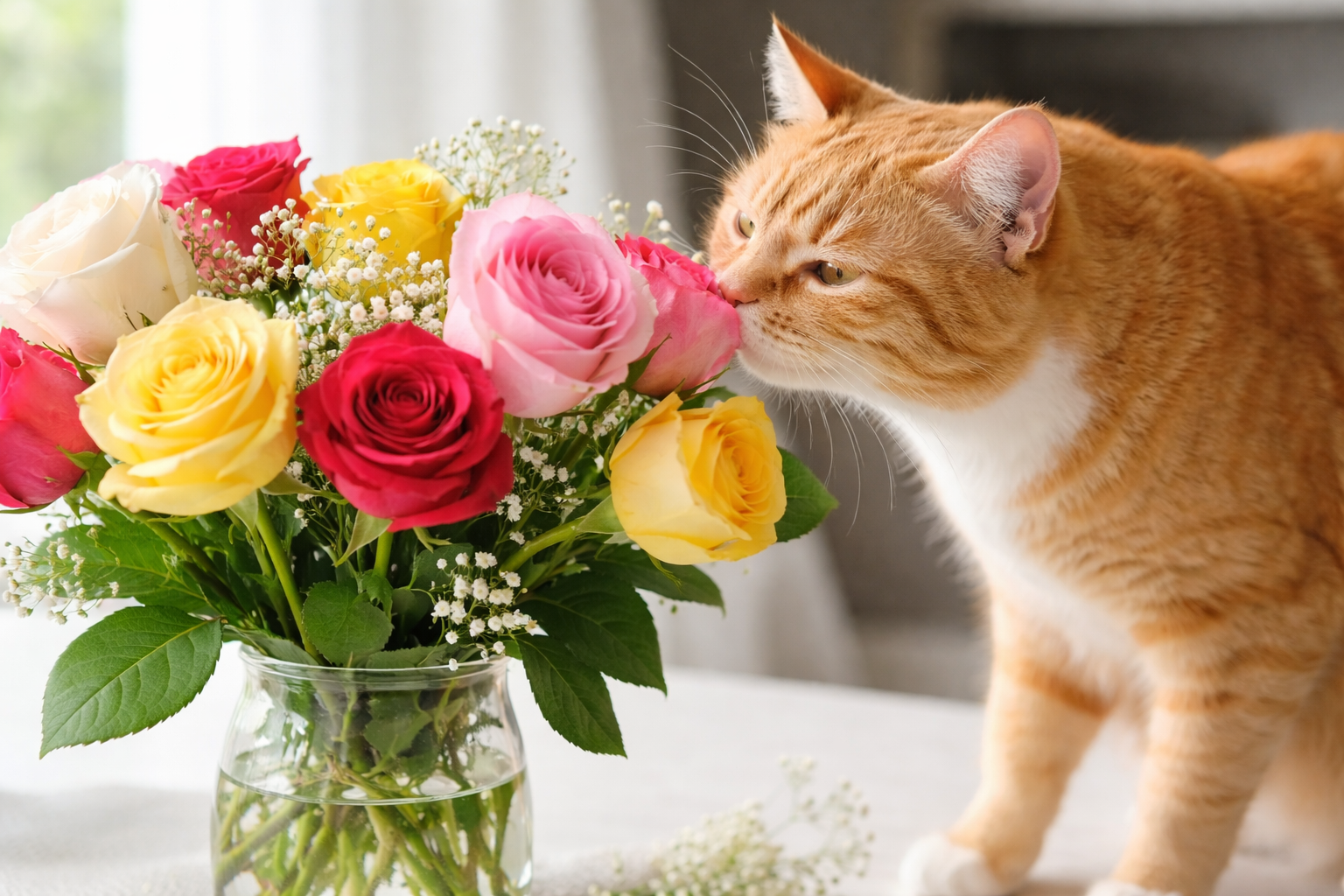
Good news first: roses are not toxic to cats. The ASPCA gives them a clean bill of health, and a nibbled petal is unlikely to cause anything more than a mild upset stomach.
But a bouquet is a different story. Lilies, pesticides, and scented products can all hitch a ride in a bunch of roses — and those are a much bigger deal. Here’s what to actually watch out for.
Warning: Check Your Bouquet for Lilies First
Before anything else — check your bouquet for lilies. They are extremely toxic to cats, even small amounts can cause acute kidney failure, and they are commonly mixed into rose arrangements. Stargazer lilies, Easter lilies, tiger lilies, and daylilies are all life-threatening to cats. If your bouquet contains any lily varieties alongside the roses, keep it completely out of reach or remove it from your home entirely.
If there is any chance your cat was exposed to lilies, treat it as an emergency.
The Real Dangers: Pesticides, Fertilizers, and Rose Products
Pesticide residue is probably the biggest hidden risk with florist roses. Commercially grown flowers are heavily sprayed before they ever reach a shop, and that residue can cause poisoning if your cat licks or chews the petals. Symptoms can range from drooling and vomiting to more serious signs depending on the chemical involved.
Garden fertilizers used around rose bushes are another concern. Many contain bone meal, blood meal, or synthetic additives that are toxic to pets — and cats are often attracted to the smell of organic fertilizers in particular.
Rose water, rose oil, and rose-scented products are worth paying attention to also. They often contain geraniol or phenols — compounds that can irritate or harm cats even in small amounts. This covers diffusers, scented candles, potpourri, and sachets. Your cat doesn’t even have to eat anything — just being in the room or licking it off their coat can be enough to cause a reaction.
What Happens If a Cat Eats a Rose?
The rose itself is much less dramatic. According to the ASPCA’s toxic plant database, roses (Rosa spp.) are classified as non-toxic to cats, dogs, and horses. If your cat eats a significant amount, mild digestive upset is common — think vomiting, diarrhea, drooling, or a temporary loss of appetite. Thorn injuries to the mouth, paws, or eyes are also a real risk, especially in curious kittens.
Are All Rose Varieties Safe for Cats?
Yes—most types of roses are safe for cats. This includes spray roses, mini roses, hybrid tea roses, and climbing roses.
What matters more is how the roses were treated. Florist bouquets and store-bought arrangements are often sprayed with pesticides, preservatives, or dyes, and those chemicals can be harmful if your cat licks or chews the petals.
So while the rose itself is not toxic, the coating on it can be.
Are Dried Roses Safe for Cats?
Dried petals aren’t toxic, but they break into brittle fragments that can irritate the mouth and digestive tract. The bigger issue is that dried roses are often found in potpourri and scented sachets, which almost always contain essential oils or fragrance additives that are dangerous to cats. If you use dried arrangements at home, keep them well out of reach or swap them for something cat-safe like unscented dried wheatgrass.
What to Do If Your Cat Eats a Rose
Stay calm — in most cases a cat that nibbles a petal will be completely fine. Remove access to the roses, check your cat’s mouth and paws for thorn injuries, and monitor for symptoms like vomiting, drooling, diarrhea, or lethargy. If symptoms don’t clear up within a few hours or your cat seems distressed, call your vet.
For emergencies, contact the ASPCA Animal Poison Control Center (888-426-4435) or the Pet Poison Helpline. If there’s any chance lilies were involved, don’t wait — call immediately.
How to Keep Cats Safe Around Roses
- Always check bouquets for lilies before bringing them indoors
- Trim all thorns from stems before displaying cut roses
- Choose organic roses grown without pesticides when possible
- Keep arrangements in rooms your cat can’t access
- Avoid rose-scented oils, diffusers, and candles in your home
- Offer cat grass or silvervine nearby to redirect plant-chewing instincts

Cat-Safe Flowers to Use Instead of Roses
If you want beautiful blooms without the worry, these flowers are considered non-toxic to cats and make great alternatives: snapdragons, gerbera daisies, orchids, asters, and marigolds (in moderation). Always verify before buying — the ASPCA’s searchable plant database is the most reliable tool for this.
The Bottom Line
Roses won’t poison your cat — but a bouquet still can. Thorns, pesticide residue, rose-scented products, and any lilies tucked into the arrangement are all worth watching out for. Trim the thorns, go organic when you can, skip the scented stuff, and always check your bouquet for lilies before your cat does.
Debbie Reid is the founder and chief editor of CatPedia.net, with over 25 years of hands-on experience in feline care, rescue, and behavior research. Inspired by her rescue cats Snickers and Bigboy, she collaborates with animal welfare resources and consults veterinary literature to turn complex feline health, nutrition, and behavior topics into clear, actionable guides.