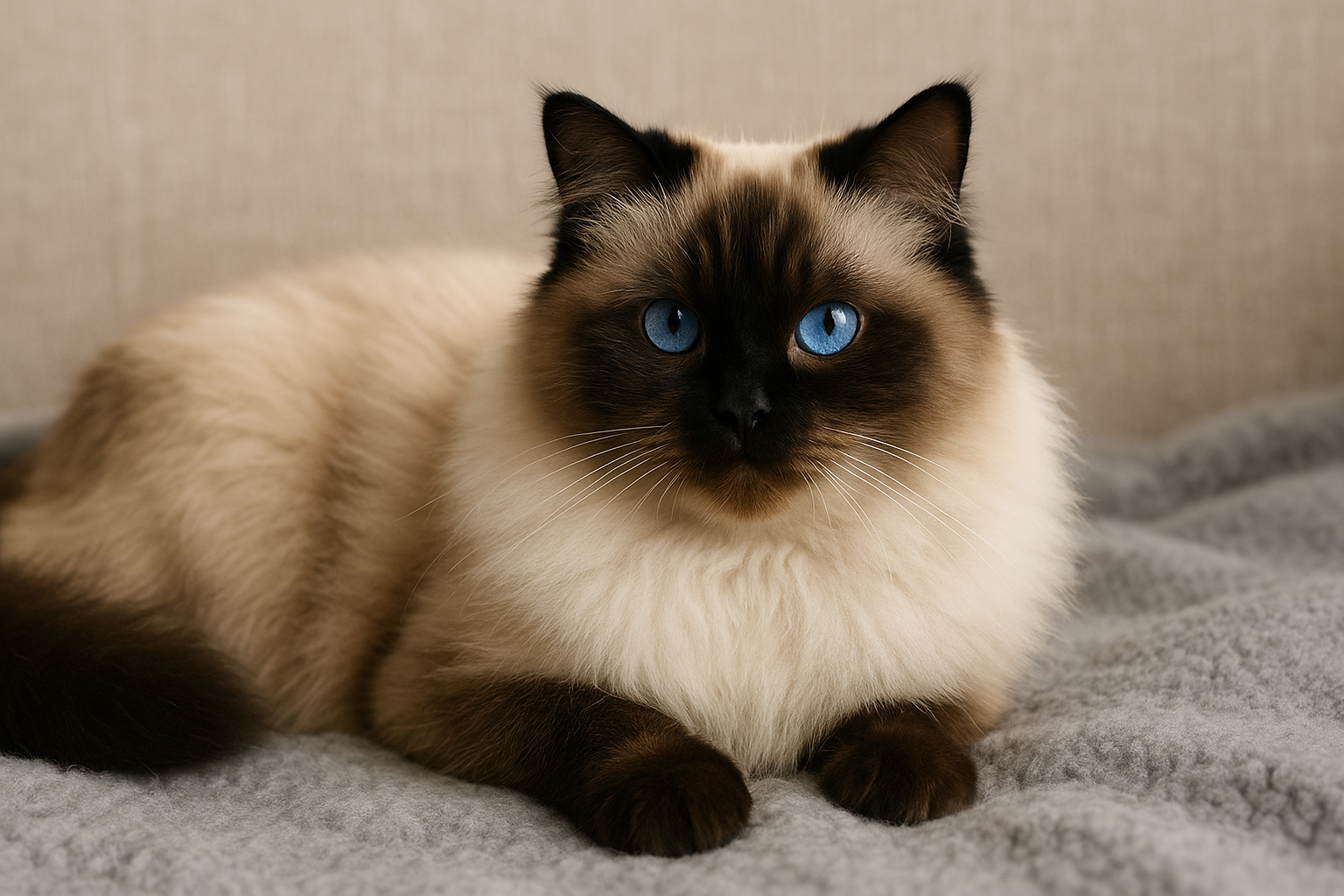
The Himalayan cat is a long-haired breed that combines the Persian’s luxurious coat and flat face with the Siamese’s striking color points and vivid blue eyes. With their calm temperament, silky coats, and deep affection for their people, Himalayans bring a quiet, elegant energy into any home.
They’re not just pretty faces either. Himalayans are loving, quiet companions who thrive on affection and do best when life is calm and predictable. They’re a good match for someone who wants a gentle cat that likes staying close without being constantly demanding.
Quick Breed Facts
- Origin: United States and United Kingdom
- Breed registries: CFA, TICA, ACFA, FIFe
- Weight range: 7–12 pounds
- Lifespan: 9–15 years
- Coat: Long, thick, silky
- Colors and patterns: Pointed colors including seal, chocolate, blue, lilac, flame, and cream
- Eye color: Always vivid blue
- Grooming: High maintenance
- Activity level: Low to moderate
- Affection level: Very affectionate
- Vocality: Quiet to moderately talkative
- Good with children: Yes, if gentle
- Good with other pets: Usually yes, especially with calm animals
History & Origin of the Himalayan Cat
The Himalayan cat — sometimes called the Himalayan Persian or Colourpoint Persian — was created by breeders who wanted the elegant color points of the Siamese Cat paired with the thick coat and body type of the Persian Cat. Early breeding programs began in the 1930s in both the United States and the United Kingdom, though developing a consistent long-haired pointed cat took several generations.
By the 1950s, breeders had established the look we now recognize as the Himalayan: a sturdy long-haired cat with vivid blue eyes, a thick coat, and pointed markings. The Cat Fanciers’ Association officially recognized the breed in 1957. Today, some registries still treat the Himalayan as its own breed, while others classify it as a color-pointed variety of the Persian.
Personality & Temperament
Himalayan cats are known for their sweet, calm, and deeply affectionate nature. They are generally quieter than their Siamese relatives but still enjoy gentle play and one-on-one time with their people. Himalayans form strong bonds with their owners and feel most at home in peaceful, predictable environments. You’ll often find them curled up on the couch, lounging in a sunny window, or following you quietly from room to room when they want attention.
While they’re not overly clingy, they do like staying close. Their calm, observant temperament makes them well-suited to quieter households, and their patience with routines means they adapt well to steady home life without needing constant stimulation.
Physical Characteristics
Himalayan cats are medium to large cats with a sturdy body, short legs, a broad chest, and the rounded features associated with Persians. Most weigh between 7 and 12 pounds, with males usually a little larger than females.
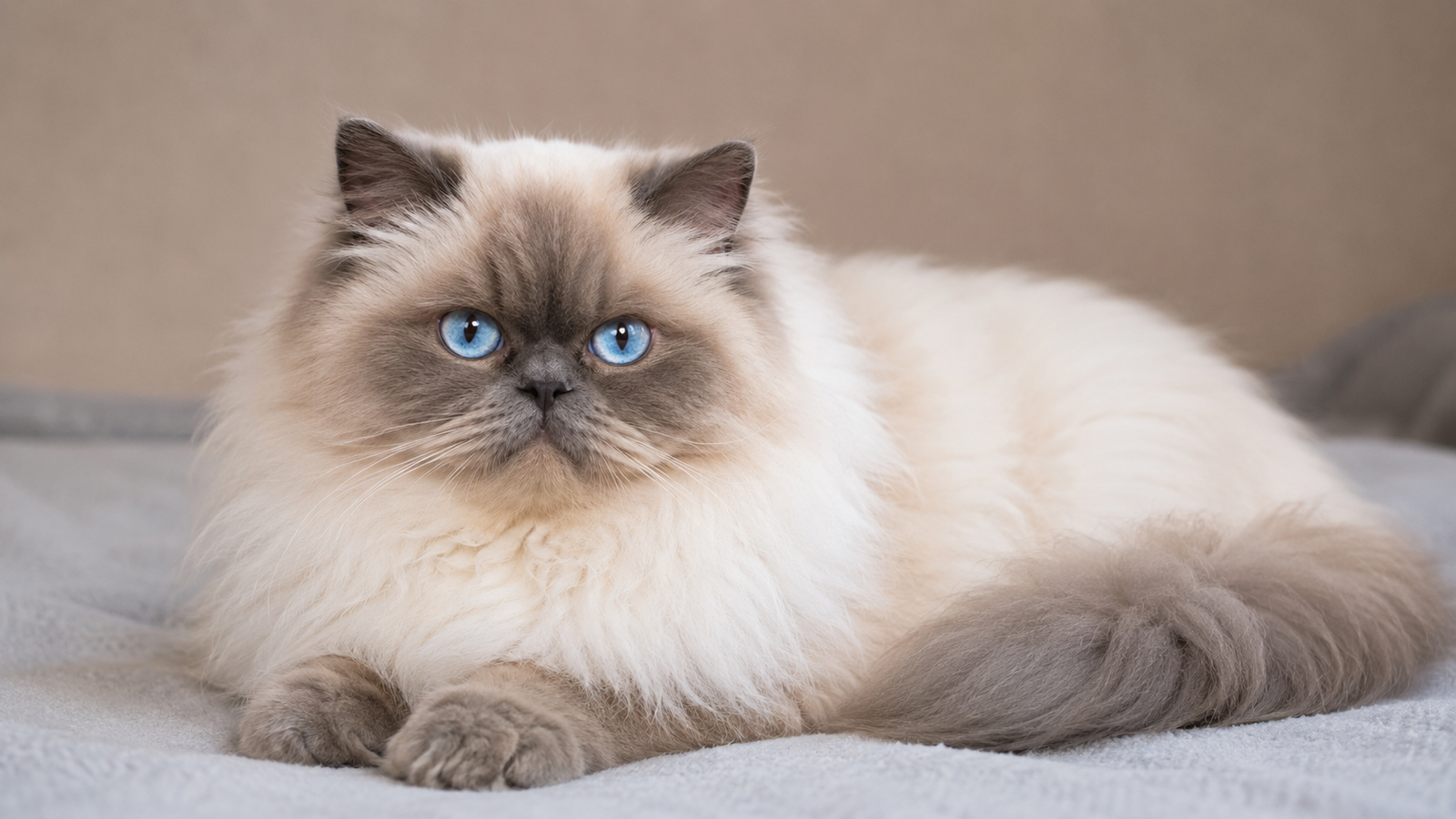
Their most recognizable traits are the long, thick coat, vivid blue eyes, and pointed markings on the face, ears, legs, and tail. Common point colors include seal, chocolate, blue, lilac, flame, and cream. Many Himalayans also have the flat-faced look seen in Persians, though some have a slightly longer “doll face” appearance.
Grooming & Shedding
Due to their long, dense Persian-style coat, Himalayans require daily brushing to prevent mats and tangles, particularly around the chest, armpits, and behind the ears. Their flat faces also tend to cause tear staining and eye discharge. A gentle wipe with a soft cloth once or twice a day usually keeps this manageable.
Shedding can be heavy during seasonal changes, so regular grooming and a good vacuum are simply part of life with a Himalayan. Keeping up with brushing also helps their coat stay soft, clean, and more comfortable year-round.
Activity & Play
While Himalayans aren’t the most energetic breed, they still enjoy short bursts of gentle play. You might catch them swatting at a feather wand, chasing a soft toy mouse, or climbing a cushy perch, as long as it’s not too tall.
They’re not big jumpers like Bengals or Abyssinians, but they do love cozy spots where they can quietly watch the world go by. Think more loungers than leapers.

Health & Lifespan
Himalayan cats typically live between 9 and 15 years, with some reaching their late teens with proper care. Because they share Persian ancestry, they are prone to several hereditary health concerns, including Polycystic Kidney Disease (PKD), brachycephalic airway syndrome related to their flat facial structure, dental crowding, and tear duct drainage issues.
Regular veterinary checkups and early PKD screening are especially important with this breed. A high-quality diet and maintaining a healthy weight also go a long way toward supporting their coat, skin, and overall long-term health.
Family Compatibility
Himalayan cats are ideal companions for families, seniors, or anyone seeking a quiet, cuddly cat that thrives in a calm environment. They do well with gentle children and tend to get along with other laid-back pets, including mellow cats and polite dogs, when introduced carefully. Their preference for calm and routine means they’re happiest in homes where life stays fairly relaxed and predictable.
If you want a cat that’s affectionate, easygoing, and happiest curled up beside you, the Himalayan is a solid choice. They enjoy being close to their people and are content in a home that moves at a slower pace.
Recommended Supplies
Himalayans need supplies built around daily grooming and a comfortable indoor routine.
- Wide-tooth comb and a brush for daily coat maintenance
- Soft facial wipes for tear staining
- Low, cushioned cat tree or window perch
- Lint rollers or pet-hair cleaning tools
- Soft bedding placed in quiet lounging areas
Himalayan Cat Price and Cost
Pet-quality Himalayan kittens from reputable breeders typically cost between $500 and $1,200, with show-quality cats or rare point colors like flame point or chocolate point running higher depending on pedigree and breeder. The price usually reflects health screening for PKD, early vaccinations, and early socialization.
Breed-specific rescues are also worth checking if you’re open to adopting an adult cat. Some rehomed Himalayans come from owners who underestimated the grooming commitment, but they can still make wonderful companions in the right home.
Himalayan Cat FAQs
Are Himalayan Cats hypoallergenic?
No, Himalayan Cats are not considered hypoallergenic. Their long coats can trap dander and saliva proteins that trigger allergies in sensitive individuals.
How long do Himalayan Cats live?
Most Himalayans live between 9 and 15 years, though some have been known to live into their late teens with good care and regular vet checkups.
What’s the difference between a Persian and a Himalayan Cat?
Himalayans are essentially Persian Cats with Siamese coloring. They have the same body structure and long coat as Persians but feature pointed colors and blue eyes inherited from Siamese ancestry.
Is a Himalayan Ragdoll a real breed?
No, a “Himalayan Ragdoll Cat” isn’t an official breed. It’s often a nickname for a Ragdoll with similar coloring, or a mixed-breed cat with traits of both breeds.
How much does a Himalayan Cat cost?
The price of a Himalayan Cat can vary widely. Pet-quality kittens usually cost between $500 and $1,200, while show-quality or rare color points like blue point or flame point Himalayans may cost more.
Is the Himalayan Cat Right for You?
The Himalayan Cat is a great fit for someone who wants a calm, affectionate companion and doesn’t mind regular grooming. They thrive in quieter homes where they can relax near their favorite people and stick to a predictable routine.
They’re gentle, easygoing cats that bring a calm presence to the house. If your ideal cat is more couch companion than chaos machine, the Himalayan may be a very good match.
Debbie Reid is the founder and chief editor of CatPedia.net, with over 25 years of hands-on experience in feline care, rescue, and behavior research. Inspired by her rescue cats Snickers and Bigboy, she collaborates with animal welfare resources and consults veterinary literature to turn complex feline health, nutrition, and behavior topics into clear, actionable guides.