Hissing is one of the clearest warning signals a cat can give. It can look aggressive, but it’s usually a defensive response. Cats hiss when they feel scared, startled, overwhelmed, cornered, overstimulated, or physically uncomfortable.
Your cat is asking for space before the situation escalates to swatting, scratching, or biting.
What a Cat Hiss Looks and Sounds Like
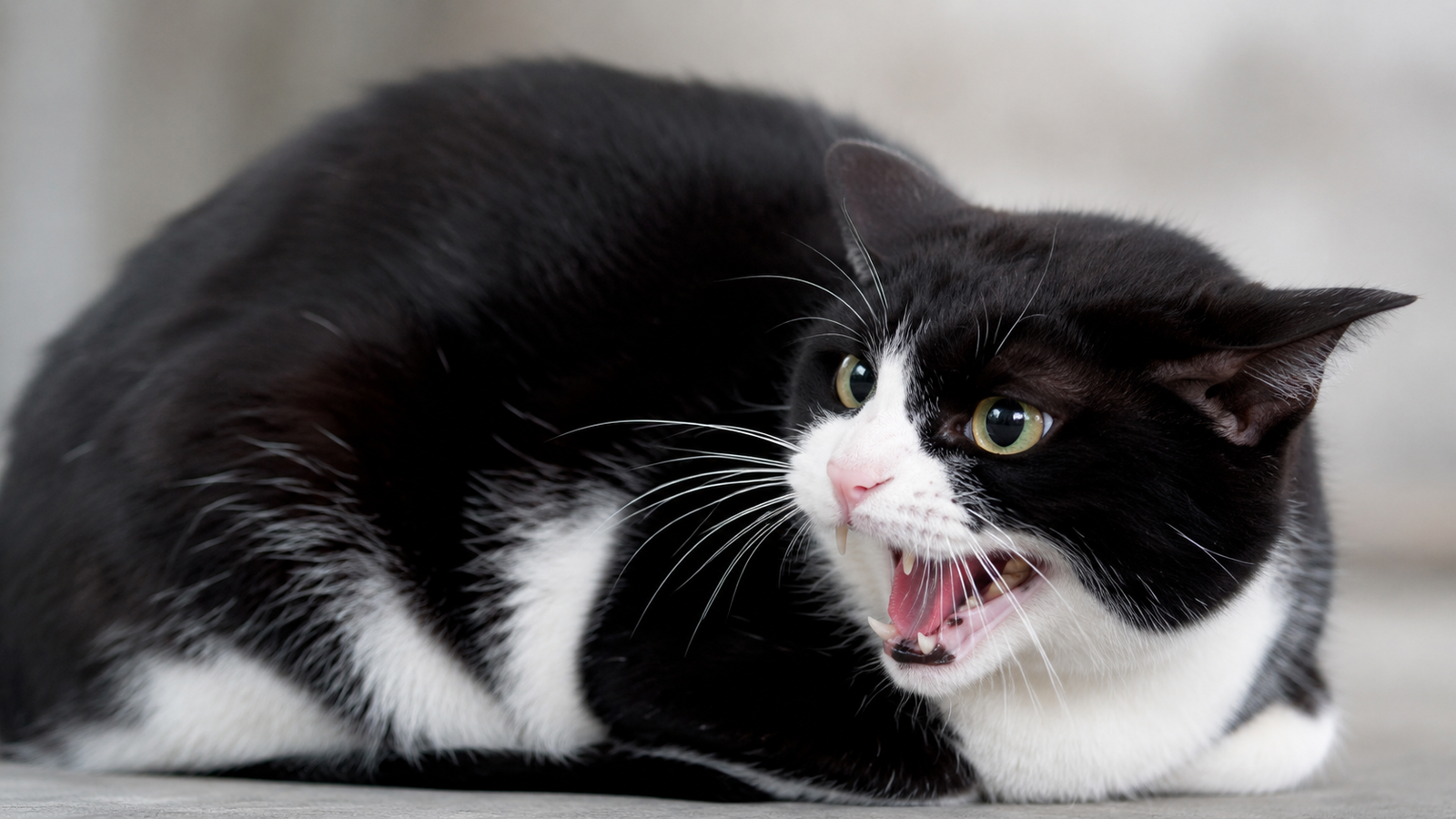
A hiss is a sharp burst of air, not a normal meow or yowl. Your cat opens their mouth and pushes the air out without using the vocal cords, which is why the sound can feel so sudden and harsh.
It can be brief and quiet, or drawn out and loud, depending on how alarmed your cat is. A mildly irritated cat might give an almost breathy hiss. A very frightened or defensive cat may hiss with their mouth wide open, teeth visible, and tongue pulled back.
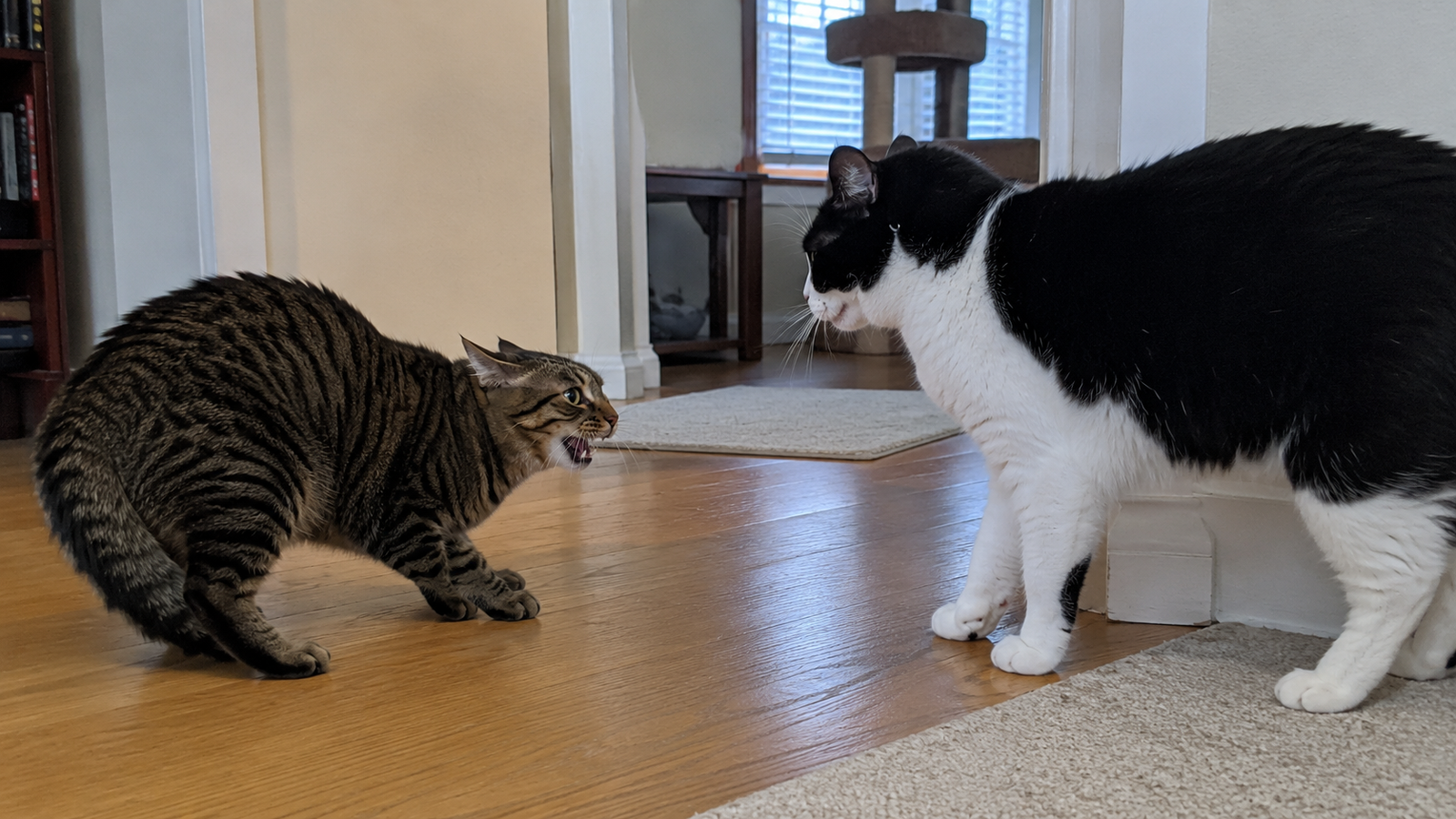
A hissing cat may flatten their ears against their head, arch their back, puff up their fur to look larger, crouch low, or turn sideways. Their tail may lash, tuck, or puff up. Their eyes may go wide or narrow depending on whether fear or irritation is driving it. Some cats freeze. Others back away slowly or bolt for somewhere to hide.
Some cats pair a hiss with a sharper, more explosive spit, which is an intensified version of the same sound. Others make a snorting or forceful nasal sound, especially when the hiss is sharp or sudden.
Why Do Cats Hiss?
Fear or feeling threatened
Fear is one of the most common drivers of hissing. A cat may hiss at a visitor, a loud noise, a new pet, an unfamiliar smell, or someone who moves too quickly toward them. Even a cat who is normally relaxed and friendly can hiss if they feel cornered or unsure about what’s happening around them.
In these moments, your cat is trying to create distance, not start something. They may have no interest in attacking at all. They want the scary thing to stop, back off, or leave. Giving them space is almost always more helpful than trying to reassure them with your hands, which can feel like more pressure rather than comfort.
Being startled
Some cats hiss simply because they were startled. They may be napping, eating, or walking through a room when something surprises them: a dropped object, a fast movement, a dog rushing in, or someone appearing suddenly from around a corner. The hiss happens before they’ve even had time to process what’s going on.
This kind of hiss tends to be brief. Your cat hisses, pauses, then relaxes once they realize the threat isn’t real.
Overstimulation
Overstimulation is one of the most commonly misunderstood reasons for hissing, especially between cats and their owners. Your cat may seem perfectly happy during petting, relaxed and maybe even purring, and then suddenly tense up and hiss. This isn’t personal. It just means the interaction went on longer or became more intense than your cat wanted.
Some cats are particularly sensitive along the belly, tail, paws, or lower back. They might enjoy a few strokes but find repeated contact in the same spot grating. Others get wound up during play and hiss when the game tips over into something too rough or too stimulating.
The hiss is usually not the first signal. It’s the last one before a swat. Before cats hiss from overstimulation, they often give smaller warnings: a flicking tail, rippling skin, a sudden stiffness, ears that go flat, or a quick head turn toward your hand. Learning to spot those earlier cues means you can stop before your cat feels like they have to escalate.
Pain or illness
A cat who suddenly hisses when handled may be hurting. This is especially true if they react when you touch the same spot each time, or if they hiss when you pick them up, brush them, or move them in a way that used to be normal.
Cats are skilled at masking discomfort, so hissing is sometimes the first sign something is wrong. It may come with other changes, including hiding more than usual, eating less, avoiding the litter box, sleeping in different spots, or reacting more strongly to touch.
Injuries, arthritis, dental disease, ear infections, abdominal pain, and urinary problems can all make a cat far less tolerant of being touched, even by someone they trust completely.
Stress or environmental change
Cats depend heavily on routine, familiar smells, and predictable surroundings. A move, a new baby, rearranged furniture, houseguests, construction noise, or a different feeding schedule can all make some cats feel unsettled.
Some cats take those changes in stride. Others find them genuinely stressful, and hissing may be one way that stress shows up.
Stress-related hissing usually improves as the cat adjusts, especially when they have a quiet place to hide, familiar bedding, and a routine that stays as consistent as possible. The key is giving them time and a low-pressure environment rather than trying to force them to interact with whatever is stressing them out.
Territorial tension and resource guarding
Cats can become protective of the things they consider theirs, and that list can be longer than most owners expect. A litter box, a food bowl, a favorite window seat, a particular spot on the couch, a scratching post, or even your attention can all become sources of tension, especially in homes with multiple cats.
Territorial hissing doesn’t automatically mean the cats will never get along. It often means the household setup needs some adjustment. Cats do better when resources are spread around the home instead of concentrated in one area: separate feeding stations, multiple litter boxes in different locations, and several resting spots at different heights. When one cat can’t easily block another from the things they need, there’s less reason for hissing to turn into a standoff.
Protecting kittens
A mother cat may hiss at people, other pets, or even other cats she normally gets along with when they come too close to her kittens. It can be surprising if she’s usually affectionate toward you, but her entire priority in those early weeks is keeping the kittens safe, and hissing is her most efficient way of controlling who comes near.
Give her a quiet, low-traffic space with food, water, and a litter box close by. That way, she doesn’t have to leave the kittens to get what she needs.
Keep other pets away and keep handling to a minimum, especially in the first two weeks. Maternal hissing usually fades as the kittens grow older and she feels less vigilant.
Rough play or crossed limits
Cats may hiss when play becomes too physical, too prolonged, or when someone ignores their body language. This is common with children who don’t yet know how to read a cat, dogs who play too hard, and other cats who don’t pick up on cues to stop.
It also happens outside of play. A cat who is chased, grabbed, picked up when they don’t want to be, or held in a lap they’re trying to leave will often hiss to say enough.
Give the cat a way out. If they walk away, flatten their ears, lash their tail, or hiss, the interaction needs to stop.
Why Is My Cat Hissing at Me, Other Cats, Kittens, or Dogs?
Why is my cat hissing at me?
A cat hissing at their owner can feel confusing, especially if they’re usually affectionate. Most of the time, it traces back to something specific in the moment, not a sudden change in how your cat feels about you.
Think about what happened right before the hiss. Did you pick them up unexpectedly, touch their belly, trim their nails, put them in a carrier, pet them too long, wake them up, or come home smelling like another animal? Any of those can make a cat want space.
If it keeps happening, look for the common thread. Your cat may dislike that specific type of handling, or they may be sore enough that normal contact feels uncomfortable. New hissing during touch or handling is worth a vet check.
Why is my cat hissing at other cats?
Cats hiss at other cats when they feel threatened, crowded, territorial, or unsure. This is common when a new cat enters the home, when one cat returns from the vet smelling different, or when cats compete over food, litter boxes, resting spots, or attention.
Some hissing during a slow introduction can be normal. Chasing, blocking, stalking, growling, or constant hiding means the cats need more separation, more resources, and a slower adjustment.
Why is my cat hissing at a new kitten?
Adult cats often hiss at new kittens because kittens are intense. They run, pounce, stare, climb, and miss the social cues an older cat is trying to send. A hiss from the resident cat usually means “back off” or “that’s enough.”
Some hissing is normal as long as the adult cat can leave and the kitten isn’t being hurt. Give the older cat kitten-free spaces, high perches, and separate food and litter areas while they adjust.
Why is my cat hissing at the dog?
Cats often hiss at dogs because dogs move, stare, sniff, and play in ways that can feel threatening. Even a friendly dog can be too much if the cat has no escape route.
Give your cat high places, quiet rooms, and dog-free areas so they can choose distance. Don’t force a cat to “get used to” a dog by putting them face to face.
What To Do When Your Cat Hisses
The most important thing to do when your cat hisses is to stop what you’re doing and give them space. Don’t try to pick them up, follow them, stare them down, or offer your hand to sniff. Your cat is already stressed, and adding more contact or pressure can push them from hissing into swatting or biting.
Back away calmly and let your cat choose their own distance. If another pet is involved, separate them without putting your hands between them. If your cat retreats somewhere to hide, leave them alone unless there’s an immediate safety concern. Hiding is one of the ways cats calm themselves down.
Once things have settled, think about what triggered it. Was it petting that went on too long? A specific type of handling? An encounter with another pet? A sudden noise or movement? That trigger is your clue for what needs to change.
Should You Punish a Cat for Hissing?
No. Hissing is a warning signal. When a cat hisses, they’re telling you they need space before they escalate to scratching or biting. That’s the kind of communication you want your cat to feel safe using.
Punishing a cat for hissing, such as yelling, spraying water, grabbing them, or chasing them, doesn’t remove the problem that caused the hiss. It just makes your cat feel less safe around you. It can also teach them that early warnings don’t work, which may make them more likely to bite without warning next time.
The better response is to treat the hiss as information. Something made your cat feel unsafe, overwhelmed, cornered, or uncomfortable. When you remove that pressure and address the trigger, your cat has less reason to hiss in the first place.
When To Call the Vet
Occasional hissing during an obviously stressful event, such as a vet visit, a new pet arrival, or a household disruption, is usually not a medical concern. A change in hissing behavior is a different matter.
Call your vet if the hissing is sudden, frequent, intense, or tied to touch. Pain can make a cat hiss when they’re picked up, brushed, moved, or touched in a specific area.
You should also schedule a check if hissing starts coming with other changes: eating less, hiding more, low energy, limping, litter box avoidance, vomiting, weight loss, overgrooming one spot, or unusual aggression toward you or other pets. One change may have a simple explanation. Several changes together, especially with new hissing, are worth a vet visit.
Because cats are so good at masking discomfort, it’s easy to assume hissing is behavioral or stress-related when something physical is actually going on. If the hissing is new and you can’t point to an obvious trigger, ruling out pain first is the safest choice.
How To Help Your Cat Feel Safer Long-Term
The goal isn’t to stop your cat from ever hissing. Hissing is normal communication, and a cat who never hisses may simply have learned that their warnings don’t work. The goal is to help your cat feel secure enough that they don’t need to hiss very often.
Start with the basics. Hiding spots, high perches, scratching posts, quiet resting areas, and consistent daily routines all help cats feel more secure. In multi-pet homes, spread resources throughout the house with separate feeding stations, multiple litter boxes in different rooms, and several resting spots at different heights. This makes it harder for one cat to guard everything or block another cat’s access.
For cats who hiss at visitors, children, or dogs, create distance before your cat gets to the point of hissing. Let them observe from a safe spot and approach on their own terms. Reward calm behavior with treats or play, but don’t force interaction. That usually makes the problem worse.
The more control your cat has over where they go, where they hide, where they climb, and what their day looks like, the less often they will feel pushed into hissing.
FAQs
Why does my cat hiss at me for no reason?
There’s almost always a reason, even if it’s not obvious. Your cat may be startled, overstimulated, in pain, reacting to a smell you brought home, or responding to something in their environment you haven’t noticed. Look at what happened right before the hiss and whether it keeps happening in the same situation.
Should I hiss back at my cat?
No. Hissing back can confuse your cat, make you seem threatening, and raise the stress level. Give them space instead.
Can hissing mean my cat is sick?
Yes. Hissing can be a sign of pain or illness, especially when it starts suddenly, happens during handling, or comes with changes like hiding, appetite loss, litter box avoidance, limping, or unusual aggression.
Debbie Reid is the founder and chief editor of CatPedia.net, with over 25 years of hands-on experience in feline care, rescue, and behavior research. Inspired by her rescue cats Snickers and Bigboy, she collaborates with animal welfare resources and consults veterinary literature to turn complex feline health, nutrition, and behavior topics into clear, actionable guides.