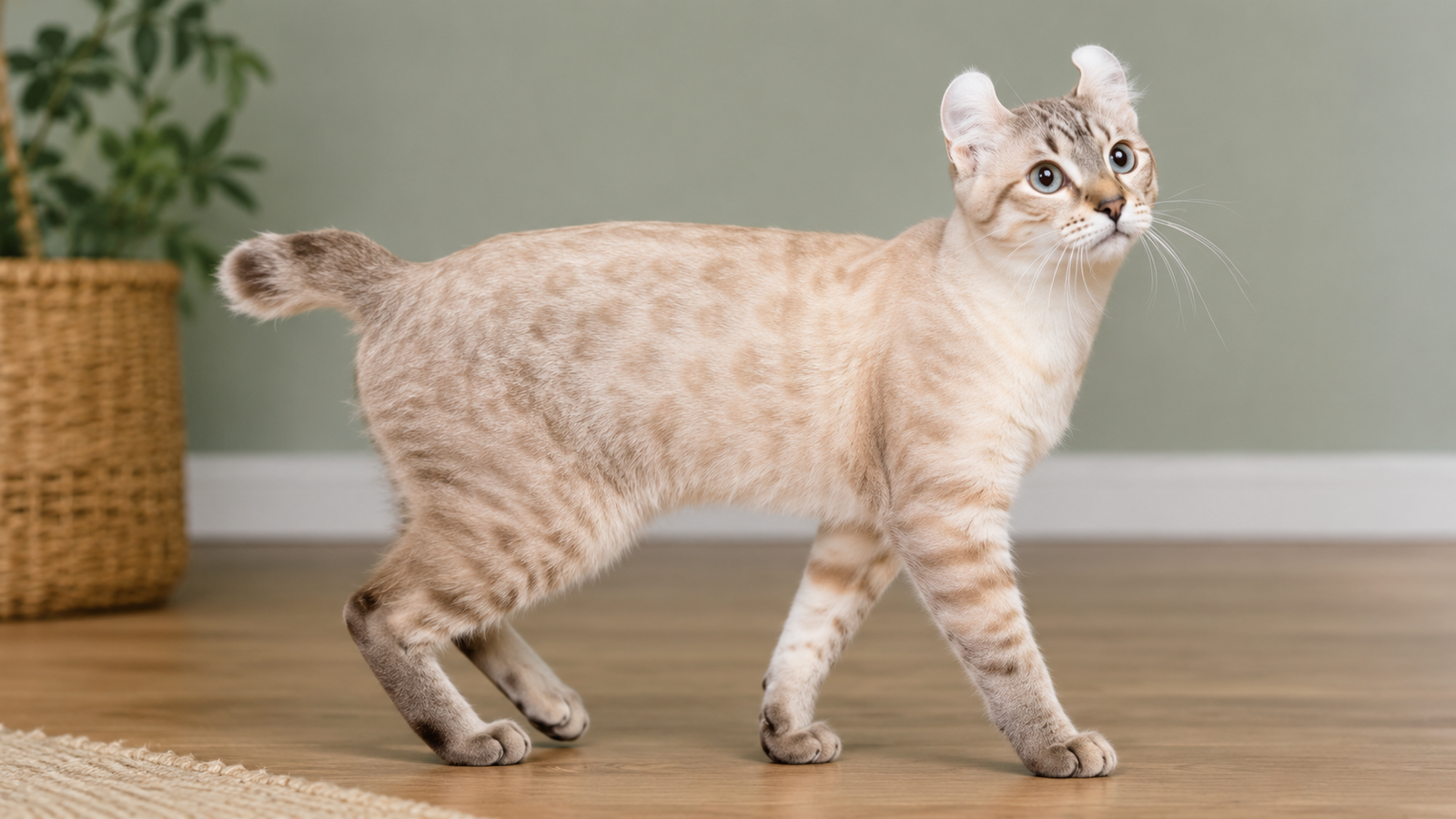
Highlander cats are a large, fully domestic breed with forward-curling ears, a naturally short tail, and a broad, muscular build. Despite the wild look, there is no wildcat ancestry behind the breed.
Highlanders are active, confident cats that treat the household as their business to oversee. They follow their people, keep track of what is happening, and get restless when they do not have enough stimulation or company. A bored Highlander can be loud, destructive, and impossible to ignore. This breed suits owners who want an engaged cat and have time to spend with them, but it is not ideal for anyone who prefers a cat that mostly keeps to itself.
Quick Breed Facts
- Origin: United States
- Breed registries: TICA (Advanced New Breed)
- Weight range: 10–20 lbs
- Lifespan: 10–15 years
- Coat: Short or long
- Colors and patterns: Spotted tabby, classic tabby, lynx point, and others
- Eye color: Gold, green, or blue
- Grooming: Low to moderate depending on coat length
- Activity level: High
- Affection level: High
- Vocality: Moderate
- Good with children: Yes
- Good with other pets: Usually
History and Origin of the Highlander Cat
The Highlander was developed in the early 2000s in the United States by crossing two experimental domestic lines, the Jungle Curl and the Desert Lynx. The aim was a large, wild-looking cat with a domestic temperament. The Jungle Curl contributed the forward-curling ears, and the Desert Lynx brought the muscular frame and naturally short tail.
The breed was originally called the Highland Lynx, a name that created confusion about its origins. Changing the name to Highlander helped separate the breed from associations with actual wild cats and gave it a cleaner identity as a stand-alone breed. TICA currently recognizes the Highlander as an Advanced New Breed, a development category before full championship status.
Highlander Cat Personality and Temperament
Highlanders are confident, outgoing cats that like to know what is happening around them. They follow their people, greet visitors, and involve themselves in household activity. A Highlander will often find a way into whatever you are doing, whether you invited them or not.
They are also more tolerant of noise and disruption than many breeds, which makes them a good match for busy households, families with children, and homes with other pets. That said, they have clear needs of their own. A Highlander that is under-stimulated or isolated for long stretches will let the household know about it.
Highlander Cat Appearance and Physical Traits
The defining features are the ears and the tail. The ears curl forward and upward rather than folding down, and the degree of curl varies from cat to cat. The tail is naturally short, ranging from a few inches to roughly half the length of a standard tail depending on the individual. It is born that way, not surgically shortened.
Highlanders have a large, muscular body. Males commonly reach 15 to 20 pounds at full size, and females are smaller but still solidly built. Their muscle density makes them feel heavier than their weight suggests.
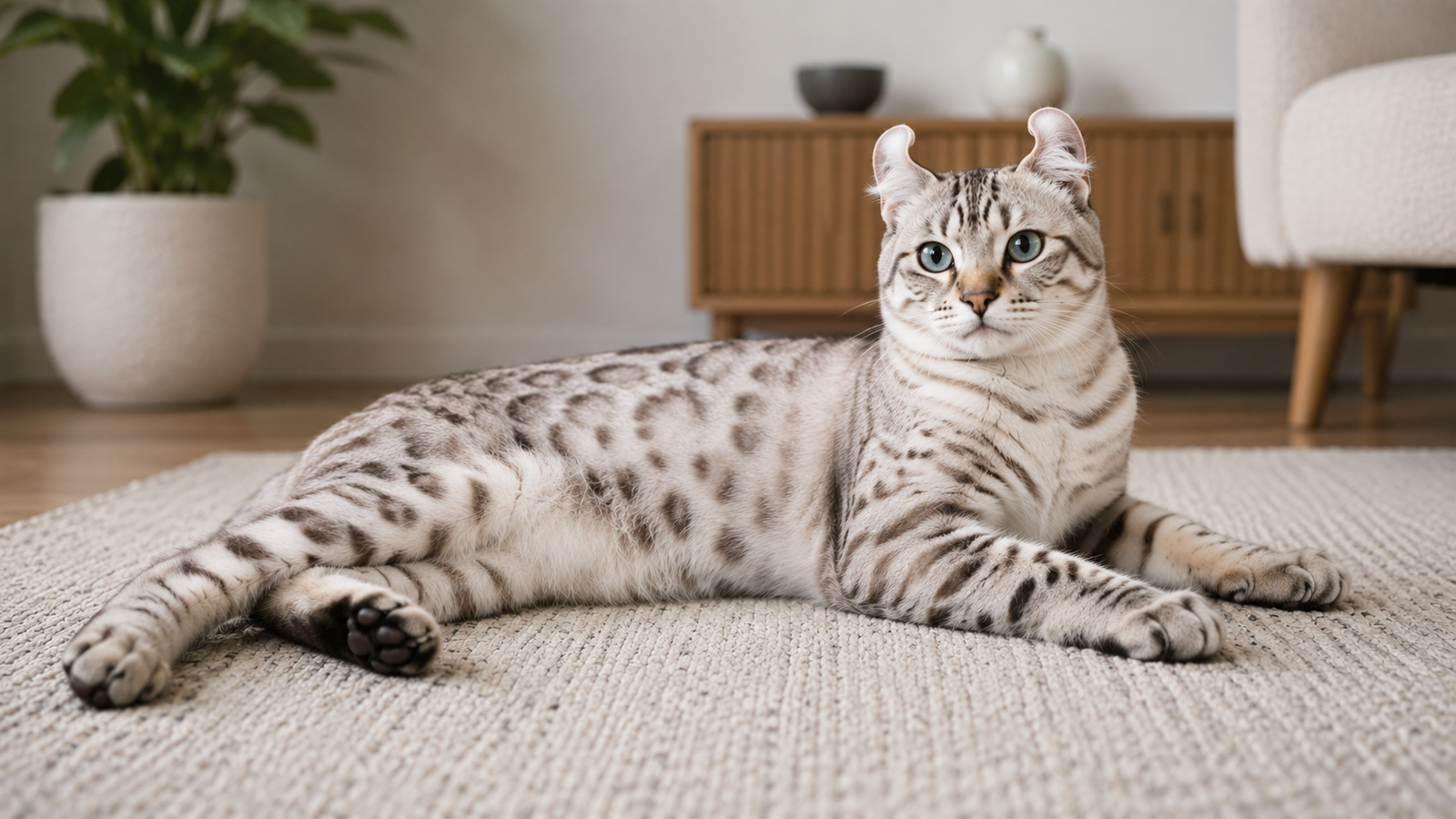
Some Highlanders are also polydactyl, meaning they are born with extra toes on the front feet and occasionally the back. This gives them wide, padded-looking paws that add to the breed’s sturdy appearance.
The coat comes in shorthaired and longhaired varieties. Patterns include spotted and classic tabby, lynx point, and others. The shorthaired coat in particular sits close to the body in a way that shows off the breed’s muscular build.
Highlander Cat Grooming and Shedding
Grooming needs depend mostly on coat length. Shorthaired Highlanders are low maintenance; a quick brush once a week removes loose fur and keeps the coat in good shape. Longhaired cats need brushing two to three times a week, with particular attention to the neck, flanks, and hindquarters where tangles develop first. Shedding is moderate year-round and increases during seasonal coat changes in spring and fall.
The curled ears need more attention than a straight ear would, since wax and debris can collect around the curl faster. Regular grooming sessions should include a quick ear check.
Regular nail trims are part of normal care, but polydactyl Highlanders need a little extra attention. Check each paw carefully so every nail gets trimmed. The extra toes do not always sit in an obvious position, so one can be easy to miss during a quick trim.
Highlander Cat Activity and Play
The Highlander’s activity level is high and stays that way well into adulthood. These cats keep climbing, jumping, chasing, and investigating long after many breeds start to settle down. Without enough play and enrichment, they will usually find their own outlets, and those outlets are not always ones you want.
Vertical space matters for this breed. A tall, sturdy cat tree gives them a place to climb, perch, and burn energy indoors. Puzzle feeders, wand toys, tunnels, and games of fetch also work well, especially when you rotate them instead of offering the same setup every day. Some Highlanders take well to leash training, which can add safe outdoor stimulation without the risks of free roaming.

Highlander Cat Health and Lifespan
Highlanders are considered a healthy breed with a lifespan of 10 to 15 years. No hereditary conditions have been identified as specific to the breed, though long-term health data is still developing because the Highlander is relatively new. Regular vet checkups are important with newer breeds because there is less history showing which problems may become common with age.
Weight management is worth paying attention to, particularly as they age. Highlanders are heavy cats by nature, and carrying extra weight puts more strain on their joints over time. A measured, meat-based diet combined with the daily exercise this breed needs anyway helps most Highlanders stay at a healthy weight.
Family Compatibility
Highlanders do well in busy households because they are confident, social, and less easily rattled than many cats. They are usually comfortable with children who know how to handle cats gently, and they can live with other cats or cat-friendly dogs when introductions are done slowly.
This breed does best in a home where there is regular activity and company. They suit households where someone is home often, or where another active pet provides company through the day. Long stretches alone do not work well for this breed.
Recommended Supplies for a Highlander Cat
Standard cat furniture often runs too small for this breed. Highlanders need supplies that can handle their size, strength, and activity level without wobbling, tipping, or wearing out quickly.
- Tall, heavy-duty cat tree with wide platforms and a stable base
- Puzzle feeders and rotating wand toys for daily engagement
- Wide, shallow food and water bowls to avoid whisker fatigue
- Sturdy scratching posts at both horizontal and vertical angles
- Roomy, consistently clean litter box

Highlander Cat FAQs
How much does a Highlander cat cost?
Highlander kittens typically cost between $800 and $2,000, depending on the breeder, pedigree, and coat type. The breed is still relatively rare, so finding a reputable breeder takes patience.
What is the difference between a Highlander and a Highland Lynx?
They are the same breed. Highland Lynx was the name used during the breed’s early development, and it was later changed to Highlander to avoid confusion with actual wild cats.
Are Highlander cats polydactyl?
Some are. Highlanders can be polydactyl or non-polydactyl, and both are accepted in the breed standard.
Are Highlander cats hypoallergenic?
No. Highlanders shed and produce Fel d 1, the protein responsible for most cat allergies, at typical levels for a domestic cat.
Is the Highlander Cat Right for You?
The Highlander is best for someone who wants a fully domestic cat with a wild look and an involved personality. They are social, active, and usually comfortable in busy households, but they need more attention and enrichment than a quiet, low-maintenance breed.
This is not a cat that does well with long stretches of boredom or isolation. For owners who can provide daily play, climbing space, and regular company, the Highlander is a distinctive, rewarding cat to live with.
Debbie Reid is the founder and chief editor of CatPedia.net, with over 25 years of hands-on experience in feline care, rescue, and behavior research. Inspired by her rescue cats Snickers and Bigboy, she collaborates with animal welfare resources and consults veterinary literature to turn complex feline health, nutrition, and behavior topics into clear, actionable guides.