
When I first put the One Fast Cat wheel in my living room, neither of my cats wanted anything to do with it. I grabbed a laser pointer and shone it near the top of the wheel, up above their heads. Eventually Snickers jumped for it. When she landed, her weight pulled the top of the wheel down, and the wheel started to spin under her.
She never quite figured out that she was supposed to run steadily. Four years later, she still uses the wheel the same way: jump, run a few steps, jump again, run a few more. It looks nothing like the smooth sprinting in cat wheel videos, but she gets on it almost every day.
Bigboy has never touched it. He’s around 17 pounds and prefers to supervise from the couch. Some cats just don’t take to them, and no amount of treats or laser pointers will change that.
If you’re thinking about a cat exercise wheel for your own home, the rest of this guide covers which wheels are worth the money in 2026, how they differ, and how to get a cat to actually use one. I’ve had the One Fast Cat for over four years; the other picks in this article are based on research across the most-reviewed wheels currently available.
At a Glance
Best overall: One Fast Cat Exercise Wheel. Quiet, easy to clean, and fits most cats up to the low-20-pound range.
Best for multi-cat homes: Nordic Beast 48″ Extra-Wide Cat Wheel. Wide enough for two cats to run side by side, on a wooden frame heavy enough not to shift.
Best premium pick: Star Cat Wheel 47″. Extra-wide birch wood build with an interactive water tube that fish “swim” through.
Best for large cats: Homegroove XXXL 59″ Cat Wheel. The only wheel on this list big enough for Maine Coons, Savannahs, and Norwegian Forest Cats to run without arching their backs.
Why Get a Cat Exercise Wheel?
Indoor cats spend most of the day sleeping, but they’re wired for short bursts of hard running. Without room to run, that energy tends to come out as 3 a.m. zoomies, scratched furniture, or slow weight gain that shows up on the vet’s scale before you notice it at home.
A cat wheel gives that energy somewhere to go. For cats that take to it, most owners see calmer nights, less destructive behavior during the day, and better weight management over time.
What Makes a Good Cat Exercise Wheel
Not every wheel is worth the money. After four years with the One Fast Cat and a lot of time looking at what’s currently on the market, a few things separate wheels worth owning from wheels that end up in a garage sale.
Diameter and track width. Diameter is how tall the wheel is; track width is how deep the running surface is from front to back. Your cat needs enough diameter to run without arching their back, and enough track width to feel steady. Most cats do well on a wheel at least 43 inches in diameter with a track at least 10 inches wide. Larger or two-cat households want a wider track — 15 inches or more.
Smooth, quiet rotation. Wheels with sealed bearings or TPE rollers run near-silent. Cheap skate-wheel bases rattle and wake you up when your cat decides 4 a.m. is exercise time.
A stable base. A wheel that wobbles or tips is a wheel your cat won’t trust. Heavier wooden wheels are the most stable; lighter plastic wheels are fine on carpet or with a mat under them.
A running surface that doesn’t snag claws. EVA foam and low-pile carpet both work. Bare wood or high-pile carpet either hurts paws or catches claws.
A weight capacity that fits your cat. Most wheels handle cats up to 20-25 pounds. Larger breeds like Maine Coons or Ragdolls need a wheel rated for 30+ pounds and built on a heavier base to stay stable at higher weights.
The Best Cat Exercise Wheels for 2026
1. One Fast Cat Exercise Wheel — Best Overall
No products found.
The One Fast Cat is a 48-inch wheel with an 11-inch-wide running track, rated for cats up to 25 pounds. I’ve had one in my living room for over four years. Mine is the EVA foam version, though the wheel now ships in both EVA foam and felt versions depending on the design you pick. The frame, base, assembly, and general use are the same across all versions.
The open-frame design gives cats plenty of room to run without feeling boxed in. The EVA foam pads on my wheel are smooth and easy to wipe clean, though they do show claw marks over time; the felt version has more grip but some owners report it can snag claws. Fur and dust wipe off either version with a damp cloth.
Assembly takes about 30 minutes with the included allen wrench. You build the wheel ring first by snapping the pieces together, then the base and rollers, and the wheel sits on the rollers so it can spin. The traction pads go on last. Take your time and line each pad up carefully as you press it into place, or you’ll end up with gaps where the pads meet.
The wheel spins smoothly with light resistance, which makes it easier for a cat to figure out how their movement controls the motion. The sound is a low whir that doesn’t cut through a TV or normal conversation. It stays stable on carpet and most rugs; on slick tile or hardwood, a thin mat under the base helps. Mine sits on tile and does shift sometimes, but has never fallen. It’s also light enough that one person can move it between rooms.
The One Fast Cat is the wheel I’d recommend to most people. It’s roomy enough for most cats, reasonably priced, and after four years in my house it still works exactly the way it did on day one.
2. Nordic Beast 48″ Extra-Wide Cat Wheel — Best for Multi-Cat Homes
| Preview | Product | Price | |
|---|---|---|---|

|
Nordic Beast 48'' XL Cat Wheel – Safe, Quiet & Stable Exercise Wheel for Large Indoor Cats up to... | $199.99 | View on Amazon |
The Nordic Beast is a 48-inch wooden wheel with a 15.7-inch-wide carpeted track, rated for cats up to 45 pounds. The wide track is what sets it apart from most wheels on the market. Standard wheels have a 10 to 12 inch track built for one cat; Nordic Beast’s 15.7 inches gives two bonded cats room to run side by side.
The plywood construction is heavy enough to keep the wheel stable at speed, and the 45-pound weight capacity comfortably supports two cats at once.
Assembly is a real time commitment. Allow for one to two hours. A screwdriver, gloves, and spare hardware are included in the box. Holes come pre-drilled, so nothing has to be measured or marked. You attach the rollers to the base, assemble the wheel ring, apply velcro strips to the interior, and then align and press the carpet running surface onto the velcro. Most people can do it solo, but a second person helps for a couple of the lifting steps.
The carpeted running surface gives cats grip and is replaceable when it wears down. Carpet does require regular vacuuming to keep fur and dust out, and cats with long claws can occasionally snag it. Both are manageable, but worth knowing if you were expecting the low-maintenance feel of a foam-tracked wheel.
Nordic Beast isn’t the right choice if you want a wheel you can move between rooms, since it’s large, heavy, and a hassle to move once assembled. Where it stands out is for bonded pairs and multi-cat households, with an extra-wide track that gives two cats room to run side by side.
3. Star Cat Wheel 47″ — Best Premium Pick
| Preview | Product | Price | |
|---|---|---|---|

|
Star Cat Wheel, Cat Treadmill, Exercise Wheel for Running, Spinning, Scratching, and Climbing for... | $449.00 | View on Amazon |
The Star Cat Wheel is a birch wood wheel with a 47-inch diameter, a 15.7-inch-wide carpeted running surface, and a 176-pound weight capacity. A patented water-filled tube runs along one side with three toy fish that swim as the wheel spins.
The build itself is where the premium price shows. The birch wood is E0-certified for low formaldehyde emissions, the surface is UV-coated so it wipes clean with a damp cloth, and the carpet is water-resistant and designed to recover from repeated clawing. A ventilation bottom and cushioned heels also make it noticeably quieter than most wooden wheels of its size. The one weak spot in the build: the fish tube attaches with zip ties, which hold fine but look cheap next to the rest of the wheel.
Assembly is the weakest part of the experience. The printed instructions are hard to follow and the process is more tedious than it needs to be. The manufacturer’s step-by-step video is much better than the printed guide, so watch it before you start. You’ll assemble the base and mount the rollers, connect the pre-drilled curved wooden panels into the wheel ring, attach the carpet to the interior with velcro strips, and set the finished wheel onto the base rollers. Allow for the better part of an afternoon, and clear a workspace before you begin.
The wheel spins with very little rotational resistance. That means it can rock gently back and forth when a cat stops running, which some cats find startling the first few times. Two pin brakes let you lock rotation during training or overnight.
Star Cat is a premium-priced wheel with a build to match. The main drawback is its weight: this isn’t a good choice for kittens or very light cats, since they may not have enough body weight to get the wheel moving easily. It’s better suited to adult cats with enough size and strength to use it comfortably.
4. Homegroove XXXL 59″ Cat Wheel — Best for Large Cats
| Preview | Product | Price | |
|---|---|---|---|

|
Homegroove XXXL Giant Cat Wheel, 59"/150cm Extra Large Cat Exercise Wheel for Maine Coon & Large... | $252.99 | View on Amazon |
The Homegroove XXXL is built for cats too long for a standard 47- or 48-inch wheel. With a 59-inch outer diameter, a 53.5-inch inner running diameter, a 13.77-inch carpeted track, and a 50-pound weight rating, it gives long-bodied breeds like Maine Coons, Savannahs, and Norwegian Forest Cats room to run with a straight spine.
The multi-layer solid wood build is heavy enough to stay stable when a 20-plus pound cat runs at speed, and the widened base keeps the wheel planted. Rounded edges cut splinter risk during assembly. The carpeted running track attaches with velcro and comes off for cleaning or replacement.
Assembly takes a few hours, and if possible, get a second person to help with the lifting steps. A power drill with a Phillips head bit is close to essential, since there are a lot of screws and doing them by hand takes forever. Pieces are pre-drilled and labeled, but the printed instructions are hard to follow, so watch Homegroove’s assembly video before you start. You build the wheel ring from the curved panels, mount the TPE rollers to the base, lift the wheel onto the rollers, and press the carpet onto the velcro strips inside the track. Give yourself a large workspace to spread parts out.
The wheel spins on TPE rollers, and vents in the base dampen the sound of rotation. A well-aligned unit is quiet enough that it doesn’t cut through a TV in the same room. Where noise creeps in is over time: the reinforcement block screws work themselves loose over months of use, and once they do, the wheel starts to wobble and rattle. Plan on checking them with a screwdriver every few weeks and re-tightening any that have backed out. A built-in locking mechanism lets you stop the wheel overnight or when you’re out.
Homegroove isn’t the right pick for a small room, since it measures roughly five feet by five feet by one foot. It also needs occasional maintenance; plan on tightening the screws every few weeks. Where it stands out is for really large cats, with a diameter big enough to give them proper room to run.
How to Get Your Cat Using the Wheel
Even a well-chosen wheel can sit unused for weeks. Cats aren’t wired to run in place on a moving surface, and most need help figuring out what the wheel is for. What follows is the sequence I’d use if I were starting over with Snickers today.
Set expectations first. Younger and more athletic cats generally figure it out in days. Older or heavier cats, and cats that don’t play much, are slower or non-starters. No amount of training changes that ceiling, so it’s better to know up front than to feel like you’re doing something wrong six weeks in.
Place the wheel where your cat already spends time
Putting the wheel in a spare room is the fastest way to guarantee it never gets used. A wheel your cat walks past every day is a wheel they’ll investigate. A wheel in the guest bedroom is furniture.
Put it in the living room, near where your cat naps or watches birds. If you have the space, position it so your cat can see it from a favorite perch.
Let them investigate with the wheel locked
For the first few days, either lock the wheel using the built-in brake (if it has one) or wedge something under the base so it can’t rotate. You want the wheel to become a normal object in your cat’s environment before they ever feel it move.
Catnip sprinkled on the running surface helps. So does feeding a meal on the wheel, or dropping treats along the inside of the track so your cat has to step in to get them.
Unlock the wheel and let it move under a still cat first
Once your cat is comfortable standing on the wheel, unlock it and let them experience the movement while they’re stationary. Give the wheel a small push while your cat is standing on it, just a few inches, not a full rotation. Most cats jump off the first time this happens; that’s fine. Repeat over several short sessions until they’ll stay put through a small movement.
Introduce running motion with a lure above the wheel
This is the step where the laser pointer trick from Snickers’ first day comes in. Once she was standing on the wheel comfortably, I put the dot above the top of the wheel, forcing her to jump for it. Her landing weight pulled the wheel into rotation under her, and she got her first taste of the surface moving in response to her own body.
A wand toy works the same way if your cat isn’t a laser cat. Dangle it above and slightly forward of the wheel’s top, just out of easy reach.
Textbook running isn’t the goal. Snickers still uses ours the way she did on day one: jump to start the wheel, run a few steps, jump again when it slows, keep going. Awkward form counts.
Build the habit with short, frequent sessions
Five minutes twice a day beats one long session. Cats learn better in short repetitions, and a tired cat won’t want to keep going.
Reward every use with a few treats for the first couple of weeks, even if your cat only takes a few steps. If they’re going to take to the wheel, they’ll usually start using it on their own after that, and you can taper off.
Cleaning and Maintenance
Running surface. EVA foam wipes clean with a damp cloth every week or two. Carpeted and felt surfaces need vacuuming instead; a handheld vacuum with a brush attachment works better than a full-size upright because you can angle it around the curve of the wheel. Spot-clean stains with a damp cloth and mild soap, and avoid soaking any of the running surfaces.
Rollers. Fur wraps around the small wheels at the base and eventually starts to squeak. Once a month, tip the wheel and pull the hair off with your fingers or a pair of scissors.
Screws and hardware. Wooden wheels loosen over time. Check the visible hardware every few weeks and re-tighten anything that’s backed out. Plastic-based wheels like the One Fast Cat don’t have this problem.
Replaceable parts. Carpet liners on wooden wheels come off with velcro and can be swapped when they wear through, usually after a couple of years of regular use. EVA foam pads on the One Fast Cat can be peeled up and replaced individually if a section tears or discolors.
Frequently Asked Questions
Will my cat actually use a cat wheel?
Some cats take to one in a few days. Others never touch a wheel no matter what you do. Younger cats, active breeds, and cats that already sprint around the house are the most likely to use one. Older, low-energy cats usually don’t.
At what age can a kitten start using a cat wheel?
Wait until they’re close to fully grown, around 8 to 12 months. Younger kittens don’t have the coordination for a moving surface, and their joints are still developing.
Are cat wheels safe?
For healthy adult cats, yes. Cats with arthritis, heart conditions, or significant weight to lose should be cleared by a vet first. The main injury risk is a claw catching on the running surface mid-run, so stick to EVA foam or low-pile carpet and avoid bare wood or high-pile carpet.
Are cat wheels loud?
Wheels on sealed bearings or TPE rollers run near-silent, at roughly the volume of a household fan. Cheap wheels with skate-wheel bases rattle. All four picks above are quiet when new; the wooden ones can develop rattles over months of use as screws work loose.
If You Decide to Buy a Cat Wheel
If you’ve decided to bet on a wheel, the One Fast Cat is where I’d start. It’s what Snickers has been using for over four years, it’s easy to assemble, and it’s light enough to move between rooms or slide out of the way when you have company.
No products found.
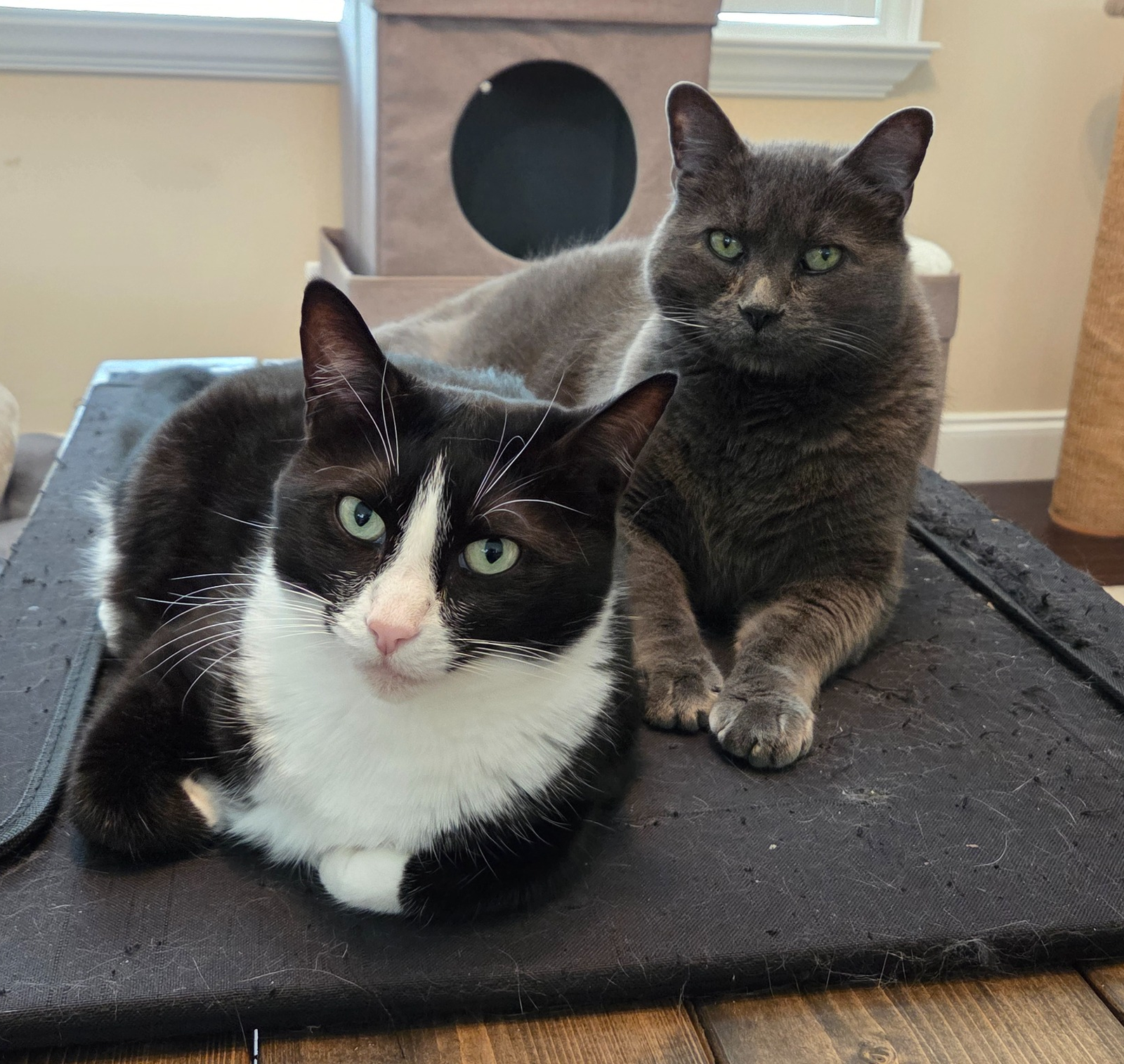
Debbie Reid is the founder and chief editor of CatPedia.net, with over 25 years of hands-on experience in feline care, rescue, and behavior research. Inspired by her rescue cats Snickers and Bigboy, she collaborates with animal welfare resources and consults veterinary literature to turn complex feline health, nutrition, and behavior topics into clear, actionable guides.