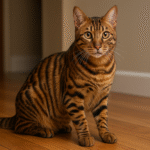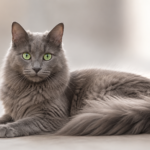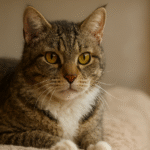
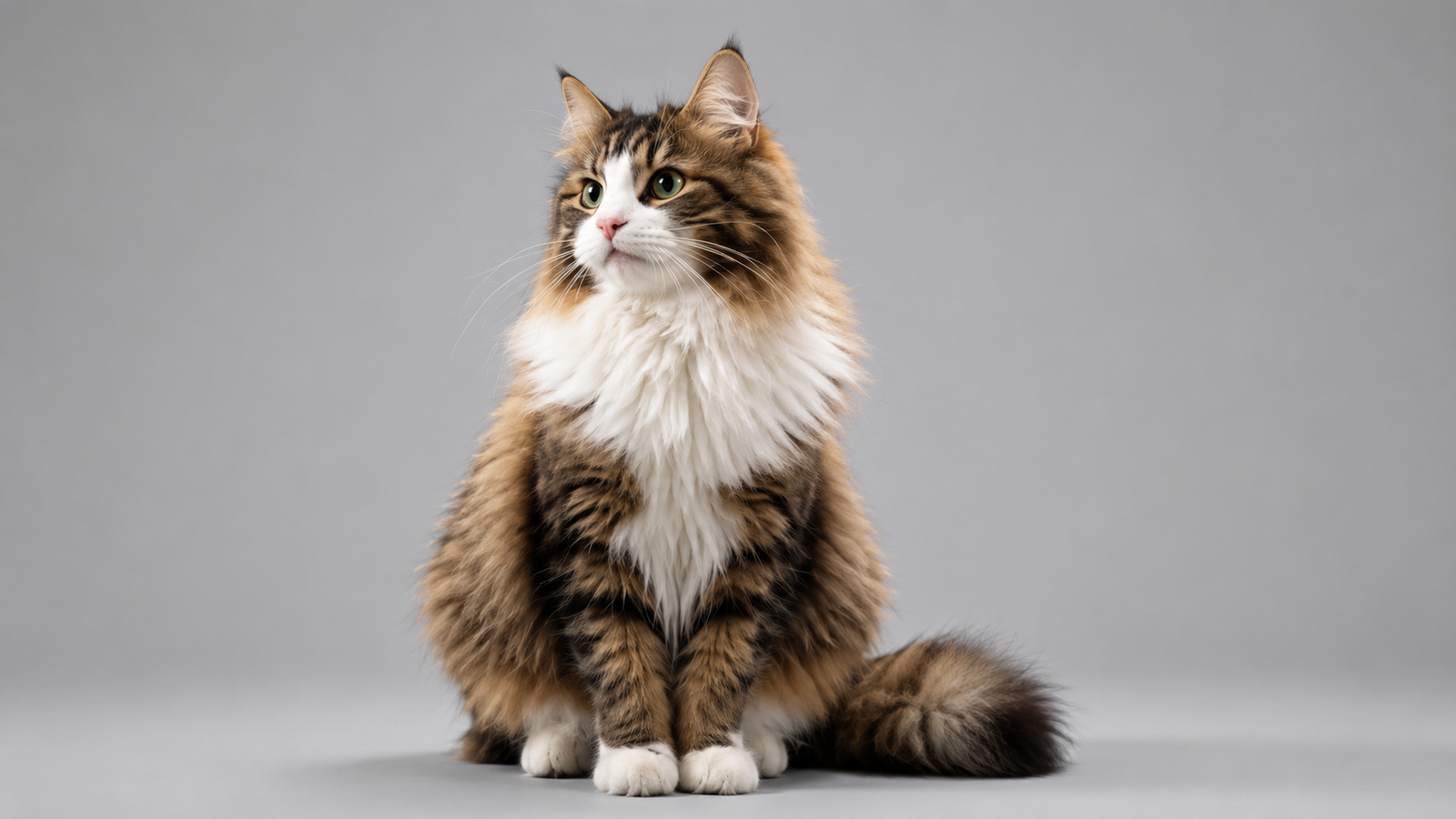
The Norwegian Forest Cat is a large, longhaired breed from Norway with a thick, water-resistant coat, a sturdy build, and a calm, steady temperament. Often called the Wegie, this breed developed as a working farm and forest cat before becoming Norway’s national cat.
Norwegian Forest Cats are affectionate but not usually clingy. They tend to stay near their people, watch what is going on, and join family life without demanding to be the center of it. Their size, coat, and climbing instinct need some planning, but day to day, they are usually easier to live with than their size and coat suggest.
Quick Breed Facts
- Origin: Norway
- Breed registries: CFA, TICA, FIFe
- Weight range: 9–20 lbs (males larger)
- Lifespan: 14–16 years
- Coat: Long, water-resistant double coat
- Colors and patterns: Most colors and patterns except colorpoint
- Eye color: Green, gold, copper
- Grooming: Moderate — weekly brushing, more in shedding season
- Activity level: Moderate
- Affection level: Moderate to high
- Vocality: Low, with soft chirps and trills
- Good with children: Yes
- Good with other pets: Yes
History & Origin of the Norwegian Forest Cat
The Norwegian Forest Cat, known as the Skogkatt in its home country, is one of the oldest natural cat breeds in the world. These cats were farm and forest cats in Norway for at least a thousand years, and possibly much longer. The thick double coat, tufted paws, and hardy build all trace back to generations of surviving Scandinavian winters without much help from anyone. Norse folklore even connects them to the goddess Freya, whose chariot was said to be pulled by giant cats, which most people take to be an early reference to the breed.
The Wegie almost disappeared in the mid-20th century as crossbreeding with domestic shorthairs threatened its distinct type. A dedicated group of Norwegian breeders launched a preservation effort in the 1970s, and the breed was formally recognized by FIFe in 1977. CFA followed in 1993, with TICA soon after. Today the Norwegian Forest Cat is Norway’s official national cat and a popular breed across Europe and North America.
Norwegian Forest Cat Personality & Temperament
Wegies are calm, confident, and sociable without being demanding. They like being around their people and will usually settle nearby rather than in your lap, keeping tabs on the household without needing to be the center of attention. This self-assured sort of affection tends to work well for owners who want a cat that’s clearly bonded to them but not underfoot every minute of the day.
They’re also quieter than most breeds. Wegies communicate mostly through soft chirps and trills rather than full meows, and they rarely raise their voice unless something is actually wrong. Combined with their easygoing nature around children, other cats, and cat-friendly dogs, this makes them one of the more adaptable large breeds you can bring home.
Norwegian Forest Cat Size and Appearance
Norwegian Forest Cat size puts them among the larger domestic breeds, though they don’t quite reach the extremes of a Maine Coon. Males typically weigh 12 to 20 pounds, while females usually range from 9 to 16 pounds. They’re slow to mature and often don’t reach their full adult size until around five years of age, which is worth keeping in mind if you’re bringing home a kitten. The body is long and muscular with strong bones and a broad chest, and the bushy tail is long enough to wrap fully around the body when they curl up.
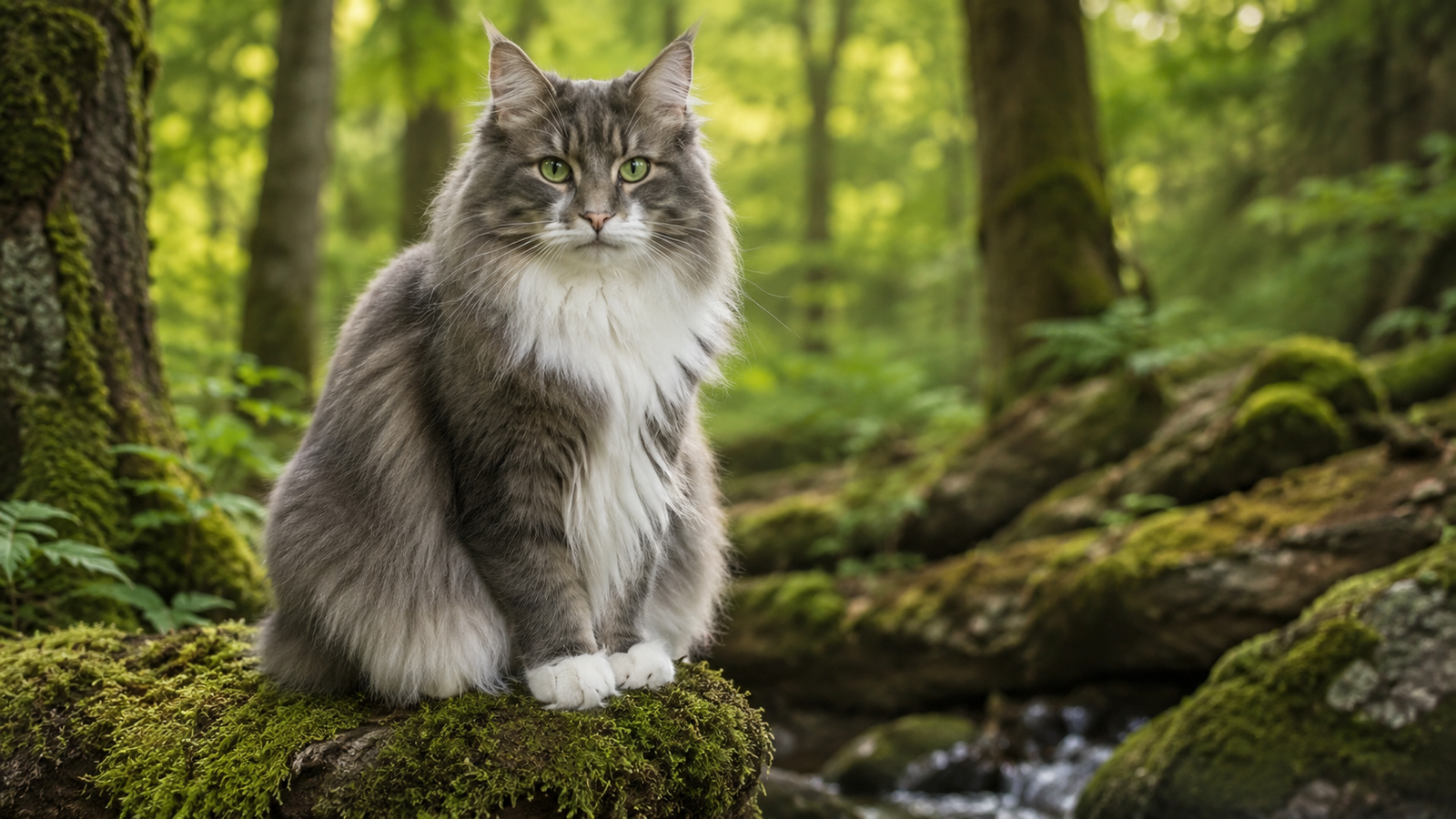
The head is triangular with a straight profile, the eyes are almond-shaped, and the ears are large and often tipped with lynx-like tufts. It’s a wild look, softened by how calmly they carry themselves. The coat is the defining feature: a dense woolly undercoat topped by a longer, water-resistant layer that helped the breed survive centuries of Norwegian winters. Colors and patterns cover almost the full range seen in cats, with the notable exception of colorpoint.
Norwegian Forest Cat Grooming and Shedding
The Wegie coat looks more high-maintenance than it actually is. That water-resistant top layer resists tangles better than many longhaired coats, and brushing twice a week keeps things in order. A wide-toothed comb works well for the undercoat, and a slicker brush handles the top layer.
Spring and fall are the exception. Wegies drop a lot of undercoat in a short period, and during those stretches you’ll want to brush more often to keep loose fur under control and cut down on hairballs. Nail trims every couple of weeks and regular ear checks round out the routine.
Activity & Play
Wegies are moderately active with a strong love of climbing. In Norway they were known for scaling cliffs and tall trees, and that instinct carries over indoors. A tall, sturdy cat tree is essential for this breed, and window perches or wall shelves give them the vertical territory they naturally seek out. Feather wands, puzzle feeders, and interactive play keep them sharp without needing to wear them out.
They’re smart, patient hunters, so activity that taps into stalking and problem-solving works better than pure sprint-and-chase games. Many Wegies also take well to leash training if you want to give them supervised outdoor time.

Norwegian Forest Cat Health Issues and Lifespan
Norwegian Forest Cats typically live 14 to 16 years, with some reaching beyond that with good care. As a natural breed they benefit from a broad gene pool, but a few hereditary conditions do show up in the breed. Hypertrophic cardiomyopathy (HCM) is the most significant, a form of heart disease that can develop silently over time. Hip dysplasia is another concern and can affect mobility, especially as cats age or gain weight.
Glycogen Storage Disease Type IV is a rare inherited metabolic disorder that specifically affects Norwegian Forest Cats. There is a reliable genetic test available, and responsible breeders screen for it, so asking to see test results is a reasonable thing to do before buying a kitten. Because Wegies are large and slow to mature, keeping them at a healthy weight through their long growth period matters more than with smaller breeds. High-protein food with animal protein listed as the first ingredient is a good foundation, and wet food in the rotation helps with hydration.
Norwegian Forest Cat vs Maine Coon
Norwegian Forest Cats are often compared with Maine Coons for good reason. Both are large, longhaired natural breeds with thick double coats, tufted ears, and calm, family-friendly temperaments. The main differences come down to size, build, and personality.
On size, the Maine Coon wins. Maine Coon males commonly reach 15 to 25 pounds and are among the largest domestic cats in the world, while Norwegian Forest Cat males top out closer to 20 pounds. The build differs too. Maine Coons have a rectangular body, a squared muzzle, and pronounced lynx tips on the ears. Wegies have a more triangular head with a straight profile from forehead to nose, almond-shaped eyes, and a slightly shorter muzzle. Side by side, the Maine Coon looks more angular and imposing, while the Wegie looks a little softer and more compact.
On personality, the Maine Coon is usually the more outgoing of the two. Maine Coons often follow their people from room to room and may greet visitors at the door. Wegies are affectionate but more reserved, preferring to keep tabs on the household from a nearby perch rather than being directly involved in everything. If you want a cat that’s constantly engaged and sociable, the Maine Coon fits better. If you want a calmer, more independent large cat that still bonds closely with its people, the Wegie is the better match. Both handle families, other cats, and cat-friendly dogs well, so household compatibility usually isn’t the deciding factor.
Family Compatibility
Few large breeds fit into family life as easily as the Norwegian Forest Cat. They’re patient with children, tolerant of other cats and cat-friendly dogs, and calm enough not to bolt at every unexpected noise. Their confidence helps them handle visitors and new situations without much drama, which makes them a solid choice for busy households.
They also suit quieter homes and solo owners. Wegies form real bonds with their people but aren’t demanding about attention, and they’re comfortable spending stretches of the day on their own as long as they have things to climb and a window to look out of. If you’re out of the house for long hours regularly, a companion animal helps, but Wegies handle solo time better than most social breeds.
Recommended Supplies for a Norwegian Forest Cat
Wegies need supplies sized for a large, active, longhaired cat.
- Tall, heavy-duty cat tree with a wide, stable base
- Wide-toothed comb and slicker brush for coat maintenance
- High-protein food with animal protein as the first ingredient
- Extra-large litter box that lets them turn around comfortably
- Cat water fountain to encourage drinking
- Sturdy scratching posts at multiple heights

Norwegian Forest Cat Price and Cost
The Norwegian Forest Cat price from a reputable breeder typically runs $800 to $1,500 for a pet-quality kitten, with show-quality cats from champion lines going higher. Prices vary by region and by whether the breeder screens for hereditary conditions like HCM and Glycogen Storage Disease Type IV, and the extra cost of a well-screened kitten is usually worth it in avoided vet bills later. Ongoing costs for a large, longhaired cat also run higher than average, with food, litter, and grooming supplies adding up over a 14 to 16 year lifespan. Wegies are less common in shelters than mixed breeds, but breed-specific rescues do exist, particularly in Europe, and rescued adults are often surrendered by owners who underestimated the size or shedding.
Norwegian Forest Cat FAQs
Are Norwegian Forest Cats hypoallergenic?
No, Norwegian Forest Cats are not hypoallergenic. They produce the same Fel d 1 protein as other cats, and their thick double coat means more fur in your environment. They’re not a good choice for anyone with significant cat allergies.
How big do Norwegian Forest Cats get?
Males typically weigh 12 to 20 pounds, while females usually range from 9 to 16 pounds. They’re slow to mature and often don’t reach their full size until around five years of age.
How long do Norwegian Forest Cats live?
Most Norwegian Forest Cats live 14 to 16 years with proper care. Regular vet visits, weight management, and a quality diet all contribute to a longer, healthier life.
Do Norwegian Forest Cats shed a lot?
They shed year-round with heavy shedding in spring and fall. Weekly brushing keeps it manageable, and their coat resists matting better than many other longhaired breeds.
Which is bigger, a Norwegian Forest Cat or a Maine Coon?
The Maine Coon is generally the larger of the two. Maine Coon males commonly reach 15 to 25 pounds, while Norwegian Forest Cat males typically top out around 20 pounds. Both are among the largest domestic cat breeds, but the Maine Coon holds a clear edge on maximum size.
How is the Norwegian Forest Cat different from a Siberian Cat?
Both are cold-climate natural breeds with dense double coats. Wegies have a straighter profile and more angular head, while Siberians tend to be rounder and stockier with a thicker neck. Siberians are also often better tolerated by allergy sufferers due to lower Fel d 1 production, while Wegies are not considered hypoallergenic.
Are Norwegian Forest Cats good with kids or other pets?
Yes. Wegies are patient, tolerant, and confident, which makes them one of the better breeds for families with children and other animals. They tend to get along well with cat-friendly dogs when introduced properly.
Is the Norwegian Forest Cat Right for You?
The Norwegian Forest Cat suits owners who want a large, sociable cat that stays connected without being demanding about it. They’re affectionate, calm, and quiet, and they handle families, other pets, and stretches of solo time better than most social breeds. If you want a cat that stays nearby without being underfoot, this is a strong pick.
The size and coat are the real commitments. A full-grown Wegie needs bigger basics, from litter boxes to cat trees, and the twice-yearly shedding is heavier than most first-time longhaired-cat owners expect. Stay on top of both, and they’re one of the easier large breeds to live with.
Debbie Reid is the founder and chief editor of CatPedia.net, with over 25 years of hands-on experience in feline care, rescue, and behavior research. Inspired by her rescue cats Snickers and Bigboy, she collaborates with animal welfare resources and consults veterinary literature to turn complex feline health, nutrition, and behavior topics into clear, actionable guides.