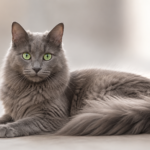
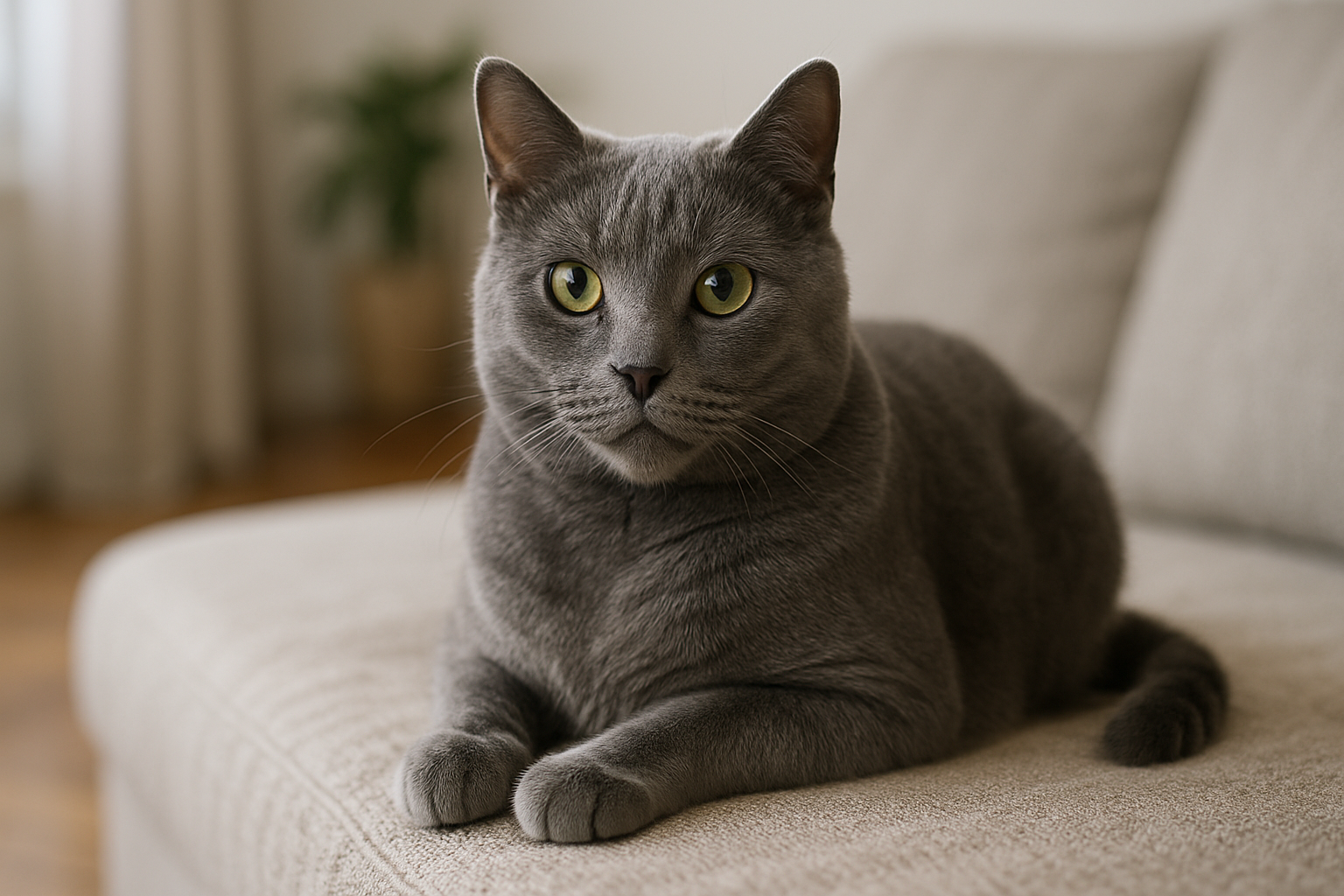
The Chartreux cat is a quiet, intelligent French breed known for its blue-gray coat, copper eyes, and calm, deeply loyal personality. They’re affectionate without being clingy, playful without being chaotic, and quietly devoted in a way that many owners describe as unforgettable.
Unlike more demanding breeds, the Chartreux tends to settle into daily life with calm confidence rather than constant attention-seeking. For the right owner, that understated personality is exactly the appeal.
Here’s what it’s actually like to live with a Chartreux cat, from personality and daily habits to grooming, health, and whether they’re the right fit for your home.
Quick Breed Facts
- Origin: France
- Breed registries: CFA, TICA, FIFe
- Weight range: 7–16 lbs
- Lifespan: 12–15 years
- Coat: Short, dense, woolly double coat
- Colors and patterns: Blue-gray only
- Eye color: Copper to gold
- Grooming: Low to moderate — weekly brushing
- Activity level: Moderate
- Affection level: High but not clingy
- Vocality: Very quiet
- Good with children: Yes
- Good with other pets: Usually, with slow introductions
History & Origin of the Chartreux Cat
The Chartreux is one of the oldest natural cat breeds in the world, with documented references in French literature dating back to the 16th century. The exact origins are debated — some accounts suggest the breed descended from cats brought back from Syria by Crusaders, while others link them to the Carthusian monks of the Grande Chartreuse monastery near Grenoble, which is where the most popular origin story and the breed’s name come from. What’s consistent across accounts is that these cats were prized in France for their exceptional hunting ability and distinctive woolly coat.
By the 1920s, dedicated French breeders began standardizing the Chartreux for show. The breed survived World War II through careful preservation efforts, though numbers dropped significantly. Chartreux cats were introduced to North America in the 1970s and gained CFA recognition in 1987. They remain relatively rare outside of France and Europe, which contributes to the mystique that surrounds the breed.
Chartreux Cat Personality & Temperament
The Chartreux is a calm, intelligent cat with a quiet way of making its presence felt. They observe before they engage, approach new situations thoughtfully rather than impulsively, and communicate more through posture and eye contact than vocalization. Many Chartreux cats are nearly silent, occasionally making small chirping sounds rather than traditional meows, which surprises people who expect more audible feedback from their cat.
With their own family, Chartreux cats are genuinely devoted. They often follow their people from room to room, settle nearby during quiet time, and tend to pick a favorite person while remaining friendly with the whole household. They’re not lap cats in the traditional sense but they’re consistently present in a way that owners find deeply comforting. Their patience and steady temperament make them a good fit for a wide range of households, including those with children and other pets.
Chartreux Cat Appearance & Physical Traits
The Chartreux has a sturdy, muscular build that’s often described as robust despite their medium size. Their head is broad and rounded with full cheeks, a tapered muzzle, and the characteristic expression that looks like a slight smile — an effect created by the structure of their face rather than any actual expression. Their copper to gold eyes are vivid and expressive, and contrast beautifully with the blue-gray coat.
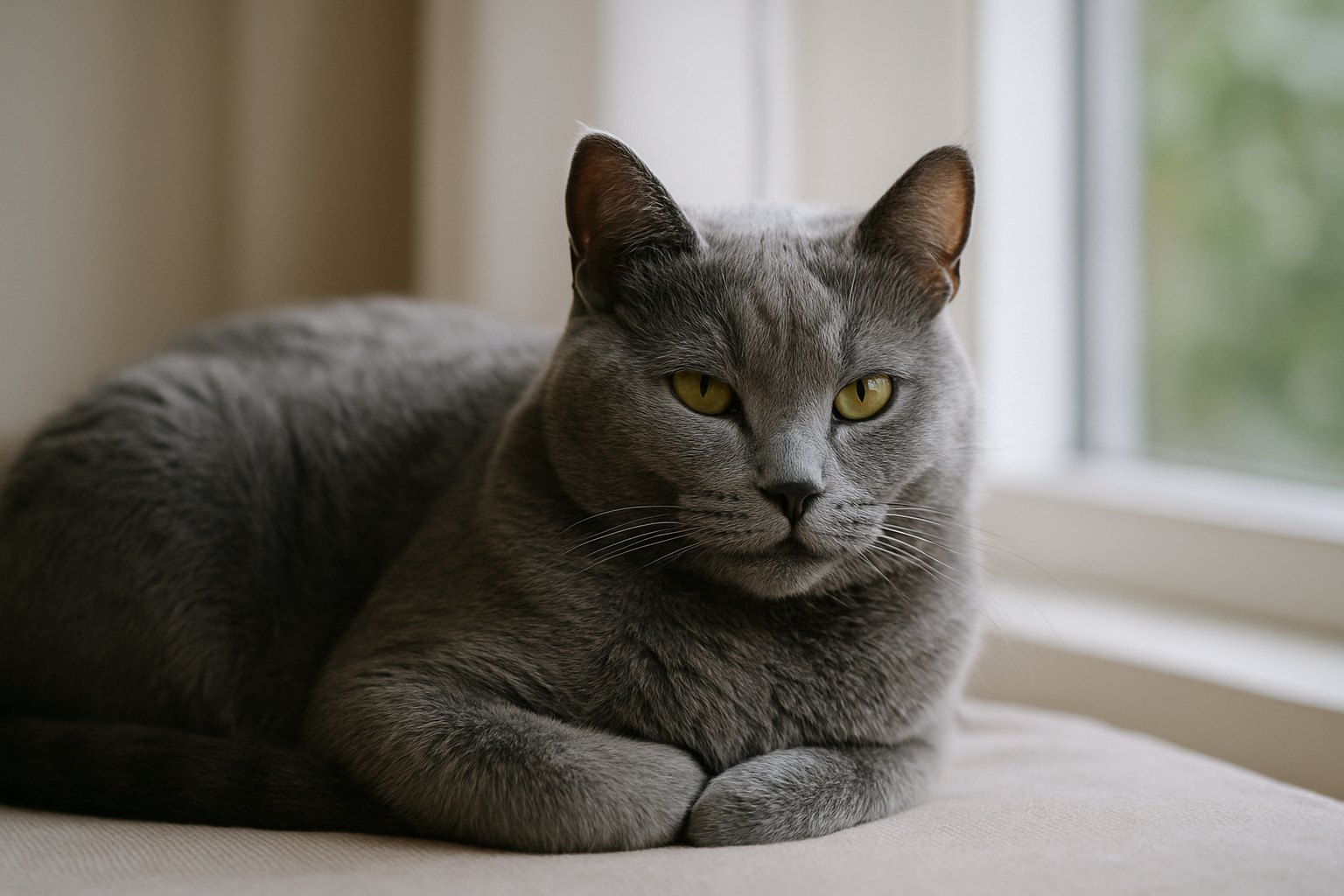
The coat is one of the breed’s most distinctive features. It’s short but dense and woolly with a slightly water-resistant texture, more like a double layer of soft flannel than a typical shorthaired cat coat. It comes in one color only: blue-gray, ranging from ash to slate. The overall effect is of a polished, substantial cat that looks more refined in person than photos typically convey.
Chartreux Cat Grooming & Shedding
Despite how dense the Chartreux coat looks, it’s genuinely low-maintenance. A weekly brush is usually enough to remove loose hair and keep the woolly texture in good condition. During spring and fall shedding seasons, brushing twice a week helps manage extra loose fur before it ends up on your furniture. Their coat is naturally water-resistant and tends to repel dirt, which means bathing is rarely necessary.
A slicker brush or grooming glove works well for the Chartreux’s double coat without irritating their skin. Beyond coat care, the usual basics apply: nail trims every couple of weeks, regular ear checks, and dental care. When bathing is needed, dry them thoroughly since their thick coat can hold moisture close to the skin longer than a typical shorthaired coat.
Activity & Play
Chartreux cats are moderately active with a natural hunting instinct that surfaces reliably during play. They enjoy stalking, pouncing, and problem-solving, and respond well to toys that mimic prey movement. Wand toys, soft mice to chase across the floor, and puzzle feeders are all good fits. They tend to prefer shorter, focused play sessions over marathon activity, and they’re happy to entertain themselves between sessions with independent play options.
Mental stimulation matters as much as physical activity for this breed. Their intelligence means they stay engaged longer with toys that offer some unpredictability or challenge. A Chartreux that’s mentally understimulated will find its own entertainment, which isn’t always convenient. Building consistent daily play into their routine is the most effective way to keep them settled and content.

What Do Chartreux Cats Eat?
Chartreux cats do well on a high-protein, meat-based diet with animal protein listed as the first ingredient. Because they can be prone to weight gain if overfed, portion control matters — two measured meals per day works better than free-feeding for most Chartreux cats. Their muscular build can make it easy to underestimate weight gain until it becomes a noticeable health concern, so monitoring body condition regularly is worthwhile.
A mix of wet and dry food works well for most cats of this breed. Wet food supports hydration and provides the animal protein they need, while dry food adds some dental benefit. Puzzle feeders are a good fit for this intelligent breed since they add mental engagement at mealtimes and slow down eating, which supports healthy digestion.
Chartreux Cat Health & Lifespan
The Chartreux is generally a robust, healthy breed with a lifespan of 12 to 15 years. They’re not burdened with an extensive list of breed-specific conditions, which is one of the practical advantages of a naturally developed breed. That said, some lines can be predisposed to patellar luxation, a condition where the kneecap slips out of position, and polycystic kidney disease (PKD) has been documented in the breed. Asking breeders about health screening for these conditions is worthwhile.
Regular vet checkups, dental care, and keeping them at a healthy weight are the most important day-to-day health considerations. Their quiet nature means health changes can be subtle and easy to miss, which makes consistent vet visits more important than with more vocal, demonstrative breeds.
Family Compatibility
The Chartreux adapts well to a wide range of households. They’re patient with respectful children, tolerant of other cats and calm dogs with gradual introductions, and steady enough not to be easily rattled by household activity. Their calm, observant nature means they integrate into family life quietly and reliably without drama.
They suit singles, couples, families, and seniors equally well. The main thing they need is consistency and a calm environment where they can form close bonds over time. They don’t do well with being handled roughly or with constantly chaotic environments, but in a home that suits their temperament, Chartreux cats are remarkably easy and rewarding companions.
Recommended Supplies for a Chartreux Cat
Chartreux cats appreciate comfort, calm enrichment, and a setup that gives them elevated spots to rest and observe. They’re not demanding about their environment but they do have preferences, and a few well-chosen basics make a real difference.
- Slicker brush or grooming glove for weekly coat maintenance
- Stable cat tree with wide platforms and cozy resting spots
- Interactive toys and puzzle feeders for mental stimulation
- Wide, shallow food and water bowls to avoid whisker fatigue
- Cat water fountain to encourage hydration
- Roomy, consistently clean litter box in a quiet location

Chartreux Cat Price and Cost
From a reputable breeder, Chartreux kittens typically cost between $1,000 and $2,000. The breed is rare in the United States, which means finding a reputable breeder takes more research than with more common breeds, and waitlists are common. Responsible breeders will provide health documentation and ask questions to ensure their kittens go to appropriate homes.
Adoption is unlikely but worth checking. Chartreux cats occasionally appear through breed-specific rescues or as retired adults from breeders. If you’re open to an adult cat, it’s a more affordable option and adult Chartreux cats typically have the same calm, loyal personality as younger ones.
Chartreux Cat FAQs
Are Chartreux cats rare?
Yes, particularly in the United States. The breed is better established in Europe, especially France, but remains uncommon in North America. Finding a reputable breeder typically requires patience and research, and waitlists are not unusual.
Are Chartreux cats hypoallergenic?
No, Chartreux cats are not hypoallergenic. All cats produce the Fel d 1 protein that triggers allergies. Some people with mild sensitivities find them more manageable due to their low-shedding coat, but there are no guarantees. Spending time with the breed before adopting is always recommended if allergies are a concern.
Do Chartreux cats meow a lot?
No. The Chartreux is one of the quietest cat breeds. They rarely vocalize in the traditional sense and tend to communicate through body language, chirping sounds, and eye contact rather than persistent meowing.
How long do Chartreux cats live?
Most Chartreux cats live 12 to 15 years with proper care. Regular vet checkups, a quality diet, weight management, and dental care all contribute to a longer, healthier life.
Are Chartreux cats good with children and other pets?
Yes. Their patient, steady temperament makes them a good fit for families with respectful children and homes with other calm pets. They do better in quieter environments but are more adaptable than many sensitive breeds.
What is the difference between a Chartreux and a British Shorthair?
Both breeds are blue-gray with plush coats, but they differ in build and temperament. British Shorthairs are heavier and more rounded with a broader range of colors, while the Chartreux is more athletic with copper or gold eyes and comes only in blue-gray. The Chartreux is also notably quieter and slightly more agile than the British Shorthair.
Is the Chartreux Cat Right for You?
If you want a calm, intelligent, and quietly devoted cat that brings a steady presence to daily life without demanding constant attention, the Chartreux is one of the best choices available. They suit a wide range of households and are generally easy to live with thanks to their patient, adaptable nature.
Debbie Reid is the founder and chief editor of CatPedia.net, with over 25 years of hands-on experience in feline care, rescue, and behavior research. Inspired by her rescue cats Snickers and Bigboy, she collaborates with animal welfare resources and consults veterinary literature to turn complex feline health, nutrition, and behavior topics into clear, actionable guides.