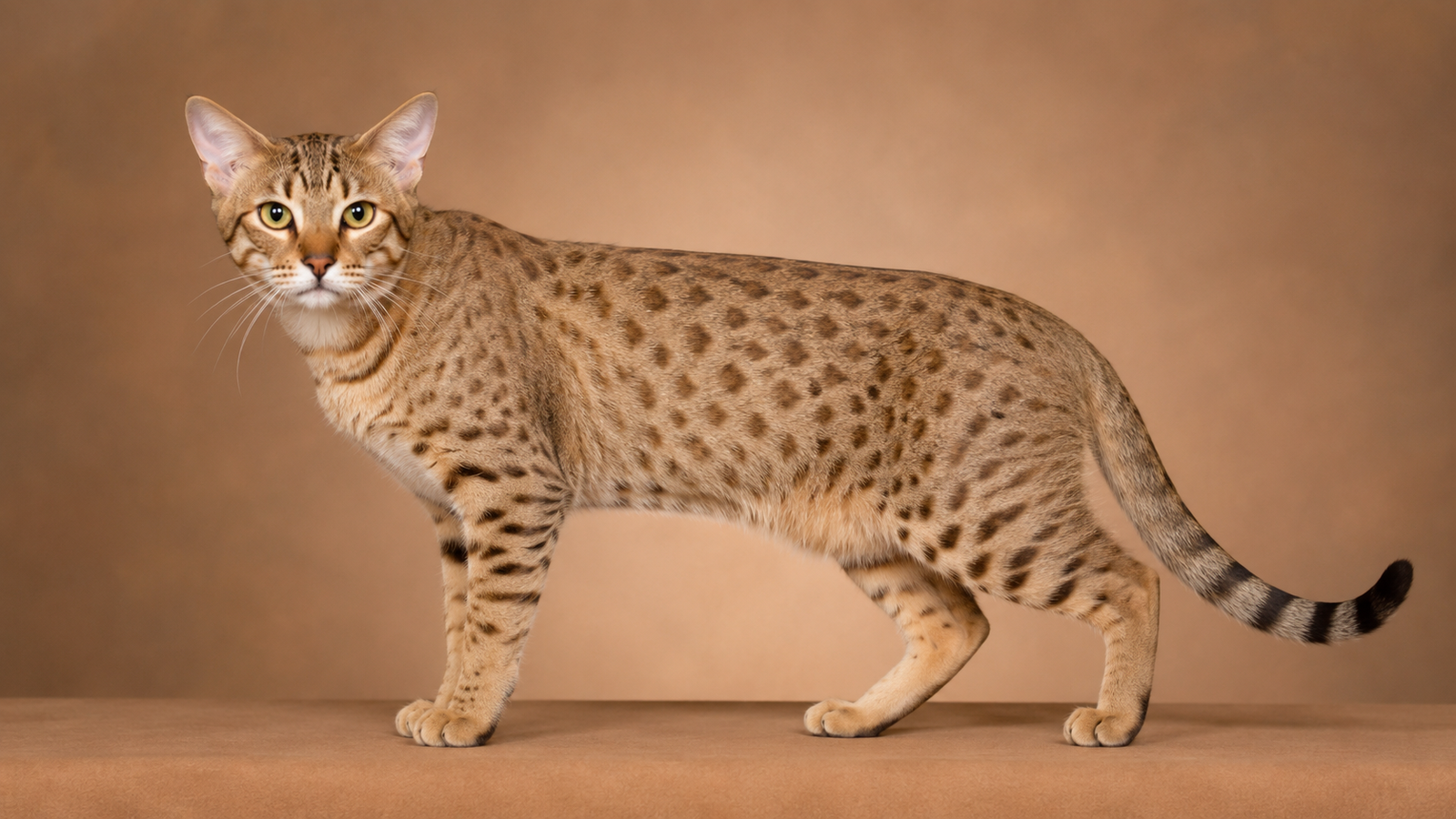
The Ocicat looks like something that walked out of a nature documentary. Bold spotted coat, muscular frame, and alert almond eyes give it the look of a small jungle cat. Despite the appearance, no wild ancestry contributed to the breed. Ocicats are fully domestic, and they act like it.
They’re active, social, and closely bonded to their people. Ocicats need real engagement, mental stimulation, and company for most of the day.
Here’s what it’s actually like to live with an Ocicat, from personality and daily habits to grooming, health, cost, and whether they’re the right fit for your home.
Quick Breed Facts
- Origin: United States
- Breed registries: TICA, CFA
- Weight range: 6–15 lbs
- Lifespan: 12–18 years
- Coat: Short, dense, sleek
- Colors and patterns: Spotted, 12 recognized colors including tawny, chocolate, cinnamon, blue, lavender, fawn, silver
- Eye color: Gold, green, or hazel (never blue)
- Grooming: Low maintenance
- Activity level: High
- Affection level: High
- Vocality: Moderate
- Good with children: Yes
- Good with other pets: Yes, including dogs
History & Origin of the Ocicat
The Ocicat started as an accident. In the 1960s, Michigan breeder Virginia Daly was crossing an Abyssinian with a Siamese, aiming for a pointed cat with warm ruddy coloring on its face, ears, paws, and tail. One of her litters produced an unexpected spotted kitten instead, a male she named Tonga.
Tonga himself was neutered and placed with a family, but a photograph of him ran in a Detroit newspaper and caught the attention of geneticist Dr. Clyde Keeler, who had been looking for a domestic cat that resembled vanishing wildcat species. Keeler encouraged Daly to repeat the breeding, which produced more spotted kittens, and those kittens became the foundation of the breed. The breed name came from Daly’s daughter, who thought the pattern looked like an ocelot’s coat.
Later breeders brought American Shorthair bloodlines into the program to broaden the gene pool. The CFA accepted the Ocicat for registration in 1966, and full championship status followed in 1987. The breed remains a steady presence in North American show rings and has picked up a dedicated following among owners who want an exotic-looking cat that’s still fully domestic.
Ocicat Personality & Temperament
Ocicats are outgoing, social, and closely bonded to the people they live with. They follow their people from room to room, greet guests instead of hiding, and tend to attach to the whole household rather than picking one favorite person. They’re also unusually trainable for a cat. Fetch, leash walks, and simple commands are all realistic with an Ocicat that gets consistent practice.
That intelligence needs an outlet. Ocicats get bored quickly without enough to do, and a bored Ocicat is the one opening cabinets, dragging things off shelves, and testing which household rules actually get enforced. They’re talkative but less insistent about it than a Siamese, and they do best in homes where someone is around for most of the day rather than gone for eight or nine hours at a stretch.
Ocicat Physical Characteristics
The Ocicat has a muscular, athletic build with a body shape closer to a small wild cat than a typical domestic breed. The coat is short, dense, and marked with distinct thumbprint-shaped spots rather than the rosettes seen on breeds like the Bengal. Those spots come in more than a dozen color variations, including chocolate, cinnamon, tawny, blue, and silver.
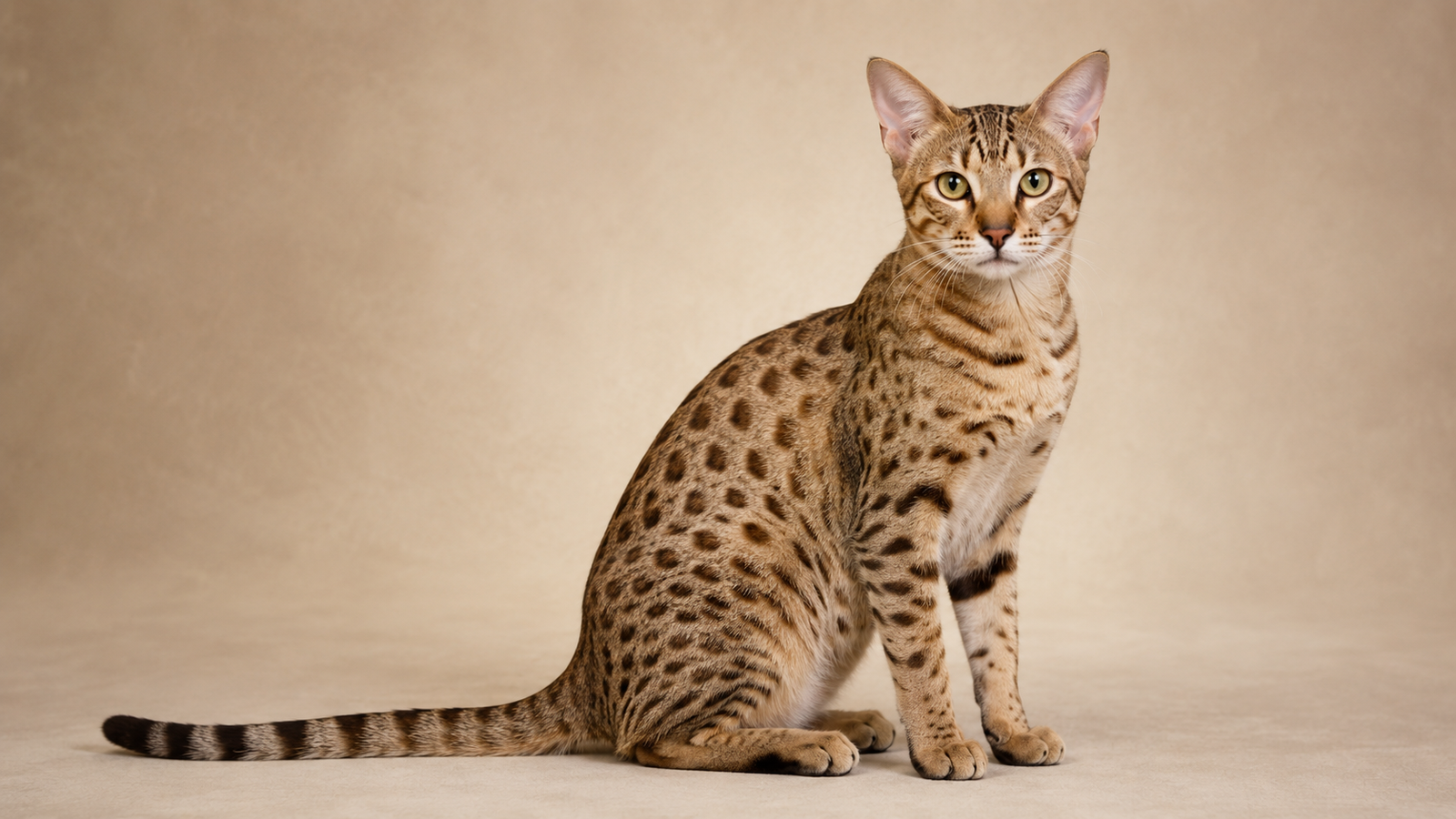
Large, almond-shaped eyes in gold, green, or hazel add to the alert expression. The face carries a tabby-style M marking on the forehead along with darker striping around the eyes, both leftover features from the Abyssinian and Siamese ancestry. The tail is long and tapered, usually ending in a darker tip that echoes the spotting pattern.
Ocicat Grooming & Shedding
Ocicat grooming is straightforward. The short, close-lying coat doesn’t mat, sheds lightly year-round, and rarely picks up debris beyond what a weekly brush can handle. Most Ocicats never need a bath outside of the occasional accident, and even then a damp cloth is usually enough.
Beyond coat care, the usual basics apply: nail trims every couple of weeks, regular ear checks, and routine dental care.
Activity & Play
Ocicats are one of the more athletic domestic breeds. They climb, chase, and investigate throughout the day, and they need real play sessions to stay content, not just toys left on the floor. A tall cat tree, wand toys, and tunnels all earn regular use with this breed.
Puzzle feeders are a particularly good fit here. Ocicats are smart enough to work through them consistently, which slows down eating, adds mental engagement, and gives them a productive place to direct their problem-solving energy.

Ocicat Health & Lifespan
Ocicats typically live 12 to 18 years and are considered a healthy breed overall. Their Siamese and Abyssinian ancestry does bring a handful of inherited conditions worth knowing about, and any responsible breeder should be able to discuss health screening, genetic testing, and known issues in their lines before selling you a kitten.
The main concerns are progressive retinal atrophy (PRA), a hereditary eye disease that leads to gradual vision loss, and hypertrophic cardiomyopathy (HCM), a heart condition that thickens the heart walls and often develops without obvious symptoms. Amyloidosis is a third concern, and in Ocicats it can affect either the kidneys or the liver, causing gradual organ damage in either case.
Diet plays a role in keeping this breed healthy long-term. Ocicats are muscular and active, which means they need high-protein, meat-based food to maintain muscle mass, and they gain weight fast if they’re overfed. Portion control and measured meals work better than free-feeding for most Ocicats.
Family Compatibility
Ocicats fit into busy family life better than most cats. They’re patient with school-age kids who know how to handle a cat, and they tend to enjoy the noise and activity of a busy household more than they mind it. Very young children need supervision around any cat, but especially around an Ocicat that wants interactive play and may not understand unpredictable toddler behavior.
They get along with other pets more easily than most cats, dogs included. The key is a gradual introduction and matching energy levels: an Ocicat that wants to play chase all day will be miserable with a senior cat that wants to sleep on the windowsill, and vice versa. Small pets like birds, hamsters, and fish need secure separation. The Ocicat’s high prey drive makes them unsafe around any animal they might view as prey.
Recommended Supplies for an Ocicat
Ocicats need vertical space, interactive toys, and consistent enrichment to stay out of trouble.
- Tall, sturdy cat tree with multiple perches
- Interactive wand toys and puzzle feeders
- Window perch or hammock in a shared living space
- Wide, shallow food and water bowls
- Roomy litter box with easy access

Ocicat Price and Cost
Ocicat kittens typically cost between $800 and $2,500, with price depending on breeder, pedigree, coat color, and whether the cat is show quality. Tawny, chocolate, and cinnamon are among the more common colors, while dilute and silver variations may be harder to find.
Since Ocicats are one of the less common purebreds, they rarely turn up in general shelters, but breed-specific rescues and Ocicat clubs do occasionally place adult cats needing rehoming. Adoption or retired-breeder cats usually cost much less than a kitten from a breeder and often come vaccinated and spayed or neutered.
Ocicat FAQs
Are Ocicats hypoallergenic?
No cat is truly hypoallergenic, and Ocicats are no exception. Their short coat sheds lightly, which may mean less loose fur in the house, but they still produce the Fel d 1 protein responsible for most cat allergies.
What is the difference between an Ocicat and a Bengal?
Bengals descend from the Asian leopard cat, a wild species, while Ocicats have no wildcat ancestry at all. Bengal coats usually show rosettes, while Ocicats have thumbprint-shaped spots. Bengals also tend to run more intense and higher energy, while Ocicats lean more people-focused and adaptable.
How much does an Ocicat cost?
Ocicat kittens from a reputable breeder typically cost between $800 and $2,500, depending on pedigree, color, and show quality. Adoption through a breed-specific rescue is usually the more affordable option.
Can Ocicats live in apartments?
Yes. Ocicats adapt well to apartment life as long as they get enough vertical space, play, and social interaction. Without that, the same energy that makes them fun to watch can turn into boredom-driven mischief.
Are Ocicats good with other pets?
Yes. Ocicats are social by nature and typically get along well with other cats and cat-friendly dogs, especially when introductions happen gradually and with some supervision early on.
Is the Ocicat Right for You?
Ocicats fit best in homes where someone is around most of the day, whether that means a family with school-age kids, a multi-pet household, or someone working from home. They reward that setup with strong bonds, consistent playfulness, and a personality that stays engaging well past kittenhood.
This breed is a poor fit for households that need a low-effort, independent cat, or for owners who are gone most of the day without another pet or enough enrichment to keep the Ocicat occupied. In those setups, the same intelligence and social drive that make the breed rewarding can turn into restlessness, vocal frustration, and destructive habits.
Debbie Reid is the founder and chief editor of CatPedia.net, with over 25 years of hands-on experience in feline care, rescue, and behavior research. Inspired by her rescue cats Snickers and Bigboy, she collaborates with animal welfare resources and consults veterinary literature to turn complex feline health, nutrition, and behavior topics into clear, actionable guides.