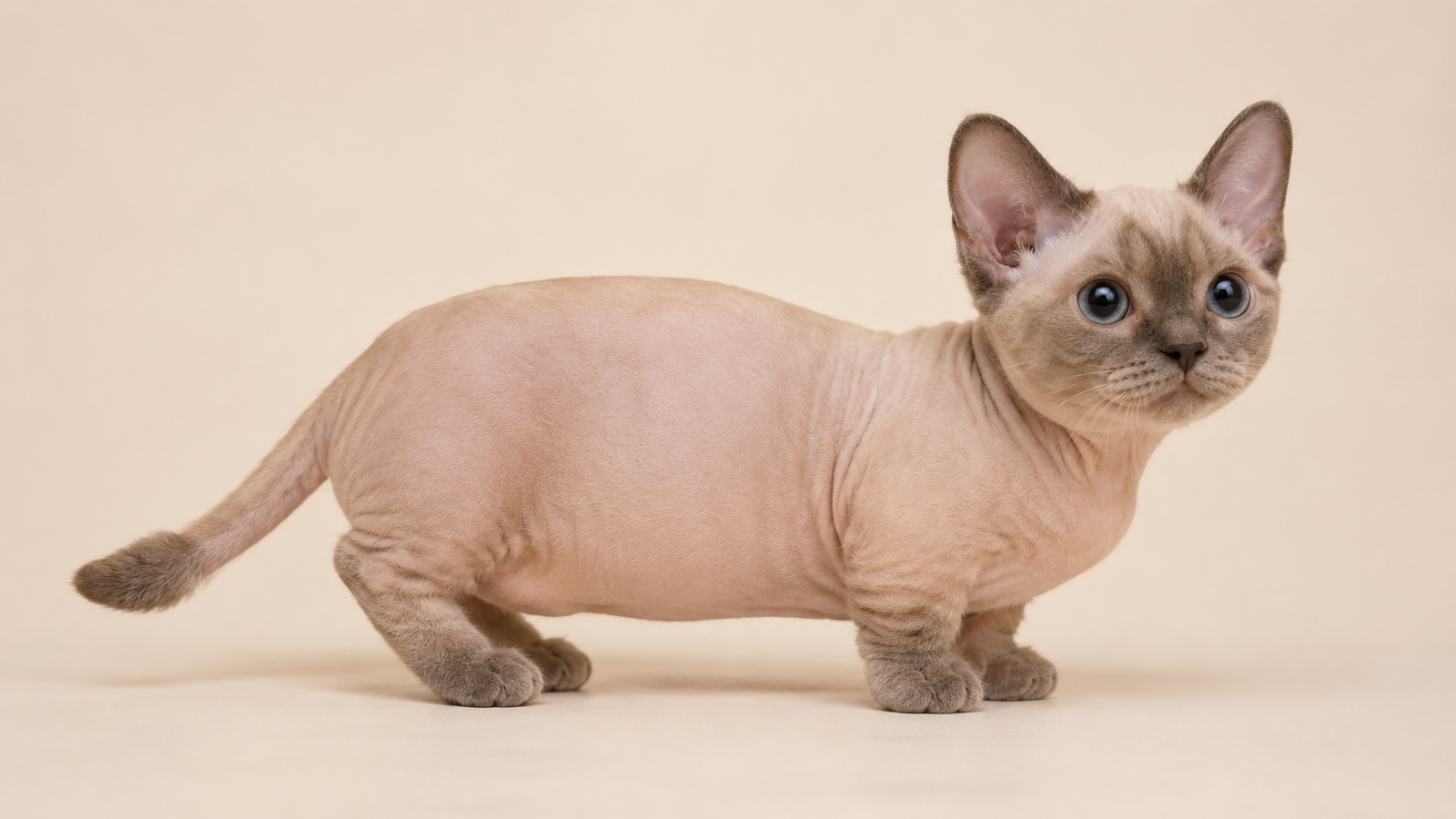
The Minskin is a lot of cat packed into a very small package. With a near-hairless body, short Munchkin legs, and a frame that rarely tops six pounds, it’s one of the smallest breeds you’ll come across and one of the hardest to mistake for anything else.
The personality is where the Minskin gets more interesting. They’re affectionate, talkative, and closely attached to their people, often wanting to be near whatever is happening in the house. The catch is the upkeep: their bare skin, short legs, and sensitivity to cold mean they need more hands-on care than a typical shorthair.
Quick Breed Facts
- Origin: United States (Boston, MA)
- Breed registries: TICA (Preliminary New Breed)
- Weight range: 4–6 lbs
- Lifespan: 12–15 years
- Coat: Sparse to nearly hairless, with fuzzy fur points
- Colors and patterns: All colors and patterns accepted
- Eye color: Wide range, often large and expressive
- Grooming: Low-shedding but needs regular bathing
- Activity level: Moderate to high
- Affection level: Very high
- Vocality: Moderate, chirpy and expressive
- Good with children: Yes
- Good with other pets: Yes, with early socialization
History & Origin of the Minskin Cat
The Minskin is one of the newest cat breeds around, developed in Boston in 1998 by breeder Paul McSorley. The idea was to combine the hairlessness of the Sphynx with the short legs of the Munchkin, then bring in the affectionate, people-driven temperament of the Devon Rex and Burmese. The first kitten that matched what McSorley was after arrived in 2000, and a small breeding program grew from there.
TICA accepted the Minskin into its Preliminary New Breed category in 2008, which is an early step toward full recognition rather than championship status. The breed remains rare, with relatively few registered breeders worldwide, so finding one usually means joining a waitlist rather than picking from available litters.
Minskin Cat Personality & Temperament
Minskins are social to the core. They form fast, strong attachments to their people and tend to treat your lap as their default location. This is a cat that follows you between rooms, supervises your chores, and parks itself on your keyboard. It’s like having a small shadow.
They’re also confident and curious rather than skittish. Minskins usually greet visitors instead of vanishing under the bed, adapt well to a busy household, and bond with the whole family rather than fixating on one person. The flip side is that they don’t handle being alone for long stretches. A Minskin left by itself all day tends to get bored and a little needy, so they’re a better fit for homes where someone is around for much of the day.
Minskin Cat Appearance & Physical Traits
The Minskin is small and solid, usually weighing between 4 and 6 pounds with short, sturdy legs and a body that feels heavier than it looks. The large round eyes and oversized ears give the face an open, almost elfin expression, and the skin has the warm, soft texture of suede rather than the smooth feel people often expect from a hairless cat.
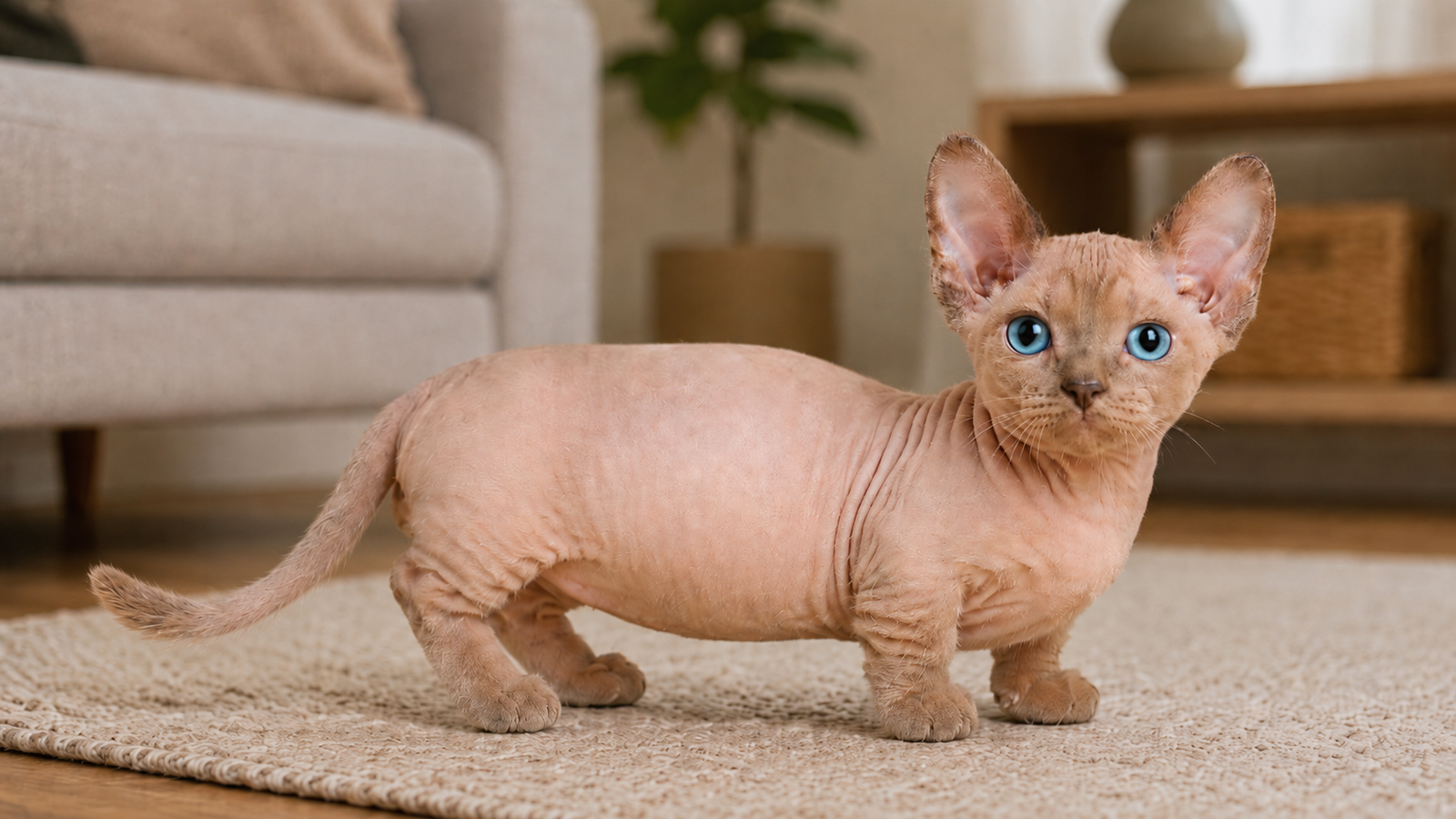
Despite the hairless reputation, Minskins aren’t fully bald. They carry denser fur on the face, ears, legs, and tail, a pattern breeders call fur points, while the belly and body stay sparse to nearly bare. That contrast is part of what sets the breed apart from the Sphynx and gives each cat a slightly different look depending on how much coat it carries.
Minskin Cat Grooming & Shedding
The Minskin coat barely sheds, but that doesn’t make this a low-maintenance breed. Without a full coat to absorb the natural oils the skin produces, those oils build up on the surface and can leave the skin feeling greasy or grimy if left alone. A gentle bath every week or two with a mild, cat-safe shampoo keeps the skin clean and comfortable. Bathing more often than that can have the opposite effect and dry the skin out.
The skin folds and the area around the ears need attention too, since debris collects there faster than on a furred cat. The same goes for the nail beds and the gaps between the toes, where oil and grime tend to gather. Routine ear cleaning, nail trims every couple of weeks, and a quick wipe-down between baths handle most of it.
Activity & Play
The short legs don’t slow these cats down much. Minskins are quick, curious, and happy to climb, chase, and investigate anything new in the house. They tend to favor lower perches and ramps over the high leaps a long-legged cat manages, so vertical setups with steps or graduated levels suit them better than a single tall tower.
They’re not a hyperactive breed, but they do need daily play to stay content. Wand toys, puzzle feeders, and a game of fetch all land well with a Minskin, and the mental engagement matters as much as the physical exercise for a cat this attached to its people. Skip the play and they’ll invent their own entertainment, which usually involves something you’d rather they left alone.
Minskin Cat Health & Lifespan
Minskins typically live 12 to 15 years, and most are reasonably healthy when they come from a careful breeding program. Because the breed blends several others, it can inherit risks from each side. The short legs come from the same gene behind the Munchkin’s build, which can be associated with spinal and joint concerns, and the hairless trait brings skin sensitivity, dryness, and a tendency toward sunburn on exposed skin. The breed’s small gene pool also means responsible breeders screen carefully and avoid doubling up on known issues.
Diet plays a quieter role here than with larger breeds, but it still matters. A high-protein, meat-based food with animal protein as the first ingredient supports a small, active cat, and because the bare skin loses heat fast, Minskins burn through calories to stay warm and often eat more than their size suggests. Fresh water should always be available, and keeping them at a steady weight protects those short legs from extra strain. A vet familiar with hairless and short-legged breeds is worth seeking out, since a routine baseline exam catches skin and joint issues early.
Family Compatibility
Few small breeds slot into a busy family as smoothly as the Minskin. They’re patient with children who handle them gently, comfortable around other cats and cat-friendly dogs, and confident enough not to spook at noise or commotion. Their sociable streak means they tend to seek out the action rather than retreat from it, which suits a household with a lot going on.
They do better in homes where company is the norm. A Minskin craves contact and gets lonely when left to its own devices for hours, so a second pet or a household with overlapping schedules helps fill the gaps. Their bare skin is also more vulnerable to scratches and scrapes than a furred cat’s, so gentle handling from kids is important.
Recommended Supplies for a Minskin Cat
A Minskin needs a few things a furred cat doesn’t: skin care, a way to stay warm, and furniture it can actually reach.
- Mild, cat-safe shampoo for regular baths
- Heated bed or soft blankets for warmth
- Low or stepped cat furniture suited to short legs
- Interactive toys and puzzle feeders
- Cat-safe sunscreen or shaded spots near windows

Minskin Cat Price
Minskin kittens from a reputable breeder generally run between $1,500 and $3,000, with the price reflecting how rare the breed still is and the limited number of breeders producing them. Because Minskins seldom turn up in shelters, adoption usually means watching breed-specific or hairless-cat rescues, where the occasional surrendered adult appears, often from an owner who underestimated the grooming and warmth demands.
Minskin Cat FAQs
Are Minskin cats completely hairless?
Not entirely. Most Minskins have sparse fur over the body with denser hair on the face, ears, legs, and tail, a pattern known as fur points. The belly and underside are usually close to bare.
How much does a Minskin cat cost?
Minskin kittens from a reputable breeder typically cost between $1,500 and $3,000. The price reflects the breed’s rarity and the small number of breeders currently producing them.
Do Minskin cats get along with other pets?
Yes. Minskins are sociable and generally do well with other cats and cat-friendly dogs, especially when introduced early and socialized properly.
Do Minskin cats need special care?
They do. Their sparse coat means regular bathing to manage skin oils, protection from cold and direct sun, and attention to skin folds and ears that furred cats don’t require.
Is the Minskin Cat Right for You?
If you want a small, affectionate cat that stays close and stays involved, the Minskin delivers. They fit households where someone is around often, families with gentle kids, and owners drawn to an unusual cat with a warm, outgoing streak.
What gives people pause is the maintenance. Between regular baths, keeping them warm, and looking after that bare skin, a Minskin is more work than most breeds. For an owner who can meet those needs, a Minskin is one of the most affectionate small cats you’ll find.
Debbie Reid is the founder and chief editor of CatPedia.net, with over 25 years of hands-on experience in feline care, rescue, and behavior research. Inspired by her rescue cats Snickers and Bigboy, she collaborates with animal welfare resources and consults veterinary literature to turn complex feline health, nutrition, and behavior topics into clear, actionable guides.