The thing people say after meeting a Sphynx for the first time is usually some version of, “I didn’t expect to like it that much.” The look throws people off. The personality changes people’s minds pretty quickly.
They’re one of those breeds that genuinely doesn’t care whether you’re a cat person or not. Sphynx cats want to be involved in everything, from greeting visitors at the door to crawling under blankets the second you sit down. Social doesn’t really cover it. They’re just completely uninterested in being ignored.
Sphynx cats are a real commitment. They need consistent company, regular skin care, and an owner willing to stay on top of the breed’s long-term health needs. They’re not difficult cats, but they are very involved ones.
Quick Breed Facts
- Origin: Canada
- Breed registries: CFA, TICA, FIFe, ACFA
- Weight range: 6–12 lbs
- Lifespan: 9–15 years
- Coat: Hairless; fine peach fuzz may be present
- Colors and patterns: All colors and patterns expressed through skin pigmentation
- Eye color: Varies; often vivid blue, green, gold, or hazel
- Grooming: Moderate; regular bathing required
- Activity level: High
- Affection level: Very high
- Vocality: Medium to high
- Good with children: Yes
- Good with other pets: Yes
History & Origin of the Sphynx Cat
The Sphynx cat traces back to a hairless kitten born in Toronto in 1966 after a natural genetic mutation appeared in an otherwise normal domestic litter. Breeders began selectively working with hairless cats soon afterward, though the earliest breeding programs ran into health and genetic problems. Over time, outcrossing with breeds like the Devon Rex and American Shorthair helped create the healthier and more stable Sphynx lines seen today.
Despite the name, the Sphynx cat has no actual connection to ancient Egypt. The breed was named for its unusual, almost statuesque appearance. Today, the Sphynx is recognized by major cat registries including CFA and TICA and is known for having one of the most social and people-oriented personalities in the cat world.
Sphynx Cat Personality & Temperament
Sphynx cats are social in a way that catches people off guard. They don’t wait to be approached. They walk up to strangers, make themselves comfortable, and treat every available lap as an open invitation. It’s bold, a little shameless, and completely endearing once you understand that this is just how they operate.
They’re also vocal and persistent about it. When a Sphynx wants attention, food, or company, they’ll tell you, and they have enough range that the communication tends to land. Their intelligence makes them quick to pick up routines, figure out doors and cabinets, and learn tricks when they feel like cooperating. What they don’t handle well is being left alone for long stretches. This is a breed that needs people around, and without them it shows in the behavior.
Sphynx Cat Appearance & Physical Traits
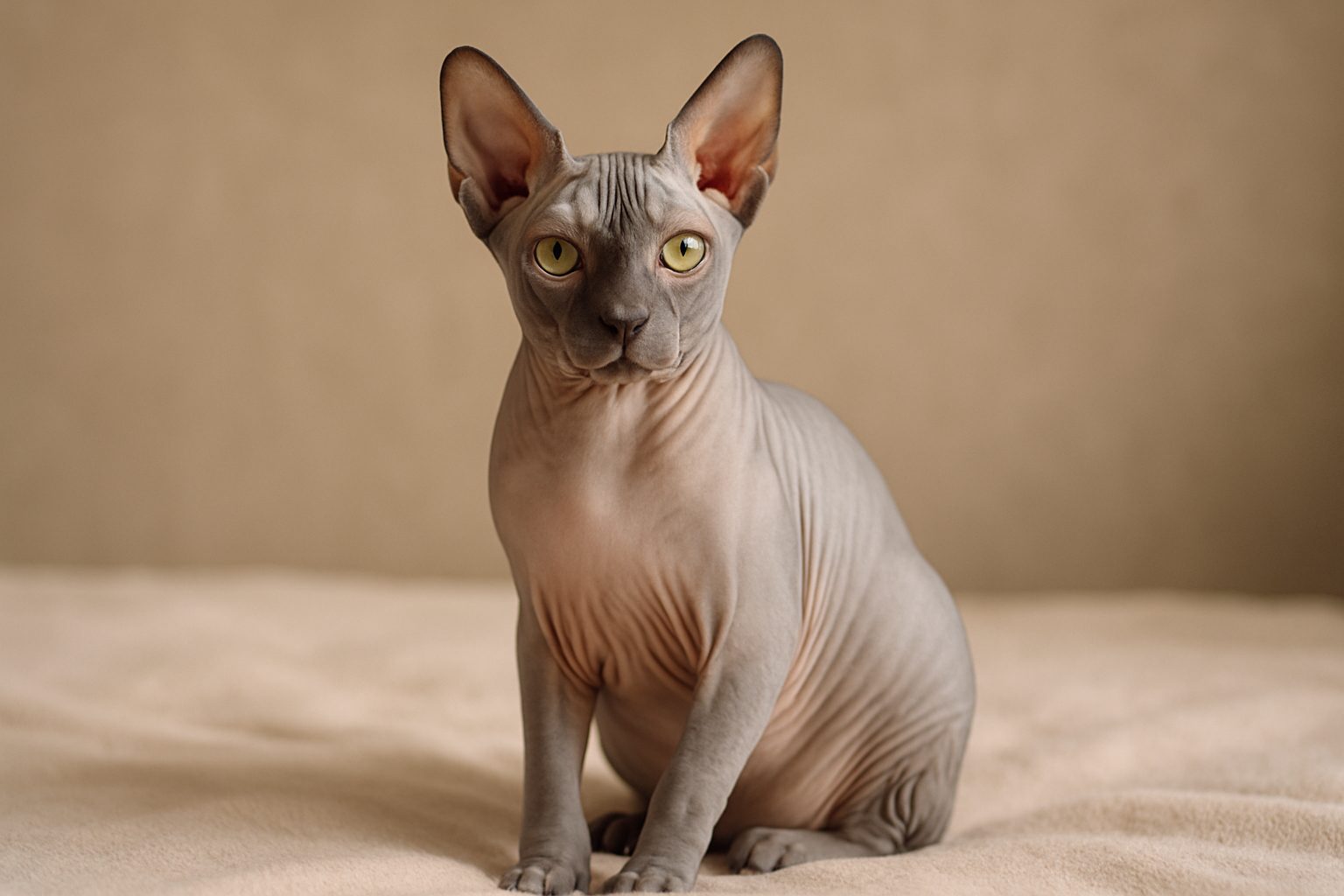
The Sphynx is immediately recognizable and hard to compare to anything else. The skin is warm to the touch, wrinkled around the face, neck, and belly, and covered in a layer of fine down that gives it a texture somewhere between suede and a warm peach. The ears are large relative to the head, the eyes are wide and lemon-shaped, and the overall look is unlike any other cat breed.
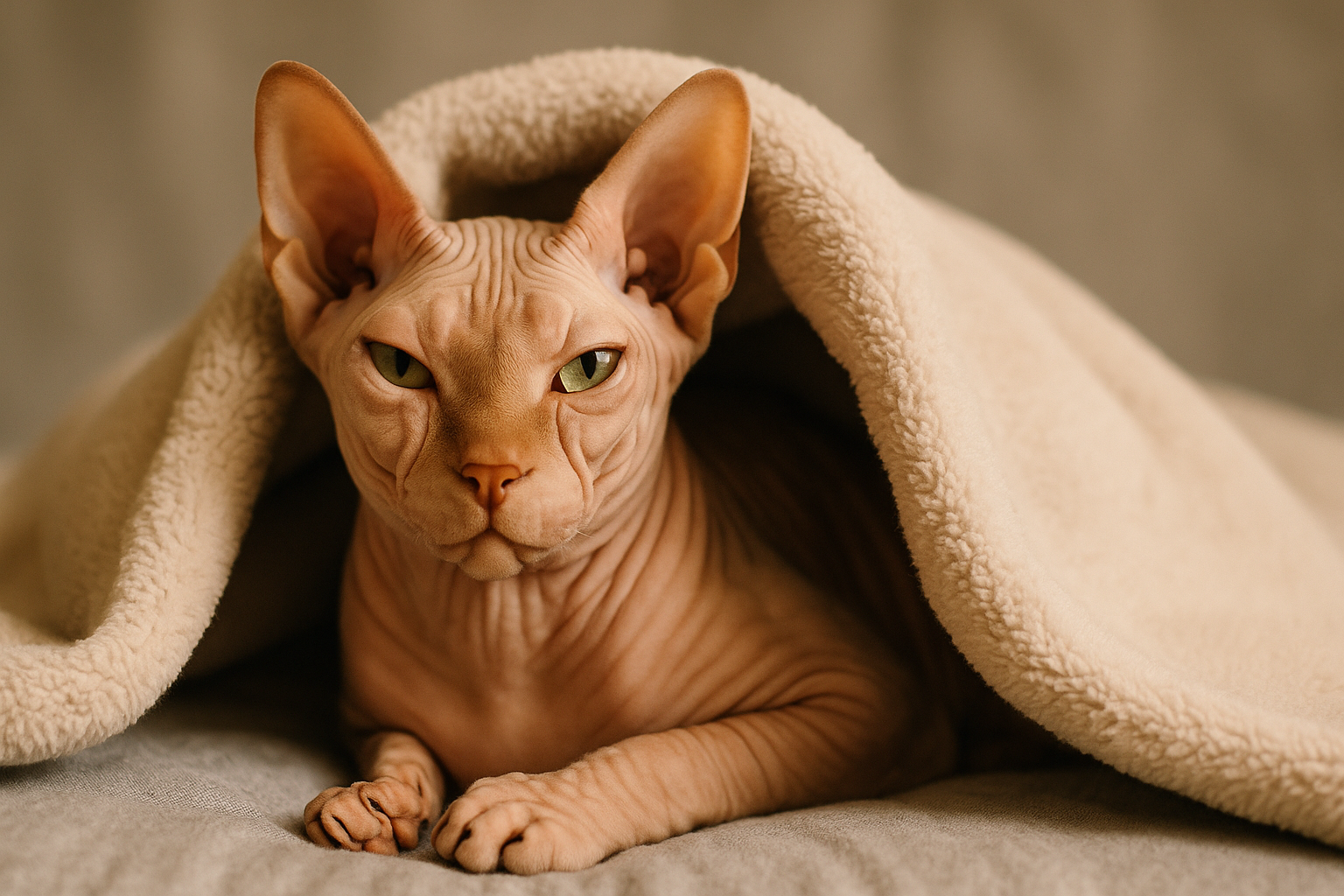
The body is medium-sized but noticeably muscular, with a rounded belly and a build that feels heavier than the weight suggests. Color and pattern still exist in Sphynx cats, expressed through skin pigmentation rather than fur. Tabby markings, solid colors, tortoiseshell, and pointed patterns all appear, rendered in skin tone instead of coat. Eye color runs the full spectrum from vivid blue to deep gold, and odd-eyed Sphynx cats are not uncommon.
Sphynx Cat Grooming & Shedding
The grooming reality of the Sphynx is the thing most people underestimate before bringing one home. All cats produce skin oils, but most breeds have fur to absorb them. Without that, oil accumulates on the skin surface, in the deep ear canals, and in the folds around the face and neck. Left unattended, it becomes visible, transfers to furniture and bedding, and eventually develops an odor.
Most Sphynx cats need a full bath every one to two weeks using a gentle, cat-safe shampoo. Ear cleaning is equally important and needs to happen regularly since wax builds up quickly without fur lining the canals. Skin folds should be wiped down between baths with pet-safe wipes. Cats that are bathed from kittenhood generally tolerate the routine well, and some seem unbothered by warm water entirely. Beyond the skin care, the usual basics apply: nail trims every couple of weeks and consistent dental attention since the breed can be prone to periodontal disease.
Activity & Play
Sphynx cats are high-energy and stay that way well into adulthood. They climb, investigate, chase, and involve themselves in whatever is happening around the house. Interactive play sessions are necessary with this breed, not optional, and a bored Sphynx is a loud and occasionally destructive one. Wand toys, puzzle feeders, and vertical space to navigate all help.
They’re also heat-seekers in a way that shapes their entire day. Without a coat to hold warmth, Sphynx cats gravitate to the warmest available surface at all times: sunny patches on the floor, laptop keyboards, heating vents, and the bodies of anyone sitting still long enough. A heated bed or a pile of fleece blankets aren’t extras for this breed. They’re part of keeping the cat comfortable.

Sphynx Cat Health & Lifespan
Sphynx cats typically live between 9 and 15 years, which is on the shorter end for domestic cats, and the cardiac risks the breed carries are a real part of that picture. Hypertrophic cardiomyopathy (HCM) is the most significant health concern, a form of heart disease that thickens the heart walls and can develop without any obvious symptoms until it’s already advanced. Regular cardiac screening with a veterinary cardiologist is recommended throughout the cat’s life, and responsible breeders screen their breeding cats for the condition before producing litters. Asking for documentation of that testing is a reasonable and important question when buying from a breeder.
Periodontal disease is also common in the breed and dental care should start early to stay ahead of it. The skin and ear care routine that keeps a Sphynx looking good is also preventive since infections can develop in neglected folds and ear canals. A high-protein, meat-based diet supports muscle condition and overall health, and because Sphynx cats burn more calories maintaining body temperature than furred cats do, they tend to eat heartily and should be fed accordingly rather than put on the same portions as a lower-energy breed.
Family Compatibility
Sphynx cats adapt well to busy, social households. They’re confident around strangers, unbothered by noise, and tend to engage with people rather than retreating. Children who know how to handle a cat are usually a good match, and the Sphynx’s boldness means it’s unlikely to hide under a bed the moment the house gets loud. They get along with other cats and cat-friendly dogs when introductions are handled gradually.
Where they struggle is extended solitude. This is not a breed that settles into a quiet routine when you’re gone for ten hours. A second cat, ideally one with a similar energy level, helps a lot if the Sphynx would otherwise be home alone most of the day. For people who work from home, retirees, or households where someone is usually around, the breed is exceptional company.
Recommended Supplies for a Sphynx Cat
Warmth and skin care shape the Sphynx supply list more than anything else.
- Heated cat bed or self-warming burrow bed
- Gentle, unscented cat shampoo for regular bathing
- Pet-safe wipes for in-between cleaning of skin folds and ears
- Fleece sweaters or shirts for cooler weather or drafty homes
- Tall, sturdy cat tree with multiple levels
- Interactive puzzle toys and wand toys for daily play
- Roomy, consistently clean litter box

Sphynx Cat Price and Cost
From a reputable breeder, Sphynx kittens typically cost between $1,500 and $3,000, with price varying based on pedigree, coat pattern, breeder reputation, and location. That range reflects the health screening, early socialization, and cardiac testing that responsible Sphynx breeding requires. Breed-specific rescues are worth searching if you’re open to an adult cat; many rehomed Sphynx cats come from owners who didn’t anticipate the grooming commitment, and they bring the same personality with none of the kitten chaos.
Sphynx Cat FAQs
Are Sphynx cats hypoallergenic?
Not officially. Sphynx cats still produce the Fel d 1 protein that triggers most cat allergies, and their skin oils can be a factor as well. Some allergy sufferers do better with this breed because there’s no airborne fur, but reactions vary significantly from person to person. Spending time with a Sphynx before committing is always a good idea if allergies are a concern.
How much do Sphynx cats cost?
Pet-quality Sphynx kittens from a reputable breeder typically range from $1,500 to $3,000. Show-quality cats or rarer color variations can go higher. Adopting through a breed-specific rescue is a more affordable route and worth considering seriously.
Do Sphynx cats get cold?
Yes, and more noticeably than most breeds. Without a coat to retain body heat, Sphynx cats seek out warm surfaces constantly and are sensitive to cooler temperatures. Heated beds and fleece blankets are practical necessities rather than optional extras for this breed.
Do Sphynx cats need baths?
Yes. Skin oils accumulate without fur to absorb them, and without regular cleaning that buildup becomes visible and eventually odorous. Most Sphynx cats need a bath every one to two weeks, along with consistent ear cleaning and attention to skin folds. Cats introduced to bathing as kittens usually tolerate it well.
Do Sphynx cats have whiskers?
Some do, but whiskers in Sphynx cats are often very short, sparse, or absent entirely. This is a normal variation within the breed, and most Sphynx cats adapt well.
Are Sphynx cats good with kids or other pets?
Generally yes. Their confidence and sociable nature means they tend to engage with children rather than avoid them, and they usually adapt well to other cats and cat-friendly dogs when introductions are handled properly. Very young children who haven’t learned how to handle a cat yet are a better fit once the child is a bit older.
Is the Sphynx Cat Right for You?
If you want a cat that’s completely unlike anything else in a room, deeply attached to its people, and treats your home like a personal obstacle course and your body like a preferred heat source, the Sphynx is a hard breed to talk yourself out of. They suit active households, social households, and anyone who wants a cat that’s all the way in.
But the commitment with this breed is real. The skin care, the warmth management, the cardiac monitoring, the need for regular company. None of it is optional with a Sphynx. For people who enjoy that level of involvement, though, few cats are more entertaining or more attached to their people.
Debbie Reid is the founder and chief editor of CatPedia.net, with over 25 years of hands-on experience in feline care, rescue, and behavior research. Inspired by her rescue cats Snickers and Bigboy, she collaborates with animal welfare resources and consults veterinary literature to turn complex feline health, nutrition, and behavior topics into clear, actionable guides.