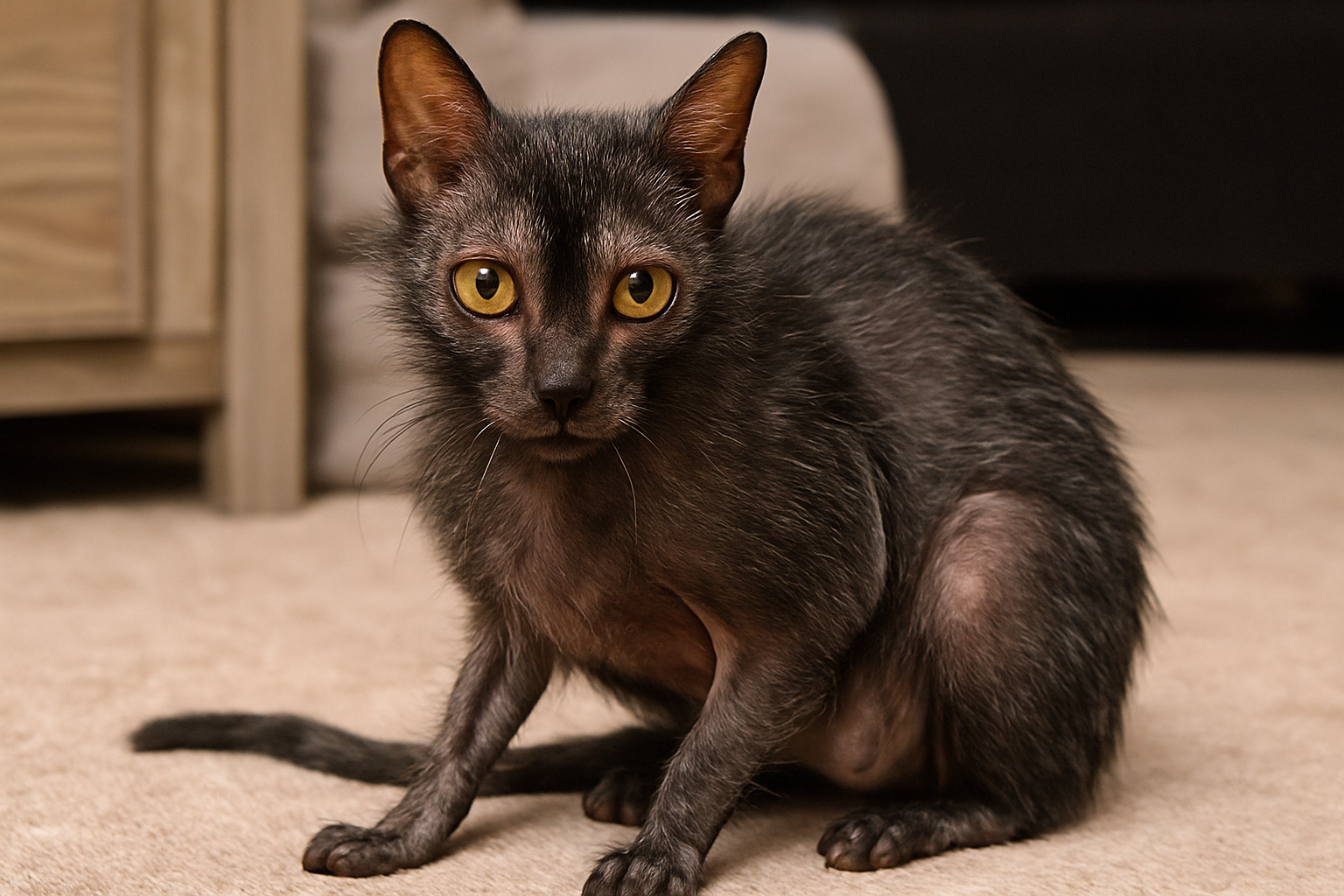
The Lykoi cat looks like it wandered out of a werewolf story. The sparse coat, bare patches around the face, and golden-yellow eyes give this breed a look that feels more like a storybook creature than a typical house cat.
Beneath that feral exterior, they are social, demanding, and genuinely people-oriented. Lykoi cats follow their owners around, come when called, and play with a focused intensity that sets them apart from more laid-back breeds.
That level of engagement is what makes them rewarding, but it also means the Lykoi is not a low-effort breed. Their energy does not have an off switch, and without enough stimulation they may find destructive ways to entertain themselves. Their exposed skin also needs regular cleaning and protection from cold and sun. They suit owners who want an involved, interactive cat, not one that mostly keeps to itself.
Quick Breed Facts
- Origin: United States (natural mutation in domestic shorthairs)
- Breed registries: TICA, CFA
- Weight range: 6–12 lbs
- Lifespan: 12–15 years
- Coat: Sparse, roan-patterned, partially hairless
- Colors and patterns: Primarily black roan; white Lykoi are rare
- Eye color: Gold to yellow
- Grooming: Low maintenance, occasional skin care needed
- Activity level: High
- Affection level: Moderate to high
- Vocality: Moderate
- Good with children: Yes, with early socialization
- Good with other pets: Yes, especially other cats and cat-friendly dogs
History & Origin of the Lykoi Cat
The Lykoi began with two kittens from separate litters found at a Virginia rescue shelter in 2010. Both had the same patchy, sparse coat and a look that didn’t match any known breed. Breeder Patti Thomas recognized she had something unusual and handed them to Tennessee veterinarian Dr. Johnny Gobble and his wife Brittney, who had the resources and expertise to pursue the science behind what she’d found.
The Gobbles didn’t move straight to breeding. They brought in geneticists and dermatologists, with DNA testing handled by Dr. Leslie Lyons at UC Davis, to confirm the coat was a natural mutation and not the result of disease. Once the foundation cats were cleared as healthy, two unrelated cats were paired, and the first intentionally bred Lykoi kitten was born on September 14, 2011. Around the same time, an identical mutation turned up independently in a Tennessee feral colony, confirming this wasn’t a fluke. All five foundation cats were registered with TICA that same year.
The breed is now nicknamed the “second chance breed” because the original foundation cats came from rescues, shelters, or feral colonies. TICA passed the Lykoi to championship status in fall 2016, with cats eligible to compete starting in May 2017. CFA accepted the breed for registration in 2018 and advanced it to championship status in 2023.
Lykoi Cat Personality & Temperament
Lykoi cats are not passive housecats. They are alert, busy, and closely tuned in to what their people are doing. Many follow their owners from room to room, respond when called, and want to be part of the household routine. They are social cats, but not usually in a cuddly, couch-cat way. Their affection tends to show through attention, loyalty, and involvement.
This is also a breed with a strong hunting instinct. Lykoi cats often watch before they act, then pounce, chase, or investigate with real focus. They need daily interaction and enough stimulation to keep their minds busy. Without it, they can become restless or get into things they shouldn’t.
With early socialization, Lykoi cats can do well with respectful children, other cats, and cat-friendly dogs. They are confident enough to handle an active home, but they still need space when they choose to step away. The best match is an owner who wants an involved, intelligent cat and does not mind being followed, watched, and occasionally outsmarted.
Lykoi Cat Appearance & Physical Traits
The Lykoi’s coat is unlike anything else in the domestic cat world. Most of the body is covered in a roan pattern where individual hairs are partly black and partly white, creating a salt-and-pepper effect that shifts in different lighting. The nose and ears are typically hairless, and many cats also have sparse or absent fur on the face, legs, and belly, revealing soft pink or gray skin underneath. How much skin shows varies significantly between individual cats and can change after a molt, so even two Lykoi from the same litter may not look alike.
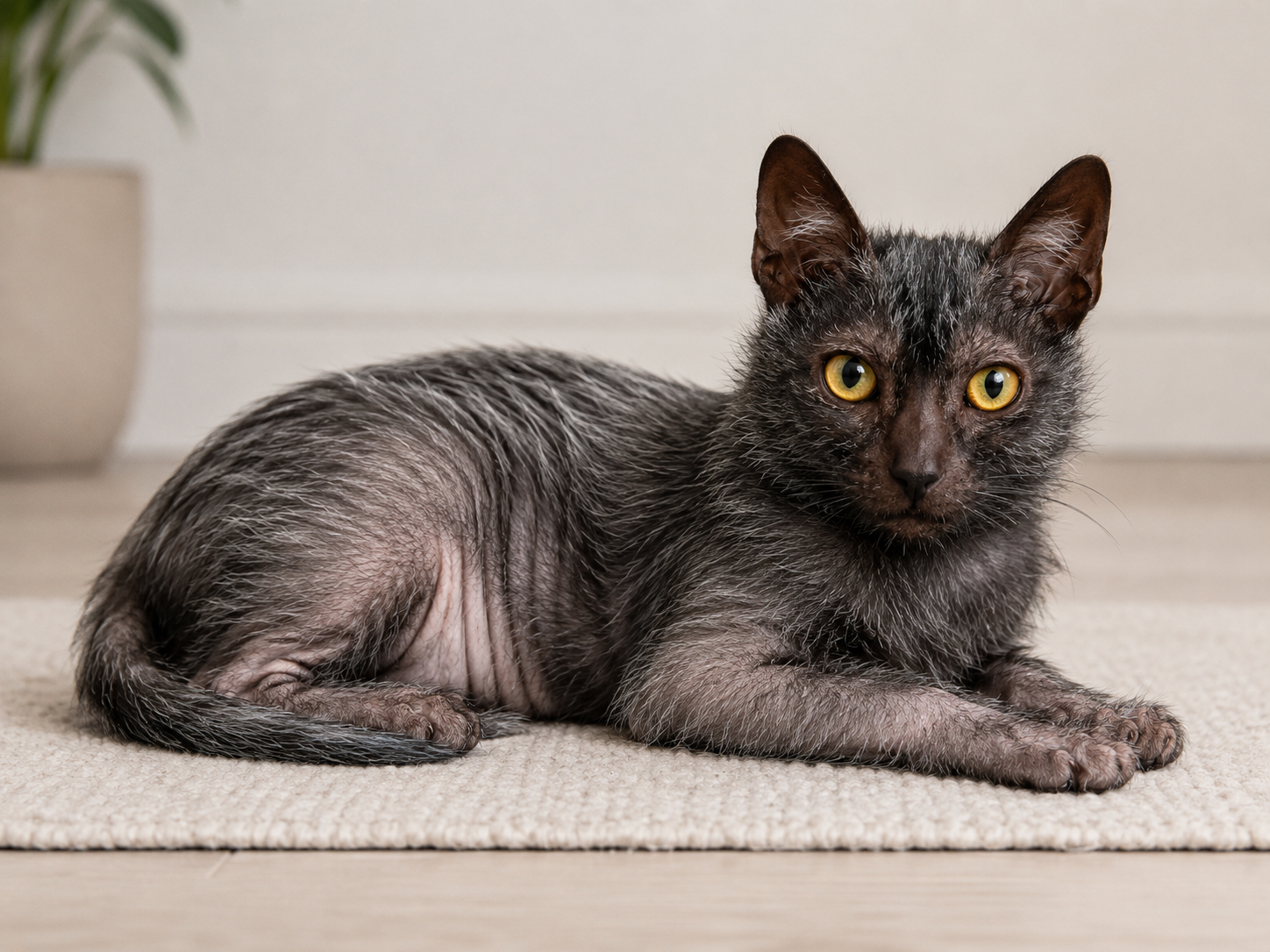
Beyond the coat, the Lykoi has large upright ears, a wedge-shaped head, and gold-to-yellow eyes that stand out against the pale skin. Their build is lean and athletic rather than stocky. Black roan is the standard and the color most people associate with the breed, but white Lykoi do exist. They are much rarer and have the same patchy pattern with white fur and exposed pink skin.
Lykoi Cat Grooming & Shedding
The Lykoi coat is easier to manage than it looks. There is no thick undercoat to brush out, no long fur to mat, and most cats do fine with minimal grooming. During shedding cycles, a soft grooming mitt can remove loose hair without irritating the skin.
The exposed skin needs more attention. Because some areas have little to no fur, skin oils can build up faster than they would on a fully coated cat. An occasional bath when buildup is visible can help keep the skin comfortable. Lykoi skin is also more sensitive to direct sun, and prolonged exposure can cause irritation or burning.
Activity & Play
Lykoi cats are high-energy with a strong hunting drive. They stalk, wait, and pounce with more focus than many household cats, so they do best with toys that give them something to chase. Feather wands, motorized toys, and anything that mimics prey movement are usually a good fit. A bored Lykoi will find its own entertainment, and that is rarely ideal.
Plan on daily interactive play. This breed has the athleticism to stay active and the focus to stay engaged longer than most cats. Puzzle feeders can also help because they tap into the Lykoi’s problem-solving instincts while slowing down meals. Vertical space matters too. A sturdy cat tree with multiple levels gives them a place to climb, watch the room, and burn off some of that restless energy.

Lykoi Cat Health & Lifespan
Lykoi cats typically live 12 to 15 years. Because breeders still outcross to domestic shorthairs, the gene pool stays broader than many pedigreed breeds, which helps limit inherited problems. The main exception is tied to the coat mutation itself. Research has documented lymphocytic mural folliculitis in the breed, an inflammatory reaction around the hair follicles that appears connected to the same mutation responsible for the sparse coat. Signs include excessive hair loss, itching, scabbing, crusted skin, or skin that seems uncomfortable. Severity varies between cats, and any persistent irritation should be checked by a vet.
The reduced coat also leaves the skin more exposed to environmental irritants and UV light. Prolonged sun exposure can raise the risk of skin damage and squamous cell carcinoma, especially on sparsely haired areas like the ears, nose, eyelids, and around the eyes. Keeping them indoors and out of direct sun for long periods reduces that risk. Beyond skin and coat concerns, the breed is generally healthy and routine annual vet care is enough for most cats.
Family Compatibility
Lykoi cats fit well into households where people are home regularly and willing to engage with them. They bond with their people and want to be included in daily life rather than left to their own devices for long stretches. Their confidence and social nature mean they warm up to new faces faster than more reserved breeds, and with proper introductions they get along well with other cats and cat-friendly dogs.
They suit older children who understand how to read a cat’s signals and give it space when needed. Their high prey drive makes them a poor match for homes with small animals like birds, hamsters, or fish. That instinct doesn’t switch off with familiarity, and no amount of cohabitation fully overrides it.
Recommended Supplies for a Lykoi Cat
A Lykoi needs an environment built around warmth, movement, and mental engagement.
- Tall, sturdy cat tree with multiple perch levels
- Interactive wand toys and motorized prey-style toys
- Puzzle feeders to channel problem-solving instincts
- Soft, warm beds and blankets for temperature comfort
- Gentle grooming mitt for shedding cycles
- Roomy, consistently clean litter box

Lykoi Cat Price and Cost
Lykoi kittens from reputable breeders typically cost between $1,500 and $2,500. Rare variations, including white or long-haired Lykoi, may cost more. The breed is still uncommon, so prices tend to stay high and waitlists are normal.
Before buying, ask how the breeder tracks skin, coat, and overall health in their lines. Lykoi-specific rescues are rare, but adult cats may occasionally become available through breeders, breed groups, or owners rehoming a cat that needs a more active household.
Lykoi Cat FAQs
Are Lykoi cats hypoallergenic?
No. Lykoi cats produce the same dander and saliva proteins that trigger cat allergies in sensitive people. Their reduced coat means less airborne fur, but they’re not a safe option for anyone with significant cat allergies.
How much does a Lykoi cat cost?
Most Lykoi kittens from reputable breeders fall between $1,500 and $2,500. Rare variations like white or long-haired Lykoi can cost more.
Is there really a Down syndrome Lykoi cat?
No. Cats cannot develop Down syndrome, which is a human chromosomal condition. Lykoi cats with unusual facial features or behaviors that circulate online are typically showing normal breed characteristics or unrelated health conditions, not a feline equivalent of the syndrome.
Can Lykoi cats live with other pets?
Generally yes. Lykoi cats are social and confident, which helps them adapt to other cats and cat-friendly dogs when introduced gradually. Their prey drive makes them a poor fit for homes with small animals like birds, hamsters, or fish.
Is the Lykoi Cat Right for You?
The Lykoi is a good match for owners who are home often, want an active cat, and do not mind the extra skin care the coat requires. It is a poor fit for anyone looking for an independent, hands-off pet or a household where the cat would spend most of the day alone. For the right owner, it is a strange, devoted little shadow in the best possible way.
Debbie Reid is the founder and chief editor of CatPedia.net, with over 25 years of hands-on experience in feline care, rescue, and behavior research. Inspired by her rescue cats Snickers and Bigboy, she collaborates with animal welfare resources and consults veterinary literature to turn complex feline health, nutrition, and behavior topics into clear, actionable guides.