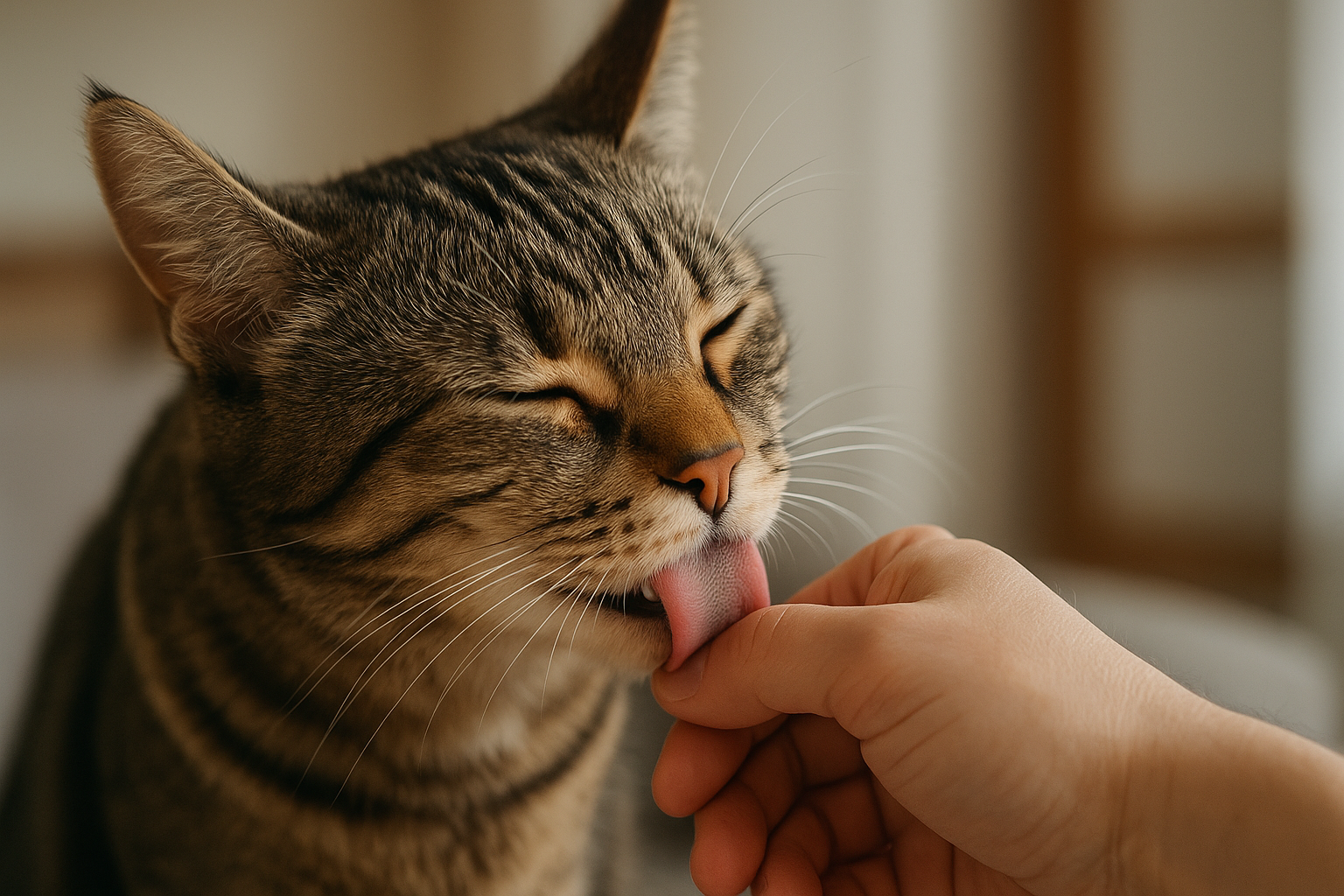
You are relaxing on the couch, your cat is curled up beside you, and everything feels calm. Then, out of nowhere, they lean over and start licking your hand, arm, or even your face.
It can feel sweet, a little weird, or sometimes downright scratchy, but this behavior is actually very normal for cats. Licking is tied to bonding, comfort, and instinct, and in many cases it is a sign that your cat feels safe and connected to you.
Still, it is natural to wonder what it really means and whether it is always a good thing. Understanding why cats lick their humans can help you tell the difference between simple affection and behavior that may need a closer look.
Why Cats Lick Their Owners
Licking is one of the first forms of communication kittens experience. Mother cats lick their babies to clean them, stimulate breathing, and create a strong emotional bond. That early grooming helps kittens feel safe and protected.
As cats grow up, many carry that behavior into adulthood. When your cat licks you, they may be treating you the same way they would treat another trusted cat in their social group. It is a way of reinforcing connection and familiarity.
Cats also explore the world with their mouths and noses. Your skin smells and tastes like you, and licking may simply be part of how your cat gathers information about their favorite human.
Affection and Social Bonding
One of the most common reasons behind cat licking behavior is affection. Cats groom each other to strengthen social bonds, and licking you can be your cat’s way of including you in their inner circle.
When licking happens during calm moments, especially while your cat is cuddling with you or starting to knead, it is usually a sign of comfort and trust. Your cat feels safe enough to relax and enjoy being close to you.
This kind of behavior often goes hand in hand with other affection signals, like slow blinking, head butting, or choosing to sleep near you.
Grooming Instincts and Comfort
Licking is also part of your cat’s normal grooming routine. Cats spend a large part of their day cleaning themselves and other cats they are bonded to.
Some cats extend this behavior to their humans, almost as if they are helping keep you “clean” too. It is not about dirt. Grooming is soothing for cats, and the repeated motion can help them relax when they are feeling calm and content.
Cats that were well-socialized as kittens or grew up in multi-cat homes may be especially likely to groom their owners because they are used to social grooming as part of daily life.
Why Does My Cat Bite Me Then Lick Me?
This mix of behaviors can be confusing and sometimes painful. Often, gentle nibbles are simply part of grooming. Cats may use small bites to remove loose fur or as part of playful social interaction.
However, biting followed by licking can also happen when a cat becomes overstimulated. Too much petting, excitement, or prolonged contact can sometimes flip a switch from calm affection to mild irritation.
If the bites are gentle, it is usually just playful or grooming behavior. If the bites are harder or come with tail flicking, ear flattening, or sudden tension, it is a good idea to pause the interaction and give your cat a little space.
Why Is My Cat Constantly Licking Me?
Occasional licking is normal, but constant or intense licking can sometimes point to other issues. Some cats lick more when they are bored, anxious, or seeking comfort.
Stress-related licking may happen during changes like moving, new pets, schedule changes, or loud environments. In these cases, licking can be a self-soothing behavior, similar to other repetitive comfort habits.
Excessive licking can also be linked to medical problems, such as skin irritation, allergies, or discomfort. If your cat is licking you frequently while also overgrooming themselves, losing fur, or acting restless, it may be time to talk to your veterinarian.
When Licking May Be a Sign of a Problem
While most licking is harmless, there are situations where it deserves closer attention. Licking that suddenly increases or becomes obsessive can be linked to stress, pain, or underlying health issues.
It is a good idea to contact your veterinarian if licking is paired with:
- Hair loss or skin irritation
- Constant grooming of themselves and you
- Behavior changes or hiding
- Loss of appetite or low energy
Cats often express discomfort through subtle behavior changes. If licking feels different from your cat’s normal habits, trusting your instincts and asking your vet for advice is always a safe choice.
How to Gently Redirect Licking Behavior
If your cat’s licking is a bit too much for you, gentle redirection usually works better than trying to stop the behavior completely.
Short play sessions, puzzle feeders, and interactive toys can help shift your cat’s focus toward healthy outlets for energy and attention.
Some cats simply want more engagement, and adding small bursts of play throughout the day can reduce attention-seeking behaviors like constant licking.
Is It a Compliment When Your Cat Licks You?
In most cases, yes. Licking usually means your cat trusts you and feels comfortable around you.
Cats do not groom just anyone. When they choose to groom you, it often means you are part of their social group and someone they feel safe bonding with.
So while it might not be your favorite sensation, it is generally a very sweet sign of connection.
So, What Does It Really Mean When Your Cat Licks You?
Most of the time, licking is simply your cat’s way of showing comfort, trust, and affection. It is part of how cats bond with the ones they feel safe around, and in many homes, it is just another quiet way cats say, “you’re my person.”
As long as your cat is acting normal, eating well, and not showing signs of stress or illness, there is usually no reason to worry. Paying attention to changes in behavior is the best way to know when something may need a closer look.
So if your cat gives you a few surprise licks during cuddle time, chances are it is just their way of feeling close to you, even if it feels a little strange on your end.