
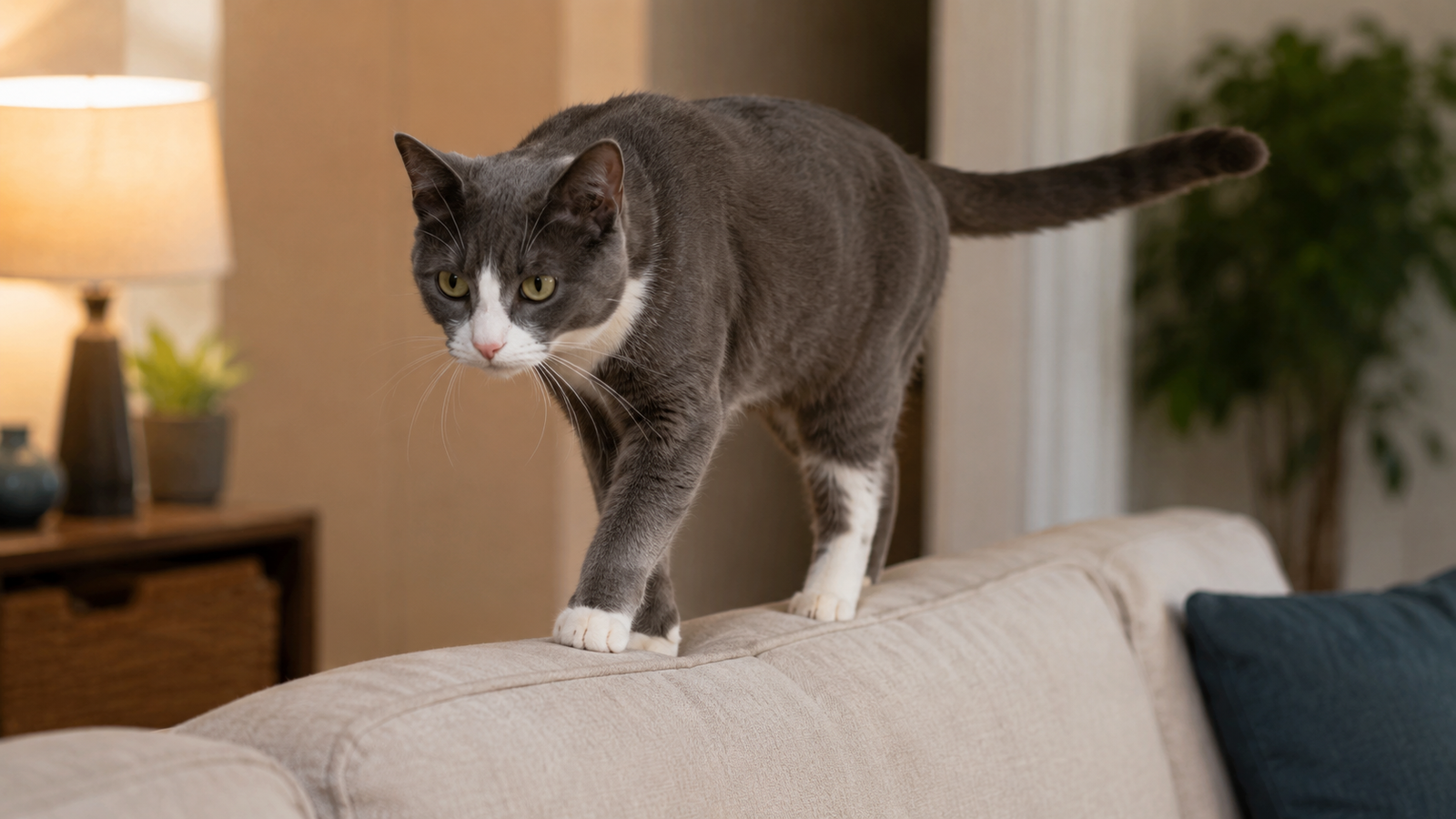
Cats have tails mainly to help with balance and body control. A cat’s tail works like a flexible counterweight when they climb, sprint, turn sharply, walk across narrow spaces, or line up a jump.
The tail is an extension of the spine, made of small bones, muscles, nerves, and sensitive tissue. That structure gives cats fine control over their movement, helps them communicate with other cats and people, and gives them extra feedback as they move.
What Is a Cat’s Tail Made Of?
The small bones inside a cat’s tail are called caudal vertebrae. Most cats have somewhere between 18 and 23 of them, wrapped in muscle, tendons, nerves, and blood vessels.
That is why your cat has such fine control over their tail. They can hold it high, curl the tip into a question mark, flick it, puff it out, or keep it perfectly still while the rest of them is in motion.
Because the tail contains so many nerves, many cats don’t enjoy having it touched, held, or stroked for long. Some will twitch, pull away, or give you a warning nip if you linger there.
How Tails Help Cats Balance
Balance is the biggest reason cats have tails. Your cat is built to climb, stalk, and pounce, and all of that depends on staying steady through quick, precise movements. The tail helps make those movements more controlled.
You can see it most clearly when your cat walks along something narrow, like a shelf edge or a railing. If their body starts to tip one way, the tail swings the other way to shift their weight back. It works a lot like the long pole a tightrope walker carries.
It happens at full speed too. Watch your cat tear around a corner during the evening zoomies and you’ll notice their tail swinging wide behind them as their back legs adjust. That movement helps them change direction fast without skidding out or tumbling over.
The tail also helps your cat’s back half stay in sync with the front. When a cat backs up, turns around on a narrow surface, twists their body while climbing, or corrects themselves mid-jump, the tail helps the hips and hind legs move with the rest of the body.
Cats Also Use Their Tails to Communicate
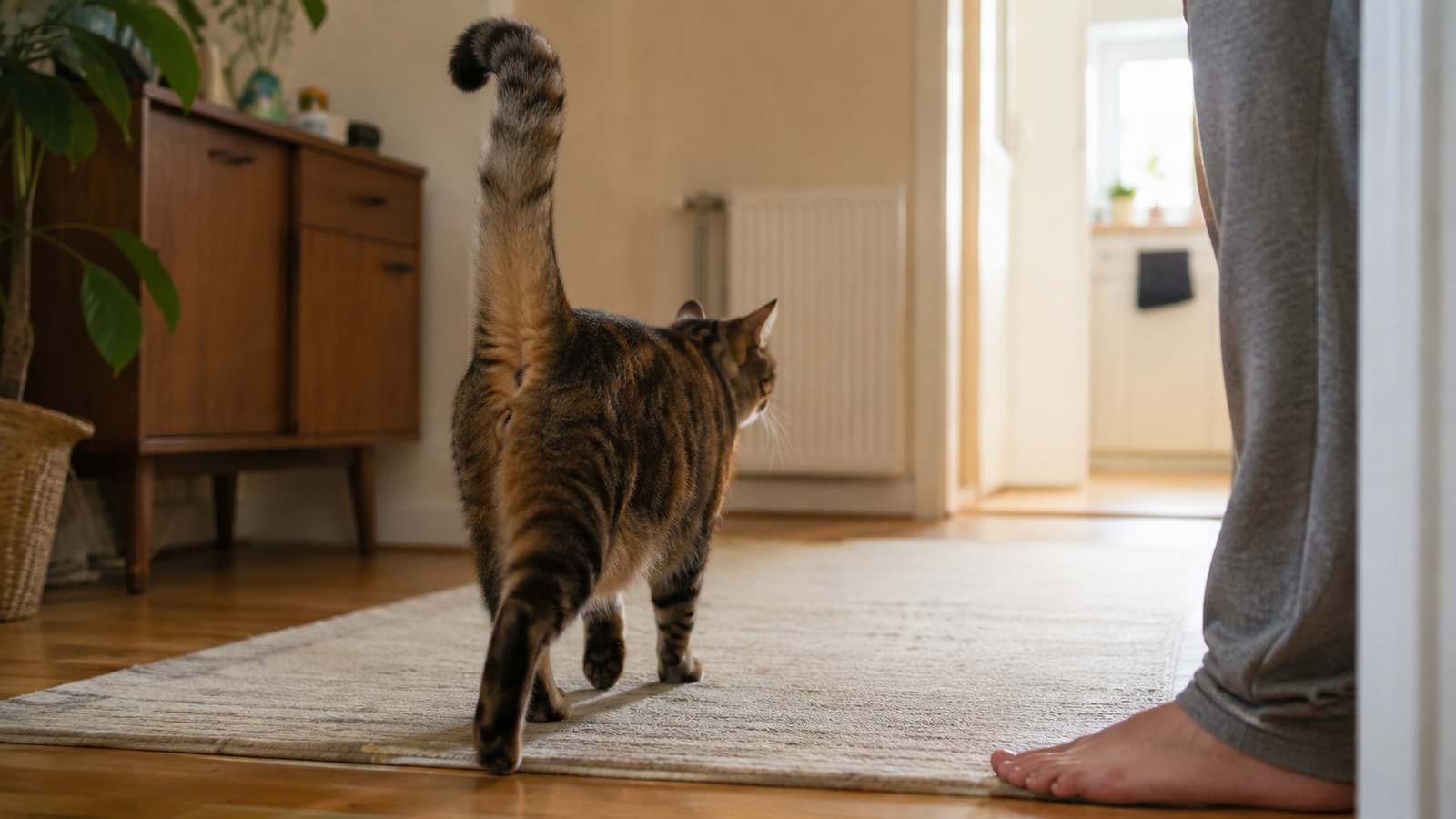
A cat’s tail is not only useful for balance. It also helps cats show mood and intent. A tail held straight up usually points to confidence or a friendly greeting. A puffed tail means the cat feels startled or threatened. A low or tucked tail can suggest fear, stress, or discomfort, while a hard-thumping tail usually means the cat is irritated and needs space.
Position gives you part of the message, but movement changes the meaning. A slow swish, quick flick, hard thump, or lashing tail can all point to different moods. We cover those signals in more detail in our guide to cat tail movements.
Why Do Cats Hold Their Tails Straight Up?
That confident, straight-up tail is worth a closer look because pet cats use it far more than their wild relatives. Big cats and wildcats use their tails for balance and signaling too, but they do not usually walk around with their tails held straight up.
In domestic cats, the upright tail works as a peaceful, friendly greeting. It usually means the cat feels comfortable coming closer and is not looking for trouble. In homes with more than one cat, a raised tail can ease the mood before two cats get close enough to sniff and sort things out.
Do All Cats Have Tails?
Most cats have full-length tails, but some are born with naturally short tails, little stubs, or no visible tail at all. A few breeds are especially known for shortened or missing tails.
The best-known example is the Manx, which can have anything from a full tail to no visible tail. Other short-tailed breeds include the Japanese Bobtail, American Bobtail, Kurilian Bobtail, Pixie-Bob, and Highlander.
Can Cats Live Without a Tail?
Cats can live normal lives without a tail, whether they are born that way or lose one later. Cats born with little or no tail grow up without that extra counterweight, so they learn to balance using the rest of their body from the start.
A cat who loses their tail may be a little unsteady at first. They may need time to relearn how to jump, turn, and land, but many compensate over time by relying more on their legs, hips, spine, and body position.
Communication can take a little more effort too, especially with other cats. The tail is a major part of feline body language, but it is not the only one. Cats also use their ears, eyes, whiskers, posture, scent, and voice to get their point across.
When Should You Worry About Your Cat’s Tail?
Because the tail connects straight to the spine and nervous system, a tail problem can be more serious than it first looks. If your cat’s tail suddenly hangs limp, drags, or won’t lift the way it usually does, they should see a veterinarian.
Injuries near the base of the tail are the ones to take most seriously, since the nerves there also affect the back end of the body. Call your vet if your cat shows any of these signs:
- A limp, dragging, or suddenly motionless tail
- Pain or sensitivity around the base of the tail
- Trouble walking, or weakness in the back legs
- Leaking urine or stool, or straining in the litter box
- Constant licking, chewing, or biting at the tail
- Sudden tail chasing or attacking the tail in a grown cat
A bit of tail twitching on its own is usually nothing to fret about. Cats twitch and flick their tails when they’re focused, playful, or mildly annoyed, and all of that is normal. What’s worth your attention is a sudden change, especially when it shows up alongside pain, hiding, or any of the signs above. When something seems off, it’s always worth checking in with your veterinarian to rule out an injury or a problem with the nerves.
Frequently Asked Questions
Why does my cat wrap their tail around me?
When your cat curls their tail around your arm or leg, it’s usually a sign of affection or trust. Their tail also carries scent, so they may be mixing their scent with yours and marking you as one of their favorite people.
Do cats control their tails on purpose?
Yes. Your cat controls their tail much like they control their legs or ears. Most tail movement is deliberate, though a few things, like the tail puffing up when they’re frightened, are reflexes they can’t fully help.
Why does my cat’s tail puff up?
A puffed tail means your cat feels startled, threatened, or suddenly very wound up. Fluffing the fur makes them look bigger, which is their way of warning off whatever spooked them. It usually settles once they calm back down.
Why does my cat hit me with their tail?
A gentle tail tap may simply mean your cat is aware of you. A faster, harder thumping tail usually means irritation or overstimulation, especially during petting.
Can cats feel pain in their tails?
Yes. A cat’s tail contains nerves, muscles, skin, and small bones, so cats can feel pain there just like they can in other parts of the body. Pain near the base of the tail can be especially uncomfortable because that area connects closely with the spine and nervous system.
Why Your Cat’s Tail Matters
Cats have tails because they help with the things cats do every day: climbing, turning, jumping, landing, and communicating. The tail works as a flexible counterweight, but it also helps your cat show mood, intent, and comfort around the people and pets they share a home with.
Some cats have long tails, some have short bobtails, and a few have no visible tail at all. Whichever kind your cat has, that little extension of the spine says a lot about how they move through the world and how they feel about you.
Debbie Reid is the founder and chief editor of CatPedia.net, with over 25 years of hands-on experience in feline care, rescue, and behavior research. Inspired by her rescue cats Snickers and Bigboy, she collaborates with animal welfare resources and consults veterinary literature to turn complex feline health, nutrition, and behavior topics into clear, actionable guides.