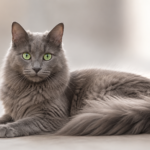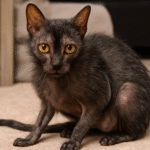
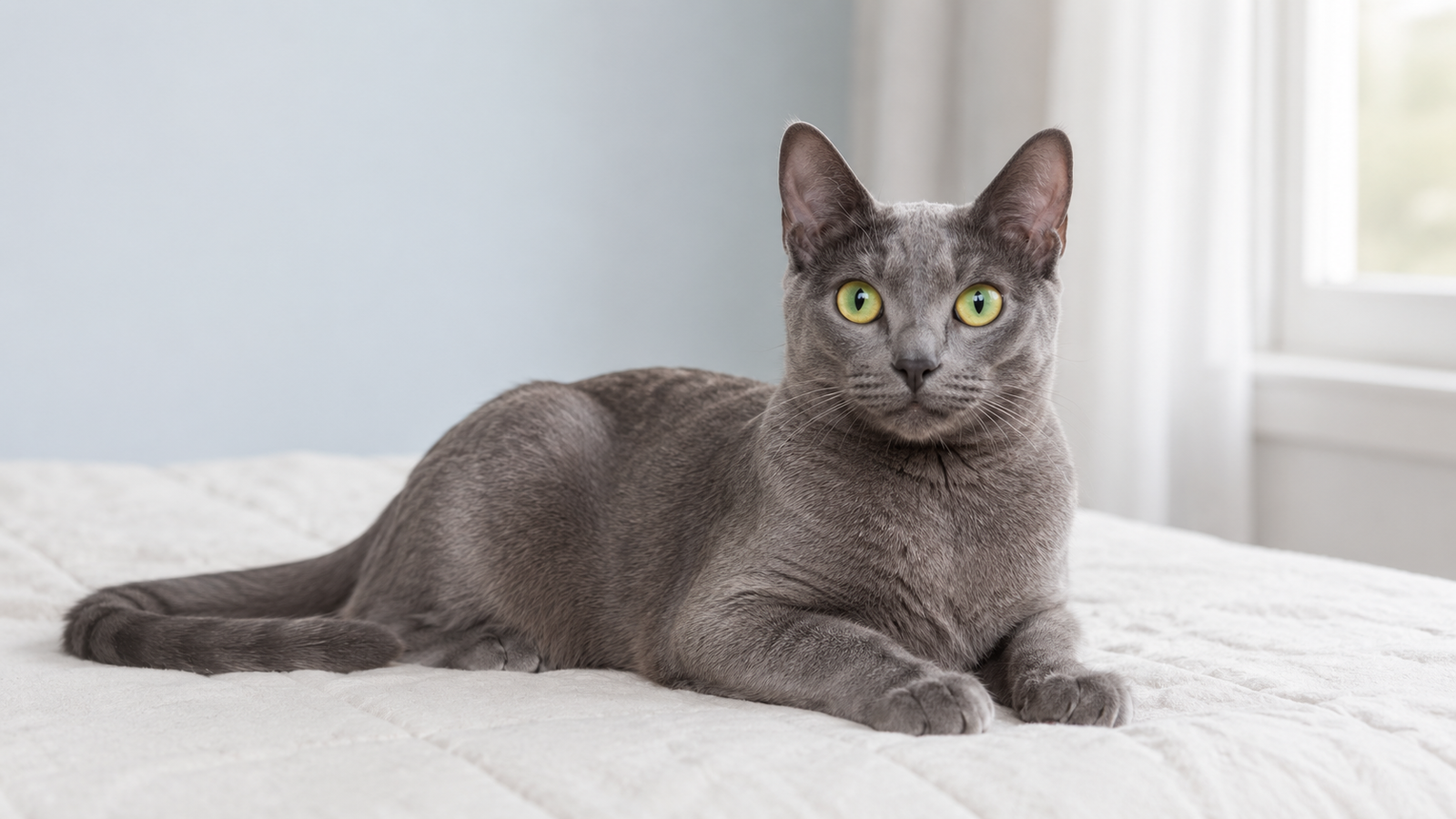
The Korat cat is a rare silver-blue breed from Thailand with a close-lying coat, bright green eyes, and a soft heart-shaped face. Treasured in Thailand for centuries, Korats are considered a symbol of good luck. Outside their homeland, they are genuinely hard to find.
Korats are affectionate, observant, and often intense in their loyalty. A Korat may follow you from room to room, settle beside you while you work, and object when the routine changes. For someone expecting a quiet, independent cat, this level of involvement may be more than they bargained for.
Quick Breed Facts
- Origin: Thailand
- Breed registries: CFA, TICA, FIFe
- Weight range: 6–10 lbs
- Lifespan: 12–15 years
- Coat: Short, single-layer, no undercoat
- Colors and patterns: Silver-blue only
- Eye color: Vivid green (amber in kittens, green by adulthood)
- Grooming: Low maintenance
- Activity level: Moderate to high
- Affection level: Very high
- Vocality: Talkative
- Good with children: Yes, with respectful children
- Good with other pets: Selective
History & Origin of the Korat Cat
The Korat has been documented in Thailand for centuries. It appears in The Cat-Book Poems, a manuscript from the Ayutthaya Kingdom believed to date as far back as the 14th century. The Korat is described in the manuscript as one of a small number of cats considered lucky. In Thai culture, the breed is called Si-Sawat, a name that references the silvery-blue color of the fruit from the sawat tree. Korats were traditionally given in pairs as wedding gifts and considered an omen of prosperity and good fortune for the couple receiving them.
The breed remained largely unknown outside Southeast Asia until the 1950s and 1960s, when Korats were brought to the United States and the United Kingdom. The Cat Fanciers’ Association recognized the Korat in 1967. Despite its long history and distinctive appearance, the breed is still considered rare in Western countries, and that is unlikely to change. Breeding programs are small, and most serious breeders maintain tight control over pedigree lines to preserve the breed’s defining characteristics.
Korat Cat Personality & Temperament
Korats are not casual cats. They form intense bonds with their people and tend to attach most strongly to one or two individuals in a household, tracking them from room to room and positioning themselves as close as possible. This isn’t restlessness. It’s their natural mode of engagement. A Korat that follows you to the bathroom, sits beside you at your desk, and watches you cook dinner is doing exactly what the breed was built to do.
They’re also perceptive in a way that can catch you off guard. Korats pick up on emotional shifts quickly and often respond to stress or sadness in their owners by staying close and unusually quiet. That attunement makes them deeply rewarding companions for the right person. It also means they’re sensitive to disruption. Loud households, frequent visitors, and chaotic environments tend to unsettle them more than most breeds, and they do best when their daily routine stays predictable.
Around strangers, expect reserve rather than aggression. A Korat in an unfamiliar situation will typically withdraw and observe until it has sized things up, then approach on its own terms. That behavior is normal for the breed and usually misread as shyness. Given time and a calm introduction, most Korats warm up without much difficulty.
Korat Cat Appearance & Physical Traits
The Korat is a medium-sized cat with a surprisingly solid, muscular build for how refined it looks. Adults typically weigh between 6 and 10 pounds, but they feel heavier than that number suggests. The body is semi-cobby, with a broad chest and a back that arches gently from shoulder to rump.
The head is a soft heart shape when viewed from the front, widening across the forehead with a gentle narrowing at the chin. That heart shape is one of the defining features of the breed standard. The eyes are large and round, set wide apart, and their color deepens from amber in kittenhood to the vivid peridot green the breed is known for, a process that can take two to four years to complete fully.
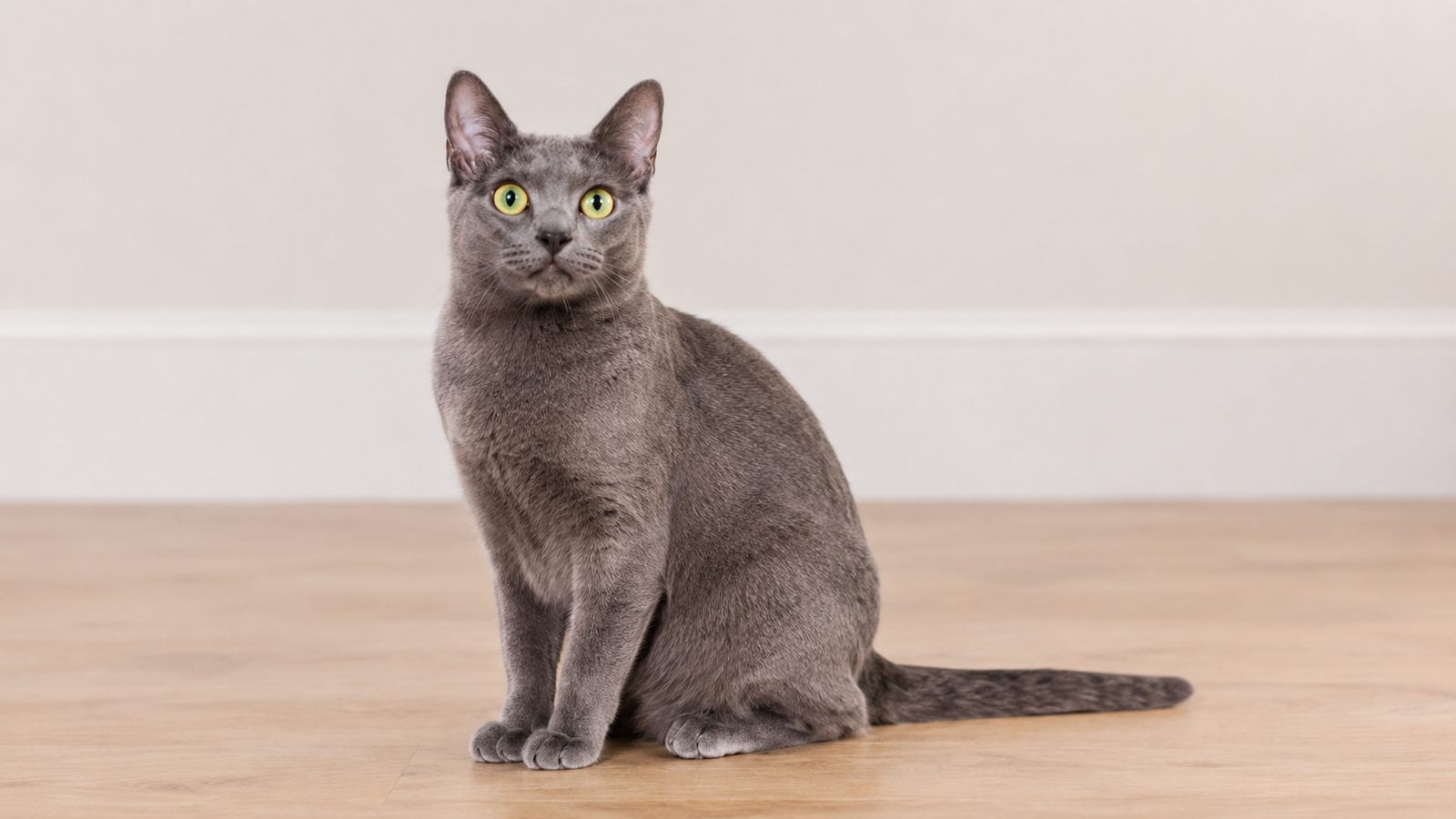
The coat is the breed’s most distinctive physical trait. It’s short, close-lying, and single-layered, meaning there’s no dense undercoat to add volume or create the fluffy appearance common in other shorthaired breeds. Each hair is darker at the root, transitions through a lighter mid-section, and tips in silver, which creates the shimmering effect the breed is known for. In natural light, the coat appears to move and catch, almost metallic. That quality is called silver tipping, and it’s specific to the Korat.
Korat Cat Grooming & Shedding
The Korat’s single-layer coat is about as low-maintenance as a cat coat gets. Without an undercoat, there’s minimal shedding, no matting risk, and very little grooming effort required to keep it in good condition. A soft brush or grooming glove once a week removes loose hair and maintains the coat’s natural sheen.
Beyond coat care, the usual basics apply: nail trims every two weeks, regular ear checks, and dental care. Korats have thinner skin than many breeds and respond better to short, gentle grooming sessions than longer, more thorough ones. Most will tolerate grooming well when it stays consistent and comfortable.
Activity & Play
Korats are moderately active with a clear preference for interactive play over self-directed entertainment. They’ll chase a toy on their own for a while, but what they really want is for you to be on the other end of the wand. Play sessions that involve direct engagement with their person are far more satisfying to them than puzzle toys left out alone, though those still have value for keeping them occupied during the day.
They’re agile and athletic enough to appreciate a good cat tree, and they tend to claim high perches as observation posts rather than retreats. A Korat settled at the top of a cat tree is usually watching everything, not hiding from it. Rotate toys regularly since they lose interest in static setups quickly, and keep at least one interactive play session in the daily routine.

Korat Cat Health & Lifespan
Korats generally live 12 to 15 years, and the breed is considered healthy overall with one significant exception. GM1 and GM2 gangliosidosis are rare but serious neurological conditions caused by enzyme deficiencies that can appear in Korat lines. Affected kittens typically show symptoms within the first few months of life and usually do not survive to adulthood. Responsible breeders screen breeding cats for both conditions, and any kitten from a reputable source should come with documentation confirming the parents tested clear. This is one of the more important questions to ask when evaluating a breeder.
Outside of that hereditary concern, Korats don’t carry a heavy burden of breed-specific health issues. Most well-bred Korats live full, healthy lives without major problems. A quality diet, regular vet visits, and keeping them indoors are the foundations. Because of their lean, low-fat build, they’re not particularly prone to obesity, but they’re also not forgiving of poor nutrition. A high-protein, meat-based food with minimal fillers suits them well.
Family Compatibility
Korats adapt well to families as long as the household matches their temperament. They’re affectionate with children who handle them gently, but the breed’s sensitivity to noise and disruption means that rough handling or unpredictable behavior from very young children may stress them more than it would stress a more easygoing breed.
With other pets, Korats can be selective. They tend to do best as the only cat or paired with a calm, compatible companion they’ve grown up with. Introductions to other animals should be slow and carefully managed. Dogs aren’t automatically off the table, but a boisterous dog that charges or corners them is going to create a conflict. Their territorial nature means they want to establish their place in a household clearly and on their own timeline.
Where the Korat excels is with single owners or smaller households that can give them consistent daily attention. They suit people who are home regularly and want a cat that’s genuinely engaged with them rather than one that comes and goes on its own schedule. For someone who travels frequently or works very long hours without another animal at home for company, a Korat will struggle.
Recommended Supplies for a Korat Cat
Korats do best with supplies that support their activity and their downtime. They like to climb, watch the household, play directly with their people, and settle into soft resting spots when the day quiets down.
- Tall cat tree with stable perches for observation
- Interactive wand toys for daily play sessions
- Soft, padded bed in a quiet spot away from household traffic
- Wide, shallow food and water bowls to avoid whisker fatigue
- Clean, low-sided litter box in a consistent location
- Rotating toy selection to maintain interest

Korat Cat Price
Korat kittens from reputable breeders typically cost between $500 and $2,500, with price varying by breeder reputation, location, and whether the kitten comes from show-quality lines. Because the breed is genuinely rare in the United States and most Western countries, waitlists are common and availability can be limited. The price should always include documentation of GM1 and GM2 testing on the parents. Adoption is worth exploring through breed-specific rescues, though Korats appear infrequently in that channel. When they do come available, they’re typically adults from breeders reducing their programs or owners who underestimated the breed’s need for attention.
Korat vs Russian Blue Cat
From a distance, the two breeds can look very similar. Both have blue-gray coats, green eyes, and a sleek, medium-sized build, and they are often confused for one another. Up close, the differences are easier to see.
The Korat is more compact and muscular with a heart-shaped face and a close-lying single-layer coat with silver tipping. The Russian Blue is longer and more slender, with a wedge-shaped head and a plush double coat that feels dense and velvety. Russian Blue eyes are also vivid green, but the face shape, body type, and coat texture are noticeably different once you know what to look for.
Personality is where the two breeds diverge most. Korats are intense in their attachments, vocal, and tend to follow one person closely through the day. Russian Blues are affectionate but more reserved by nature, often described as quiet and self-contained. They form bonds with their people but are less likely to demand involvement in everything you do. A Russian Blue is comfortable being in the same room with you. A Korat wants to be in the same conversation.
Both breeds are rare and relatively low-shedding. If you’re drawn to the blue coat and green eyes but want a calmer, more independent cat, the Russian Blue is usually the better fit. If you want a deeply bonded, emotionally present companion and can meet that need consistently, the Korat delivers it more completely.
Korat Cat FAQs
Are Korat cats hypoallergenic?
No. Korats produce the same Fel d 1 protein that triggers most cat allergies. Their short, low-shedding coat does reduce the amount of fur in the environment, which some mild allergy sufferers find helpful, but they are not a hypoallergenic breed. Spending time with a Korat before committing is the only reliable way to assess your reaction.
How rare is the Korat cat?
Quite rare outside Thailand. Breeding programs in the United States and Europe are small and tightly managed, which keeps the overall population limited. Finding a kitten often involves a waitlist and some patience in locating a breeder who prioritizes health testing and proper socialization.
Do Korat cats get along with dogs?
They can, provided the dog is calm and the introduction is handled carefully. Korats are territorial and don’t respond well to being rushed or cornered. A slow, structured introduction over several days works better than an immediate shared space. A low-energy, cat-experienced dog is the most compatible match.
How long do Korat cats live?
Most Korats live 12 to 15 years with proper care. Routine vet visits, a high-protein diet, and keeping them indoors are the main factors in a long, healthy life. Confirming that breeding parents were tested clear for GM1 and GM2 gangliosidosis is important when selecting a kitten.
Are Korat cats good for first-time owners?
They can be, but not for every first-time owner. Korats are affectionate and not difficult to care for physically, but their emotional intensity and need for consistent attention requires someone prepared for a cat that genuinely demands involvement. An owner who wants a low-interaction pet will find the relationship frustrating for both parties.
Is the Korat Cat Right for You?
The Korat suits a specific kind of owner: someone who is home regularly, wants a cat that’s actively engaged with them, and can provide the routine and attention this cat depends on.
Korats don’t do well being ignored, left alone for long stretches, or shuffled into a chaotic household where they can’t establish their footing. If your lifestyle can accommodate a cat that needs routine, presence, and consistent engagement, a Korat will thrive. If not, a more independent breed is the better choice.
Debbie Reid is the founder and chief editor of CatPedia.net, with over 25 years of hands-on experience in feline care, rescue, and behavior research. Inspired by her rescue cats Snickers and Bigboy, she collaborates with animal welfare resources and consults veterinary literature to turn complex feline health, nutrition, and behavior topics into clear, actionable guides.