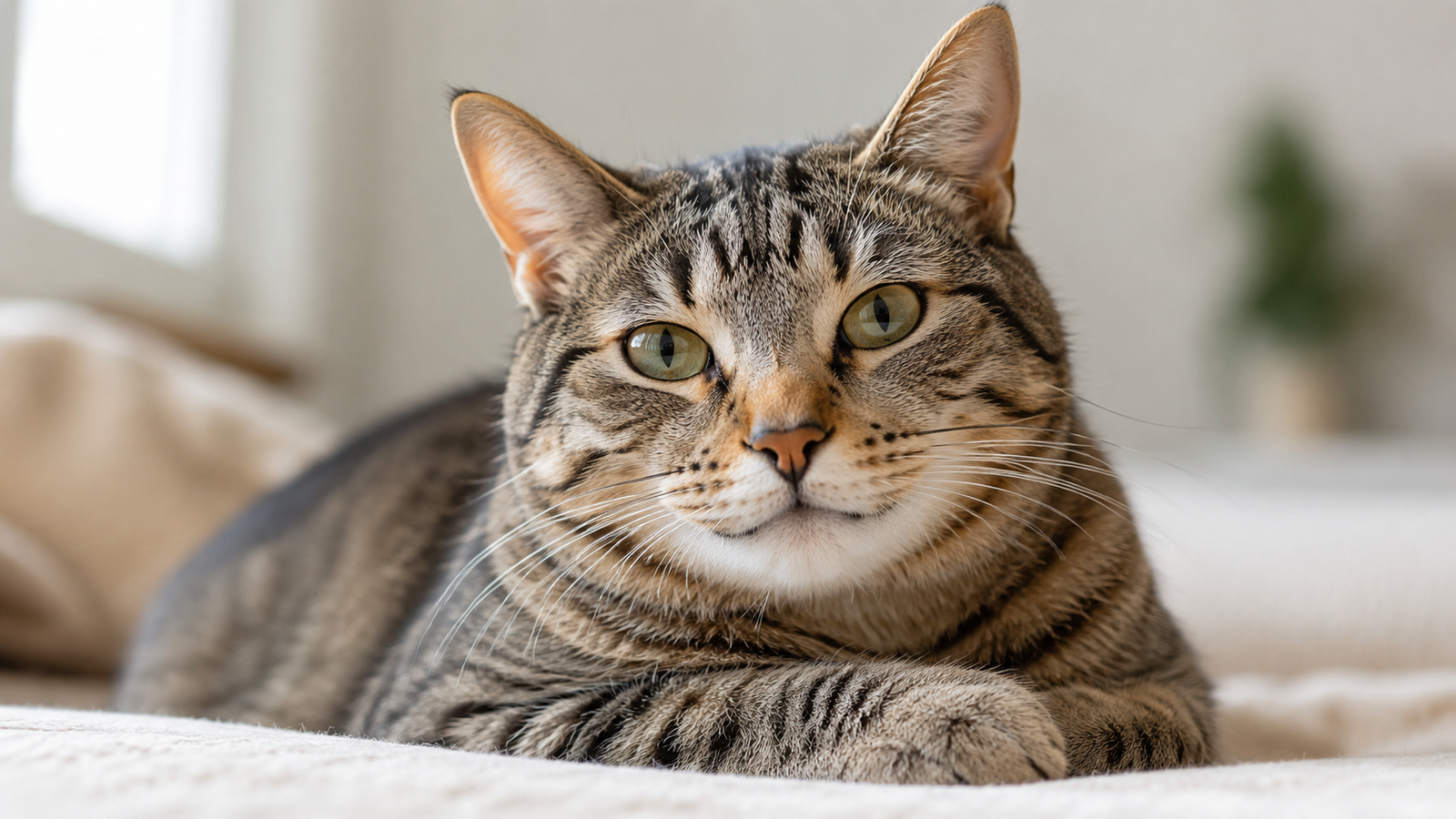
No, cats don’t smile the way humans do. But they show happiness clearly through body language, behavior, and vocalizations.
The upturned mouth that looks like a grin is usually just the natural shape of their face when they’re resting. Happiness shows up in their eyes, tail, and body instead.
So, Can Cats Smile?
Cats have the same facial muscle humans use to smile. It’s called the zygomaticus muscle, and it pulls the corners of the mouth upward. They can move it, they just don’t use it to show they’re happy.
Their mouth signals communicate other things. A curled lip means they’re processing a scent. Bared teeth mean back off. When a cat is happy, the message shows up in their eyes, their tail, and how they hold their body.
What That “Smile” Usually Is
That look usually comes from a relaxed mouth, a Flehmen response, or bared teeth.
Their Resting Face
A cat’s mouth naturally curves up at the corners when they’re relaxed. The shape isn’t emotional. It’s just how the muscles sit.
The tell is that the same cat has the same mouth shape awake, asleep, mid-yawn, and staring at a wall. If it’s constant, it isn’t communicating anything.
The Flehmen Response
The Flehmen response is a scent-processing reflex. Cats curl their lip, open their mouth slightly, and sometimes tilt their head. Of the three, this one looks the most like a smile.
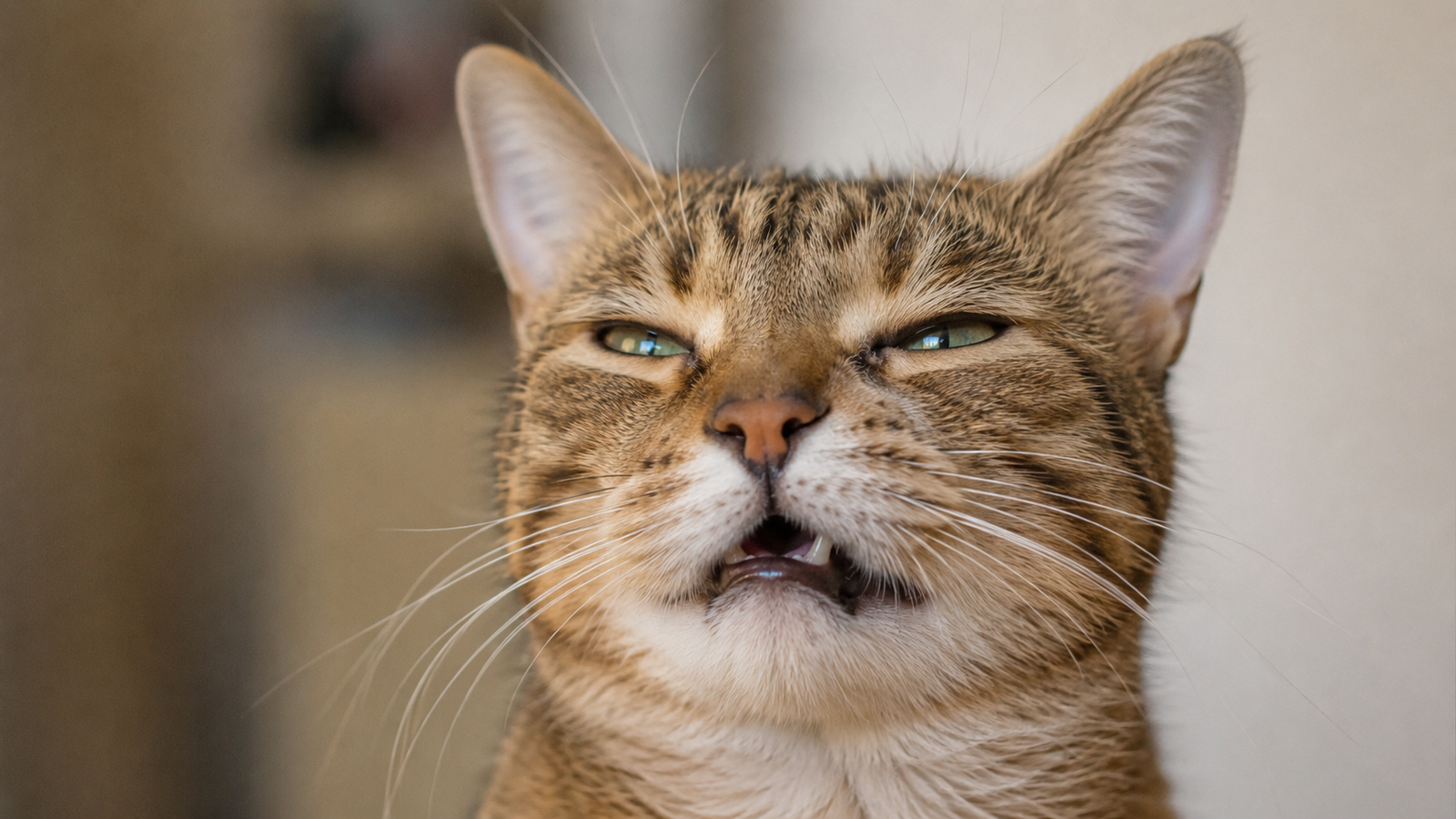
They’re using a small organ in the roof of the mouth called the vomeronasal organ (or Jacobson’s organ) to read pheromones in more detail than the nose can pick up. To activate it, they pull air over it by opening the mouth and curling the lip.
Common triggers: another cat’s urine, unfamiliar scents on your shoes, certain plants, and anything a strange animal has touched. The face means “I’m analyzing this smell,” not “I’m happy to see you.”
Teeth-Baring
Lips pulled back, teeth visible, ears flat against the head, pupils dilated. This is a warning, not a smile.
It usually comes with hissing, growling, or a low crouched posture, and it means the cat wants space. Reading it as friendly is how people get scratched or bitten.
How Cats Actually Show They’re Happy
A happy cat uses their eyes, tail, and whole body to say so.
Slow Blinking
Slow blinking is the closest thing cats have to a smile. The eyes narrow into soft crescents, sometimes close briefly, then open again in a slow, relaxed motion.
The blink itself is a trust signal. A cat that feels safe enough to close their eyes around you is usually relaxed and content too. Research from the University of Sussex (Humphrey et al., 2020) found that cats were more likely to return a slow blink to humans who slow-blinked first.
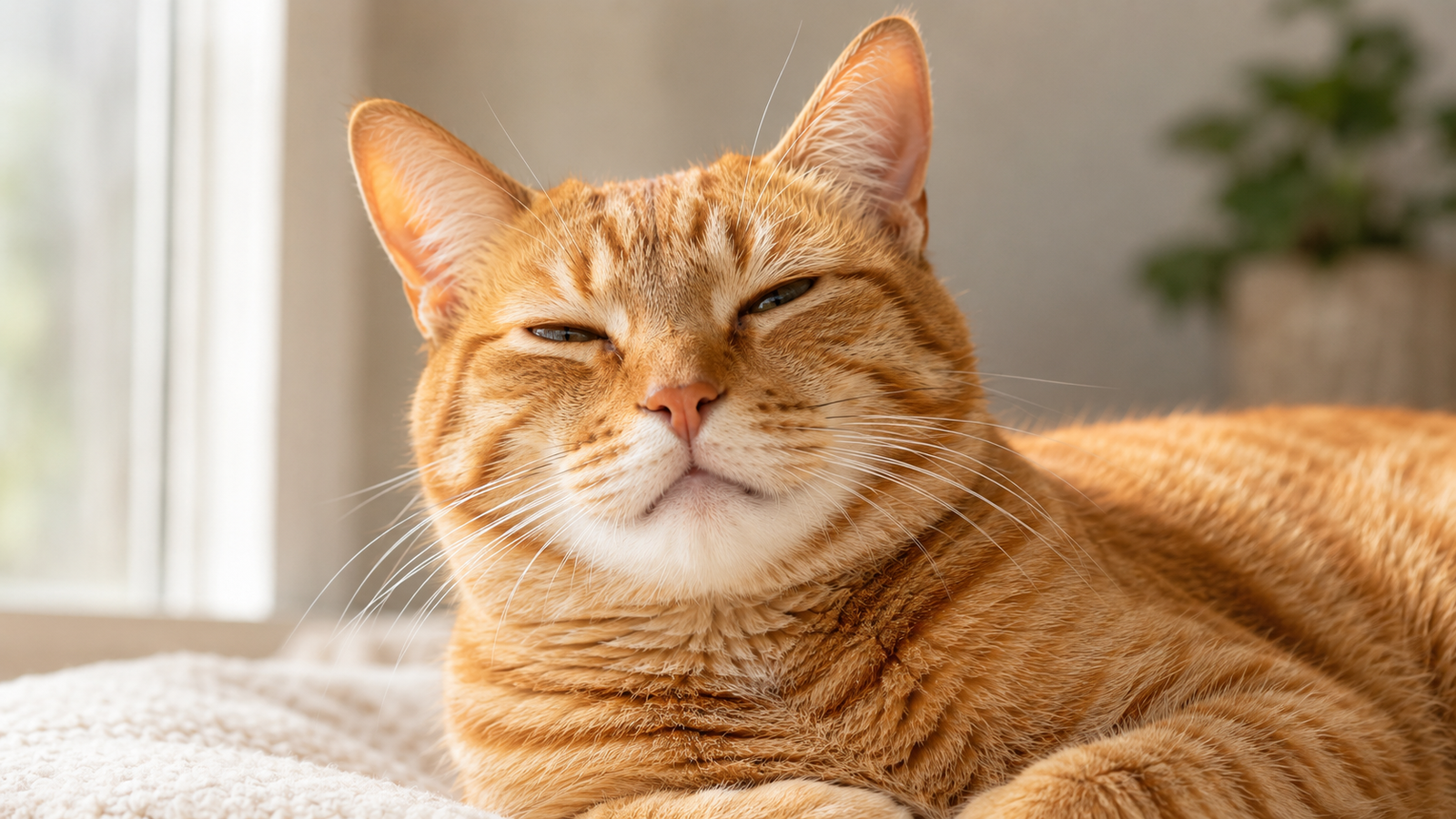
To try it, relax your eyes, avoid staring, and slowly close and open them. Your cat may return the blink.
Purring
Purring during chin scratches, while kneading a soft blanket, or curled up next to you is one of the clearest signs of a content cat. The rumble is low and steady, and the rest of the body looks relaxed—loose limbs, forward ears, and soft or half-closed eyes.
Purring doesn’t always mean happiness, though. Cats also purr for a range of reasons, including fear, pain, and self-soothing during stressful situations. If your cat’s body is tight, their ears are back, or they’re stuck in the carrier on the way to the vet, the purr may be a coping response rather than a sign of contentment.
Kneading
Kneading is that rhythmic push-push motion cats make with their front paws on something soft. It starts in kittenhood, when they knead their mother’s belly to help the milk flow, and many cats keep doing it as adults when they feel relaxed and secure.
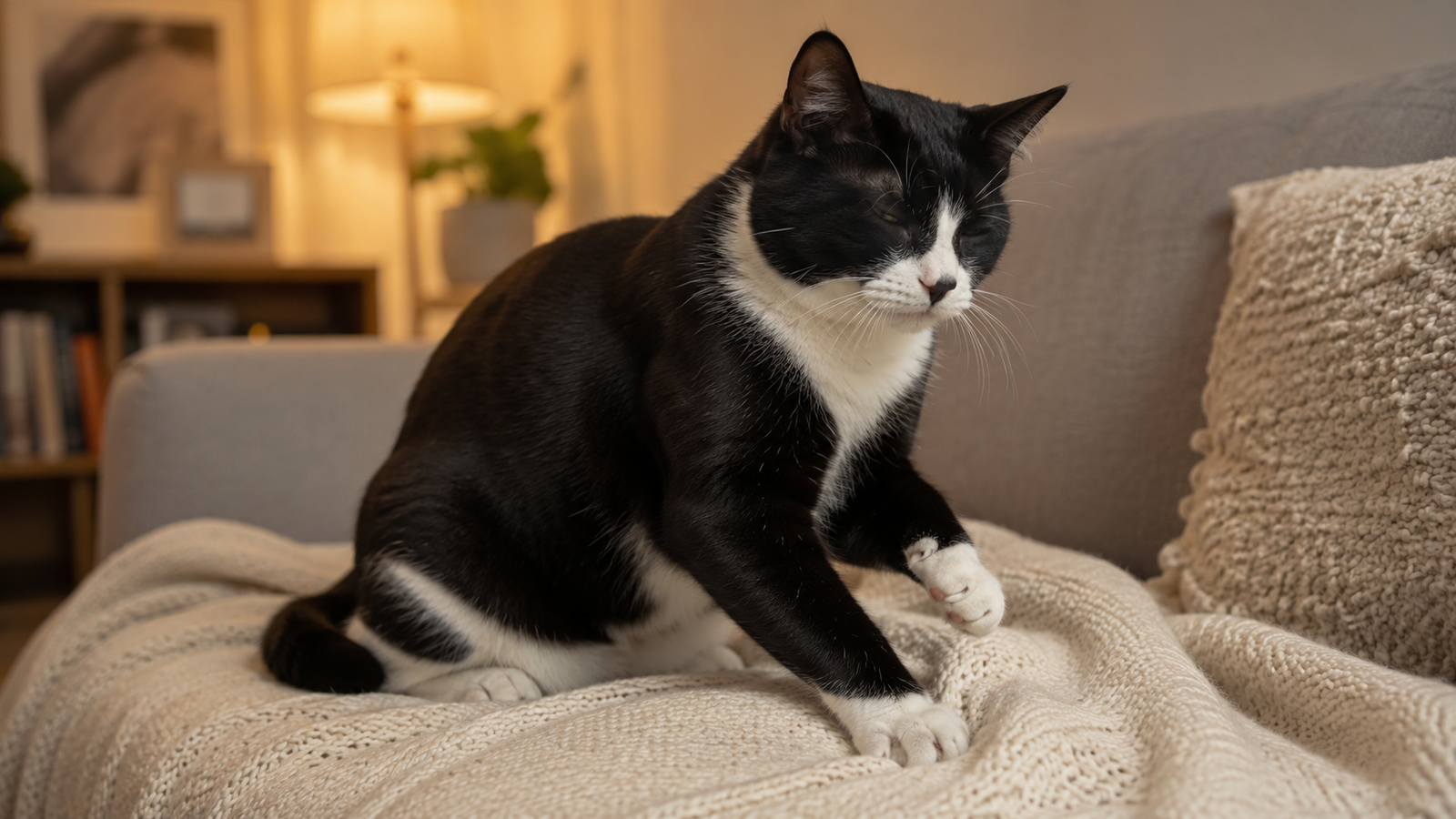
Blankets, laps, other cats, the couch. If it’s soft and your cat feels safe, it may become a kneading spot. Some cats even drool while they do it, another leftover from nursing. If you’re on the receiving end, take it as a compliment.
Bunting
Bunting is when your cat presses their head into you or rubs their cheeks against your hand, leg, or face. It’s their way of greeting you and claiming you at the same time.
Cats have scent glands on their cheeks and forehead, so every head bump leaves a little of their scent behind. That marks you as familiar and safe. It’s part hello, part signature.
Tail Talk
The classic happy tail is straight up with a slight curl at the tip. It’s the position you’ll often see when your cat spots you coming through the door.
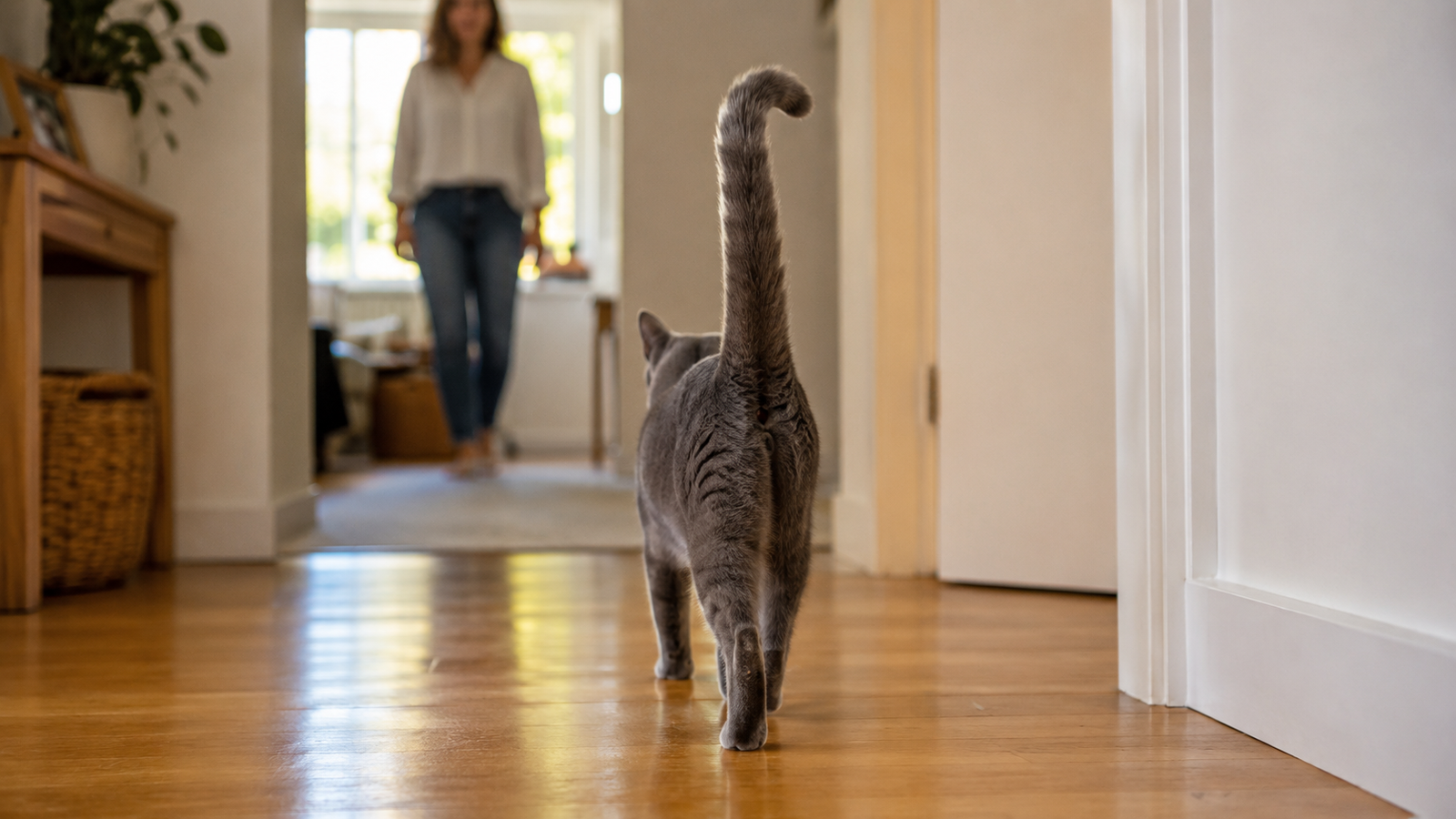
A question-mark curve at the top usually means your cat is feeling playful or curious. A small, slow flick at the tip can mean they’re focused on something. A low or tucked tail points to fear or uncertainty, while forceful thrashing usually means stress or irritation.
Ears and Body
A cat’s ears, whiskers, and fur tell you plenty. Upright ears facing forward, whiskers resting naturally at the sides, and fur lying flat against the body are all signs of a cat who feels safe and settled.
Their posture backs it up. A happy cat sprawls, stretches out, or flops belly-up near you. When the rest of the body stays loose and relaxed, exposing the belly is a strong sign your cat feels secure.
Do Cats Understand When You Smile at Them?
Sort of. Cats pick up your mood from your eyes, voice, and body language, not from the smile itself.
Relaxed eyes and a calm voice come across as safe. A hard stare and tense posture can feel threatening. What your mouth is doing doesn’t really factor in.
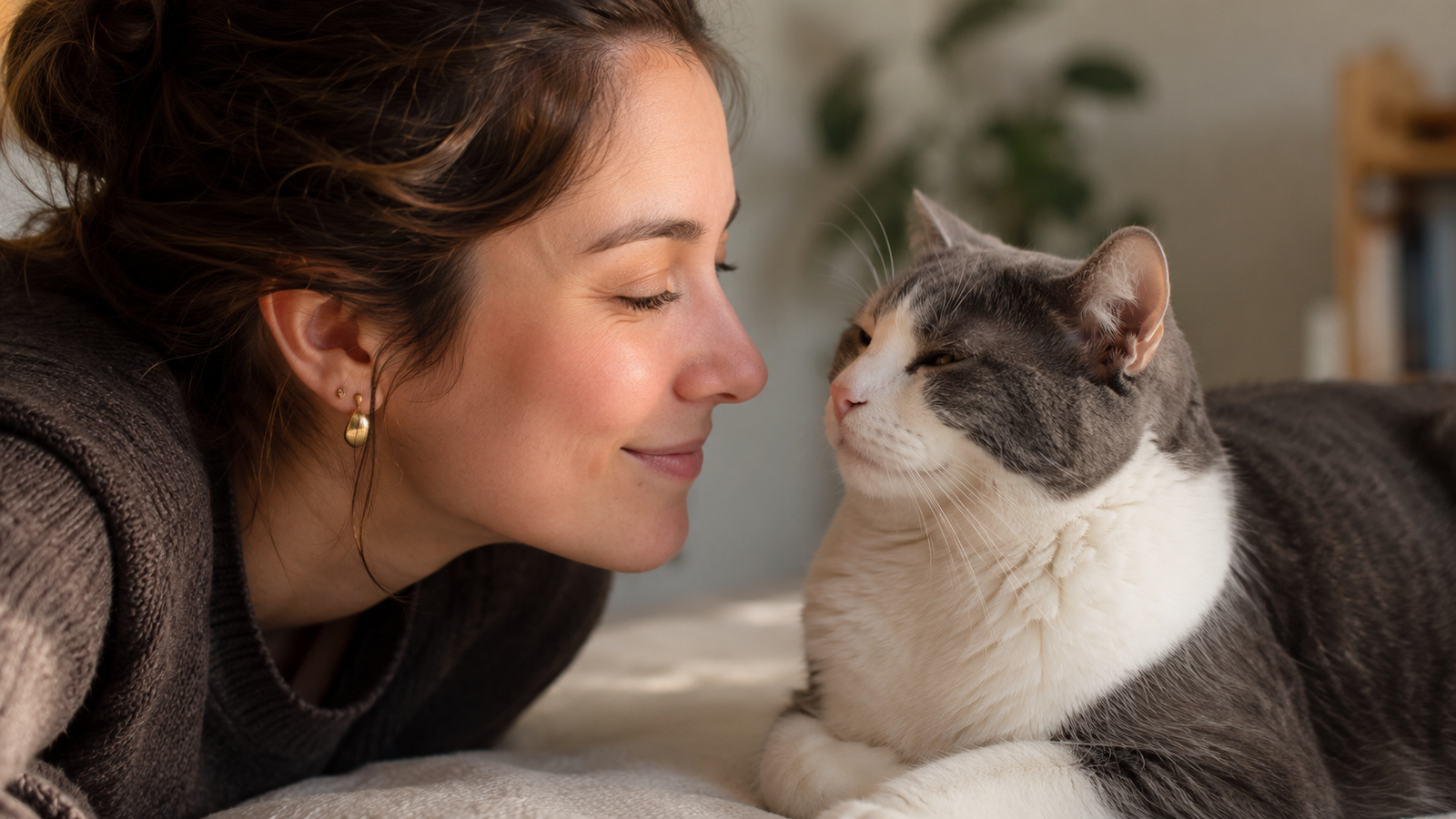
Smiling at your cat is fine. It just isn’t a message they read the way people do. A slow blink is what actually speaks their language.
Can Cats Smirk?
What looks like a smirk is usually a Flehmen response caught mid-motion or an asymmetrical resting face. One side of your cat’s lip sits a little higher than the other, which can look like a knowing half-smile.
Cats don’t do smug. Whatever you’re reading into that expression, it isn’t attitude. Charming, yes. Smug, no.
Can Cats Laugh?
Not in the human sense. Cats don’t have a laugh sound or a laugh face, and they don’t experience amusement the way people do.
A few of their vocalizations do get mistaken for laughter, though. Chirping is the excited noise cats make at the window when a bird lands. It’s a hunting instinct, not amusement. Trilling is a rolling greeting mothers use with kittens and friendly adults use with people they like. Chattering is the fast jaw-clicking sound cats make when they’re locked onto prey they can’t get to.
The closest thing to laughter is play. When a cat is having a good time, you see it in the zoomies and the sideways hop, not in any sound they make. The mouth stays quiet. The body does the talking.
Frequently Asked Questions
Do cats smile when they’re happy?
Not with their mouths. A happy cat’s version of a smile is the slow blink, and the rest of the signal comes from their tail and body. Checking the mouth first misses almost everything the cat is telling you.
Why does my cat look like they’re smiling?
The corners of a cat’s mouth naturally curve up when they’re relaxed, which is why they can look like they’re grinning even while asleep. If the expression comes with a curled lip and slightly open mouth, that’s the Flehmen response, a scent-processing reflex.
Should you smile at your cat?
Yes, and it won’t upset them. The smile itself isn’t really what your cat is reading, though. A slow blink comes through more clearly.
What does a cat smile look like?
It happens in the eyes, not the mouth. A happy cat narrows their lids into soft crescents and closes them briefly in an unhurried motion. That’s the slow blink, and it’s how cats show trust.
Do cats have facial expressions?
Yes, but they’re subtler than a dog’s or a human’s, and most of the signal comes from the eyes, ears, and whiskers rather than the mouth. A tense cat has tight eyes, flattened ears, and stiff whiskers. A relaxed cat has soft eyes, upright ears, and loose whiskers.
Debbie Reid is the founder and chief editor of CatPedia.net, with over 25 years of hands-on experience in feline care, rescue, and behavior research. Inspired by her rescue cats Snickers and Bigboy, she collaborates with animal welfare resources and consults veterinary literature to turn complex feline health, nutrition, and behavior topics into clear, actionable guides.