Yes, female cats spray. It’s less common than in males, but both spayed and unspayed females do it, usually in response to stress, territory, or being in heat.
What Cat Spraying Looks Like
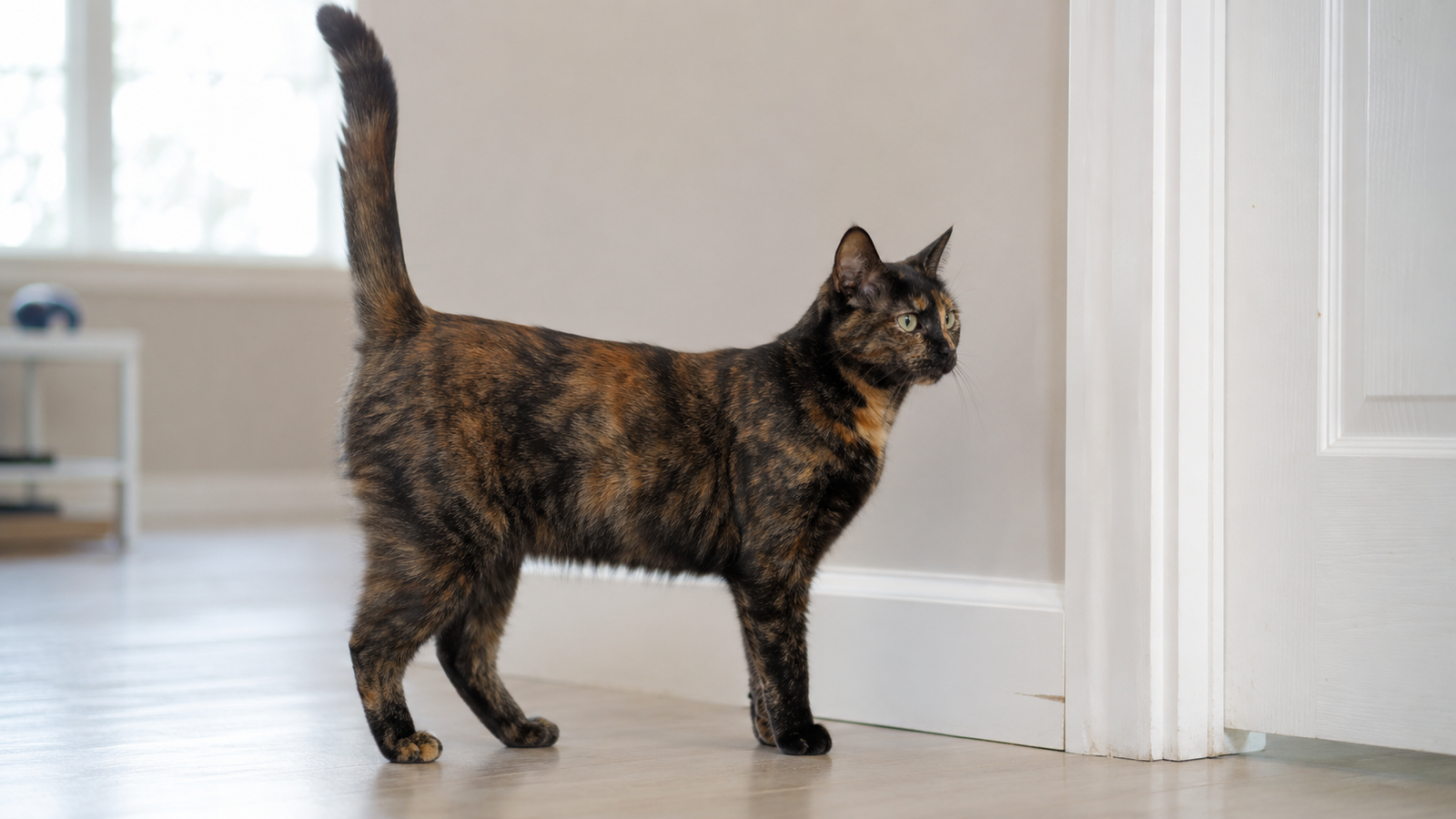
When a female cat sprays, she backs up to a vertical surface, lifts her tail, and releases a small amount of urine while the tail quivers. Her back feet often tread in place as she does it, and the urine lands on the wall, furniture, or door rather than the floor.
Sprayed urine smells stronger and more pungent than regular urine because it’s concentrated with scent-marking compounds. Most people describe the odor as musky, sharp, or slightly fishy, and the scent lingers longer than a normal litter box accident.
Both spayed and unspayed females can spray, though intact females do it far more often.
Spraying vs. Peeing Outside the Litter Box
- Spraying: Small amount of urine, vertical surface, tail up and quivering, cat stays standing and may tread with her back feet.
- Peeing outside the box: Full bladder release, horizontal surface like a rug or bed, cat squats.
If you haven’t caught your cat in the act, the surface and amount of urine can usually tell you which one you’re dealing with.
Why Do Female Cats Spray?
Most female spraying comes down to hormones, stress, territory, or conflict with another cat.
She’s in Heat
Unspayed females in heat spray to advertise their availability to nearby males. The urine carries hormones that signal she’s ready to breed. This type of spraying stops once she’s out of heat, and spaying usually prevents it from coming back.
A New Cat or Animal Is in the Home
Adding a new pet shifts the territory map. A resident female may spray near doorways, windows, or shared resources like food bowls and litter boxes to mark familiar territory.
Outdoor Cats She Can See or Smell
A stray or neighborhood cat outside the home is one of the most common triggers. Your cat sees or smells the intruder through a window or door and sprays a nearby vertical surface in response.
Stress and Routine Changes
Moving, renovations, new furniture, a new baby, or a change in your schedule can all trigger spraying. Cats rely on routine, and spraying is one of the ways they react when things shift.
Conflict With Another Cat in the Home
Tension between cats in the same household is a common trigger. The cats don’t have to be openly fighting. Quiet competition over litter boxes, food bowls, or resting spots is often enough to set it off.
Do Female Cats Spray After Being Fixed?
About 5% of spayed females still spray, compared with around 10% of neutered males. Spaying removes the heat-related hormone trigger, but stress and territory disputes can still set it off.
If a spayed female suddenly starts spraying after years of no issues, get a vet exam first to rule out a medical problem, then look at what’s changed at home.
Do Female Cats Spray When in Heat?
Yes, and it’s one of the clearest signs of heat along with vocalizing, restlessness, and the classic mating posture. Heat cycles last several days and can repeat every two to three weeks as long as she isn’t spayed, especially for indoor cats who cycle nearly year-round.
Spraying during heat is hormonal, not behavioral, so cleaning and rearranging the environment won’t fix it. Spaying ends the cycle and almost always ends the spraying tied to it.
How to Stop a Female Cat From Spraying
Stopping the spraying depends on what’s causing it. Working through the likely triggers one by one is more effective than trying every solution at once.
Skip punishment entirely. It increases stress and usually makes the behavior worse.
Spay Her If She Isn’t Already
For intact females, spaying is the most effective single step. It removes the heat-related hormone trigger and ends the cyclical spraying that comes with it.
Block the View of Outdoor Cats
If an outdoor cat is the trigger, close the blinds or cover the window near the spraying spot so she can’t see out. Motion-activated deterrents outside can also help keep visiting cats away.
Clean Sprayed Areas Properly
Regular cleaners don’t break down the compounds in cat urine that cause the odor, so the smell lingers and your cat keeps returning to the same spot. Use an enzyme cleaner made for pet urine and saturate the area, not just the surface. Avoid ammonia-based cleaners, since ammonia smells similar to urine and can draw your cat back to spray the same place again.

Add More Litter Boxes
The general rule is one box per cat plus one extra, placed in separate locations. In multi-cat homes, this reduces competition and gives each cat a private option.
Reduce Stress and Restore Routine
Keep feeding times consistent, give each cat their own resting spots, and add vertical space like cat trees or shelves. Pheromone diffusers can help take the edge off in tense environments.
Manage Conflict Between Cats
If two cats in the home aren’t getting along, separate resources so neither has to compete for food, water, or litter. Slow reintroduction can help when the tension has become routine.
When to Call the Vet
Schedule a vet visit if your female cat:
- Suddenly starts spraying after never doing it before
- Is also squatting, straining, or producing larger puddles outside the box
- Has blood in her urine
- Shows changes in appetite, energy, or thirst alongside the spraying
Bottom Line
Spaying handles most heat-related spraying. For everything else, the fix is usually environmental, whether that’s a stray cat outside the window, a new pet in the house, or competition between cats. Work through what’s changed, address the trigger, and the spraying usually stops.
Debbie Reid is the founder and chief editor of CatPedia.net, with over 25 years of hands-on experience in feline care, rescue, and behavior research. Inspired by her rescue cats Snickers and Bigboy, she collaborates with animal welfare resources and consults veterinary literature to turn complex feline health, nutrition, and behavior topics into clear, actionable guides.