
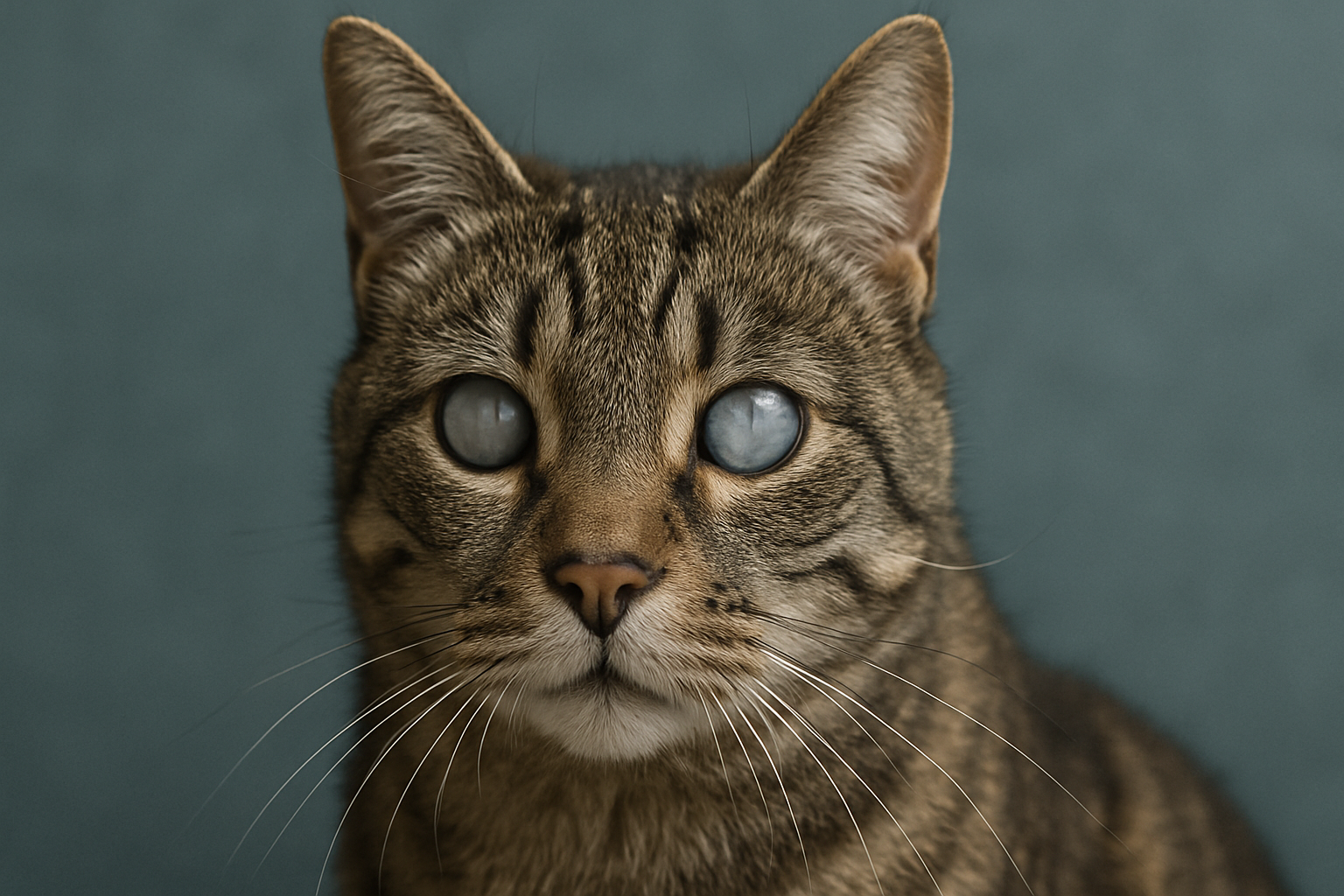
If your cat has started bumping into furniture, hesitating in dim lighting, or seeming disoriented at night, you may be seeing the early signs of vision loss. One possible cause is progressive retinal atrophy, a genetic condition that gradually leads to blindness in cats.
What Is Progressive Retinal Atrophy?
Progressive retinal atrophy, or PRA, is a degenerative eye disease that causes the light-sensitive cells in the retina to deteriorate over time. As those cells break down, vision gradually fades. There is no reversing it.
There are two forms:
- Early-onset PRA, also called retinal dysplasia, which can appear in kittens as young as a few weeks old
- Late-onset PRA, which develops in adults, typically between one and eight years depending on the breed
Both are inherited conditions, and both lead to irreversible blindness. PRA is painless, which is part of why it often goes unnoticed until vision is already significantly affected.
Which Cats Are at Risk?
PRA is rare in most cats but occurs more frequently in certain breeds due to inherited gene mutations. It’s an autosomal recessive condition, meaning both parents must carry the gene for it to appear in offspring.
Breeds with a higher risk include Abyssinians, Somalis, Siamese, Bengals, Persians, and Ocicats. Some lines of Maine Coons, Orientals, and Singapuras may also carry PRA mutations. Genetic testing is available and recommended for cats from these breeds.
What Are the Signs?
Because PRA is painless, many cats adapt quietly as their vision fades. The signs can be easy to miss early on.
- Dilated pupils even in bright light
- Cloudy or glassy-looking eyes
- Hesitation or reluctance to move in dim lighting
- Bumping into furniture or objects, especially in unfamiliar spaces
- Increased clinginess or anxiety
Difficulty seeing in low light is usually the first sign, well before full vision loss develops.
How Is It Diagnosed?
If vision loss is suspected, your vet will likely refer you to a veterinary ophthalmologist. Diagnosis typically involves a combination of:
- Fundoscopy to examine the retina directly
- Electroretinography (ERG) to measure retinal function
- Genetic testing, particularly for breeds known to carry PRA mutations
This also helps rule out other causes of vision loss, such as cataracts or retinal detachment, which have different treatment paths.
Is There a Treatment?
There is no cure for PRA. Once the retinal cells are gone, they cannot regenerate. Research into antioxidant therapy and gene therapy is ongoing, but currently there is no intervention that stops or reverses the condition.
The focus is on keeping your cat comfortable and helping them adapt to life with reduced or absent vision.
Living With a Blind Cat
Cats adapt to blindness more readily than most people expect. They rely heavily on scent, hearing, and spatial memory, and a cat that loses vision gradually often compensates so well that owners don’t realize how little they can see.
Some adjustments that help:
- Keep furniture in the same place so your cat can build and rely on a mental map of the space
- Use textured rugs to help mark key locations like the food bowl, water, and litter box
- Clear floor clutter and remove obstacles from regular pathways
- Use gentle voice cues so your cat knows where you are
- Consider a small bell on other pets so your cat can track their movement

PRA in Cats FAQs
Can cats go completely blind from PRA?
Yes. PRA causes progressive loss of retinal cells that eventually results in total blindness.
Is PRA painful for cats?
No. It’s a painless condition, which is part of why cats often adapt so quietly as their vision fades.
How can I test my cat for PRA?
Genetic tests are available for many at-risk breeds. A veterinary ophthalmologist can also perform an ERG or retinal exam to assess retinal function.
What age does PRA usually appear?
It depends on the form. Early-onset PRA can appear in kittens, while late-onset typically develops between one and eight years of age.
Can PRA be prevented?
Not in an affected cat. But responsible breeding with genetic screening can prevent it from being passed on to future litters.
Living Well With PRA
Progressive retinal atrophy sounds daunting, but cats can live happy, full lives without sight. Because the condition usually develops gradually, most cats adjust as their vision fades.
Keep their space predictable, avoid moving furniture around, and talk to your vet if you notice sudden changes in behavior or confidence.