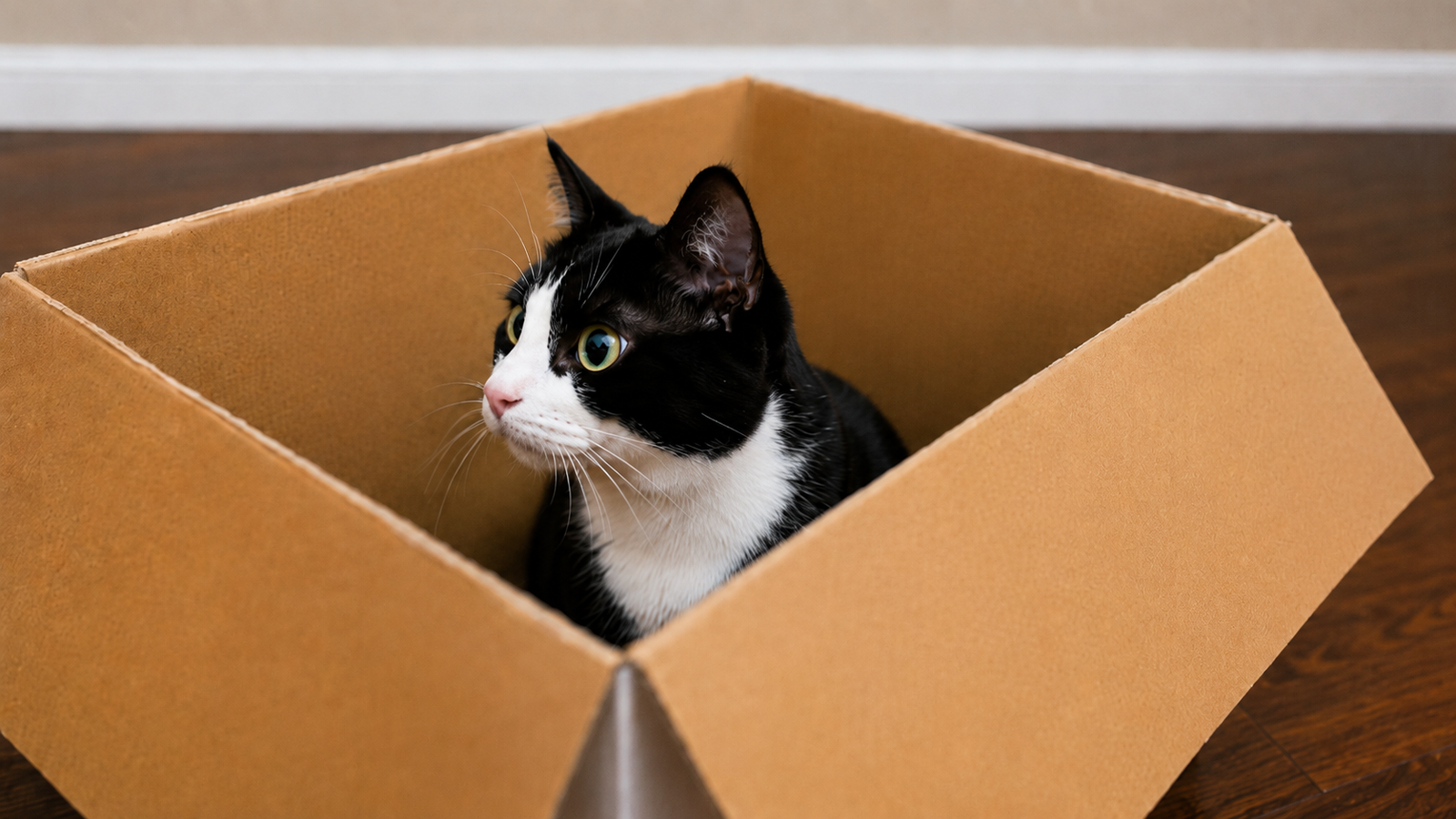
If I fits, I sits.
You’ve seen the phrase a hundred times, usually under a photo of somebody’s cat crammed into a shoebox, a salad bowl, or an Amazon box two sizes too small.
But why a box? And why does your cat choose it over the heated bed you actually bought for them?
Why Do Cats Love Boxes? 6 Reasons
1. Boxes Feel Safe
Cats are both predator and prey, so they naturally look for places where they can rest without feeling exposed. A box protects their back and sides while giving them a clear view of what’s happening around them.
This is why your cat will often pick a cardboard box over a bed that looks cozier to you. The bed is softer. The box is safer. To a cat, safer wins.
2. Boxes Trap Warmth
Cats are most comfortable between 86 and 97°F. Most homes sit around 72°F. That gap is why your cat spends the day tracking warmth around the house, from sunny patches in the morning to warm laundry and whichever couch cushion you just got up from.
A cardboard box gives them another warm place to sleep. Cardboard is a decent insulator, so it holds your cat’s body heat inside the box instead of letting it escape into the room. The tight space also keeps your cat curled up, which helps conserve even more heat.
3. Boxes Are Ambush Stations
Cats are ambush hunters. Instead of chasing prey over long distances, they hide, watch, and wait for the right moment to pounce. That behavior doesn’t disappear just because dinner comes from a can. Your cat may still practice it with toys, your ankles, or another cat passing by.
A box gives them the perfect place to do it. They can stay hidden while watching for movement outside, then spring out when something catches their attention.
4. Boxes Reduce Stress
A 2014 study by researchers at Utrecht University followed shelter cats for two weeks after they arrived at a Dutch animal shelter. Cats that were given a box to hide in adjusted faster and showed lower stress levels than cats that weren’t given one. Having a place to retreat helped them cope with an unfamiliar setting.
The same idea applies at home. When something changes or feels overwhelming, whether it’s houseguests, a new pet, fireworks, or a move, a box gives your cat a quiet place to retreat until they feel comfortable coming back out.
5. Boxes Help Cats Avoid Conflict
Cats don’t always deal with tension by confronting each other. If another cat is crowding them, guarding a favorite spot, or simply getting too close, they may prefer to retreat instead.
A box gives them somewhere to do that. In a multi-cat home, having several boxes and other hiding spots gives each cat more ways to get away from the others when they want some space.
6. Boxes Are Fun to Scratch and Shred
Cardboard is fun for cats to scratch, bite, and tear apart. It’s stiff enough to catch their claws and soft enough to come apart when they pull.
For some cats, destroying the box is almost as much fun as sitting in it. It also gives them somewhere to scratch and tear that isn’t your couch.
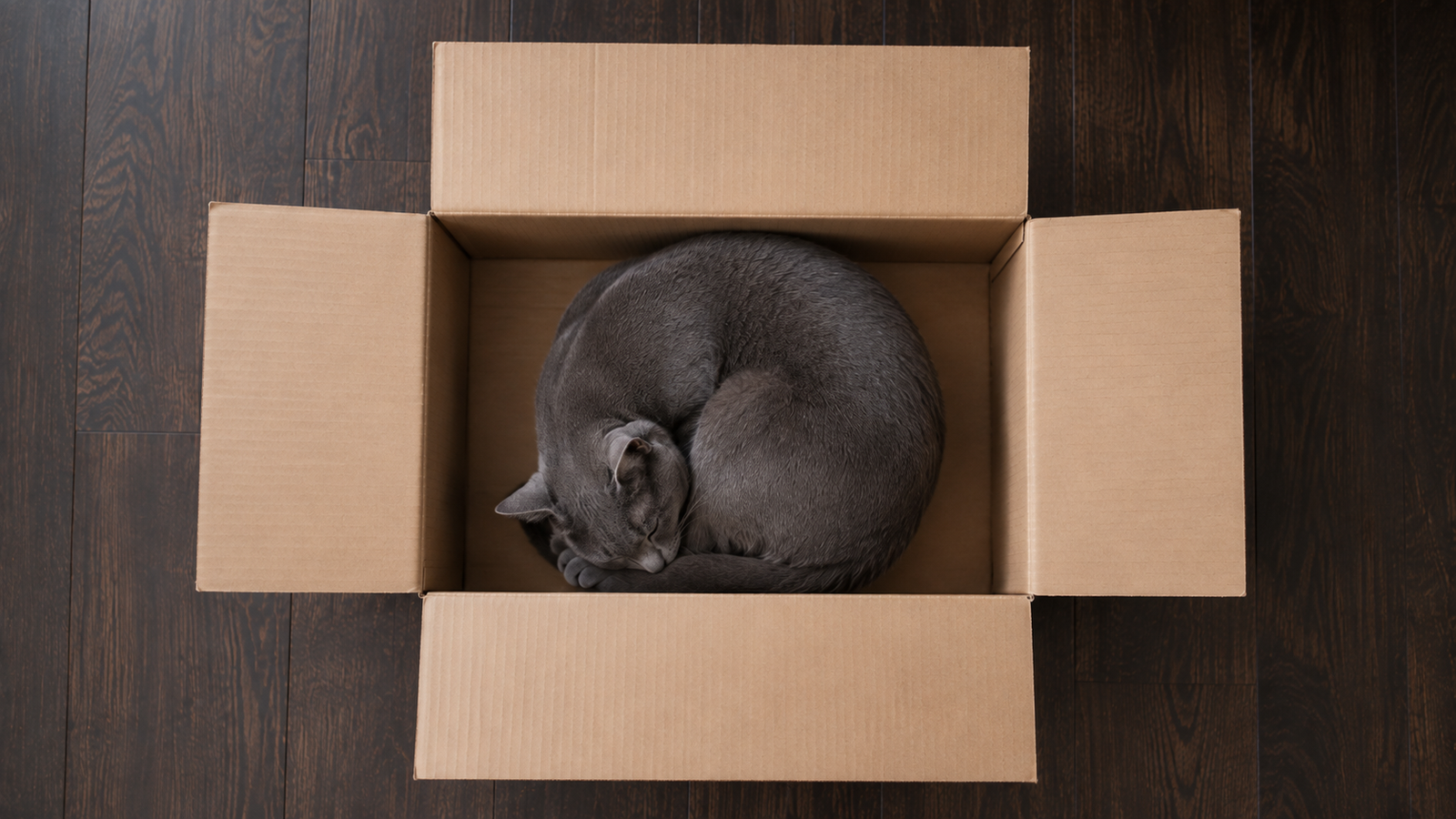
So Is It Just About the Walls?
Most of the reasons cats like boxes depend on the box actually being there. The walls provide warmth, cover, and a place to hide. But a 2021 study suggests the shape itself may also matter.
Researchers had cat owners place a square of tape on the floor at home. Some cats sat inside it even though there was nothing to warm them or hide them.
The researchers also tested a visual illusion made from four separate shapes arranged so the empty space between them looked like a square. No square was actually drawn, but the cats sat inside the illusion too.
The study was small, so it doesn’t prove every cat responds this way. But it does suggest part of a box’s appeal starts before your cat climbs inside. A square shape on the floor can draw a cat in on its own, even without walls to hide behind.
When Box Hiding Might Signal a Problem
Loving boxes is normal cat behavior. But if your cat suddenly starts spending much more time hiding than usual, pay attention to what else has changed.
A Sudden Increase in Box Time
A new stressor in the house, like a move, a new pet, houseguests, or a change in routine, can send a cat looking for somewhere quiet to retreat for a few days.
A medical issue can look the same on the surface. Cats hide when they don’t feel well, and increased hiding paired with reduced appetite, a hunched posture, low energy, or changes in litter box habits is worth a call to your vet.
When Your Cat Eats the Box Instead of Just Shredding It
Shredding cardboard is one thing. Actually swallowing it is another. Some cats develop a habit of chewing and eating non-food items, a condition called pica, and cardboard is a common target.
Swallowed cardboard can cause an intestinal blockage. If your cat is actually eating pieces of the box rather than just tearing it up, take it away and talk to your veterinarian. Vomiting, loss of appetite, or lethargy after swallowing something needs more urgent attention.
How to Make a Box Safe for Your Cat
Most cats claim a new box the moment it hits the floor, so you’re often checking it after they’ve already climbed in. Look for these hazards either way.
Remove Staples, Tape, and Labels
Shipping boxes can have metal staples, loose tape, and paper labels stuck to the outside. Staples can scratch, and tape or torn pieces of labels can be chewed off and swallowed. Pull off anything loose before your cat starts working on the box.
Check Handle Cutouts
Some boxes have handle cutouts that only go partway through the cardboard, leaving a hanging flap. A curious cat can push their head through the flap and struggle to pull it back out. If a flap is still hanging, tear it off.
Remove Loose Packing Materials
Elastic bands, twine, plastic wrap, packing peanuts, and pieces of foam can all be swallowed and cause an intestinal blockage. Pull them out as soon as you see them, even if your cat is already in the box.
Debbie Reid is the founder and chief editor of CatPedia.net, with over 25 years of hands-on experience in feline care, rescue, and behavior research. Inspired by her rescue cats Snickers and Bigboy, she collaborates with animal welfare resources and consults veterinary literature to turn complex feline health, nutrition, and behavior topics into clear, actionable guides.