We all know dogs wag their tails when they’re happy, but cats are a little more complicated. A swish, a thump, or a slow wave can all mean something different.
Why Do Cats Wag Their Tails?
Cats use their tails to express mood and intent. Unlike dogs, a wagging tail does not automatically mean happiness. Fast or sharp movement often signals irritation, overstimulation, or intense focus. Slower, more fluid movement tends to indicate calm curiosity or relaxed engagement.
What Different Tail Movements Mean
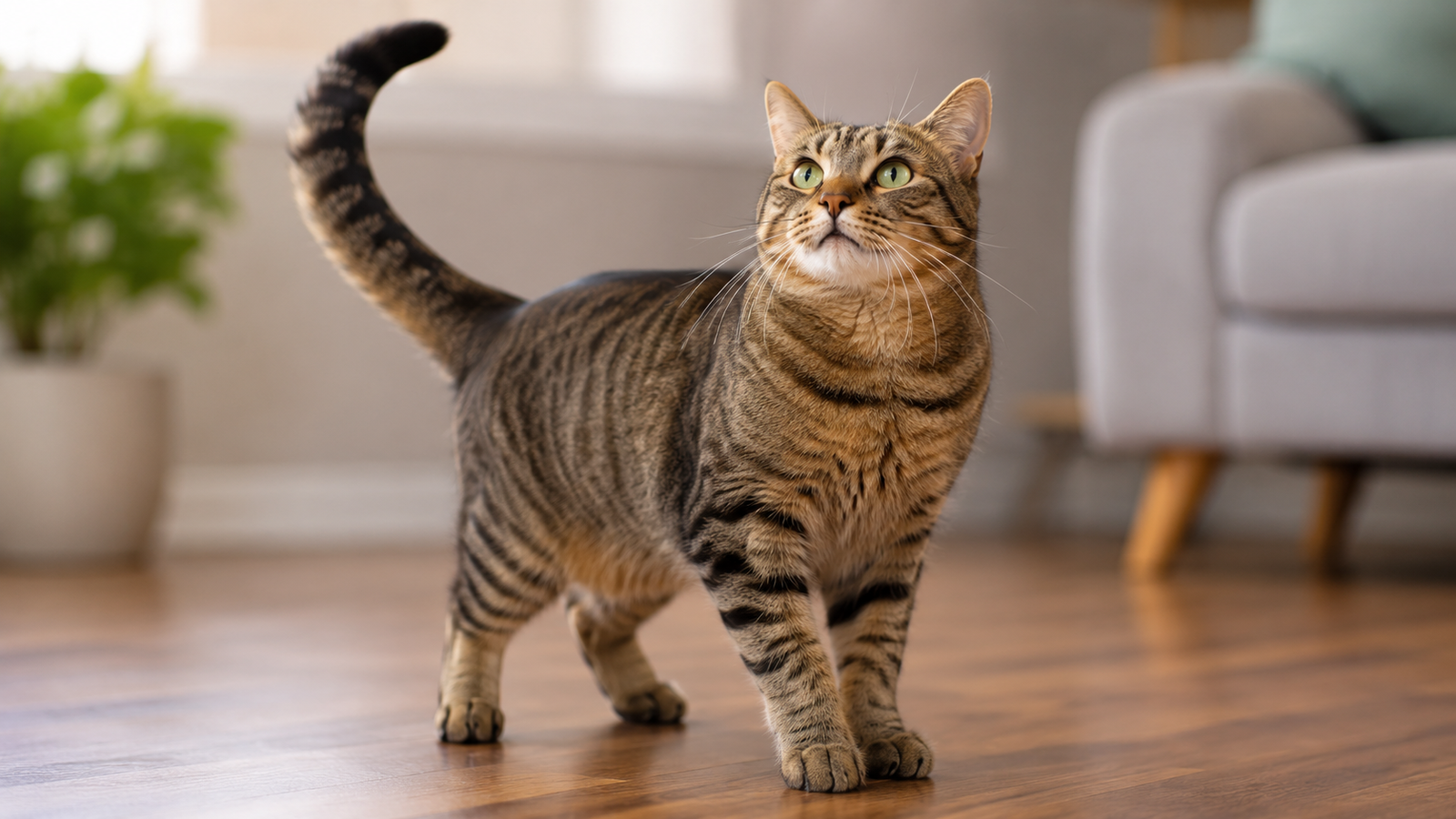
- Straight up: Confidence and friendliness. A cat approaching you or another animal with their tail straight up is open to interaction.
- Question mark shape: Playful and happy. An invitation to engage.
- Slow swish or wave: Focused attention. Your cat is watching something closely and may be getting ready to pounce.
- Gentle waving while relaxed: Contentment or calm engagement. Some cats softly move their tails while resting near people they trust.
- Fast flicking: Irritation or overstimulation. Often an early warning that your cat wants space.
- Tail thumping against the floor: A stronger signal of annoyance. If it happens during petting, your cat is asking you to stop.
- Tip twitching: Mild irritation or hunting focus. Context matters here. A cat watching a bird outside is very different from one twitching during a petting session.
- Puffed tail: Fear or feeling threatened. Usually paired with an arched back and raised fur.
- Wrapped around you: Affection and trust. The feline equivalent of putting an arm around someone.
- Tucked low or drooping: Fear, submission, or sometimes pain, especially if your cat suddenly starts holding their tail differently than usual.
When to Be Concerned
Most tail movements are harmless, but a tail that suddenly droops or sits at an odd angle can sometimes point to an injury. Cat tails are delicate, and strains or fractures can happen after falls, rough handling, or getting the tail caught somewhere.
If your cat suddenly starts holding their tail differently, avoids being touched, or cries out when the tail moves, call your veterinarian.
Do Happy Cats Wag Their Tails?
They can, yes. A content cat may gently wave or softly twitch their tail while resting near someone they trust. The movement tends to be slow and relaxed, nothing like the sharp flicking of an irritated cat. A straight-up tail, slow blinking, purring, and a loose, comfortable body are all reliable signs your cat is feeling good.
Frequently Asked Questions
Why do cats wag their tails while lying down?
A cat lying down with a gently moving tail is usually relaxed but still aware of what’s going on around them. They may be tracking a sound or reacting to your voice without feeling the need to act on it. If the movement sharpens during petting, that’s a signal they’ve had enough contact for now.
Why do cats wag their tails when sleeping?
Cats cycle through light and deep sleep, and during lighter phases the tail can twitch alongside small ear flicks or paw movements. It’s the same reason people shift or mumble in their sleep. As long as your cat seems comfortable and is otherwise acting normally, it’s nothing to worry about.
Why do cats wag their tails while being petted?
A cat may seem content during petting while their tail signals otherwise. Gentle movement at the start can mean engagement, but if the tail starts flicking harder or thumping, your cat is asking for a pause. Some cats have a shorter threshold for physical contact than others, and learning to read that signal makes interactions better for both of you.
Why does my cat wag their tail when I talk to them?
They’re likely focusing on you or reacting to your voice. Many cats flick or twitch their tails when paying attention to someone they’re comfortable with.
Why do cats wag their tails before pouncing?
That twitching is part of the hunting sequence. Cats often flick or lash their tails while zeroing in on a target right before they spring. Completely normal predatory behavior.
Reading Your Cat’s Tail
Cats may not be as obvious as dogs, but their tails do a lot of talking. Pay attention to the swishes and twitches, and you’ll have a much better sense of when your cat wants to play, when they need space, and when they’re just happy to be near you.
Debbie Reid is the founder and chief editor of CatPedia.net, with over 25 years of hands-on experience in feline care, rescue, and behavior research. Inspired by her rescue cats Snickers and Bigboy, she collaborates with animal welfare resources and consults veterinary literature to turn complex feline health, nutrition, and behavior topics into clear, actionable guides.