Female cats go through reproductive cycles, but they do not menstruate like humans do.
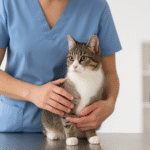
Bleeding is not a normal part of a cat’s heat cycle. If you see blood, it is a medical issue and she needs to see a vet.
Do Cats Have Periods Like Humans Do?
What female cats have instead is a heat cycle. The fertile phase is called estrus, or being “in heat.”
In humans, the uterine lining thickens each cycle to prepare for pregnancy. If no pregnancy occurs, hormone levels drop and the lining is shed through the vagina as menstrual flow. In cats, the uterine lining remains much thinner, and when no pregnancy occurs the body reabsorbs it internally rather than shedding it. A cat can cycle repeatedly without ever bleeding.
Ovulation is also different. In humans it happens on a hormonal schedule roughly midway through the cycle. Cats are induced ovulators, meaning they only release eggs after mating. An indoor cat who never encounters an intact male will keep cycling in and out of heat without ovulating.
Cat Heat Cycle vs. Human Menstrual Cycle, Side by Side
| Human menstrual cycle | Cat heat cycle | |
|---|---|---|
| What happens to the uterine lining | Shed and passed out of the body | Reabsorbed internally |
| Visible bleeding | Yes, expected | No |
| What triggers ovulation | Hormonal, on a schedule | Mating (induced ovulation) |
| How often it happens | Monthly, year-round | Every 2 to 3 weeks during breeding season, often year-round for indoor cats |
How a Cat’s Heat Cycle Works
Cats are seasonal breeders. Under natural lighting, they cycle mostly during the longer-daylight months, generally from late winter or early spring through fall in the northern hemisphere. Daylight is the trigger. A cat needs around 12 to 14 hours of light per day to stay in her cycling phase.
Indoor cats living under household lighting often get that much year-round, which is why an indoor-only cat may go into heat every few weeks with no seasonal break.
The Five Stages of the Cat Heat Cycle
A cat’s heat cycle has five phases, but estrus is the one most people recognize as being “in heat.” This is when the behaviors are most obvious. The other phases are quieter transitions that may be easy to miss.
Proestrus (1 to 2 days). Estrogen begins to rise and the cat’s body prepares for the fertile stage ahead. She may start rubbing against furniture, becoming more affectionate, and vocalizing more than usual. She will attract male cats but will not yet allow mating.
Estrus (2 to 19 days, average around 7). This is the phase most people mean when they say a cat is “in heat.” She is receptive to mating, and this is when the loud yowling and other classic heat behaviors are most obvious. If she gets outside during estrus, she is very likely to mate.
Interestrus (usually 1 to 3 weeks). If no mating occurred, the cat enters interestrus. Hormone levels fall and the behavioral signs stop. She looks and acts normal. Once interestrus ends, proestrus starts up and the cycle begins again.
Diestrus. If mating did occur, the cat ovulates and enters diestrus instead of interestrus. Diestrus lasts around 30 to 40 days if she did not become pregnant, or continues into pregnancy if she did. The behavioral signs of heat stop within a day or two of mating.
Anestrus. Anestrus is the seasonal resting phase, when the cat’s reproductive system quiets down for the shorter-daylight months. Outdoor and semi-outdoor cats in the northern hemisphere usually enter anestrus in late fall and stay there through winter. Indoor cats living under year-round artificial light often skip anestrus entirely and keep cycling straight through.
When Do Cats Have Their First Heat?
Most female cats have their first heat somewhere between 4 and 12 months of age. The average is around 6 months.
Short-haired breeds like Siamese tend to reach sexual maturity earlier, sometimes as young as 4 months. Long-haired breeds like Persians and Maine Coons often take longer, and some do not have their first heat until 10 to 12 months or later. Underweight or slow-growing kittens generally cycle later than their well-fed littermates.
Daylight is the other major factor. Outdoor kittens born in spring are exposed to the longer days that help trigger cycling during their first summer. Kittens born in fall may not cycle until the following spring, when days lengthen again.
Indoor cats do not follow the seasonal pattern. Household lighting keeps them exposed to long daylight hours year-round, so an indoor kitten may go into heat earlier than a barn cat born on the same day.
Once a cat starts cycling, she can get pregnant. That includes her very first heat if she has access to an intact male. This is why most veterinarians recommend spaying before the first heat, typically around 4 to 5 months of age.
Signs Your Cat Is in Heat
The signs of a cat in heat are behavioral, not physical, and they can be startling if you have never seen them before.
- Loud, persistent vocalizing. Yowling and drawn-out meowing that can go on for hours, often worse after dark. She is calling for a mate and will not stop until the cycle ends.
- Sudden clinginess and rubbing. She may rub her face, cheeks, and body against furniture, doorframes, the floor, and your legs, even if she is normally standoffish.
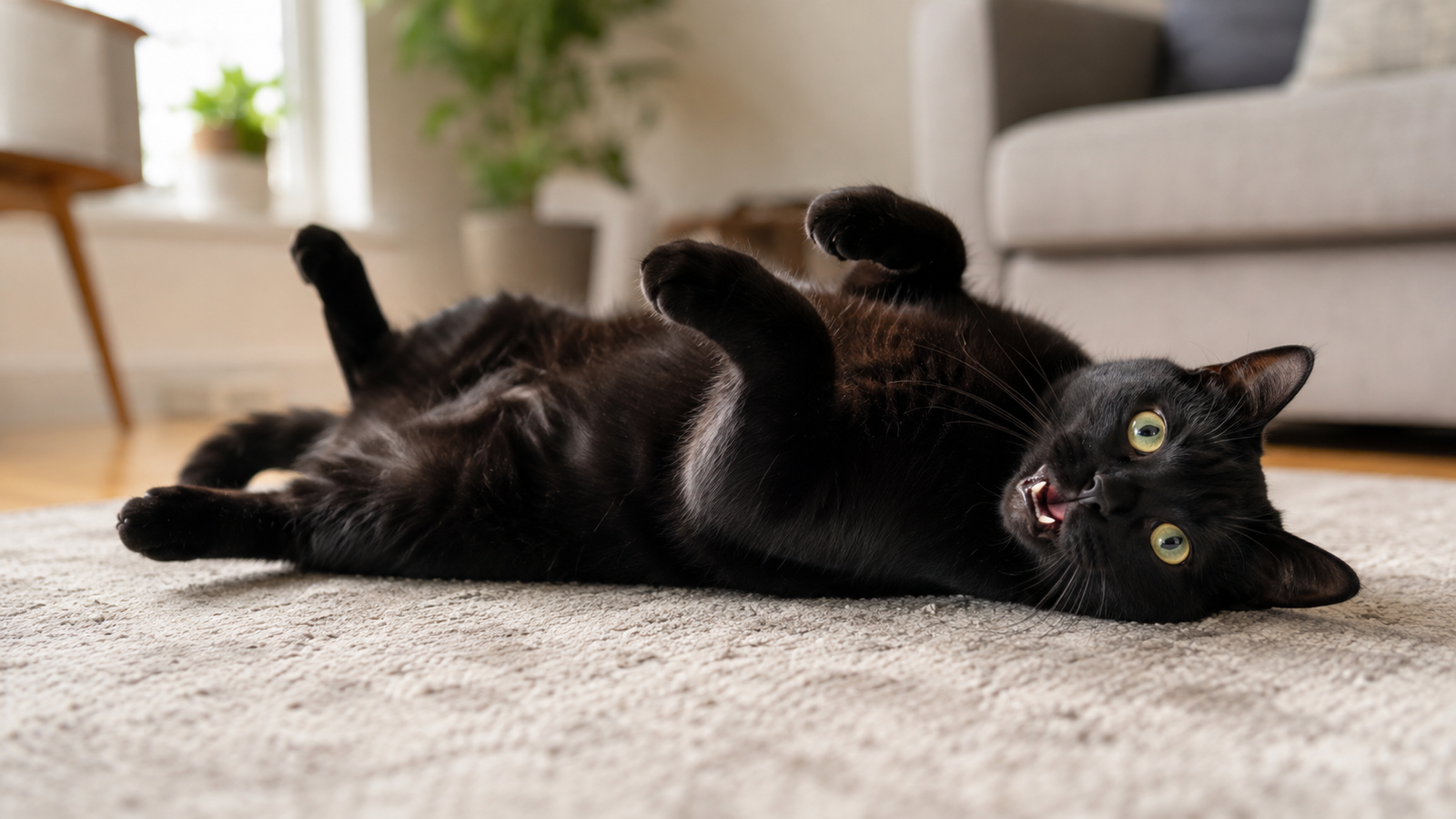
- Rolling on the floor. Repeated rolling and stretching, often on her back, sometimes for long stretches at a time.
- Raising her hindquarters (lordosis). When you pet her along her lower back, she may lower her chest, raise her rear end into the air, and tread with her back legs. This is the mating posture.
- Trying to escape outside. Bolting for open doors, sitting at windows, and calling from screens. An indoor cat who has never shown any interest in going outside can become determined to get out.
- Spraying urine. Small amounts of urine sprayed on vertical surfaces, walls, or furniture. This is scent marking to advertise her availability to males and is not a litter box problem.
- Restlessness and pacing. Walking from room to room, unable to settle, especially near doors and windows.
- Reduced appetite. Many cats eat less during estrus, and some skip meals entirely. Appetite returns once the phase ends.
- Excessive grooming of the genital area. More licking than usual around the vulva is normal during heat.
If she does not mate and you have not had her spayed, these signs stop for a couple of weeks and then start over.
Is Bleeding Normal When a Cat Is in Heat?
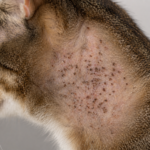
No. A healthy cat in heat should not be bleeding. Cats do not shed the uterine lining the way humans do, so any visible blood — light, heavy, or clotted — is a medical issue, not a period.
Bleeding in an unspayed cat may come from a urinary tract problem or a pregnancy complication. If you see blood, have your cat examined by a veterinarian.
How to Help Your Cat Through a Heat Cycle
You cannot shorten a heat cycle at home, and you cannot train the vocalizing out of her. What you can do is keep her safe, keep the household manageable, and take some of the stress off her.
- Keep her indoors and check every window screen. A cat in heat will find gaps she has never used before. Walk through the house and confirm every screen is secure. Keep doors closed and warn anyone in the household to watch for a bolt when they come in or out.
- Separate her from any intact males in the household. Cats do not recognize family bonds. Brothers, fathers, and unrelated intact males will all mate with her, and she will accept them. If you have unneutered males in the house, keep them in a separate room with the door closed until her heat ends.
- Block sight, sound, and scent of outdoor cats. Close windows on the side of the house where male cats congregate, pull curtains, and consider a white-noise machine if you hear yowling outside. The fewer cues she picks up, the less she will fight to get out.
- Do not punish the vocalizing or spraying. Both are hormonal, not behavioral. Yelling, spray bottles, and time-outs will not stop either one and will add stress to a cat who is already stressed. Wait the phase out, and talk to your vet about spaying.
Should You Spay Your Cat?
Yes. Unless you are a registered breeder, spaying your cat is the right call. It ends the heat cycles, protects her from serious reproductive diseases, and prevents unwanted litters.
Why Spay?
- Heat cycles stop. No more yowling, spraying, or door-bolting every 2 to 3 weeks.
- Pyometra risk is eliminated. Pyometra is a life-threatening uterine infection that requires emergency surgery. A spayed cat cannot get it.
- Mammary cancer risk drops sharply. Feline mammary tumors are aggressive and often malignant, and spaying substantially reduces the risk, especially when done before the first heat.
- No accidental litters. A door held open for a few seconds is enough for her to get out and mate. Cats can be pregnant again within weeks of giving birth. Spaying is the only way to guarantee no kittens.
When to Spay
Most veterinarians recommend spaying before the first heat, typically at 4 to 5 months of age. Spaying before the first cycle produces the biggest reduction in mammary cancer risk and avoids the whole first round of heat behavior. Kittens this age recover fast.
If your cat is already past her first heat, spay her anyway. The mammary cancer reduction is smaller after multiple cycles, but spaying eliminates pyometra risk.
Can You Spay a Cat Who Is in Heat?
Yes, but many veterinarians prefer to wait. During heat, the blood vessels supplying the uterus and ovaries are enlarged, which raises the risk of surgical bleeding. Most vets will schedule the spay for a week or two after the heat cycle ends rather than performing it during estrus.
FAQ
Do female cats bleed during their period?
No. A healthy cat in heat does not bleed. Cats reabsorb the uterine lining rather than shedding it, so there is no menstrual flow the way there is in humans. If your cat is bleeding, it is a sign of a medical problem and she needs to see a veterinarian.
How long does a cat’s heat cycle last?
The active heat phase lasts about 7 days on average, though it can range from 2 to 19 days.
Do cats get their period every month?
No. Cats do not have a monthly cycle. An unspayed cat may go into heat every 2 to 3 weeks during breeding season, and indoor cats exposed to year-round household lighting may cycle throughout the year.
At what age do cats stop going into heat?
Cats do not go through menopause. An unspayed female cat can continue cycling for her whole life. Spaying is the only permanent way to end the cycles.
Can I spay my cat while she’s in heat?
Most vets prefer to wait a week or two after the cycle ends. The reproductive organs are more vascular during heat, which raises surgical bleeding risk.
Conclusion
Bleeding is never a normal part of a cat’s heat cycle. If you see blood, have her examined by a veterinarian.
If the repeated yowling, spraying, restlessness, and escape attempts are wearing you down, spaying ends the heat cycles permanently. It also prevents pyometra and reduces the risk of mammary cancer.
Debbie Reid is the founder and chief editor of CatPedia.net, with over 25 years of hands-on experience in feline care, rescue, and behavior research. Inspired by her rescue cats Snickers and Bigboy, she collaborates with animal welfare resources and consults veterinary literature to turn complex feline health, nutrition, and behavior topics into clear, actionable guides.