Most people know dogs are ticklish. Scratch the right spot and that back leg starts going like crazy, totally involuntary. But what about cats? Are cats ticklish too?
Turns out they have their own version of it. Touch certain spots and you’ll get twitching, toe-spreading, skin rippling, or a back leg kicking at nothing. Behind all of it is a mix of nerve sensitivity, instinct, and each cat’s own quirks. So yes, cats are ticklish, just in their own way.
Where Cats Are Most Sensitive
Certain spots on your cat’s body tend to produce the strongest reactions. The belly, paws, and the area just above the tail are the usual suspects — either because they’re packed with nerve endings, tied to instinctive self-protection, or both.
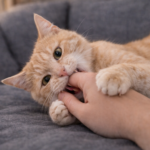
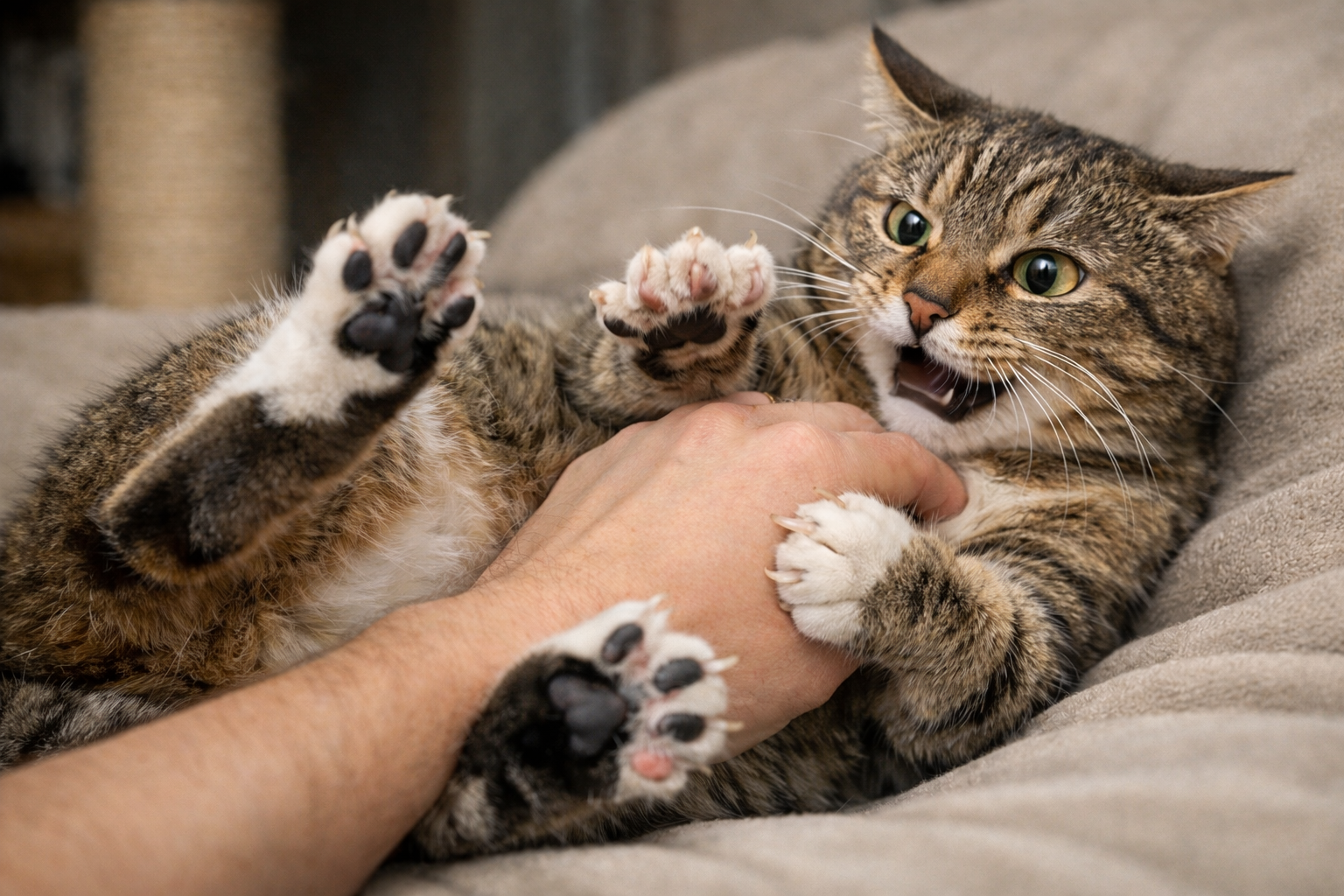
The belly is probably the most misunderstood zone. When your cat rolls over and shows their tummy, it’s a sign of trust — not necessarily an invitation for a rub. The belly covers vital organs, and even the most relaxed cats can feel exposed when touched there. That grab-and-kick response? It’s part reflex, part self-defense. It’s not personal.
Paws and feet are another sensitive area. Cat paws are packed with nerve endings they rely on for balance, hunting, and reading surfaces. Because their feet are so important to them, many cats are naturally guarded about having them handled. A light touch between the toes can cause immediate toe-spreading or a swift pullback — which is also part of why nail trims can feel like such a production.
The lower back and base of the tail is a bit of a wildcard. Some cats love being scratched there and will lean right into your hand. Others will twitch, have that rippling skin reaction, or spin around like you flipped a switch. Even cats who enjoy it often have a limit, and it can be reached quickly.
One thing to keep in mind: if your cat’s back skin ripples frequently, or they seem unusually reactive to touch along their spine, it’s worth mentioning to your veterinarian. That kind of sensitivity can sometimes point to skin irritation, fleas, or a condition called feline hyperesthesia — not just a ticklish spot.
Do Cats Actually Enjoy Being Tickled?
It depends on the spot and the cat. Most cats enjoy a gentle tickle around the chin, cheeks, and behind the ears — areas where the sensation feels good without triggering that defensive instinct. The belly and paws are a different story. Even if your cat tolerates it, those areas are wired for protection, so what starts as enjoyment can flip quickly.
The honest answer is that cats aren’t looking to be tickled the way we might think of it. What they respond well to is gentle, predictable touch in spots they’re comfortable with, from a person they trust. Pay attention to what your cat’s body is telling you — leaning in, slow blinking, and purring are all good signs. Tail flicking, skin twitching, and suddenly going very still are signs to stop. If you catch those early, you’ll avoid the swat.
When to Check In with Your Vet
Cats can have sensitive spots their whole lives, and that’s completely normal. But if your cat suddenly becomes reactive to touch in a way they never were before, it’s worth paying attention.
If they cry out, flinch from light contact, or you notice changes like redness, hair loss, or scabs, it’s a good idea to check in with your veterinarian. New or worsening sensitivity can be a sign of fleas, a skin condition, an injury, or pain from something internal. It’s easy to chalk it up to “just being dramatic,” but your cat will thank you for ruling things out.
So, Are Cats Ticklish?
Yes, in their own way. They have genuinely sensitive spots, and touching those spots can trigger twitching, kicking, and reactions that are hard to read as anything other than “please stop,” or occasionally, “right there, don’t stop.” Understanding why it happens, and learning to read your cat’s signals, makes for a much better experience for both of you.
Every cat is different, and yours will tell you exactly where their limits are if you pay attention. Cats who love a belly rub do exist, they’re just a little outnumbered.
Debbie Reid is the founder and chief editor of CatPedia.net, with over 25 years of hands-on experience in feline care, rescue, and behavior research. Inspired by her rescue cats Snickers and Bigboy, she collaborates with animal welfare resources and consults veterinary literature to turn complex feline health, nutrition, and behavior topics into clear, actionable guides.